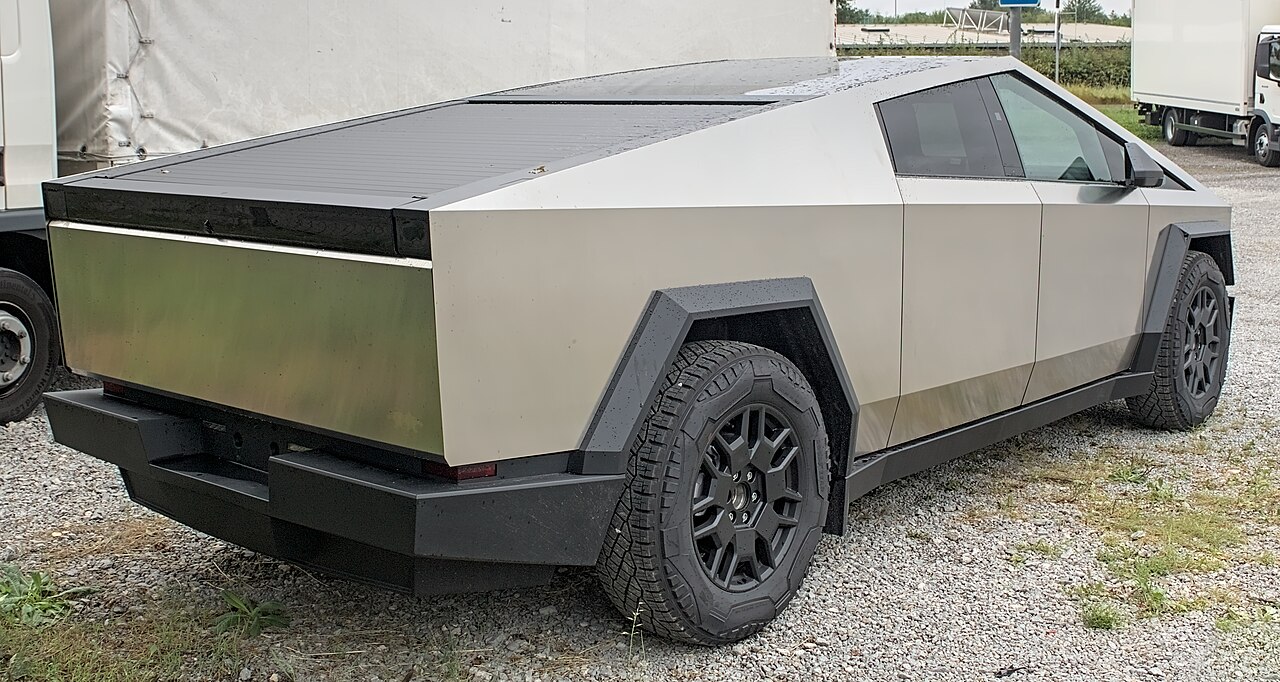
Tesla Cybertruck 2024

Electric Vehicle

Tesla Cybertruck 2024

8 source-linked failure reports. Most reported: Electrical system failure. Typical failure around 1.8 yr.

Reliability signal — · Early signal · data confidence Low

8 confirmed failure reports

Reliability summary

What is likely to go wrong, when it happens, and how expensive it can be — from source-linked failure reports. Counts are reports in our database, not a population failure rate.

Reliability signal

—

8 confirmed failure reports · Early signal · Data confidence: Low

Early signal (8 confirmed reports) suggests shorter ownership before failure (typical 21.5 mo), but that is not enough data for a D or F grade.

Most common issue
Electrical system failure
Typical first failure
1.8 yr
Median of confirmed reports with timing
Median repair cost
—
Reported costs only · market varies
Highest reported repair
—
Not a quote · costs differ by country

What breaks?

Failure types

Click a type in the reports section below to filter.

  • Electrical system failure3 · 37.5%
  • Other2 · 25%
  • Airbag / restraint failure1 · 12.5%
  • Brake system failure1 · 12.5%
  • Powertrain / transmission failure1 · 12.5%

When does it break?

Failure timing

Months after purchase, using reports that included timing.

What does it cost?

Reported repair costs

Distribution of owner-reported repair costs— not a quote or guarantee. Labor and parts prices vary by country.

No reported repair costs yet for this model.

Median months to failure

21.5

Failure reports

8

View →

Median repair cost

—

Still recommend

—

% repaired

—

% mfr warranty

—

% extended warranty

—

% support helpful

—

Use these reports as a risk signal, then check current listings before you buy.

Search this model on Amazon

As an Amazon Associate, After Warranty may earn from qualifying purchases.

What breaks?

What breaks? · reports

Airbag / restraint failure

STEERING,ELECTRICAL SYSTEM,AIR BAGS

26 months

Government / agencyIndexed Oct 8, 2026Source-linkedVerify source — NHTSA complaint #11767489

While driving on a highway with Full Self-Driving engaged, I approached an exit and applied steering input to take control. I expected the system to disengage and the Cybertruck to follow my steering input. The vehicle did not respond in the manner I expected and left the paved roadway, entering a grass field. To my knowledge, it did not strike another vehicle, guardrail, tree, or structure. The airbags nevertheless deployed, and a collision event was indicated. I cannot determine from my observations what triggered the restraint system or whether contact with the ground or another condition played a role. After the vehicle came to rest, it lost power to the extent that it would not operate normally and I could not access parts of it by the usual means. Tesla personnel attempted to supply external power but could not restore normal operation. They ultimately had to force access to the trunk to retrieve belongings. The disabled vehicle was towed to Tesla’s Mechanicsburg Service Center and then to Sun Motors Collision Center. I notified Tesla and requested an explanation specific to this incident. Tesla has provided me with vehicle data through its privacy process. Unfortunately, Tesla stated most of the data was unavailable without explanation, such as video recordings and event data. In correspondence through September 17, Tesla referred to general driver responsibility and collision-related warranty coverage, but I have not received a technical explanation that resolves the steering behavior, the airbag deployment, or the power loss. I have followed up with Tesla multiple times. Their final response is "We don't comment on causes." They refuse to provide any other information or support the warranty. I do not know whether a vehicle system malfunction caused or contributed to the roadway departure or whether the later events were consequences of the departure.

VerifiedEvidence ★★★★☆
View report details

Months until failure

26 months

Repair cost

Not stated

Repaired

Not stated

Manufacturer warranty

Not stated

Extended warranty

Not stated

Support helpful

Not stated

Would recommend

Not stated

AI extraction confidence

90%

Verification status

Verified

Evidence quality

★★★★☆ (4/5)

Discussion

Other

FORWARD COLLISION AVOIDANCE,LANE DEPARTURE

22 months

Government / agencyIndexed Oct 8, 2026Source-linkedVerify source — NHTSA complaint #11747861

Approximately 10 minutes after my vehicle was serviced at a Tesla Service Center for a Full Self-Driving (FSD) concern, I entered the highway and engaged FSD. The service center had stated the system was operating correctly. While traveling approximately 75 mph through a highway curve, FSD suddenly changed to an "Unavailable" state. According to Tesla's own accident data, I did not disengage FSD. There was no audible warning, no effective visual warning, no takeover request, no controlled deceleration, and no safe handoff to the driver before the vehicle stopped controlling itself. Within about one second of FSD becoming unavailable, the vehicle left its intended path and struck a concrete highway divider. If the divider had not been present, the vehicle likely would have crossed into oncoming highway traffic, creating the risk of a catastrophic head-on collision with other vehicles, including a semi-truck. Tesla's accident report confirms I did not disengage FSD and shows no warning or takeover request before impact. I possess documentation supporting that FSD became unavailable without a safe transition to the driver. This failure occurred immediately after Tesla serviced the vehicle and represented that the FSD system was functioning properly. Despite the accident data, Tesla Customer Support and the Service Center have refused to acknowledge or investigate what appears to be a failure of the FSD system's fail-safe behavior. The failed component appears to be the FSD/Autopilot system and its driver handoff logic. The vehicle and electronic records are available for inspection. An automated driving system should not terminate operation at highway speed without providing adequate warning, a safe transfer of control, or controlled deceleration. I believe this presents a serious safety defect that could result in fatal crashes. The collision caused approximately $15,500 in vehicle damage.

VerifiedEvidence ★★★★☆
View report details

Months until failure

22 months

Repair cost

Not stated

Repaired

Not stated

Manufacturer warranty

Not stated

Extended warranty

Not stated

Support helpful

Not stated

Would recommend

Not stated

AI extraction confidence

90%

Verification status

Verified

Evidence quality

★★★★☆ (4/5)

Discussion

Other

UNKNOWN OR OTHER

17 months

Government / agencyIndexed Oct 8, 2026Source-linkedVerify source — NHTSA complaint #11702702

I am submitting this safety complaint as the vehicle owner of a Tesla that was involved in a collision on November 15, 2025. Although I am the policyholder and registered owner, I was not the driver at the time of the incident. My husband, [XXX] , was operating the vehicle, and Tesla Autopilot/FSD was engaged when the loss of control occurred. At the time of the incident, it was raining heavily, though visibility and road conditions were still within what Autopilot typically handles during normal operation. While driving under these conditions with Autopilot activated, the vehicle suddenly exhibited unexpected and erratic steering behavior, causing it to lose stability and veer out of control. The deviation happened rapidly and without sufficient warning or opportunity for my husband to intervene manually. The resulting collision appeared to be the result of an Autopilot system malfunction, not driver error. Key concerns include: Autopilot’s failure to maintain proper lane position Sudden abnormal steering input originating from the system Possible sensor, perception, or weather-related detection failure Lack of adequate warning or disengagement alert prior to the loss of control Tesla Insurance later determined the driver to be “principally at fault,” but this conclusion did not consider the possibility of Autopilot system failure under heavy rain conditions and does not reflect the sequence of events as experienced by the driver. As the vehicle owner, I am requesting that NHTSA review this incident as a potential safety defect involving Tesla’s Autopilot/FSD system. I am concerned that this malfunction—particularly under adverse weather—may also affect other Tesla owners and could indicate a broader systemic safety issue. I am willing to provide additional information, driver statements, documentation, or vehicle data upon request. INFORMATION REDACTED PURSUANT TO THE FREEDOM OF INFORMATION ACT (FOIA), 5 U.S.C. 552(B)(6)

VerifiedEvidence ★★★★☆
View report details

Months until failure

17 months

Repair cost

Not stated

Repaired

Not stated

Manufacturer warranty

Not stated

Extended warranty

Not stated

Support helpful

Not stated

Would recommend

Not stated

AI extraction confidence

90%

Verification status

Verified

Evidence quality

★★★★☆ (4/5)

Discussion

Electrical system failure

POWER TRAIN,ELECTRICAL SYSTEM,FORWARD COLLISION AVOIDANCE

21 months

Government / agencyIndexed Oct 8, 2026Source-linkedVerify source — NHTSA complaint #11722131

Vehicle Safety Complaint - Tesla Cybertruck Steering System Failure During FSD While driving my Tesla Cybertruck with Full Self-Driving (FSD) engaged, the rear steering system failed without any prior warning. FSD immediately disengaged, and a red steering system ERROR appeared on the instrument cluster. The rear axle steering was completely disabled, turning radius became severely limited, and vehicle speed was restricted. This occurred while actively driving in traffic and was extremely dangerous. I accessed the vehicle’s Service Mode and documented three fault codes that triggered simultaneously at 17:48:14 on March 4, 2026: 1.RSAM_a260_monitorTripDetected ∙Monitor trip detected, system degraded ∙Potential Impact: Steering system performance degraded, vehicle speed limited ∙Only clears on next power-up 2.RSA_a212_activeFault ∙Rear Steer Actuator (RSA) stopped at current position ∙Internal condition detected, defaulted to safe state ∙Fault Reason: CONTROLLER_IRRATIONAL ∙Previous State: RSASTATE_ACTIVE_STEERING (was actively steering when failure occurred) ∙rsamControllerRational = false 3.PEPS_a182_rearSteerDegraded ∙Primary Electric Power Steering (PEPS) detected RSA not functioning as expected ∙Reason: RSA_UNHEALTHY ∙rsaUnhealthy = true ∙rearSteerCommand = -0.59 All three faults were set at 17:48:14 and cleared at 17:50:55. Additionally, an earlier alert — EGGRIGHT3_a203_airwaveLeftLateralUnavailable — was logged on March 2, 2026 at 21:11:08, which may indicate a related or recurring issue. The simultaneous failure of the rear steering actuator and disengagement of FSD while driving at speed represents a serious safety hazard. The RSA controller was flagged as “IRRATIONAL” while the system was in active steering mode, meaning the steering hardware failed during operation — not at startup or in a parked state. I have photographic documentation of both the dashboard steering ERROR warning and all Service Mode diagnostic screens showin

VerifiedEvidence ★★★★☆
View report details

Months until failure

21 months

Repair cost

Not stated

Repaired

Not stated

Manufacturer warranty

Not stated

Extended warranty

Not stated

Support helpful

Not stated

Would recommend

Not stated

AI extraction confidence

90%

Verification status

Verified

Evidence quality

★★★★☆ (4/5)

Discussion

Brake system failure

STEERING,UNKNOWN OR OTHER,SERVICE BRAKES

14 months

Government / agencyIndexed Oct 8, 2026Source-linkedVerify source — NHTSA complaint #11695253

Component/System Failed: The primary component failing is the Front Overhead Console Assembly (P-R-N-D manual gear selector/shifter and hazard light switch). The assembly detaches, rattles, and fails to remain securely affixed to the headliner. The defect has been present since delivery (Aug 2024, 208 miles). Safety Risk: The overhead console contains the crucial backup gear selector and the hazard light button. Should the vehicle’s primary touchscreen fail (rendering the main gear selector unusable), reliance on this repeatedly detaching or faulty manual shifter compromises the driver's ability to safely operate the vehicle (Park, Reverse, Neutral, Drive) or activate emergency hazard lights. Problem Confirmation/Inspection: The failure is confirmed by the manufacturer (Tesla Service Centers). Tesla attempted to fix the overhead console defect at least four times. The defect was confirmed again on October 22, 2025 (11936 miles), where Tesla noted only a "slight adjustment... as a temporary fix" and stated a "Permanent fix will be performed on the upcoming visit". The vehicle and its components have been inspected repeatedly by Tesla technicians. Warning Lamps/Symptoms: The primary symptom is the physical rattling, looseness, and detachment of the overhead console/gear selector. The center console can come off at ant time that the windshield visor is detached from the console. This has happened to me several times while I was driving and it caused the cybertruck to shift out of gear and has changed the gear to neutral and park on different occasions. The first time this happened while I drove, I was driving down the street and the car came to a hault when the gear shift cover came loose. This could have caused a serious accident, but fortunately it didnt. This problem existed from the time of delivery & we had to make our 1st service apt on the day we took possession of the truck. This happened several times afterwards and tesla was unable to fix this in 7 attemp

VerifiedEvidence ★★★★☆
View report details

Months until failure

14 months

Repair cost

Not stated

Repaired

Not stated

Manufacturer warranty

Not stated

Extended warranty

Not stated

Support helpful

Not stated

Would recommend

Not stated

AI extraction confidence

90%

Verification status

Verified

Evidence quality

★★★★☆ (4/5)

Discussion

Powertrain / transmission failure

POWER TRAIN,UNKNOWN OR OTHER

27 months

Government / agencyIndexed Oct 8, 2026Source-linkedVerify source — NHTSA complaint #11765113

I am submitting a formal complaint regarding my recent experience with Tesla service, involving repeated failed repair attempts, inaccurate representations that the vehicle was ready for pickup, and unprofessional conduct by the service manager, Kris. I initially brought my vehicle in for service due to a critical error. After being notified that the vehicle was ready for pickup, I arrived and discovered a fluid leak underneath the vehicle. The vehicle had to be taken back in for further inspection, resulting in a wasted trip. I was later notified again that the vehicle was ready. I returned, and at that time the vehicle presented a new alert (“Trailer functionality may be unavailable”), which had never appeared prior to service. Due to this, I left the vehicle again for additional work. Following this, I had a phone conversation with the service manager regarding the ongoing issues. During that call, I explicitly asked that the call not be ended while I was addressing the situation. Despite that, the call was ended. This conduct is unacceptable, particularly given the repeated service failures and the time and inconvenience this situation has already caused. After that, I received another email directly from the service manager confirming that the vehicle was ready for pickup. I returned for a fourth time based on that representation. Upon arrival, I was told that I was “misunderstanding” and that when the vehicle is marked as ready for pickup, it does not necessarily mean that the issue has been resolved. This is completely unacceptable and contradicts any reasonable expectation of what “ready for pickup” represents—especially when that representation is being made directly by management. As a result of this, I ultimately left the service center with a vehicle that still had active issues and unresolved alerts present. Being placed in a position where I had to take possession of a vehicle that was not fully repaired is unacceptable and raises serious concerns

VerifiedEvidence ★★★★☆
View report details

Months until failure

27 months

Repair cost

Not stated

Repaired

Not stated

Manufacturer warranty

Not stated

Extended warranty

Not stated

Support helpful

Not stated

Would recommend

Not stated

AI extraction confidence

90%

Verification status

Verified

Evidence quality

★★★★☆ (4/5)

Discussion

Electrical system failure

ELECTRICAL SYSTEM,EXTERIOR LIGHTING

26 months

Government / agencyIndexed Oct 8, 2026Source-linkedVerify source — NHTSA complaint #11754251

On XXX at approximately 5:15 AM, I was driving my 2024 Tesla Cybertruck (VIN [XXX], ~47,300 miles) on an interstate trip to [XXX] with Full Self-Driving (Supervised) engaged. I heard a loud pop from the front of the vehicle, immediately followed by an alert stating the left front turn signal was malfunctioning and that I needed to take over control. FSD disengaged and I was forced to manually drive in pre-dawn darkness with a failed turn signal until the next charging stop. The fault then behaved intermittently: it cleared on its own, returned, cleared again, and I resumed FSD for much of the trip. Then, with roughly 100 miles remaining, the left turn signal malfunction warning returned while the vehicle was actively driving itself, again forcing manual takeover and leaving me without a functioning left turn signal in traffic. This is a serious safety defect on multiple levels: (1) A failed turn signal prevents me from lawfully and safely signaling lane changes and turns to other drivers. (2) The failure occurred WHILE the automated driving system was operating and depends on functional signaling to execute its own lane changes — yet the system had been driving with a component that failed audibly and without warning. (3) The intermittent nature means the vehicle can re-enter a hazardous state at any time, without warning, at highway speed. (4) I cannot get a service appointment immediately, so I must continue operating a vehicle with an unrepairable intermittent signal failure, exposing me to citations and collision risk. This vehicle has an extensive repair history including body panel adhesion defects related to Tesla’s 2025 cant rail recall, and this electrical failure continues a pattern of defects across multiple systems. No warning preceded the pop. The failure is reproducible in the sense that it has recurred three times in one day. Service records and buyback correspondence with Tesla are available on request. INFORMATION REDACTED PURSUANT TO THE FREEDOM OF

VerifiedEvidence ★★★★☆
View report details

Months until failure

26 months

Repair cost

Not stated

Repaired

Not stated

Manufacturer warranty

Not stated

Extended warranty

Not stated

Support helpful

Not stated

Would recommend

Not stated

AI extraction confidence

90%

Verification status

Verified

Evidence quality

★★★★☆ (4/5)

Discussion

Electrical system failure

ELECTRICAL SYSTEM

5 months

Government / agencyIndexed Oct 8, 2026Source-linkedVerify source — NHTSA complaint #11695120

On [XXX], [XXX] was a right rear passenger in a 2024 Cybertruck. The driver lost control and struck a tree with the driver side against a wall. The truck immediately caught fire. The operation of the doors was powered by a small battery pack which was no longer operational after the impact. The passenger side doors operate off of that battery. Without power, the passenger doors could not open, trapping the driver and passengers in the Cybertruck. The fire moved quickly to the passenger compartment and towards the trapped passengers. The design of the electric doors required passengers who are not familiar with the vehicle to find the location of a manual release hidden from view beneath a panel to remove that panel and pull the manual release mechanism. There are no instructions present to explain to a passenger how to access the manual release. The truck has no exterior door handles. The only means to open the door from the outside was a button located at the base of the B&C pillars. When the electric system failed, that door release button became useless. A rescuer arrived but had no way to open the passenger side doors from the outside. The truck’s “armor glass” windows made forcing entry extraordinarily difficult. The rescuer was able to break the passenger side window with repeated strikes and attempted to rescue [XXX] by extracting her through the front passenger window but was unsuccessful due to the heat from the fire. She was forced to retreat back to the rear seat. She survived the initial collision with no injuries and was fully conscious. She was unable to escape the Cybertruck and was killed due to smoke inhalation and thermal injuries. The failure of the vehicle’s design to provide emergency egress in the event of crash, power loss, and fire created a foreseeable and unreasonable risk of occupant entrapment and death in the event of a collision resulting in power loss. It is available for inspection by the NHTSA. INFORMATION REDACTED PURSUANT TO THE FR

VerifiedEvidence ★★★★☆
View report details

Months until failure

5 months

Repair cost

Not stated

Repaired

Not stated

Manufacturer warranty

Not stated

Extended warranty

Not stated

Support helpful

Not stated

Would recommend

Not stated

AI extraction confidence

90%

Verification status

Verified

Evidence quality

★★★★☆ (4/5)

Discussion

Compare nearby models

Similar products

Stay ahead of failures

Notify me about this model

Get an email when a new source-linked failure report is published for the Tesla Cybertruck 2024.

We only email when a new published report is added for Tesla Cybertruck 2024. No spam, unsubscribe by contacting support.

Contribute signal

Had a failure with this model?

Add your experience and help future shoppers understand what happens after the warranty.

Submit your experience