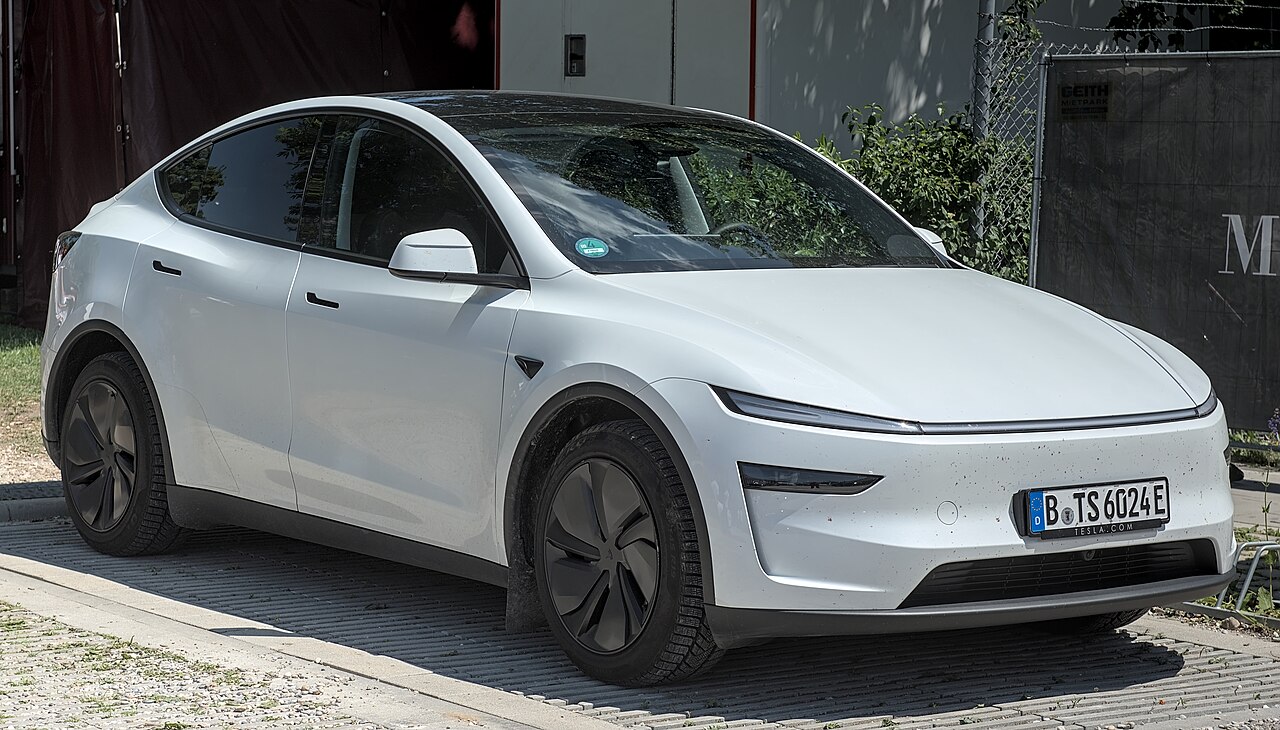
Tesla Model Y 2025

Electric Vehicle

Tesla Model Y 2025

8 source-linked failure reports. Most reported: Other. Typical failure around 6 mo.

Reliability signal — · Early signal · data confidence Low

8 confirmed failure reports

Reliability summary

What is likely to go wrong, when it happens, and how expensive it can be — from source-linked failure reports. Counts are reports in our database, not a population failure rate.

Reliability signal

—

8 confirmed failure reports · Early signal · Data confidence: Low

Early signal (8 confirmed reports) suggests shorter ownership before failure (typical 6 mo), but that is not enough data for a D or F grade.

Most common issue
Other
Typical first failure
6 mo
Median of confirmed reports with timing
Median repair cost
—
Reported costs only · market varies
Highest reported repair
—
Not a quote · costs differ by country

What breaks?

Failure types

Click a type in the reports section below to filter.

  • Other4 · 50%
  • Airbag / restraint failure1 · 12.5%
  • Electrical system failure1 · 12.5%
  • Brake system failure1 · 12.5%
  • Structure / body failure1 · 12.5%

When does it break?

Failure timing

Months after purchase, using reports that included timing.

What does it cost?

Reported repair costs

Distribution of owner-reported repair costs— not a quote or guarantee. Labor and parts prices vary by country.

No reported repair costs yet for this model.

Median months to failure

6

Failure reports

8

View →

Median repair cost

—

Still recommend

—

% repaired

—

% mfr warranty

—

% extended warranty

—

% support helpful

—

Use these reports as a risk signal, then check current listings before you buy.

Search this model on Amazon

As an Amazon Associate, After Warranty may earn from qualifying purchases.

What breaks?

What breaks? · reports

Other

UNKNOWN OR OTHER

6 months

Government / agencyIndexed Oct 8, 2026Source-linkedVerify source — NHTSA complaint #11705024

After approximately 6 months we leased this vehicle we found out some issues with the vehicle. This vehicle has e Parking(P),Drive(D),Neutral(N),Reverse(R) positions. When you want to maneuver you vehicle you pull the lever at the required position. So what happenes some times: I put the vehicle in drive(D) and when I am in very slow traffic,or stop and go traffic or in stop light/sign vehicle Parks itself in Park (P) positions and sometime its difficult placing the vehicle right away in Drive (D). Parking (P) is reseved only to put the vehicle manually in Park(P) like any other vehicle. This vehicle has another option :when you remove your feet from accelarator after 2-4 sec it does apply brakes without pressing the brake pedal. This has happen several times until now. Can you imaging you are in traffick and this keeps happen and when it happens there is a possibility that this can be cause for accident because as soon as trafic start moving drivers behind you as soon as they see that traffic is moving they aslo start moving and if the car does Park istelf than the chance for the driver behind you to hit you is high,because you are making unintentionaly unnecesary sudden stop . I brought this problem up several times to manufacture's service location and they are telling me (initially i was told its normal,after explaing in details thay accepted the issue and took the vehicle and kept for 2 weeks .) After the service i was told that nothing was found .Issue had repeated againg.Also i was told that they are not able to find/read a problem if something happen to the car if had passed more than a month from the incident .I informed them again with the date/time stapm.Looks like they are not taking this issue seriosly, and i beleive that this is a safety issue because this for now its happening when in slow speeds but no one knows that this will not happen in higher speed and if this happen in higher speeds the consequences are bad. Thank you

VerifiedEvidence ★★★★☆
View report details

Months until failure

6 months

Repair cost

Not stated

Repaired

Not stated

Manufacturer warranty

Not stated

Extended warranty

Not stated

Support helpful

Not stated

Would recommend

Not stated

AI extraction confidence

90%

Verification status

Verified

Evidence quality

★★★★☆ (4/5)

Discussion

Airbag / restraint failure

STEERING,AIR BAGS,SERVICE BRAKES

6 months

Government / agencyIndexed Oct 8, 2026Source-linkedVerify source — NHTSA complaint #11707046

I am writing to formally report a serious safety incident involving a Tesla vehicle and to document multiple critical system failures that occurred during an accident, resulting in physical injuries to me. On the 12/24/2025, while operating Tesla under rainy conditions, I experienced a sudden and dangerous malfunction of the vehicle. During the event, the steering system became unresponsive and appeared to lock, preventing me from maintaining control of the vehicle. Simultaneously, the braking system failed to respond as expected despite my attempt to apply the brakes. These failures significantly impaired my ability to avoid or mitigate the collision. Most concerning, the vehicle’s airbag system did not deploy during the impact. Given the severity of the collision and the resulting injuries, the lack of airbag deployment represents a serious failure of a critical safety system designed to protect occupants in such events. As a direct result of this incident and the apparent malfunction of multiple safety systems, I sustained physical injuries that required medical evaluation and treatment. Beyond the physical harm, the incident caused significant emotional distress and raised serious concerns about the safety and reliability of the vehicle. I am submitting this complaint to formally document these safety failures and to request a thorough investigation into the performance of the steering, braking, and airbag systems involved in this incident. I believe this matter presents a significant safety concern not only for myself but also for other drivers and passengers who rely on these systems to function properly in emergency situations. Please confirm receipt of this complaint and advise me of the next steps in your investigation process. I am prepared to provide additional documentation, including medical records, photographs, vehicle data, and incident details, upon request. Thank you for your attention to this serious matter

VerifiedEvidence ★★★★☆
View report details

Months until failure

6 months

Repair cost

Not stated

Repaired

Not stated

Manufacturer warranty

Not stated

Extended warranty

Not stated

Support helpful

Not stated

Would recommend

Not stated

AI extraction confidence

90%

Verification status

Verified

Evidence quality

★★★★☆ (4/5)

Discussion

Other

WHEELS

Government / agencyIndexed Oct 8, 2026Source-linkedVerify source — NHTSA complaint #11655135

"What component or system failed or malfunctioned, and is it available for inspection upon request?" The rear left tire (interior side) and rim assembly failed while driving under normal conditions. The tire experienced a sudden blowout, and the rim sustained significant damage. Based on the damage observed, it appears the rim may have failed first, puncturing the tire and causing the blowout. Yes, the damaged components are available for inspection upon request. "How was your safety or the safety of others put at risk?" The sudden tire blowout at freeway speeds (60+/- mph) could have posed a serious risk to my safety and the safety of other drivers. Fortunately, I was able to maintain control of the vehicle and safely pulled over to the shoulder. "Has the problem been reproduced or confirmed by a dealer or independent service center?" As of now, the issue has not yet been reproduced or confirmed by a Tesla dealer or independent service center, Tesla repair staff immediately ruled out any responsibilities as they perceived to be a foreign object hit the inside of the driver rear tire, which I did not feel anything hitting the car or the tires bumping any object. We went to an authorized Continental dealer/store to inquire for procedure on how to request for investigation for any tire defects, but we were told by the manager that if the tire is OEM, they do not accept. "Has the vehicle or component been inspected by the manufacturer, police, insurance representatives or others?" The vehicle and damaged components have not yet been formally inspected by Tesla, police, or insurance representatives, but I am preparing documentation and plan to submit everything for evaluation by Tesla and possibly my insurance. "Were there any warning lamps, messages or other symptoms of the problem prior to the failure, and when did they first appear?" There were no messages (Sentry by Tesla), or symptoms prior to the failure. The tire pressure was actively monitored.

VerifiedEvidence ★★★★☆
View report details

Months until failure

Not stated

Repair cost

Not stated

Repaired

Not stated

Manufacturer warranty

Not stated

Extended warranty

Not stated

Support helpful

Not stated

Would recommend

Not stated

AI extraction confidence

90%

Verification status

Verified

Evidence quality

★★★★☆ (4/5)

Discussion

Other

FORWARD COLLISION AVOIDANCE,LANE DEPARTURE

Government / agencyIndexed Oct 8, 2026Source-linkedVerify source — NHTSA complaint #11631362

Here is my draft: Vehicle Information: • Make: Tesla • Model: Model Y • Year: 2025 Description of the Problem: After a software update pushed by Tesla, the AP4 computer in my 2024 Tesla Model Y shorted out, causing a complete failure of all systems controlled by this computer. The following safety-critical and driver-assist features have become non-functional: 1.⁠Cruise Control (adaptive or otherwise) 2.⁠Forward Collision Warning 3.⁠Lane Departure Warning 4.⁠Lane Keeping Assistance 5.⁠Blind Spot Warning 6.⁠Parking Collision Warning 7.⁠Full Self-Driving and Auto Park features 8.⁠Cameras required for Autopilot functionality Additionally, because the GPS system has failed, the vehicle’s Navigation system is inoperable. This impacts Tesla’s unique route planning feature that sets up Supercharger stops during long journeys. Without a functioning navigation system, I cannot properly plan my travel or locate charging stations, which severely affects the usability of the vehicle. Safety Concerns: The failure of these systems, especially safety features like forward collision warning, lane keeping assistance, and blind spot monitoring, puts both the driver and others on the road at risk. Losing access to safety-critical functions after an update is unacceptable and poses a serious danger to vehicle occupants and surrounding traffic. Incident Details: • The issue occurred immediately following a software update. • Tesla pushed the update remotely without providing any warning or indication of potential risks. • The failure appears to be related to a hardware short in the AP4 computer, directly caused or exacerbated by the update. Desired Outcome: • A thorough investigation into Tesla’s software update process and its effect on vehicle hardware and safety systems. • A resolution that prevents similar failures in other vehicles and ensures system updates do not compromise vehicle safety or critical functionality. Quality control for Tesla software updat

VerifiedEvidence ★★★★☆
View report details

Months until failure

Not stated

Repair cost

Not stated

Repaired

Not stated

Manufacturer warranty

Not stated

Extended warranty

Not stated

Support helpful

Not stated

Would recommend

Not stated

AI extraction confidence

90%

Verification status

Verified

Evidence quality

★★★★☆ (4/5)

Discussion

Electrical system failure

ELECTRICAL SYSTEM

1 months

Government / agencyIndexed Oct 8, 2026Source-linkedVerify source — NHTSA complaint #11685462

I am filing this complaint regarding recurring safety, security, and system failures in my Tesla Model Y, concerns about unauthorized access, and Tesla’s refusal to provide complete diagnostic and privacy data. These issues have directly endangered my safety and prevent me from confirming whether the vehicle has been compromised. The vehicle’s touchscreen and associated software systems repeatedly failed. An unfamiliar key fob activity was detected on July 27, 2025 and on at least two occasions prior to July 27, 2025, the touchscreen went black and could only be restored via a full hard reboot. Safety Risks: * Loss of touchscreen functionality could disable access to critical driving and emergency controls. * Potential unauthorized access poses risks of theft or malicious interference with the vehicle. * Chemical/gas odors could indicate exposure to harmful substances. Tesla service center inspected the vehicle but reported no issues; I believe the inspection may not have been fully conducted as requested. The vehicle has not been independently inspected outside of Tesla. Police and insurance representatives have not been involved. Warning Signs Prior to Failure: * The touchscreen went black twice in the two days prior to July 27, 2025. * Unfamiliar key fob activity was detected on July 27, 2025. * The charger port opened by itself multiple times. * The vehicle locked while I was inside on one occasion. Attempts to Resolve: * Tesla’s mobile service rescheduling and service center inspection did not identify or resolve the issues. * Five privacy/data requests submitted to Tesla for access and diagnostic logs returned incomplete, empty, or irrelevant files. Desired Outcome: * A complete copy of all records and data related to my vehicle, including access logs, diagnostic logs, security/camera events, and system communications. * A thorough, transparent inspection of the vehicle by Tesla, conducted in my presence, with full documentation of findings provided.

VerifiedEvidence ★★★★☆
View report details

Months until failure

1 months

Repair cost

Not stated

Repaired

Not stated

Manufacturer warranty

Not stated

Extended warranty

Not stated

Support helpful

Not stated

Would recommend

Not stated

AI extraction confidence

90%

Verification status

Verified

Evidence quality

★★★★☆ (4/5)

Discussion

Brake system failure

SERVICE BRAKES,LANE DEPARTURE,FORWARD COLLISION AVOIDANCE

5 months

Government / agencyIndexed Oct 8, 2026Source-linkedVerify source — NHTSA complaint #11702617

SUMMARY OF SAFETY DEFECT: Multiple critical safety systems randomly disengage without warning while the vehicle is in operation, creating an immediate crash hazard. DETAILED DESCRIPTION: For approximately one month, my vehicle has experienced intermittent, unpredictable failures of multiple safety-critical systems while driving. These failures occur randomly during operation and include: Regenerative Braking System Failure (PRIMARY SAFETY CONCERN) Lane Departure Warning System Failure Automatic Vehicle Hold System Failure Traction Control System Failure Automatic Emergency Braking System Failure Electronic Stability Control System Failure SAFETY HAZARD ANALYSIS: The sudden disengagement of regenerative braking while driving poses an acute collision risk. Tesla vehicles are designed with regenerative braking as the primary deceleration method when releasing the accelerator. Drivers develop muscle memory and expectations based on consistent vehicle behavior. When regenerative braking unexpectedly disengages mid-drive, the vehicle's deceleration characteristics change dramatically and without warning, creating a dangerous situation where: The driver expects normal deceleration upon releasing the accelerator The vehicle instead continues at speed, requiring sudden brake application Reaction time is insufficient to compensate for the unexpected behavior change Rear-end collisions or other crashes become likely, particularly in traffic Similarly, the Automatic Vehicle Hold feature unexpectedly disengaging means the vehicle may roll when the driver expects it to remain stationary at traffic lights or stop signs. PATTERN AND FREQUENCY: These system failures occur randomly and unpredictably while driving. The issues sometimes resolve after: Restarting the vehicle Restarting the cent However, the failures recur without warning during subsequent driving. MANUFACTURER RESPONSE: Service Visit Date: November 28, 2024 Diagnosis: Tesla Service Center acknowledged this as a

VerifiedEvidence ★★★★☆
View report details

Months until failure

5 months

Repair cost

Not stated

Repaired

Not stated

Manufacturer warranty

Not stated

Extended warranty

Not stated

Support helpful

Not stated

Would recommend

Not stated

AI extraction confidence

90%

Verification status

Verified

Evidence quality

★★★★☆ (4/5)

Discussion

Other

UNKNOWN OR OTHER

Government / agencyIndexed Oct 8, 2026Source-linkedVerify source — NHTSA complaint #11656974

Critical Safety Defect Report – Tesla Full Self-Driving (FSD) Malfunction on [XXX] I am writing to formally report a critical and potentially deadly safety defect involving Tesla’s Full Self-Driving (FSD) system. During a recent road trip with my husband and daughter from Boston, MA to Washington, D.C., I used Tesla's FSD feature. On our return trip on [XXX] while traveling on [XXX] under FSD control, the system demonstrated erratic and dangerous behavior that nearly caused a fatal accident. As we approached an intersection on [XXX] , I observed that the traffic lights were red. However, the vehicle—still under FSD control—continued traveling at approximately 70 mph without slowing down. Sensing something was wrong, I quickly intervened and manually stopped the car at the intersection, where cross traffic was moving at high speeds in both directions. Had I reacted even a second later—or had the lights remained red in our direction—we likely would have been struck and potentially killed by the oncoming traffic. After reviewing dashcam footage from the incident, I confirmed that the FSD system had not only failed to recognize the red traffic signal but had also directed the car onto the wrong path, leading us into the potential path of oncoming vehicles. This serious failure posed an extreme and unacceptable risk to my family’s lives. Following the incident, my young daughter was deeply traumatized and developed a high fever that night. This experience has left lasting emotional and psychological distress for all of us. I believe this event highlights a severe and urgent defect in Tesla’s FSD system. I respectfully urge the NHTSA to launch an immediate investigation to prevent similar occurrences that could result in injury or loss of life. I am prepared to submit the dashcam footage and relevant vehicle logs to support this report. Please advise on the next steps for providing this evidence. Thank you for your attention INFORMATION REDACTED PURSUANT TO THE FREEDOM OF

VerifiedEvidence ★★★★☆
View report details

Months until failure

Not stated

Repair cost

Not stated

Repaired

Not stated

Manufacturer warranty

Not stated

Extended warranty

Not stated

Support helpful

Not stated

Would recommend

Not stated

AI extraction confidence

90%

Verification status

Verified

Evidence quality

★★★★☆ (4/5)

Discussion

Structure / body failure

STRUCTURE

10 months

Government / agencyIndexed Oct 8, 2026Source-linkedVerify source — NHTSA complaint #11728762

Incident Summary: On April 1, 2026, while operating a 2025 Tesla Model Y at highway speeds (approx. 65-70 MPH), the front hood (frunk) spontaneously unlatched, flipped upward, and struck the windshield. The impact completely shattered the windshield, obstructed 100% of forward visibility, and caused structural damage to the hood and hinges. I was able to safely navigate to the shoulder by relying on side-view mirrors and lane-keep assist, but the incident constituted an immediate and life-threatening safety hazard. Failure of Safety Redundancies: Lack of Digital Warning: At no point prior to or during the drive did the vehicle’s software provide an "unlatched," "open," or "warning" notification on the primary display or via audible alert. The vehicle’s sensors failed to detect a compromised latch state. Secondary Latch Failure: The mechanical secondary safety catch, designed to prevent the hood from fully opening if the primary latch fails, did not engage or hold. The hood bypassed all mechanical and digital failsafes. Spontaneous Activation: The vehicle had not been manually accessed in the frunk area immediately prior to this trip, suggesting either a mechanical fatigue of the latch assembly or a software-commanded release error. Year/Make/Model: 2025 Tesla Model Y License Plate: [XXX] Previous Recalls: This failure appears identical in nature to NHTSA Recall 24V-554, which affected 2021-2024 models. It appears the remedy or part quality issues addressed in that recall may persist in the 2025 model year production. Safety Consequences: The sudden loss of visibility at high speeds on a congested highway created an extreme risk of a high-speed collision, multi-vehicle pileup, and potential fatality. The force of the hood striking the glass sent shards into the cabin. I am requesting an immediate investigation into the 2025 Model Y hood latch assemblies and sensor logic to determine if a new or expanded recall is necessary to prevent loss of life. INFORMATION REDACTE

VerifiedEvidence ★★★★☆
View report details

Months until failure

10 months

Repair cost

Not stated

Repaired

Not stated

Manufacturer warranty

Not stated

Extended warranty

Not stated

Support helpful

Not stated

Would recommend

Not stated

AI extraction confidence

90%

Verification status

Verified

Evidence quality

★★★★☆ (4/5)

Discussion

Compare nearby models

Similar products

Stay ahead of failures

Notify me about this model

Get an email when a new source-linked failure report is published for the Tesla Model Y 2025.

We only email when a new published report is added for Tesla Model Y 2025. No spam, unsubscribe by contacting support.

Contribute signal

Had a failure with this model?

Add your experience and help future shoppers understand what happens after the warranty.

Submit your experience