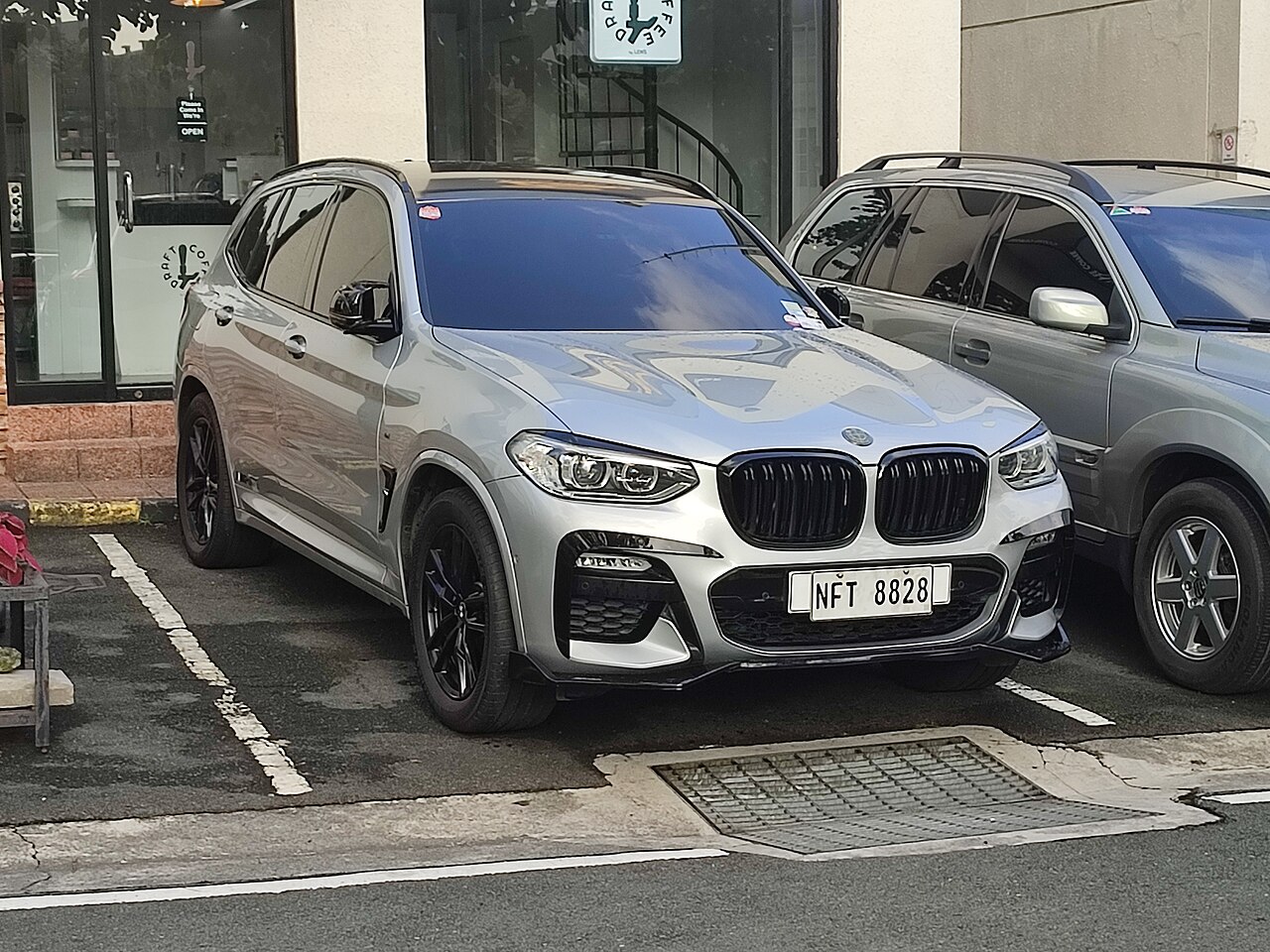
BMW X3 2020

Car

BMW X3 2020

10 source-linked failure reports. Most reported: Engine failure. Typical failure around 5.6 yr.

Reliability signal A · Early signal · data confidence Low

10 confirmed failure reports

Reliability summary

What is likely to go wrong, when it happens, and how expensive it can be — from source-linked failure reports. Counts are reports in our database, not a population failure rate.

Reliability signal

A

10 confirmed failure reports · Early signal · Data confidence: Low

Most common issue
Engine failure
Typical first failure
5.6 yr
Median of confirmed reports with timing
Median repair cost
—
Reported costs only · market varies
Highest reported repair
—
Not a quote · costs differ by country

What breaks?

Failure types

Click a type in the reports section below to filter.

  • Engine failure5 · 50%
  • Electrical system failure4 · 40%
  • Other1 · 10%

When does it break?

Failure timing

Months after purchase, using reports that included timing.

What does it cost?

Reported repair costs

Distribution of owner-reported repair costs— not a quote or guarantee. Labor and parts prices vary by country.

No reported repair costs yet for this model.

Median months to failure

67

Failure reports

10

View →

Median repair cost

—

Still recommend

—

% repaired

—

% mfr warranty

—

% extended warranty

—

% support helpful

—

Use these reports as a risk signal, then check current listings before you buy.

Search this model on Amazon

As an Amazon Associate, After Warranty may earn from qualifying purchases.

What breaks?

What breaks? · reports

Electrical system failure

ELECTRICAL SYSTEM,ENGINE,FUEL/PROPULSION SYSTEM

71 months

Government / agencyIndexed Oct 9, 2026Source-linkedVerify source — NHTSA complaint #11738436

I am submitting this complaint regarding ongoing and potentially dangerous mechanical failures involving my vehicle that have repeatedly occurred despite numerous repair attempts by the dealership. Over the past year, I have taken my vehicle to the dealership more than 10 times for serious recurring issues. The problems have included: Drivetrain malfunction warnings Engine warning lights Oil leaks Smoke coming from the vehicle The vehicle unexpectedly shifting into neutral while driving Sudden loss of drivability requiring the vehicle to be towed The dealership has repeatedly stated that the issues were repaired, and at one point even provided a one-year warranty on the repair work. Despite this, the same problems have continued to occur. Most recently, the drivetrain malfunction warning and engine light returned again, smoke came from the vehicle, and the car shifted into neutral on its own, becoming completely undriveable and requiring towing. I have spent more than $10,000 on repairs related to these ongoing issues, yet the vehicle remains unreliable and unsafe. My primary concern is the safety risk posed by the drivetrain failure and the vehicle unexpectedly shifting into neutral while in operation. I am requesting that this matter be reviewed as a potential vehicle safety issue. I believe these repeated failures may present a serious risk not only to myself but potentially to other drivers as well. Thank you for your attention to this matter.

VerifiedEvidence ★★★★☆
View report details

Months until failure

71 months

Repair cost

Not stated

Repaired

Not stated

Manufacturer warranty

Not stated

Extended warranty

Not stated

Support helpful

Not stated

Would recommend

Not stated

AI extraction confidence

90%

Verification status

Verified

Evidence quality

★★★★☆ (4/5)

Discussion

Other

WHEELS

6 months

Government / agencyIndexed Oct 9, 2026Source-linkedVerify source — NHTSA complaint #11378340

My husband was driving my infant son and I as we were merging onto the pa turnpike. We hit some small road debris at about 50-60 MPH. The debris was so small that we didn't feel a bump or anything, just heard a loud bang and figured we had a typical blow out. The car did jerk to the left moderately but we were able to safely pull over. Upon inspection, the wheel split in half across the entire circumference in the direction of roll. There was a small bend on the inside Edge of the wheel at the point of impact but the split was several inches away from this damage. There was also no crack or split at the point of impact. We would have expected there to be a crack in this area perpendicular to the road but instead the crack was in the opposite direction, away from the damage. The tire had no damage to it and was the only thing holding the wheel together as it was in two separate pieces. The wheel contacted the brake caliper, rotor, and dust shield causing abrasions and dents in these parts. Luckily, the brakes held together but this could have been much worse. My husband has seen bent wheels before but this looks like a possible casting problem with the alloy wheel itself as it literally sheared apart. There were 3 vehicles immediately behind us that struct the same debris and only suffered punctures and no broken wheels. The BMW is equipped with no spare but has run flat tires which were completely useless in this scenario. We would not have expected this kind of damage from some road debris, pothole, or any other normal circumstance.

VerifiedEvidence ★★★★☆
View report details

Months until failure

6 months

Repair cost

Not stated

Repaired

Not stated

Manufacturer warranty

Not stated

Extended warranty

Not stated

Support helpful

Not stated

Would recommend

Not stated

AI extraction confidence

90%

Verification status

Verified

Evidence quality

★★★★☆ (4/5)

Discussion

Electrical system failure

ELECTRICAL SYSTEM

2 months

Government / agencyIndexed Oct 9, 2026Source-linkedVerify source — NHTSA complaint #11435534

On August 31, 2020, I purchased a new 2020 BMW X3E, manufactured and warranted by BMW, from Habberstad BMW, located at 945 East Jericho Turnpike, Huntington Station, New York 11746. On or about October 14, 2020, I was notified by a BMW Safety Recall regarding a defective battery in my hybrid vehicle. I later learned that on or about September 2, 2020, BMW submitted a Part 573 Safety Recall Report to the NHTSA, that on August 11, 2020, BMW decided to conduct a voluntary safety recall, and that per the Safety Recall in August 2020, BMW dealerships were expressly told NOT to sell any new motor vehicles that were subject to this recall. Thus, when I purchased my new vehicle, BMW and the dealership knew about the safety recall and they still sold me the vehicle. The value of the vehicle has cratered since the Safety Recall was announced and I made payments for the vehicle and maintained insurance on the vehicle for many months while the safety defect was being addressed by BMW. I attempted to resolve these issues with BMWNA for a sum on money and for BMW to take back the defective vehicle, but no agreement was reached. Finally, I recently filed a lawsuit against BMW of North America, LLC and Habberstad Motorsport, Inc. under the New York State Lemon Law, for unlawful and deceptive trade practice, and for fraudulent inducement. All relevant documents, including the Summons and Complaint from the lawsuit are attached to this Vehicle Complaint Form. I would be happy to provide additional documentation or answer additional questions on this matter.

VerifiedEvidence ★★★★☆
View report details

Months until failure

2 months

Repair cost

Not stated

Repaired

Not stated

Manufacturer warranty

Not stated

Extended warranty

Not stated

Support helpful

Not stated

Would recommend

Not stated

AI extraction confidence

90%

Verification status

Verified

Evidence quality

★★★★☆ (4/5)

Discussion

Electrical system failure

ELECTRICAL SYSTEM

52 months

Government / agencyIndexed Oct 9, 2026Source-linkedVerify source — NHTSA complaint #11679881

The contact owned a 2020 BMW X3. The contact stated that while her husband was driving 10-15 MPH in a parking lot and attempting to make a turn, the brake pedal was depressed, but the pedal travelled down to the floor, and the vehicle failed to respond. Additionally, the steering wheel seized, and the accelerator pedal was depressed, but the pedal travelled down to the floorboard, and the vehicle failed to respond. The contact stated that the vehicle became inoperable, causing the front driver's side bumper and door of the vehicle to crash into the rear-end of an unoccupied parked vehicle, and then the front end of the vehicle crashed into the side of another occupied parked vehicle. All the air bags of the vehicle deployed. There were no injuries sustained. A police report was filed. The police report confirmed that the impacts occurred a few moments before the contact received failure notifications on the vehicle mobile app. The vehicle remained inoperable and was towed to Spitler's Collision, where it was deemed a total loss. The Chevrolet dealer where the vehicle was purchased was notified of the failure. The manufacturer was notified of the failure and sent engineers who inspected the vehicle at Spitler's Collision 8 months later. The manufacturer later informed the contact that the collisions occurred because the driver did not turn away from the other vehicles and did not depress the brake pedal as needed, which the contact stated was the description of the failure. No further assistance was provided. The manufacturer and the auto finance company deemed the vehicle a total loss. The failure mileage was 67,540.

VerifiedEvidence ★★★★☆
View report details

Months until failure

52 months

Repair cost

Not stated

Repaired

Not stated

Manufacturer warranty

Not stated

Extended warranty

Not stated

Support helpful

Not stated

Would recommend

Not stated

AI extraction confidence

90%

Verification status

Verified

Evidence quality

★★★★☆ (4/5)

Discussion

Electrical system failure

ELECTRICAL SYSTEM,STRUCTURE,VEHICLE SPEED CONTROL

52 months

Government / agencyIndexed Oct 9, 2026Source-linkedVerify source — NHTSA complaint #11619886

The accident happened at Noon on [XXX] at the Amazon Fresh/Post office parking lot’s far right exit lane facing [XXX] The address is [XXX] . We were leaving the parking lot and I stopped at the exit lane with 2 cars in front of us. After the first car exited, the second car, a black Ford Explorer, moved forward. I released the brake slightly but my foot was still on the brake pedal. At this moment, my car suddenly accelerated and quickly approached the Explorer. I immediately pressed the brake pedal hard but was unable to stop my car and hit the back of the Explorer. The Explorer was forced out in front of the stop sign but the driver was able to turn right to park at the roadside. With my foot still firmly on the brake pedal, my car kept on accelerating into [XXX] , crossing 5 lanes of traffic until we hit the roadside curb of westbound [XXX] . The car then swerved left and hit a roadside tree, turning sideways into [XXX] middle turn lane. During this entire time, I did not press the accelerator and the car was violently shaking and jerking right and left. As the car slowed down, I was able to steer the car to the right eastbound lane of [XXX] , next to the parking lot near Bank of America’s ATM sign. After I got out of the car, I noticed the front and right sides of the body and tires were damaged including crushing, dents, and significant scratching. The problem I believe is as follows: 1.Sudden Unintended Acceleration and Control Circuit Malfunction. 2.Airbags did not deploy even though we hit a car, curb and tree. 3.Onboard Data Recorder should have the information needed. INFORMATION REDACTED PURSUANT TO THE FREEDOM OF INFORMATION ACT (FOIA), 5 U.S.C. 552(B)(6)

VerifiedEvidence ★★★★☆
View report details

Months until failure

52 months

Repair cost

Not stated

Repaired

Not stated

Manufacturer warranty

Not stated

Extended warranty

Not stated

Support helpful

Not stated

Would recommend

Not stated

AI extraction confidence

90%

Verification status

Verified

Evidence quality

★★★★☆ (4/5)

Discussion

Engine failure

ENGINE

72 months

Government / agencyIndexed Oct 9, 2026Source-linkedVerify source — NHTSA complaint #11744370

reporting a safety issue with BMW vehicles equipped with the B58TU engine, primarily 2019-2021 models. These vehicles have an oil pump with an internal plastic component that regulates oil pressure, and this part is fracturing in the field, causing sudden loss of oil pressure. The failure typically occurs during cold starts in low temperatures. When it fails, oil pressure becomes erratic or is lost entirely, often with little to no warning before engine damage or vehicle disablement. Warning signs, when present, include inability to measure oil level electronically, abnormal oil pressure, or sudden drivetrain malfunction warnings. These can rapidly progress to engine shutdown or severe damage from oil starvation. This creates a dangerous situation because the vehicle can become disabled without warning while driving or after startup. This is especially hazardous when cars become immobilized in traffic or during winter conditions when failures occur most frequently, leaving occupants exposed to freezing temperatures while awaiting assistance. Pump replacement requires extensive disassembly and commonly costs $6,000-$8,000, assuming no engine damage. A critical concern: owners cannot determine if their vehicle has the original plastic pump or the later metal revision. BMW's VIN-based parts lookup now shows updated components even when original plastic parts remain installed, and BMW has removed the original plastic part number from dealer networks entirely. Failures are reported across multiple production years, and the scope of affected vehicles remains unclear. Because this condition causes sudden vehicle disablement without adequate warning, especially in cold weather, I believe this warrants investigation as a potential safety-related defect.

VerifiedEvidence ★★★★☆
View report details

Months until failure

72 months

Repair cost

Not stated

Repaired

Not stated

Manufacturer warranty

Not stated

Extended warranty

Not stated

Support helpful

Not stated

Would recommend

Not stated

AI extraction confidence

90%

Verification status

Verified

Evidence quality

★★★★☆ (4/5)

Discussion

Engine failure

ENGINE

68 months

Government / agencyIndexed Oct 9, 2026Source-linkedVerify source — NHTSA complaint #11720985

I am reporting a safety concern involving BMW vehicles equipped with the B58 Technical Update (B58TU) engine, commonly found in model years 2019–2021. These vehicles utilize a variable-displacement engine oil pump containing an internal thermoplastic adjusting component responsible for regulating oil pressure. Field failures are increasingly being reported in which this internal component fractures, resulting in sudden loss or instability of engine oil pressure. The failure frequently occurs during cold-start operation in low ambient temperatures. When the component fails, oil pressure regulation becomes erratic or is lost entirely. In many cases, drivers receive little or no actionable warning prior to engine damage or vehicle disablement. Reported precursor symptoms include inability to electronically measure engine oil level, abnormal oil pressure behavior, or sudden drivetrain malfunction warnings. Failures may rapidly progress to engine shutdown or severe mechanical damage caused by oil starvation. Loss of lubrication can cause the vehicle to become disabled without warning while driving or shortly after startup. This creates a safety hazard, particularly when vehicles become immobilized in active traffic or during winter conditions where occupants may be exposed to freezing temperatures while awaiting assistance. Replacement of the oil pump requires extensive disassembly of the vehicle and repairs commonly exceed $6,000–$8,000 when engine damage occurs. Owners are currently unable to determine whether their vehicles contain the original thermoplastic oil pump design or a later revised version utilizing metal internal components, as VIN-based parts information now identifies updated components even when no replacement has occurred. Failures have been reported across multiple production years, and affected vehicle population boundaries remain unclear.

VerifiedEvidence ★★★★☆
View report details

Months until failure

68 months

Repair cost

Not stated

Repaired

Not stated

Manufacturer warranty

Not stated

Extended warranty

Not stated

Support helpful

Not stated

Would recommend

Not stated

AI extraction confidence

90%

Verification status

Verified

Evidence quality

★★★★☆ (4/5)

Discussion

Engine failure

ENGINE

72 months

Government / agencyIndexed Oct 9, 2026Source-linkedVerify source — NHTSA complaint #11745794

I own a 2020 BMW X3 M40i, VIN [XXX], manufactured November 2019, now at approximately 100,000 miles, equipped with the B58TU engine. My oil level sensor stopped completing measurements at approximately 45,000 miles, a known precursor to thermoplastic oil pump failure. For 55,000 miles I had no way to identify whether my vehicle contained the defective component because BMW removed the original thermoplastic part number from all dealer networks. VIN-based lookup now falsely returns updated metal component information regardless of what is physically present in the vehicle. This makes proactive identification impossible for both owners and dealers, meaning the defect cannot be remediated even by willing owners. I had no actionable path forward. On [XXX] I was driving on a Florida highway at 80 mph when a low oil pressure warning appeared. I pulled over immediately. A fault log pulled at 2:05PM showed code 1C3002. A second log pulled at 6:49PM after briefly running the engine showed three additional oil system faults including 1C2002 - engine oil pump pressure too low - indicating active progressive failure within hours. This failure occurred in 90 degree Florida summer heat, not cold weather. If NHTSA’s investigation is scoped around cold climate failures, my case demonstrates that scope is incomplete and the affected population is broader than currently documented. Carfax records confirm 18 total service records over 100,000+ miles, including 8 dealer visits between 18,000 and 50,000 miles under active CPO warranty. This vehicle has been consistently and properly maintained throughout its life. The vehicle became a safety hazard at highway speed without adequate warning. I will file a second complaint after physical inspection confirming which pump variant is actually present. INFORMATION REDACTED PURSUANT TO THE FREEDOM OF INFORMATION ACT (FOIA), 5 U.S.C. 552(B)(6)

VerifiedEvidence ★★★★☆
View report details

Months until failure

72 months

Repair cost

Not stated

Repaired

Not stated

Manufacturer warranty

Not stated

Extended warranty

Not stated

Support helpful

Not stated

Would recommend

Not stated

AI extraction confidence

90%

Verification status

Verified

Evidence quality

★★★★☆ (4/5)

Discussion

Engine failure

ENGINE

67 months

Government / agencyIndexed Oct 9, 2026Source-linkedVerify source — NHTSA complaint #11709973

What component or system failed or malfunctioned, and is it available for inspection upon request? The variable displacement oil pump contains a plastic (Duoplex) internal adjusting ring/vane carrier that is known to become brittle and shatter. Status: While the pump has not yet suffered a total mechanical collapse, it is a documented inherent defect. The manufacturer (BMW) has already superseded this part (Original #11418646454 or ...453) with a reinforced metal version (Part #11419895359), admitting the original material was insufficient for the engine's lifespan. How was your safety or the safety of others put at risk? Risk: The failure mode is sudden and unpredictable. If the plastic ring shatters while driving, it can lead to an instantaneous loss of oil pressure, causing the engine to seize or stall at highway speeds. This creates an immediate risk of: Loss of power steering and braking assist in traffic. Potential rear-wheel lockup (in RWD/Manual configurations) leading to loss of vehicle control. Catastrophic engine failure in the middle of active traffic, requiring an emergency maneuver. Has the problem been reproduced or confirmed by a dealer or independent service center? Assessment: The existence of the defect is confirmed by BMW’s internal technical case PuMA Measure 65494813. Furthermore, the manufacturer released a software update (S18A-21-03-567) specifically to reduce oil pressure during cold starts to mitigate stress on this plastic component—a "band-aid" fix that acknowledges the hardware's fragility. Has the vehicle or component been inspected by the manufacturer, police, insurance representatives or others? Assessment: Not yet, as the vehicle is being operated under the assumption of a known safety defect. However, independent mechanics and BMW master technicians across the industry have verified that early B58TU builds (2018–2020) almost universally contain the defective plastic-internals pump.

VerifiedEvidence ★★★★☆
View report details

Months until failure

67 months

Repair cost

Not stated

Repaired

Not stated

Manufacturer warranty

Not stated

Extended warranty

Not stated

Support helpful

Not stated

Would recommend

Not stated

AI extraction confidence

90%

Verification status

Verified

Evidence quality

★★★★☆ (4/5)

Discussion

Engine failure

ENGINE

67 months

Government / agencyIndexed Oct 9, 2026Source-linkedVerify source — NHTSA complaint #11721601

I am reporting a driver safety concern involving BMW vehicles equipped with the B58 Technical Update (B58TU) engine in model years 2019–2021. These engines use a variable-displacement oil pump containing an internal thermoplastic adjusting component that regulates oil pressure. Field failures show this component can fracture, causing sudden loss or instability of engine oil pressure. Failures most commonly occur during cold starts in low temperatures, it can occur at any time or temperature. When the part breaks, oil pressure becomes erratic or is lost entirely. Drivers often receive little or no actionable warning before the vehicle shuts down or suffers severe engine damage. Precursor symptoms may include inability to measure engine oil level electronically, abnormal oil pressure behavior, or sudden drivetrain malfunction alerts. In many cases, the condition rapidly progresses to engine stall or mechanical failure due to oil starvation. Loss of lubrication can disable the vehicle without warning while driving or shortly after startup. This creates a serious safety hazard, especially if the vehicle stalls in active traffic. The risk is heightened in winter conditions—when failures occur most often—because occupants may be stranded in freezing temperatures while awaiting assistance. Repair requires major disassembly, and oil pump replacement alone commonly exceeds $6,000–$8,000, excluding additional engine damage Owners cannot reliably determine whether their vehicles contain the original thermoplastic oil pump design or a later revised version with metal internal components. VIN-based parts systems now default to the updated design even if no replacement has occurred, and the original plastic component part number has reportedly been removed from dealer networks. This lack of transparency prevents owners from assessing their risk. I believe this represents a known manufacturer defect with direct driver safety implications that warrants formal investigation

VerifiedEvidence ★★★★☆
View report details

Months until failure

67 months

Repair cost

Not stated

Repaired

Not stated

Manufacturer warranty

Not stated

Extended warranty

Not stated

Support helpful

Not stated

Would recommend

Not stated

AI extraction confidence

90%

Verification status

Verified

Evidence quality

★★★★☆ (4/5)

Discussion

Compare nearby models

Similar products

Stay ahead of failures

Notify me about this model

Get an email when a new source-linked failure report is published for the BMW X3 2020.

We only email when a new published report is added for BMW X3 2020. No spam, unsubscribe by contacting support.

Contribute signal

Had a failure with this model?

Add your experience and help future shoppers understand what happens after the warranty.

Submit your experience