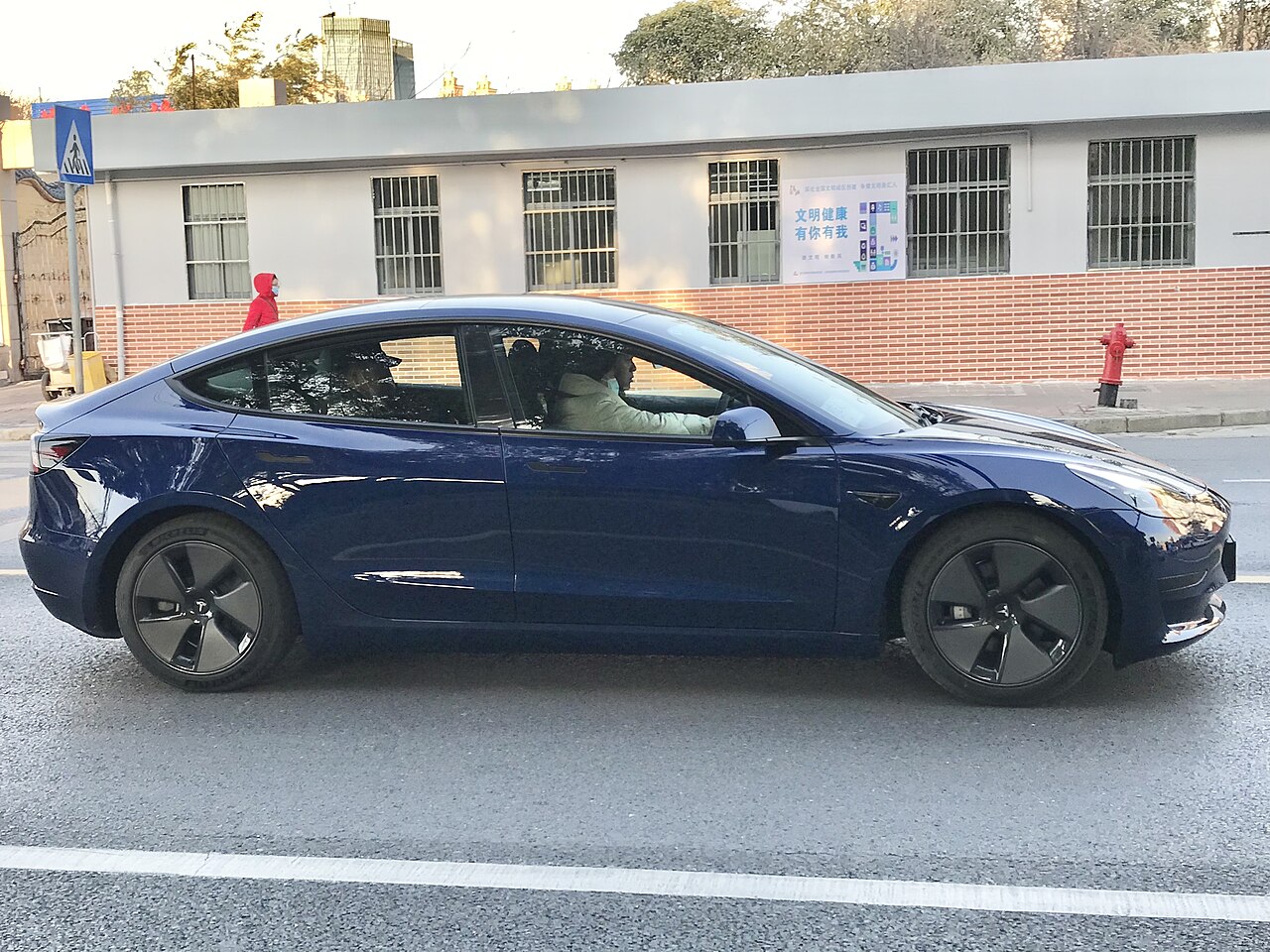
Tesla Model 3 2021

Electric Vehicle

Tesla Model 3 2021

30 source-linked failure reports. Most reported: Other. Typical failure around 2.5 yr.

Reliability signal C · Emerging signal · data confidence Moderate

30 confirmed failure reports

Reliability summary

What is likely to go wrong, when it happens, and how expensive it can be — from source-linked failure reports. Counts are reports in our database, not a population failure rate.

Reliability signal

C

30 confirmed failure reports · Emerging signal · Data confidence: Moderate

Most common issue
Other
Typical first failure
2.5 yr
Median of confirmed reports with timing
Median repair cost
—
Reported costs only · market varies
Highest reported repair
—
Not a quote · costs differ by country

What breaks?

Failure types

Click a type in the reports section below to filter.

  • Other13 · 43.3%
  • Electrical system failure8 · 26.7%
  • Brake system failure5 · 16.7%
  • Structure / body failure3 · 10%
  • Powertrain / transmission failure1 · 3.3%

When does it break?

Failure timing

Months after purchase, using reports that included timing.

What does it cost?

Reported repair costs

Distribution of owner-reported repair costs— not a quote or guarantee. Labor and parts prices vary by country.

No reported repair costs yet for this model.

Median months to failure

30

Failure reports

30

View →

Median repair cost

—

Still recommend

—

% repaired

—

% mfr warranty

—

% extended warranty

—

% support helpful

—

Use these reports as a risk signal, then check current listings before you buy.

Search this model on Amazon

As an Amazon Associate, After Warranty may earn from qualifying purchases.

What breaks?

What breaks? · reports

Other

LANE DEPARTURE,FORWARD COLLISION AVOIDANCE

58 months

Government / agencyIndexed Oct 9, 2026Source-linkedVerify source — NHTSA complaint #11737610

Component/System Failure: Total failure of the Autopilot ECU (DAS Computer) and the Front-End Module (FEM) wiring harness. Incident Description: My 2021 Tesla Model 3 (37,000 miles) experienced a catastrophic and "silent" failure of the entire vehicle vision suite and all active safety systems. A Tesla Service technician (Warrington, PA) inspected the vehicle and confirmed the root cause was a factory-defective (crimped) internal coaxial cable in the wiring harness. This manufacturing defect caused an electrical short that destroyed the primary safety-critical computer. Safety Risk: This failure resulted in a direct violation of FMVSS 111 (Rear Visibility), as the backup camera was rendered completely inoperable. Furthermore, all collision-avoidance features—including Automatic Emergency Braking (AEB), Forward Collision Warning, and Blind Spot Monitoring—were disabled. Critical Safety Concern (Silent Failure): The vehicle provided zero driver-facing alerts, dashboard warnings, or lamps to indicate that these safety systems were offline. I unknowingly operated a vehicle that was non-compliant with federal safety standards and lacked all primary crash-avoidance technology. The failure codes (APP_w045 and VCFRONT_a158) were only discoverable by manually entering the vehicle's "Service Mode." Manufacturer Status: Tesla Service has confirmed the hardware failure and the wiring defect but is currently refusing to cover the $2,800 repair cost, despite the failure involving systems currently under federal recall (SB-26-00-016). I am reporting this because a factory wiring defect causing a total, silent failure of federally manda

VerifiedEvidence ★★★★☆
View report details

Months until failure

58 months

Repair cost

Not stated

Repaired

Not stated

Manufacturer warranty

Not stated

Extended warranty

Not stated

Support helpful

Not stated

Would recommend

Not stated

AI extraction confidence

90%

Verification status

Verified

Evidence quality

★★★★☆ (4/5)

Discussion

Other

UNKNOWN OR OTHER

2 months

Government / agencyIndexed Oct 9, 2026Source-linkedVerify source — NHTSA complaint #11429782

When accessing the on-screen owner's manual, the Tesla screen freezes completely and no controls or signals are available. After the screen freezes, the air conditioning starts to blow at a full blast for about 30 seconds. The Tesla screen then goes blank for about two minutes, at which time the driver has no access to signals, speedometer, alerts, or any other car information detail. It is not clear if lights or doors are impacted. The car is able to accelerate and brake during this period, but the driver is essentially "driving blind." After approximately two minutes, the screen flashes a Tesla logo and reboots. Once the screen reboots, the screen - and car operation - appear to operate normally. This has occurred four times over a period of several weeks. This is a safety hazard. In one instance the screen went blank while driving on a highway on-ramp. It was frightening to have all car controls disappear. I appeared to have control of the steering wheel, accelerator and brake, but since there was no instruction or warning, there was no way of knowing if or when the car would simply stop on the highway. Since the speedometer, turn signal indicators, and traffic alert features disappeared, the car became hazardous to drive. In at least two of the incidents, there was no place to pull the car over while the car (hopefully) reset. Tesla automated software updates have not yet corrected this problem. The Tesla "bug report" was used to report the problem after the systems resumed function, but there has been no communication from Tesla on the matter. According to Tesla forums, other Tesla owners have experienced the same problem.

VerifiedEvidence ★★★★☆
View report details

Months until failure

2 months

Repair cost

Not stated

Repaired

Not stated

Manufacturer warranty

Not stated

Extended warranty

Not stated

Support helpful

Not stated

Would recommend

Not stated

AI extraction confidence

90%

Verification status

Verified

Evidence quality

★★★★☆ (4/5)

Discussion

Electrical system failure

ELECTRICAL SYSTEM,UNKNOWN OR OTHER

54 months

Government / agencyIndexed Oct 9, 2026Source-linkedVerify source — NHTSA complaint #11708149

To Whom It May Concern, I am submitting this complaint to report a serious and potentially dangerous safety defect affecting my 2021 Tesla Model 3 Performance. After exposure to heavy rain or wet conditions, the vehicle’s horn completely stops functioning. The failure occurs regardless of the activation method—neither pressing the steering wheel horn nor using the horn via the mobile app produces any sound. The horn remains nonfunctional even though the vehicle is otherwise operable. This issue has occurred after the vehicle becomes wet due to rain and appears to be related to moisture intrusion or an electrical/design flaw. Once the failure occurs, the driver fully loses the ability to use the horn for warnings or emergency signaling. This is a critical safety concern. The horn is a federally required safety device and is essential for alerting pedestrians, cyclists, and other drivers to avoid collisions. Losing horn functionality significantly increases the risk of accidents, especially in urban driving, highway merging, and emergency situations where immediate warning signals are necessary. This issue is not isolated to my vehicle. Numerous Tesla owners have reported the same horn failure after rain or wet conditions on online forums and owner communities, indicating a widespread and systemic defect rather than isolated wear or misuse. Given the safety implications and the volume of similar reports, I respectfully request that NHTSA investigate this issue to determine whether a design or manufacturing defect exists and whether corrective action or a recall is warranted. Thank you for your attention to this matter. Owner – 2021 Tesla Model 3 Performance

VerifiedEvidence ★★★★☆
View report details

Months until failure

54 months

Repair cost

Not stated

Repaired

Not stated

Manufacturer warranty

Not stated

Extended warranty

Not stated

Support helpful

Not stated

Would recommend

Not stated

AI extraction confidence

90%

Verification status

Verified

Evidence quality

★★★★☆ (4/5)

Discussion

Electrical system failure

ELECTRICAL SYSTEM,VISIBILITY/WIPER,LANE DEPARTURE

62 months

Government / agencyIndexed Oct 9, 2026Source-linkedVerify source — NHTSA complaint #11764750

After a Tesla-delivered over-the-air software update, my 2021 Tesla Model 3 equipped with Hardware 3 experienced loss of the rear-view camera along with other camera and Autopilot-related functions. The exact date the condition first appeared is unknown, but it occurred after the software update. Camera calibration later became stuck and resets/recalibration did not restore functionality. Tesla Service inspected and reproduced the problem. Tesla documented camera alerts, inability to activate Autopilot, alerts for both pillar cameras and the front-main camera, proper voltage to the cameras, no short to body, and no change after testing a known-good camera. Tesla concluded that the affected cameras share a deserializer path internal to the HW3 car computer and diagnosed an internal car-computer failure requiring complete computer replacement and camera calibration. The safety concern is loss of the rear-view camera and multiple camera-based driver-assistance functions, reducing rear visibility and eliminating features that rely on those cameras. Tesla did not identify the root cause of the internal HW3 failure or establish that the preceding software event could be excluded as a cause, trigger, or contributing factor. Tesla has separately acknowledged in NHTSA Recall 26V283 that software on certain HW3-equipped Model 3 vehicles can prevent camera streams from reaching the MCU and result in loss of the rear-view camera image. I am not claiming that recall necessarily applies to this specific failure; I am reporting the similar sequence so NHTSA can determine whether there may be a broader defect pattern. The vehicle remains unrepaired and is available for inspection upon request.

VerifiedEvidence ★★★★☆
View report details

Months until failure

62 months

Repair cost

Not stated

Repaired

Not stated

Manufacturer warranty

Not stated

Extended warranty

Not stated

Support helpful

Not stated

Would recommend

Not stated

AI extraction confidence

90%

Verification status

Verified

Evidence quality

★★★★☆ (4/5)

Discussion

Electrical system failure

ELECTRICAL SYSTEM,FUEL/PROPULSION SYSTEM

56 months

Government / agencyIndexed Oct 9, 2026Source-linkedVerify source — NHTSA complaint #11721572

The vehicle is undriveable due to a high‑voltage enable safety lockout triggered by ECU identity/MAC mismatch after a software/update window; local service instructed me to ‘safely disregard’ active safety alerts contrary to vehicle telemetry, creating a safety risk. Chronology (key timestamps) • Jan 28, 2026 — Low‑voltage undervoltage precondition recorded (DIF_a018). • Feb 2nd, 2026 — Low‑voltage undervoltage precondition recorded (DIF_a018). • Feb 03, 2026 08:46 — Identity/MAC invalidation alerts (CP_a089 / CP_a077); HV‑enable blocked cascade. • Feb 24, 2026 — Service app: estimate approval prompt; supervisor instruction to ‘safely disregard’ active HV alerts captured via screenshot. • Feb 27, 2026 — Persistent handshake stall (CP_a066, State B1) despite ‘successful’ software job and new firmware update to patch the 2026.2 tree branch software. Vehicle remains grounded. Safety Concern Vehicle telemetry states HV contactors are blocked to protect the vehicle; service staff advised to disregard active alerts. Inconsistent guidance risks unsafe operation. I grounded the vehicle pending engineering review. Troubleshooting and A/B Tests My home EVSEs successfully charge a different Tesla (Model Y). The subject VIN charges at DC fast charging (Supercharger) and once on a third‑party EVSE, but fails on my two home EVSEs thereafter. This localizes the issue to vehicle‑side AC charge path/charge‑port logic rather than the EVSE. Request OEM to provide CP waveform under load + Toolbox logs. Please log this safety‑related defect; aggregate with similar complaints, and, if appropriate, open an investigation into identity/integrity faults causing HV‑enable lockouts and conflicting service guidance

VerifiedEvidence ★★★★☆
View report details

Months until failure

56 months

Repair cost

Not stated

Repaired

Not stated

Manufacturer warranty

Not stated

Extended warranty

Not stated

Support helpful

Not stated

Would recommend

Not stated

AI extraction confidence

90%

Verification status

Verified

Evidence quality

★★★★☆ (4/5)

Discussion

Other

TIRES

63 months

Government / agencyIndexed Oct 9, 2026Source-linkedVerify source — NHTSA complaint #11768227

On [XXX], the Walmart Auto Care Center on Thomasville Rd in Tallahassee, FL installed four Goodyear Reliant All-Season tires, size 235/45R18 94V (standard load), on my 2021 Tesla Model 3 Standard Range Plus (approximately 75,000 miles). The vehicle's door placard specifies 235/45R18 at 42 PSI cold, and the original-equipment specification for this vehicle is 235/45R18 98 XL (extra load). The installed tires carry a lower load index (94 = 1,477 lbs per tire) than the vehicle requires (98 = 1,653 lbs per tire). The tires were delivered underinflated at approximately 35-37 PSI instead of the placard-required 42 PSI cold. After I inflated them to 42 PSI, the right-rear tire initially would not hold pressure and dropped to approximately 31 PSI, indicating a bead-seating or valve defect from installation; it later accepted 42 PSI but requires monitoring. My normal commute involves sustained highway driving at 70+ mph. Operating at highway speeds on tires rated below the vehicle manufacturer's specified load index, combined with underinflation and a suspected bead/valve installation defect causing pressure loss, creates a risk of heat buildup, tread separation, or sudden blowout and loss of vehicle control. Walmart did not correct the installation: staff attempted to install only three of the four correct replacement tires and later told me to purchase an additional tire at my own expense. I declined both. No crash, fire, injury, or police report resulted. The tires remain on the vehicle pending resolution. This complaint documents the safety hazard created by the incorrect tire fitment and defective installation. INFORMATION REDACTED PURSUANT TO THE FREEDOM OF INFORMATION ACT (FOIA), 5 U.S.C. 552(B)(6)

VerifiedEvidence ★★★★☆
View report details

Months until failure

63 months

Repair cost

Not stated

Repaired

Not stated

Manufacturer warranty

Not stated

Extended warranty

Not stated

Support helpful

Not stated

Would recommend

Not stated

AI extraction confidence

90%

Verification status

Verified

Evidence quality

★★★★☆ (4/5)

Discussion

Brake system failure

VEHICLE SPEED CONTROL,SERVICE BRAKES,FORWARD COLLISION AVOIDANCE

59 months

Government / agencyIndexed Oct 9, 2026Source-linkedVerify source — NHTSA complaint #11743634

The forward-facing camera and Autopilot computer system on my 2021 Tesla Model 3 has failed. The dashboard first showed intermittent warnings that "Automatic Emergency Braking is currently unavailable" and "Adaptive headlight features are unavailable." Over several weeks the problem worsened from intermittent to constant, and the vehicle progressively lost its forward road visualization and all active safety features. Using the vehicle's Service Mode diagnostics, the Autopilot computer's Primary (A) processing node reports a "CRITICAL" status. The fault log records repeated alerts including dasMIA (driver-assistance system not responding), aebFault (automatic emergency braking fault), and fisheyeCamInitFault and fisheyeCameraStreamExit (forward camera initialization and stream failures). The cameras themselves are physically clean and unobstructed. Safety risk: the failure disables Automatic Emergency Braking and forward collision avoidance, lane-keeping/driver assistance, and the adaptive auto high-beam headlights. AEB is a critical crash-avoidance system; losing it leaves the vehicle unable to brake automatically for an imminent collision, and the loss of adaptive headlights reduces nighttime visibility. A Tesla service center inspected the vehicle, confirmed the diagnosis, and determined the Autopilot computer — a sealed, solid-state control unit — had failed and required full replacement at approximately $3,400. The vehicle is well under 50,000 miles. This failure appears consistent with the same car-computer power-component shorting failure for which Tesla issued a recall on its newer model-year vehicles. The vehicle and the failed component are available for inspection on request. The vehicle has not been inspected by police or insurance.

VerifiedEvidence ★★★★☆
View report details

Months until failure

59 months

Repair cost

Not stated

Repaired

Not stated

Manufacturer warranty

Not stated

Extended warranty

Not stated

Support helpful

Not stated

Would recommend

Not stated

AI extraction confidence

90%

Verification status

Verified

Evidence quality

★★★★☆ (4/5)

Discussion

Other

UNKNOWN OR OTHER

58 months

Government / agencyIndexed Oct 9, 2026Source-linkedVerify source — NHTSA complaint #11733826

I am filing a complaint regarding my inability to receive a safety recall remedy without first paying for a separate component replacement. Vehicle: Tesla Model 3 VIN: [XXX] My vehicle has an active safety recall related to hood latch functionality, which Tesla stated requires a firmware (OTA) update. Tesla informed me this update could not be installed unless the vehicle’s car computer (MCU/CPU) was replaced. Tesla classified this component as out of warranty and required me to pay $1,687.66 out of pocket (after a partial discount). Separately, my vehicle developed a charging failure requiring HV battery repair. Tesla confirmed in writing that they could not proceed with the HV battery repair or install required firmware unless the same computer was replaced. Tesla also confirmed that if I did not approve and pay for the computer replacement, they would not proceed with either the battery repair or the recall-related update. At the time, my vehicle was not drivable, and Tesla indicated the loaner vehicle would need to be returned if I did not approve the repair. This would have left me without a functional vehicle, leaving no practical alternative but to proceed. As a result, I approved and paid for the repair in order to restore vehicle functionality and receive the recall remedy. This payment was made under protest. Concern: This situation conditions access to a safety recall remedy on a customer-paid repair, creating a barrier to receiving a mandated safety fix. I request review of whether a manufacturer can require payment for a separate component in order to enable a safety recall remedy and essential repairs. I have written documentation supporting these statements. INFORMATION REDACTED PURSUANT TO THE FREEDOM OF INFORMATION ACT (FOIA), 5 U.S.C. 552(B)(6)

VerifiedEvidence ★★★★☆
View report details

Months until failure

58 months

Repair cost

Not stated

Repaired

Not stated

Manufacturer warranty

Not stated

Extended warranty

Not stated

Support helpful

Not stated

Would recommend

Not stated

AI extraction confidence

90%

Verification status

Verified

Evidence quality

★★★★☆ (4/5)

Discussion

Other

UNKNOWN OR OTHER,FORWARD COLLISION AVOIDANCE

26 months

Government / agencyIndexed Oct 9, 2026Source-linkedVerify source — NHTSA complaint #11569343

I leased a Tesla Model 3 on [XXX] in Tampa, Florida On [XXX] the car went into Sudden Unintended Acceleration as I was coming out of a "Hold" at a Yield sign where I was at a complete stop waiting for traffic to fully clear for a right hand turn onto a two lane street. I was coming off of [XXX] onto [XXX] in St. Petersburg, Florida. As I started the turn, the Tesla tossed me onto the curb and along a pedestrian sidewalk at high speed. I tried to brake, but the car continued plowing towards a traffic sign that I avoided hitting by making a hard left to try to get back onto the street. Instead of returning me to the street and my lane, the Tesla threw me left across two lanes of traffic, over a grass divider, and into two lanes of oncoming traffic heading straight for a head on collision. At this point, the steering wheel went out, was completely unresponsive and just kept spinning around. The brake was still not responding. I kept spinning the wheel towards the right until at the last minute the car sped back onto the correct side of the road where I was abruptly and without any kind of a jolt, able to regain control of the car: the brake responded and the steering wheel stopped spinning. I then drove at a speed of about 20 miles an hour to the closest residential street. After stopping to gather my wits for about half an hour, I slowly drove home with the emergency lights on and parked it in the parking lot. The Tesla had damage to the front and undercarriage. The Tesla's steering wheel pulled to the right. I did not get into that Tesla again and demanded that they tow the car away and warn others that it is a death trap. They towed the car. I am never getting into any other Tesla again for as long as I live. INFORMATION REDACTED PURSUANT TO THE FREEDOM OF INFORMATION ACT (FOIA), 5 U.S.C. 552(B)(6)

VerifiedEvidence ★★★★☆
View report details

Months until failure

26 months

Repair cost

Not stated

Repaired

Not stated

Manufacturer warranty

Not stated

Extended warranty

Not stated

Support helpful

Not stated

Would recommend

Not stated

AI extraction confidence

90%

Verification status

Verified

Evidence quality

★★★★☆ (4/5)

Discussion

Brake system failure

VEHICLE SPEED CONTROL,SERVICE BRAKES,FORWARD COLLISION AVOIDANCE

8 months

Government / agencyIndexed Oct 9, 2026Source-linkedVerify source — NHTSA complaint #11450014

Our 2021Tesla Model 3, delivered in September 2021, has ongoing, repeated problems with sudden, unexpected braking, whenever cruise control or auto-steer is engaged. This happens regularly while driving on two lane highways, usually when a large sized vehicle is approaching in the opposing lane, but it also occasionally happens when there is no oncoming vehicle. Typically, an alarm also sounds and a warning light flashes in the car, warning of imminent collision risk. This happens every time we have used cruise control or auto-steer sometimes with nearly every large oncoming vehicle. This is unsafe because of the risk of a rear-end collision. The car dramatically slows. It also risks injury to the car occupants from being thrown forward unexpectedly. Along with the alarm and flashing signal, the braking is so dangerous and unnerving that it makes cruise control and auto-steer unusable. We have complained to Tesla of this problem. Tesla recently shipped the car to inspect more fully at its facility in Honolulu, but so far has reported that it is operating within "normal parameters." The rep suggested that the cruise control is not designed to work on a two lane highway such as we have on the Big Island of HI, although she says that it does not happen with every Tesla here. It occurs even on straight, level sections of wide, two lane highways with clearly marked lanes and wide shoulders. Tesla still has our car. When we read the Washington Post article explaining that many others are experiencing this problem, we felt we should report as well. We have advised Tesla that the cruise control and auto-steer functions in our car are unsafe and unusable in their current condition. We do not use cruise control or auto-steer except to test whether the problem has been fixed. We do not have full self-driving.

VerifiedEvidence ★★★★☆
View report details

Months until failure

8 months

Repair cost

Not stated

Repaired

Not stated

Manufacturer warranty

Not stated

Extended warranty

Not stated

Support helpful

Not stated

Would recommend

Not stated

AI extraction confidence

90%

Verification status

Verified

Evidence quality

★★★★☆ (4/5)

Discussion

Structure / body failure

VISIBILITY/WIPER,FORWARD COLLISION AVOIDANCE

62 months

Government / agencyIndexed Oct 9, 2026Source-linkedVerify source — NHTSA complaint #11761153

Tesla replaced the windshield on my 2021 Model 3 at the Tesla Service Center in Schaumburg, IL. Days after the installation, following a light rain, a film appeared on the exterior surface of the glass. In the presence of moisture the film hazes over and substantially obscures forward visibility from the driver's seat. The first occurrence was on 8/22/2026 while leaving a venue in heavy pedestrian traffic. Forward visibility was significantly degraded. During that drive the vehicle's driver-assist system issued a take-control prompt and returned control to the driver. The system did not display a reason for the prompt, so I cannot attribute it; I am reporting that it occurred while visibility through the windshield was degraded. The condition is not removable by normal means. Windshield wipers and washer fluid do not clear it. The defroster/defogger does not clear it, which rules out interior condensation. It required manual scrubbing to reduce, and it has recurred repeatedly since. It presents only in high humidity or after precipitation; in dry conditions the glass appears normal. The condition did not exist prior to the windshield replacement. I have photographs taken from the driver's seat showing the obscured view. I reported this to Tesla on 8/22/2026 through two in-app channels; both were closed without a response. I escalated by email on 8/24/2026. The service manager responded and scheduled an inspection. As of this filing the substance has not been identified, no cause has been determined, and no correction has been made. The condition remains active. I am filing because a windshield that intermittently obscures forward vision under ordinary weather conditions is a driving hazard, and because the vehicle has been operated in that condition while awaiting resolution. No crash, injury, or fire has occurred.

VerifiedEvidence ★★★★☆
View report details

Months until failure

62 months

Repair cost

Not stated

Repaired

Not stated

Manufacturer warranty

Not stated

Extended warranty

Not stated

Support helpful

Not stated

Would recommend

Not stated

AI extraction confidence

90%

Verification status

Verified

Evidence quality

★★★★☆ (4/5)

Discussion

Other

SUSPENSION

61 months

Government / agencyIndexed Oct 9, 2026Source-linkedVerify source — NHTSA complaint #11765089

The front suspension became loose and produced a clunk while driving. The vehicle was taken in the same day. Two independent shops examined it and neither could perform the repair. One reported that a nut for the lower suspension link fasteners was still loose inside the vehicle structure and could be heard moving, and that the cause was unknown. The vehicle was then taken to a manufacturer service center. Its printed factory invoice diagnosed that the captive nuts for the lower subframe links had failed. The front subframe, both front lower lateral links, the front lower compliance link assemblies and the front aero shield were replaced, followed by a four-wheel alignment and a post-repair test drive. There was no collision, no impact damage and no tampering. The failure occurred at approximately 41,766 miles. SAFETY RISK: the lower lateral and compliance links locate the front wheels. Fasteners securing them backing out or failing can allow a link to separate from the subframe, shifting alignment and affecting steering control. This vehicle is driven regularly at highway speed, often with driver assistance engaged, and by more than one driver in the household. A separation at speed could have caused a loss of control. WARNING SYMPTOMS: an audible clunk from the front suspension and a loose-feeling front end, first noticed shortly before the vehicle was taken in. No warning lamp or message appeared. CONFIRMATION: the failure was diagnosed and repaired by the manufacturer's own service center, and the diagnosis appears as printed text on the factory repair invoice, which is available. The replaced parts may no longer be available for inspection. This vehicle has no open or completed suspension recall. Existing recall campaigns covering front suspension lateral link fasteners on this model did not include it. The repair was paid out of pocket.

VerifiedEvidence ★★★★☆
View report details

Months until failure

61 months

Repair cost

Not stated

Repaired

Not stated

Manufacturer warranty

Not stated

Extended warranty

Not stated

Support helpful

Not stated

Would recommend

Not stated

AI extraction confidence

90%

Verification status

Verified

Evidence quality

★★★★☆ (4/5)

Discussion

Other

SEATS

26 months

Government / agencyIndexed Oct 9, 2026Source-linkedVerify source — NHTSA complaint #11537464

The driver's seat automatically adjusts when I get into the car. Normally this is a good thing, right? But when my wife and I both get in the car, and I'm going to drive, the car often assumes my wife is the driver and adjusts the seats to her settings as I'm getting into the car. This is a serious problem that has the potential to injure me. Since I'm tall, and my wife is short, the seat starts moving forward as I get in, and it starts to crush me. It's too hard to get back out, and I'm not always able to select my seat configuration quickly enough. If I happen to be carrying something as I get into the car, then that object usually is compressed between me and the steering wheel. There have been times where I didn't have my legs in fully, and they started to get crushed by the seat pushing them forward into the steering wheel. I've talked to Tesla about this several times. Tesla employees have told me that they hear about this problem regularly, but they don't have a way to fix it. And when I ask how to contact Tesla, they tell me use Twitter. I think Tesla's service department should have a method to communicate customer complaints directly. No one has given me any feedback indicating that they intend to do anything, even though they acknowledge that this is dangerous. I also wonder if it is possible that this might happen while I'm driving! For example, what would happen if the battery on my phone drained? The bluetooth connection would be lost. Would the car then pair to my wife's phone and readjust the seats? Of course, there is a simple fix. Instead of doing the automatic but stupid and dangerous adjustment, it should just ask for my confirmation. And never automatically go into a mode of "let's crush the driver"! I only want a computer to think for me if it's going to reason properly, in every situation, every time. Clearly Tesla didn't think this one through.

VerifiedEvidence ★★★★☆
View report details

Months until failure

26 months

Repair cost

Not stated

Repaired

Not stated

Manufacturer warranty

Not stated

Extended warranty

Not stated

Support helpful

Not stated

Would recommend

Not stated

AI extraction confidence

90%

Verification status

Verified

Evidence quality

★★★★☆ (4/5)

Discussion

Other

SEAT BELTS

57 months

Government / agencyIndexed Oct 9, 2026Source-linkedVerify source — NHTSA complaint #11750698

Front Seatbelt On March 13, 2026, at approximately 7:51 PM EST (23:51 UTC), the driver of a 2021 Tesla Model 3 was killed in a head-on collision on SR 741 in Warren County, Ohio. Two people died in this crash — the Tesla driver and the driver of the oncoming vehicle. Tesla's own telematics data (provided to the family post-crash) reveals that the driver's seatbelt unlatched at Row 5115 / 23:51:03.269 UTC — exactly 14.15 seconds before the collision. The driver was actively driving at the time, as confirmed by 66 separate steering torque readings between the seatbelt unlatch and the crash, ranging from −1.59 Nm to +2.15 Nm in constantly alternating directions — the signature of active lane-holding. The seatbelt released on its own while the driver was actively steering based on tesla data at approximately 66 mph. No rational driver unbuckles their seatbelt while driving 66 mph on a busy two-lane road. The telematics data proves continuous active driving before, during, and after the seatbelt event. The seatbelt failure is a separate and independent defect from the Emergency Lane Keeping (ELK) system failure that caused the collision (which is the subject of a separate NHTSA complaint). Even if the collision was unavoidable, a functioning seatbelt may have saved the driver's life. The seatbelt failure independently contributed to the fatality. The following data is from Tesla's own telematics file provided to the family: Timestamp (UTC)RowEvent 23:51:03.269 5115 Driver seatbelt status changes from LATCHED to UNLATCHED 23:51:03.269 – 23:51:17.420(row 5115–5311)66 steering torque readings confirm active driving (−1.59 to +2.15 Nm) 23:51:17.4205311ELK system activates (separate defect) ~23:51:19.0—Head-on collision — driver unrestrained — two fatalities Pattern of identical complaints from other 2021 Model 3 owners (ODI 11713076, 11738583, 11684327)

VerifiedEvidence ★★★★☆
View report details

Months until failure

57 months

Repair cost

Not stated

Repaired

Not stated

Manufacturer warranty

Not stated

Extended warranty

Not stated

Support helpful

Not stated

Would recommend

Not stated

AI extraction confidence

90%

Verification status

Verified

Evidence quality

★★★★☆ (4/5)

Discussion

Other

UNKNOWN OR OTHER

25 months

Government / agencyIndexed Oct 9, 2026Source-linkedVerify source — NHTSA complaint #11533168

This is a report of the accident I was in on July 15, 2023 at 3:00 PM. I was going south on two lane Hwy 160 a couple south miles of Hwy 12 when I pulled out onto a wide, long pullout. When I decided to get back on the highway, I looked back to see a long line of cars coming. My Tesla’s Full Self Driving has Auto Lane Change which switches lanes for you when safe. I figured I would use Auto Lane Change to merge onto the road when safe. I already had the Tesla Navigation on. I turned on the Full Self Drive and my blinker, thinking that it would be a while before the Tesla decided it was safe to merge onto the road. However, the car started moving toward the road almost immediately. I realized that there couldn’t have been a break in traffic already. I turned in disbelief. Just then the left side of the was smashed. I looked ahead to see a SUV swerving back and forth down the road trying to regain control. Then the blur of another car. The SUV was sailing through the air, then it was sliding on its roof. I rushed to the SUV feeling like there was a good chance that people were really hurt or dead. I couldn’t see inside because of the airbags.The driver’s door wouldn’t open. I rushed around the back of the car and saw a dog getting out of the front passenger door followed by a man. The man helped his wife out. Thankfully, they were not hurt. While waiting for the tow truck, one of the fishermen who were hanging around for some reason asked me for my ID. I asked why. He said his car was in the accident and pointed across the highway to over a 15 foot embankment and to about 500 hundred yards away where I saw his car. He said that his car had been parked and was hit by the SUV. With the stress and adrenaline of the accident and because there was only my car and the SUV on the side of the road, I realized that this was the car I had seen in a blur during the whirlwind accident.

VerifiedEvidence ★★★★☆
View report details

Months until failure

25 months

Repair cost

Not stated

Repaired

Not stated

Manufacturer warranty

Not stated

Extended warranty

Not stated

Support helpful

Not stated

Would recommend

Not stated

AI extraction confidence

90%

Verification status

Verified

Evidence quality

★★★★☆ (4/5)

Discussion

Brake system failure

STEERING,VEHICLE SPEED CONTROL,SERVICE BRAKES

2 months

Government / agencyIndexed Oct 9, 2026Source-linkedVerify source — NHTSA complaint #11430930

I was pulling up next to a curb inside a neighborhood to park my car. I released my foot on the accelerator pedal to slow and stop my car. I slowly stepped on the brake pedal to switch the gear into reverse and my vehicle sped up very fast and hit the parked car in front of me and ran over the curb, my steering wheel also shifted to the right as if it was trying to dodge an obstacle on the road. It happpend so fast that I could not avoid the impact. I could have ran into a pedestrian and put their life at risk, or injured the person in the car that was parked, and even hurt myself badly. I've been getting neck pain and headaches. This incident was very terrifying and traumatizing. I tried to reach out to Tesla Service Center, but my tesla app was not working after the incident. The Tesla app was frozen for 10-15 mins after the incident. I kept trying to reach out to Tesla Service center and kept getting an automated response to utilize the Tesla App. Finally, the app started working again, I left them a message regarding the accident and photos, and they responded two days after, but did not address the issue about unintended acceleration until I kept asking why are they ignoring my concerns about the uninteded accerlation, and then I received a phone call from a technician. He said that I do not have to bring my car for inspection, instead they will just check the logs and could take up to 8 weeks to see what happened. Estimated cost for exterior damages according to Geico Insurance is 5344.74. Tesla Service Center denied having the car inspected physcially for any sensor issues and malfunction issues, states that I don't have to bring my car in at all, they will submit a report for engineering team to review the driving logs at the time of the accident only. My car is currently towed to a 3rd party body shop that is Tesla certified. No warnings from my car screen alerts or anything prior to the accident.

VerifiedEvidence ★★★★☆
View report details

Months until failure

2 months

Repair cost

Not stated

Repaired

Not stated

Manufacturer warranty

Not stated

Extended warranty

Not stated

Support helpful

Not stated

Would recommend

Not stated

AI extraction confidence

90%

Verification status

Verified

Evidence quality

★★★★☆ (4/5)

Discussion

Other

FORWARD COLLISION AVOIDANCE

30 months

Government / agencyIndexed Oct 9, 2026Source-linkedVerify source — NHTSA complaint #11563831

FSD Computer module (AP3 module) when starting to fail causes all active safety systems to top functioning, including but not limited to Lane Assistance, Automatic Emergency Breaking, Adaptive Cruise Control, Lane Departure Warning, Lane Keeping Assistance, Blind Spot Warning, Pre-collision systems, etc. This is due to the ECU that processes the video feeds from the cameras needed for these function begins to fail, and is not surprising. What is surprising is there are absolutely zero customer or service facing alerts for this issue. Customers simply are unable to manually activate some features, vehicle display has difficulty recognizing objects and lane markings, and the service menu (meant for vehicle service/repair) shows part of the ECU as critical in diagnostics, but does not provide an alert. I can only guess that as previously only half of the module was used at a time, with the second half being for redundancy incase of a failure on one part of the unit, still allowing for full functionality. However, in newer versions of the vehicles software both halfs of the module are used simultaneously to increase processing power, thus eliminating redundancy. It is possible that due to the past redundancy that a failure of one half of the unit was not considered a cause for alarm (though I would have hoped a failing component would have caused an alert, unless the companies hope was that one half would work long enough on its own until it no longer needed to be covered under warranty). However, given both processors and now being actively used there should definitely be alerts and warnings. In addition to losing the convenience of several of these systems there is also a negative safety aspect of systems such as accident avoidance, pre-collision seatbelt tensioning, and others may not work in a pending collision (not that I have seen these systems function properly in past collisions when the module was fully working).

VerifiedEvidence ★★★★☆
View report details

Months until failure

30 months

Repair cost

Not stated

Repaired

Not stated

Manufacturer warranty

Not stated

Extended warranty

Not stated

Support helpful

Not stated

Would recommend

Not stated

AI extraction confidence

90%

Verification status

Verified

Evidence quality

★★★★☆ (4/5)

Discussion

Brake system failure

VEHICLE SPEED CONTROL,UNKNOWN OR OTHER,SERVICE BRAKES

Government / agencyIndexed Oct 9, 2026Source-linkedVerify source — NHTSA complaint #11399195

On February 28, 2021 at 4:08 PM.. The approximate time of my arrival at workplace which is also displayed in my navigation. As soon as I'm doing a reverse to park my Tesla for some reason and it did happen so quickly accidentally press the accelerator harder and as a result I cause an accident that my rear bumper hit the car behind me that was parked. The damaged was huge that it knock off the parked car front bumper, it broke the right headlight and buckled the engine hood. It really boggles me as to how it happened, I re-create the scenario at home it turns out and I truly believed that I got confused with the current driving mode as I switch the car to reverse while I stop to check my proximity, but the display changes to 'hold brake' font. Not knowing that it still in reverse mode, although the top left vertically displayed drive mode indicator still showing but it is too small/ minimal that it's hard to distinguish which one is active. For an owner that's new to this Electric car it is confusing and specially you have other ice car you currently driving at home.tesla should consider an update to the display on the driving mode indicator. The default as you switch the stalk to d, p, n or r, that large font only display momentarily and it changes to your speed and then changes to ' hold- brake font icon'. Those display font p-d- r- n on the top left corner is too minimal and even lightly obstructed with the steering wheel. Even the font color is hardly distinguishable, the current drive mode is only bold in the same color. This is really a safety issue and should be addressed asap. Tesla Model 3 display should be updated, the drive mode should be visible enough and permanent on the display. Look at the Model s.. It has a very visible/ easy to distinguish your current driving mode. ( p-d- n-r ) [xxx] contact: [xxx] information redacted pursuant to the freedom of information act (FOIA), 5 u.s.c. 552(B)(6). *Tr

VerifiedEvidence ★★★★☆
View report details

Months until failure

Not stated

Repair cost

Not stated

Repaired

Not stated

Manufacturer warranty

Not stated

Extended warranty

Not stated

Support helpful

Not stated

Would recommend

Not stated

AI extraction confidence

90%

Verification status

Verified

Evidence quality

★★★★☆ (4/5)

Discussion

Structure / body failure

VISIBILITY/WIPER,LANE DEPARTURE

8 months

Government / agencyIndexed Oct 9, 2026Source-linkedVerify source — NHTSA complaint #11454231

Tesla offers a blind spot camera, standard on the vehicle, which activates automatically when the turn-signal is active on the appropriate side. The blind-spot camera feed appears on the center screen. The feed comes from each of the side cameras mounted to the external portion of the car. Since the side turn-signal is mounted right above the same blind-spot cameras, the light from the turn-signal often 'bleeds' into the camera feed used by the driver to determine if the appropriate lane is clear. At night, this causes the blind-spot camera video difficult to view since the video feed alternates between 'normal' video and a bright, flushed out video, matching the turn-signal timer. The end result is often times I, the driver having difficulty observing cars on the side of my vehicle at night. More specifically, several times I have missed the headlights of cars in the lane next to me because the turn signal light, bleeding into the camera feed, obscure or hides the car and/or headlights (since they driver's eyes have to chateaubriand adjust between a bright andrark video feed flashing). This causes me to start merging into a lane which I believe is clear, only to have to quickly swerve back into my original lane when I realize the lane is not clear. Both the driver in the new lane and myself are put at risk, unnecessarily when this occurs. I have reached out to the manufacturer for this complaint. In writing, they have admitted this is a problem and even though my car is only 10 months into a 4 year warranty, they will only fix this safety issue if I pay for a replacement part. This seems unacceptable to me to force customers to pay for a safety fix. The failed component is available for inspection. I have sample video available to demonstrate the problem. There are no warning lights for any components. The manufacturer does not need to inspect the component since they already know, and admit to the shortcomings, per my written conversation with them.

VerifiedEvidence ★★★★☆
View report details

Months until failure

8 months

Repair cost

Not stated

Repaired

Not stated

Manufacturer warranty

Not stated

Extended warranty

Not stated

Support helpful

Not stated

Would recommend

Not stated

AI extraction confidence

90%

Verification status

Verified

Evidence quality

★★★★☆ (4/5)

Discussion

Other

FORWARD COLLISION AVOIDANCE,LANE DEPARTURE

50 months

Government / agencyIndexed Oct 9, 2026Source-linkedVerify source — NHTSA complaint #11681396

Component/System involved: Advanced Driver Assistance Systems — FSD (Supervised)/Autosteer (Lane Keeping Assistance) and Adaptive Cruise Control. Possible failure to warn/stop (FCW/AEB). Vehicle and data are available for inspection upon request. I preserved dashcam files and requested Tesla to preserve engineering logs and EDR. What happened & safety risk: On [XXX] at ~[XXX] PDT on [XXX] near East Palo Alto, CA, with FSD (Supervised) engaged, the system appeared to misinterpret an exit ramp/gore area as a continuing lane at a highway fork and maintained ~60 mph (posted ~70). As soon as I saw the trajectory was unsafe, I braked and began manual steering takeover, but the vehicle contacted a roadside sign near the gore/shoulder before I could complete the maneuver. I then stopped safely. No other vehicles were struck. Airbags did not deploy. This posed a serious collision risk to me, my passenger, and nearby traffic. Reproduction/confirmation: NOT REPRODUCED. I have not attempted to reproduce the event. UNKNOWN whether the issue has been reproduced by Tesla or a service center yet. Inspection to date: Police responded (report pending). My insurer has opened a claim. I opened a Tesla Service request asking to PRESERVE Autopilot/FSD engineering logs for the incident window and to coordinate EDR extraction; engineering review pending. Vehicle remains drivable. Warnings or symptoms before failure: No audible/visual forward-collision warning was perceived by me and I did not observe automatic emergency braking. No prior warning lamps/messages were noticed before the departure toward the gore. UNKNOWN whether any internal/partial interventions were recorded in logs. Evidence available: Four-camera Tesla dashcam footage saved and backed up (see [XXX] ); precise time window ~[XXX] PDT on [XXX]. I can provide files and cooperate with data retrieval/inspection upon request. INFORMATION REDACTED PURSUANT TO THE FREEDOM OF INFORMATION ACT (FOIA), 5 U.S.C. 552(B)(6)

VerifiedEvidence ★★★★☆
View report details

Months until failure

50 months

Repair cost

Not stated

Repaired

Not stated

Manufacturer warranty

Not stated

Extended warranty

Not stated

Support helpful

Not stated

Would recommend

Not stated

AI extraction confidence

90%

Verification status

Verified

Evidence quality

★★★★☆ (4/5)

Discussion

Electrical system failure

POWER TRAIN,ELECTRICAL SYSTEM,FUEL/PROPULSION SYSTEM

26 months

Government / agencyIndexed Oct 9, 2026Source-linkedVerify source — NHTSA complaint #11559885

My 2021 Tesla Model 3 shuts/powers down WITHOUT warning while driving with a battery charge >0%. This unsafe event has occurred twice now! While the battery gauge displayed 10%, I was driving about 60mph when all of these warning messages appeared prompting me to pull over. As soon as these messages displayed, my car lost all propulsion and I was left stranded in the middle of the road. Both times I narrowly avoided being hit by other vehicles traveling at high speeds since my car died in the roadway. The car was towed to Tesla on both occasions, and they weren't concerned about my safety issue in the slightest. Instead, they said the battery just ran out; however my car displayed that I had about 6-10% charge remaining. So, if the battery were completely depleted (like Tesla says), then the meter should have displayed a 0% reading at the time of the breakdowns or, there is something defective with the battery/computer. Tesla service has refused to investigate the cause of the safety issue and, thus, refused to replace the EV battery (even though my car is still under the manufacturer's warranty). Electric vehicles should not die/run out of battery at 10% charge. However, my EV has done so TWICE! Tesla says that I just ran the car out of battery but has no response when I show them the pictures and video proving that the car died when there was, in fact, a decent amount of charge remaining on the vehicle (PLEASE SEE ATTACHED VIDEO AND PICTURES). If your phone died at 10%, then you would take it back to the manufacturer and demand that they fix the defective product. However, Tesla refuses to help fix my defective vehicle and just tells me that it is "operating as intended". EVs should not just lose all propulsion mid-drive. This creates an unsafe vehicle for me to drive, for my two young daughters in their car seats, and for other drivers who might hit me. I can provide other Tesla owners who have had a similar experience. Please force Tesla to take action!

VerifiedEvidence ★★★★☆
View report details

Months until failure

26 months

Repair cost

Not stated

Repaired

Not stated

Manufacturer warranty

Not stated

Extended warranty

Not stated

Support helpful

Not stated

Would recommend

Not stated

AI extraction confidence

90%

Verification status

Verified

Evidence quality

★★★★☆ (4/5)

Discussion

Powertrain / transmission failure

POWER TRAIN,UNKNOWN OR OTHER,FORWARD COLLISION AVOIDANCE

23 months

Government / agencyIndexed Oct 9, 2026Source-linkedVerify source — NHTSA complaint #11523406

On May 22, 2023 driving south on I-580 through Reno with the Tesla adaptive cruise control, there's a 55mph construction zone. As a result, I use the right scroll wheel to adjust the speed from 65 to 55mph. The scroll wheel didn't work. As a result, I turned off the cruise control with the right steering wheel stalk. At the same time, I noticed the vehicle speed indicator on the upper left of the CRT display was malfunctioning; both failing to respond to changes in the car's speed, and then indicating erroneous speeds (at one point indicating 34mph when I was going around 60mph. These issues continued. I took the exit on Double R Blvd to turn right. As I got into the right lane on the freeway to exit I attempted to turn off the cruise control and it didn't work. Approaching the exit, I then applied the brake. The regenerative braking function did not apply. As a result, it felt like the cruise control didn't turn off. However, I braked to a stop at the intersection in the right lane with no issues. When the traffic cleared, I attempted to turn right and proceed east on Double R Blvd. The car didn't move. Using the right stalk, I tried shifting into drive, reverse, and back. All this time, the drive (D) and reverse (R) indications on the CRT did not show. I let off the brake and the car inched forward. I turned right immediately into the Maverick gas station entrance to get off RR. The CRT display now showed the back-up camera displays (a normal indication of the car being in reverse). I cautiously let off the brake and applied the accelerator pedal to see if I backed up, but the car was in drive and proceeded normally. I continued to drive and the CRT screen went completely black. I soon realized the car's computer was rebooting with the faint Tesla logo on the black screen. Within a mile or so, everything came back on the screen and worked normally. I then reached my destination. When I returned to the car, it was as if nothing had happened.

VerifiedEvidence ★★★★☆
View report details

Months until failure

23 months

Repair cost

Not stated

Repaired

Not stated

Manufacturer warranty

Not stated

Extended warranty

Not stated

Support helpful

Not stated

Would recommend

Not stated

AI extraction confidence

90%

Verification status

Verified

Evidence quality

★★★★☆ (4/5)

Discussion

Electrical system failure

ELECTRICAL SYSTEM,UNKNOWN OR OTHER,FORWARD COLLISION AVOIDANCE

2 months

Government / agencyIndexed Oct 8, 2026Source-linkedVerify source — NHTSA complaint #11428290

Tesla: 2021 Model 3 (Standard w/Full Self-Driving Capability) Vehicle Safety Issues as of August 09, 2021: 1. Vehicle does not have interior rear manual door release to allow rear seat occupants to escape in case(s) of emergency or vehicle electrical power failure 2. Vehicle does not have an exterior manual release for all doors in order to allow first responders the ability to assist or rescue vehicle occupants and/or driver 3. Vehicle doe not provide regenerative charging of 12V batter used as the only primary source of power to operate all Onboard Computer and Diagnostics, as well as electronics 4. Vehicle does not provide redundancy to operate Onboard Computer and Diagnostics or to maintain the electronics in order to allow vehicle to keep satellite contact or radio beacon 5. Vehicle does not have a mechanical locking system and is unable to be opened in the event of failure of the 12V battery 6. Vehicle does not have any audible seatbelt warning 7. Vehicle does not shift into Park or Neutral when drivers door or passenger doors are open 8. Vehicle interior parts and exterior parts are not securely fastened or reasonably installed to a standard that provides protection to occupants in cases of side impact, rear impact, and frontal collisions 9. Vehicle does not adequately provide secure installation or covering of Side-curtain Airbags, as well as a poorly designed tether that can easily be pulled triggering the Airbags gas canister 10. Vehicle does not have any audible seatbelt warning 11. Vehicle does not shift into Park or Neutral when drivers door or passenger doors are open 12. Materials used in vehicle are both flammable and gaseous, as well as produce a toxic smell when ignited 13. Vehicle "Panoramic" glass roof provides UV protection and actually absorbs heat 14. Vehicle does not feature adequate detection of: moving objects(pedestrians, bicyclist) 15. Vehicle is unable to safely navigate streets or highways with out solid lines or objects to follow

VerifiedEvidence ★★★★☆
View report details

Months until failure

2 months

Repair cost

Not stated

Repaired

Not stated

Manufacturer warranty

Not stated

Extended warranty

Not stated

Support helpful

Not stated

Would recommend

Not stated

AI extraction confidence

90%

Verification status

Verified

Evidence quality

★★★★☆ (4/5)

Discussion

Other

FORWARD COLLISION AVOIDANCE

26 months

Government / agencyIndexed Oct 8, 2026Source-linkedVerify source — NHTSA complaint #11541317

While the Traffic-Aware Cruise Control was engaged, my car abruptly tried to stop 8 times on the interstate while traveling at 80mph (the speed limit on the open stretch of road in central Utah). The weather was clear, no clouds, no wind, very light traffic, very good roads, no debris on the road, about 85 degrees, no shadows were cast on the road and during the day. I was on a 5 hour road trip. Out of the blue on at least 5 of the occasions, with a vehicle about a half mile or more ahead of me and no vehicle next to me my car abruptly braked - like emergency breaking - for no apparent reason. Two of the phantom braking occurrences happened when after passing a vehicle and I signaled and pulled back in to the right lane with at least a 3 second space, and my car emergency braked. This about caused an accident and thankfully it did not cause a road rage incident. Two of the times we were snacking once on vegetables when the car phantom braked and the bowl and vegetables went flying forward. Thankfully none of the times did I have my cup to my mouth as I would have gotten hot coffee on me and could have burned myself or have caused some destruction to my car. The passenger in my car safety was at great risk as well as everyone on the road near me. No warning that the car saw something or was going to emergency brake. My vehicle is available for inspection. I have not taken it to a dealer or elsewhere for replication nor has the vehicle or component(s) been inspected. There were never any warning lamps, messages or other symptoms of the problem prior to the failure. Also, the problem occurs 100% of the time I am at one particular place on a local freeway so it can be replicated. I do know that it will occur there so I plan for it. When I travel this road south bound there is never a problem but when I travel north bound 100% of the time my car will phantom brake regardless if it's day, night, clear or wet. Tesla needs another option for cruise control now!

VerifiedEvidence ★★★★☆
View report details

Months until failure

26 months

Repair cost

Not stated

Repaired

Not stated

Manufacturer warranty

Not stated

Extended warranty

Not stated

Support helpful

Not stated

Would recommend

Not stated

AI extraction confidence

90%

Verification status

Verified

Evidence quality

★★★★☆ (4/5)

Discussion

Brake system failure

VEHICLE SPEED CONTROL,SERVICE BRAKES,FORWARD COLLISION AVOIDANCE

1 months

Government / agencyIndexed Oct 8, 2026Source-linkedVerify source — NHTSA complaint #11486306

Complaint: Phantom Braking -- My wife and I took ownership of our 2021 Tesla Model 3 at the beginning of July 2021. We experienced what is referred to as Phantom Braking (Car initiating sudden braking while at highway speeds). We took it on a 3,000+ mile road trip to visit national parks in the western United States. Having owned electric vehicles since 2015, we found Tesla's charging network to be reliable and hassle-free to operate. On a few long stretches of road in Nevada, Wyoming, and Utah we engaged model 3's adaptive cruise control. Three times during that trip, between July 2nd and July 8th, 2021, the car braked hard, without warning, while traveling at highway speeds. From what we could determine, shadows cast on the road at the approaching side of gentle hills, with the sun in front of us, may have been interpreted by the car's camera's as an approaching or stationary object on the road. This was very unnerving and caused us to lose faith in the adaptive cruise control system. This was both disappointing and a bother since it meant that we were driving a 50 thousand dollar car without cruise control, making driving a more tiresome experience. This past labor day weekend, 2022, we drove to Las Vegas on the same Tesla model 3 and again activated the adaptive cruise control while driving in Nevada. We thought that by now the periodic software updates would have fixed the problem. This time the Phantom Braking occurred more frequently and on seemingly level sections of road. After about four attempts at using the adaptive cruise control we stopped. This was, again, disappointing that we were driving a car whose adaptive cruise control failed to perform as it was designed to. We were disappointed because for what we paid for the car, this feature should be more mature than it is. Luckily we did not have other cars close behind us at the times the car's computer together with the sensors and / or cameras decided it needed to apply the brakes.

VerifiedEvidence ★★★★☆
View report details

Months until failure

1 months

Repair cost

Not stated

Repaired

Not stated

Manufacturer warranty

Not stated

Extended warranty

Not stated

Support helpful

Not stated

Would recommend

Not stated

AI extraction confidence

90%

Verification status

Verified

Evidence quality

★★★★☆ (4/5)

Discussion

Structure / body failure

STRUCTURE,WHEELS

4 months

Government / agencyIndexed Oct 8, 2026Source-linkedVerify source — NHTSA complaint #11444772

I want to report an issue I have with Tesla concerning the damage that occurred to my vehicle as a result of a failure of Tesla FSD version 10.3 firmware release 2021.36.5.2 recalled by Tesla on 10/29/21 NHTSA recall number 21V-846. At noon on 10-24-21, I was testing the latest release of FSD as part of the beta program. My Tesla was in self-driving mode on a city street at 35 mph. This was the same route it had already successfully done earlier in the day, when suddenly the car jumped over the curb, causing damage to the bumper, to the wheel and a flat tire. This appeared to have been caused by a discolored patch in the road that gave the FSD a false perception of an obstacle which it tried to avoid. Immediately after the accident, the car was towed to the service center. The repair was finished on 10/27/21 at which time I was asked to pay $2,332.37 to take possession of the car. I explained that the damage was caused by the recalled version of FSD NHTSA recall number 21V-846 and that Tesla should be liable for the damages. I was advised that the engineering team would conduct an investigation and based on the results the money would be reimbursed. However, I did not agree to pay hoping that after the investigation Tesla would honor the recall. After two months of waiting, there is still no communication on the results of the investigation even though the case is quite simple. The car was going straight at a very low speed in self-driving mode. There is nothing except the recalled version of FSD that could have changed its trajectory. Therefore, it is obvious that nobody looked at this issue and there is no commitment to doing so anytime soon. I communicated using the Tesla app chat that I am not willing to wait indefinitely and gave notice that I intend to file a petition with the Court. I gave e-mail notice to Tesla’s resolution team as well to make sure that my notice reaches Tesla’s legal department. I have paid the invoice on 12/22/21 to get my car back.

VerifiedEvidence ★★★★☆
View report details

Months until failure

4 months

Repair cost

Not stated

Repaired

Not stated

Manufacturer warranty

Not stated

Extended warranty

Not stated

Support helpful

Not stated

Would recommend

Not stated

AI extraction confidence

90%

Verification status

Verified

Evidence quality

★★★★☆ (4/5)

Discussion

Electrical system failure

ELECTRICAL SYSTEM,FUEL/PROPULSION SYSTEM

26 months

Government / agencyIndexed Oct 8, 2026Source-linkedVerify source — NHTSA complaint #11553755

I was driving home from work on a two-lane highway when my car suddenly (and without any warning) lost all driving power and shut down while there was still battery left on the vehicle (roughly 10%). I could no longer maneuver the vehicle due to lack of propulsion, so my car died in the middle of the road. It was towed directly to Tesla service center where diagnostics were supposedly run. Their conclusion was the car died due to insufficient charge (even though there was about 10% battery left at the time of the incident). About a week later, the same EXACT thing happened! The car lost all power and shut down mid-drive without any warning with about 7% remaining. Both times, I had my home address in the car GPS (so it knew the exact distance I was traveling) and it never indicated once that I needed to stop and charge the battery. Again, I had the car towed to the service center where they reached the same "conclusion" that the car died due to simply running out of battery. When I showed them proof (pictures and videos) that the car died with charge left on the battery, they did not investigate the issue further. They simply stuck to their original conclusion and no longer wanted to help remedy my defective battery. I have video and pictures proving that my car dies without warning (on multiple occasions) while there is still charge left on the battery, but Tesla refuses to fix/warranty my car (let alone try to investigate or replicate the issue). They tell me that my car is "operating as intended" and is safe to drive, all the while knowing it is definitely not safe to drive. I'm especially concerned due to the fact that I drive my two daughters in my car. They both are very young and use car seats. What happens in the event that I am driving on the interstate with them in the backseat and my car randomly dies without warning? There would be no way to safely remove them from the vehicle (let along myself) before being involved in a serious high-speed accident.

VerifiedEvidence ★★★★☆
View report details

Months until failure

26 months

Repair cost

Not stated

Repaired

Not stated

Manufacturer warranty

Not stated

Extended warranty

Not stated

Support helpful

Not stated

Would recommend

Not stated

AI extraction confidence

90%

Verification status

Verified

Evidence quality

★★★★☆ (4/5)

Discussion

Electrical system failure

ELECTRICAL SYSTEM,UNKNOWN OR OTHER,FORWARD COLLISION AVOIDANCE

52 months

Government / agencyIndexed Oct 8, 2026Source-linkedVerify source — NHTSA complaint #11703590

Central computer (motherboard), cameras (front/rear/side), autopilot/auto steer system. Error code: APS_w132. Description of Problem: On or around [XXX], Tesla pushed a mandatory over-the-air software update to my vehicle. Immediately after, multiple safety-critical systems failed: all cameras (including backup) became intermittent or non-functional, auto steer/autopilot stopped working, and the car emitted constant distracting beeping alerts due to a critical motherboard failure. This made driving hazardous—impaired visibility for parking/reversing, loss of collision avoidance features, and constant audio distractions that could lead to accidents. I had to drive in this unsafe condition for weeks while waiting for service. Tesla attempted a remote fix but it failed. I scheduled service on November 19 for December 3 (19-day delay). Diagnostics confirmed the update induced the hardware failure, a known issue reported by other 2021 Model 3 owners on forums like Reddit (e.g., software bricking motherboards post-update). Despite this, Tesla refused warranty/goodwill coverage, quoting $2,576.83 for repairs. Service advisors Josh and Andy were unprofessional: Josh was rude/condescending; Andy was aggressive, sarcastic, and retaliatory. After I mentioned filing complaints with the AZ Attorney General and News Channel 3, Andy threatened $100/day storage fees with an impossible deadline (called at 4 PM Friday, close at 5 PM, demanded pickup by morning, then noon). He closed my ticket without authorization, delaying fixes and forcing me to contact another location—prolonging my exposure to the unsafe vehicle. This defect poses serious safety risks: sudden loss of cameras/autopilot could cause crashes. Tesla's awareness (from prior reports) and poor handling (intimidation delaying repairs) exacerbates the danger. No crash/injury yet, but potential is high. Please investigate this update-induced failure as a widespread defect. INFORMATION REDACTED PURSUANT TO THE FREEDOM OF INF

VerifiedEvidence ★★★★☆
View report details

Months until failure

52 months

Repair cost

Not stated

Repaired

Not stated

Manufacturer warranty

Not stated

Extended warranty

Not stated

Support helpful

Not stated

Would recommend

Not stated

AI extraction confidence

90%

Verification status

Verified

Evidence quality

★★★★☆ (4/5)

Discussion

Other

SEAT BELTS,LANE DEPARTURE

57 months

Government / agencyIndexed Oct 8, 2026Source-linkedVerify source — NHTSA complaint #11750627

Component: Lane Support System — Emergency Lane Keeping (ELK) Part of standard Autopilot safety suite (not FSD) activated without valid lane detection data and pushed the vehicle into the oncoming lane of traffic on Ohio State Route [XXX]. The system then aborted mid-intervention (LSS_STATE_ABORT), leaving the driver in the oncoming lane. The resulting head-on collision killed both drivers — the [XXX] Tesla driver and the driver of the oncoming vehicle. Two people died because of this ELK malfunction. Tesla's own telematics data confirms the following sequence: 5At 23:51:17.420 UTC, the Lane Support System activated Emergency Lane Keeping (LSS_STATE_ELK). 6At 23:51:17.652 UTC (232 milliseconds after activation), the system logged ALC_UNAVAILABLE_NO_LANES — confirming it had no valid lane detection data during the intervention. 7At 23:51:17.755 UTC (335 milliseconds after activation), the system logged LSS_STATE_ABORT — the system cancelled itself mid-intervention. 8During the 335-millisecond intervention, the vehicle's steering angle reached -16.79 degrees leftward and lateral acceleration measured +1.200 m/s² leftward — both confirming the vehicle was pushed into the oncoming lane. 9The driver responded with the largest steering torque (-5.08 Nm rightward) and largest rightward steering angle (+19.50 degrees) recorded in the entire telematics file — confirming he was actively attempting to recover. 10 The head-on collision killed both him and the driver of the oncoming vehicle. We requested additional telematics data from Tesla through the Tesla app. A forensic expert has examined the vehicle's ECU motherboard— missing critical fields including continuous yaw rate, high-resolution steering data, ELK steering commands, and lane detection confidence scores. A subsequent request for additional data produced an error message and Tesla has not provided further data. This crash is the exact behavior under PE25012. INFORMATION REDACTED PURSUANT TO THE FREEDOM OF INFORMATI

VerifiedEvidence ★★★★☆
View report details

Months until failure

57 months

Repair cost

Not stated

Repaired

Not stated

Manufacturer warranty

Not stated

Extended warranty

Not stated

Support helpful

Not stated

Would recommend

Not stated

AI extraction confidence

90%

Verification status

Verified

Evidence quality

★★★★☆ (4/5)

Discussion

Electrical system failure

ELECTRICAL SYSTEM,UNKNOWN OR OTHER

38 months

Government / agencyIndexed Oct 8, 2026Source-linkedVerify source — NHTSA complaint #11609726

I am writing to file a formal safety complaint regarding a critical malfunction that occurred with my Tesla Model 3 on [XXX], in West Palm Beach, Florida. This incident raises significant concerns about the safety and reliability of Tesla vehicles, particularly following software updates. Incident Overview: On [XXX], around 5:00 PM, I placed my French Bulldog in the back seat of my Tesla Model 3 and closed the passenger side rear door. As I walked around to the driver’s side, all the doors locked automatically, and I was unable to open any of them. Despite multiple attempts to unlock the car using both my iPhone and key fob, the vehicle remained locked. My dog was trapped inside the car, and I became increasingly panicked, especially considering the extreme summer heat in Florida. I immediately contacted Tesla customer service, but after a 15-minute conversation, they were unable to unlock the car remotely. I was forced to call 911, and the fire department had to break the passenger side window to retrieve my dog. Even after the window was broken, the doors still wouldn’t unlock, and I had to pull my dog out through the shattered glass. Additional Details: The car was charged to 80% just a couple of days before this incident. After this incident, the car is completely dead. It is non-functional, and I cannot power it on or access any of its systems. The day before this incident, I completed a software update on my Model 3, which I believe may have caused or contributed to the malfunction. There is CCTV evidence of the entire incident, which I can provide upon request. My dog was severely traumatized by this experience and is now fearful of being in the car, even when it is parked in the garage. I was also extremely distressed during the incident, and the situation could have resulted in a much worse outcome. Please advise on the next steps for an investigation, and let me know if you require any further information or evidence. INFORMATION REDACTED PURSUANT TO THE F

VerifiedEvidence ★★★★☆
View report details

Months until failure

38 months

Repair cost

Not stated

Repaired

Not stated

Manufacturer warranty

Not stated

Extended warranty

Not stated

Support helpful

Not stated

Would recommend

Not stated

AI extraction confidence

90%

Verification status

Verified

Evidence quality

★★★★☆ (4/5)

Discussion

Compare nearby models

Similar products

Stay ahead of failures

Notify me about this model

Get an email when a new source-linked failure report is published for the Tesla Model 3 2021.

We only email when a new published report is added for Tesla Model 3 2021. No spam, unsubscribe by contacting support.

Contribute signal

Had a failure with this model?

Add your experience and help future shoppers understand what happens after the warranty.

Submit your experience