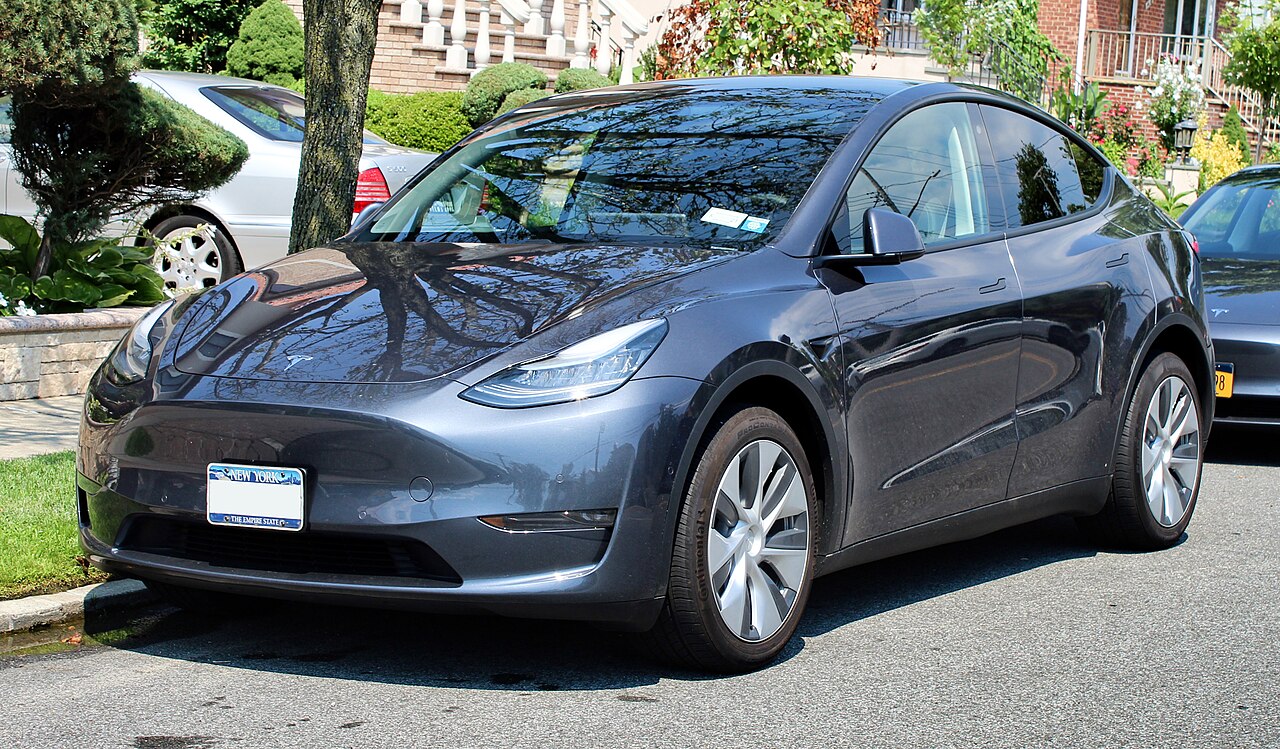
Tesla Model Y 2020

Electric Vehicle

Tesla Model Y 2020

12 source-linked failure reports. Most reported: Electrical system failure. Typical failure around 3.1 yr.

Reliability signal B · Early signal · data confidence Low

12 confirmed failure reports

Reliability summary

What is likely to go wrong, when it happens, and how expensive it can be — from source-linked failure reports. Counts are reports in our database, not a population failure rate.

Reliability signal

B

12 confirmed failure reports · Early signal · Data confidence: Low

Most common issue
Electrical system failure
Typical first failure
3.1 yr
Median of confirmed reports with timing
Median repair cost
—
Reported costs only · market varies
Highest reported repair
—
Not a quote · costs differ by country

What breaks?

Failure types

Click a type in the reports section below to filter.

  • Electrical system failure5 · 41.7%
  • Other4 · 33.3%
  • Steering failure1 · 8.3%
  • Airbag / restraint failure1 · 8.3%
  • Structure / body failure1 · 8.3%

When does it break?

Failure timing

Months after purchase, using reports that included timing.

What does it cost?

Reported repair costs

Distribution of owner-reported repair costs— not a quote or guarantee. Labor and parts prices vary by country.

No reported repair costs yet for this model.

Median months to failure

37.5

Failure reports

12

View →

Median repair cost

—

Still recommend

—

% repaired

—

% mfr warranty

—

% extended warranty

—

% support helpful

—

Use these reports as a risk signal, then check current listings before you buy.

Search this model on Amazon

As an Amazon Associate, After Warranty may earn from qualifying purchases.

What breaks?

What breaks? · reports

Electrical system failure

ELECTRICAL SYSTEM,VEHICLE SPEED CONTROL,VISIBILITY/WIPER

36 months

Government / agencyIndexed Oct 9, 2026Source-linkedVerify source — NHTSA complaint #11527838

During phone calls, the system would start making sparking noises and stall the calls. While navigation was input parts of the screen would disappear. While backing up, the rear cameras would freeze and stall. The rear camera freezing had caused us to get into an accident, and caused us to have 4 near misses. When I was trying to download the latest software release, the software download froze and never downloaded. I started to drive to the Tesla dealership and as I was doing so, the screen picture of my vehicle disappeared along with the gear shift indicator, the surrounding cameras failed. Then when I put on my turn signal, the sound disappeared. Then eventually the indicator disappeared. The entire screen froze with no information, and then went black while I was driving to the Tesla dealership. The system was black and finally did a reboot after 4 minutes, all while I had no display of my speed. I took it into the dealership, and the checkin girl was concerned about the safety and gave me a loaner. The technician was not really concerned and said it was not able to replicate the issue and said there was no safety issue as you can still drive the car. This is not correct as you do not have the speed indication when your screen freezes or goes black. I sent them pictures as the screen kept doing one thing after the other in a matter on one drive from my home to the dealership in 15 minutes. This is similar to the other recalls that Tesla had to make on the model S and the Model X and some model Y's. This should have been taken care of under the current recalls for the infotainment system that the other models years were facing as it is giving the same issues on my model.

VerifiedEvidence ★★★★☆
View report details

Months until failure

36 months

Repair cost

Not stated

Repaired

Not stated

Manufacturer warranty

Not stated

Extended warranty

Not stated

Support helpful

Not stated

Would recommend

Not stated

AI extraction confidence

90%

Verification status

Verified

Evidence quality

★★★★☆ (4/5)

Discussion

Other

LANE DEPARTURE

29 months

Government / agencyIndexed Oct 9, 2026Source-linkedVerify source — NHTSA complaint #11494262

In Tesla’s from model years before 2021, the side “repeater cameras” that are rear facing suffer from a light-leak of the blinker. There are three small holes in the PCB circuit board that allow light from the blinker to leak into the camera at night. Tesla subsequently fixed this problem, first by applying a sticker over the holes in the circuit board, and later by redesigning the part entirely. But this “light leak” problem exists on hundreds of thousands of cars. There are two problems with this: 1) Tesla has now changed their “Autopilot” and “Full Self Driving” software to a Tesla Vision system that ONLY uses cameras for the autopilot features, including lane keeping and lane changes. They no longer use ultrasonic sensors or forward looking radar, even though it is still installed on these cars. This reliance on vision makes it impossible for the Tesla side facing cameras to see when the blinker is turned on. This can result in unpredictable behavior when changing lanes or turning at night with autopilot engaged, including unpredictable or erratic driving where the car abandons a lane change mid course and swerves back into the lane. 2) Even when autopilot is not engaged, the blind spot monitoring in this car consists of a pop up window on the center screen showing the side view camera when the turn signal is engaged. At night, with the blinker on, the driver sees a bright light flashing intermittently in the side view camera. This is very distracting and potentially hazardous to the driver. Tesla has refused to replace the cameras on my car under warranty because they state the cameras are “neither a defect of materials nor workmanship” and are an “expected condition based on the inherent capability of the camera design”.

VerifiedEvidence ★★★★☆
View report details

Months until failure

29 months

Repair cost

Not stated

Repaired

Not stated

Manufacturer warranty

Not stated

Extended warranty

Not stated

Support helpful

Not stated

Would recommend

Not stated

AI extraction confidence

90%

Verification status

Verified

Evidence quality

★★★★☆ (4/5)

Discussion

Electrical system failure

POWER TRAIN,ELECTRICAL SYSTEM,FUEL/PROPULSION SYSTEM

3 months

Government / agencyIndexed Oct 9, 2026Source-linkedVerify source — NHTSA complaint #11354647

Incident: car shutdown and power failure with little warning. Time/date/place of incident: 9/7/2020, approximately 5:20PM in livermore, ca. While driving at a speed of approximately 45 MPH eastbound on w jack london blvd (past wolf house drive), the car's computer displayed an "unable to drive" message (error code DI_A137) and instructed us to pull over. Since we were on a 2-LANE road with no shoulder we proceeded to the nearest driveway (turning left to a driveway at ~1105 w jack london blvd). The car vibrated violently then shutdown. The estimated time between the initial warning and shutdown was only about 5 to 10 seconds. Other error codes/messages displayed were "power reduced" (DIR_A126) and "vehicle shutting down" (DI_A063). We called Tesla roadside assistance from the vehicle and were instructed to power cycle the car by having all passengers and driver exit the car, close all doors, then have the driver enter and step on the brake. We did this and the car restarted as normal. We drove home for about 45 minutes without incident, but we were obviously concerned that this could happen again, so we kept to the right lanes whenever possible and Limited speed. Other information: about 20 minutes prior to this incident we had charged the vehicle at the livermore Tesla Supercharger. It was also a record hot day (111 f). This is a new car purchased in July 2020 and at the time the odometer was approximately 1,300 miles. The earliest service appointment I could get is scheduled for 9/17/2020, so I do not have any additional info from Tesla on why this happened, or how this will be repaired. The service agent mentioned a firmware failure as a possible cause. We were fortunate to be able to get off the road before the car completely stopped but if this happened on a freeway, we May have been in a high speed crash with a stalled car.

VerifiedEvidence ★★★★☆
View report details

Months until failure

3 months

Repair cost

Not stated

Repaired

Not stated

Manufacturer warranty

Not stated

Extended warranty

Not stated

Support helpful

Not stated

Would recommend

Not stated

AI extraction confidence

90%

Verification status

Verified

Evidence quality

★★★★☆ (4/5)

Discussion

Steering failure

STEERING,SUSPENSION,WHEELS

18 months

Government / agencyIndexed Oct 9, 2026Source-linkedVerify source — NHTSA complaint #11447921

My wife made a left turn onto Agana Drive from Patterson Avenue in Santa Barbara, California a few blocks our home. After coming to a complete stop before making the turn, she drove about 150 feet when the car swerved to the right and the right rear passenger side of our Tesla Model Y hit left rear driver’s side of another car (BMW). I drove over to assist her and it appears from the AAA tow truck driver that a part of the axle on the right passenger side rear wheel broke later confirmed by my insurance agent and my auto mechanic. It was surprising since she was had completed the turn, was driving slowly straight on Agana Drive at approximately 25mph when this part broke. Apparently, nobody was seriously injured, the parked car had nobody in it and no real estate property damage appears to have occurred. was knocked up and over the curb due to the force of the impact braking the other car's rear axle and bending the frame. Our car is still being repaired a month later. Tesla appears to know about the problem since, according to the National Highway Traffic Safety Administration (NHTSA), there is a recall scheduled for 2020-2021 Tesla Model Y cars with a recall date of 2021-11-20, recall no. 21V912000, recall notification stating Tesla, Inc (Tesla) is recalling certain 2020-2022 Model Y vehicles. The front and rear suspension knuckles may fracture, causing the suspension links to separate, recall consequence stating Suspension links that separate can reduce vehicle stability and control, increasing the risk of a crash and a recall action stating Tesla Service will inspect and replace the knuckles as necessary, free of charge. Owner notification letters are expected to be mailed 18 January 2022. Owners may contact Tesla customer service at 1-877-798-3752. Tesla’s number for this recall is SB-21-31-004. Contact for more details and information.

VerifiedEvidence ★★★★☆
View report details

Months until failure

18 months

Repair cost

Not stated

Repaired

Not stated

Manufacturer warranty

Not stated

Extended warranty

Not stated

Support helpful

Not stated

Would recommend

Not stated

AI extraction confidence

90%

Verification status

Verified

Evidence quality

★★★★☆ (4/5)

Discussion

Airbag / restraint failure

AIR BAGS,SEAT BELTS

0 months

Government / agencyIndexed Oct 9, 2026Source-linkedVerify source — NHTSA complaint #11406730

A few weeks after I bought my car in early June 2020 I got an error on my screen that said the passenger safety restraint system had failed. It took Tesla several weeks to send a mobile technician to my house to look at the error, they kept rescheduling the appointment. By the time they showed up the error had gone away on its own. I felt very unsafe having any passenger in my car during the first few weeks of having my car. When the mobile tech finally looked at it on July 1ST 2020, he advised me to take it in to the service center because he didn't have the parts or tools required to diagnose it further. I sent Tesla several text messages to 408 560 5674 asking to have my seatbelt module replaced asap, indicating the error as a passenger seatbelt restraint system failure. I also sent the Santa clara service center an email July 2ND the day after the mobile tech visited. The earliest appointment they'd let me schedule was a almost a month out, on July 29TH. - my passenger restraint system failed on my new Model y. I had a mobile tech come look at it and he told me I need to take it to the dealer. I made an appointment and the earliest I can get you to fix it is July 29TH? This is unacceptable for a safety issue. Please find some time to get me in sooner or I will have to get the ntsb involved. - when Santa clara finally looked at it in 2020, they told me the mobile technician left no notes about the issue and that too much time had passed to diagnose the issue because the logs were deleted. I was pretty upset but they convinced me to take it home and wait for the issue to reproduce itself again. Finally this past week it happened again on March 28TH I was driving down to Santa barbara from san jose and this time safety restraint failure popped up in the middle of my drive. They said they fixed it but this car is dangerous and I don't feel safe in it.

VerifiedEvidence ★★★★☆
View report details

Months until failure

0 months

Repair cost

Not stated

Repaired

Not stated

Manufacturer warranty

Not stated

Extended warranty

Not stated

Support helpful

Not stated

Would recommend

Not stated

AI extraction confidence

90%

Verification status

Verified

Evidence quality

★★★★☆ (4/5)

Discussion

Other

UNKNOWN OR OTHER,FORWARD COLLISION AVOIDANCE,LANE DEPARTURE

5 months

Government / agencyIndexed Oct 9, 2026Source-linkedVerify source — NHTSA complaint #11378667

My car is a 2020 Model y, delivered on June 27, 2020. This fall, I've had an issue crop up that looks like it's been addressed in the past (at least for models s, x and 3 before March 31, 2019). The problem is that on several occasions (specifically on 11/26/20) while driving on city streets and with humid and cool weather (here in iowa) I've had a report on my display indicating that the b pillar camera is obscured. This, of course, would disable auto drive (including auto lane change) but I'm also concerned that this blind spot May mean that lane change protection during traffic aware cruise control (i.e. *Not* auto drive) will not work, or not be very effective, either. The only formal reference I can locate for this problem is service bulletin SB-20-12-002 but the remedy proposed there has apparently been implemented on all production vehicles starting on March 31, 2019. Well, that solution for this design defect clearly does not work. On November 26, 2020 (the date of the first occurrence of this issue on my Model y), I requested a service appointment. This was based on the seriousness of the problem given the display warning I received which requested that I stop the vehicle and clear the obscuration immediately. Upon stopping, a glance at the b pillar camera location showed that the issue was one of condensation on the inside of the protective glass over the camera (see attached). From online forums, it's clear that I'm far from alone in having this issue. My service appointment date was originally set for December 17, 2020 but has been canceled as of today. The service center handling my requests is saying that this is "normal" operation of the vehicle and, while the camera May be operating as designed, I disagree that it should be working this way since it removes blind spot awareness from the vehicle's software system and the occurrence is random.

VerifiedEvidence ★★★★☆
View report details

Months until failure

5 months

Repair cost

Not stated

Repaired

Not stated

Manufacturer warranty

Not stated

Extended warranty

Not stated

Support helpful

Not stated

Would recommend

Not stated

AI extraction confidence

90%

Verification status

Verified

Evidence quality

★★★★☆ (4/5)

Discussion

Electrical system failure

ELECTRICAL SYSTEM,UNKNOWN OR OTHER

58 months

Government / agencyIndexed Oct 9, 2026Source-linkedVerify source — NHTSA complaint #11683008

Problem: I purchased a 2020 Tesla Model Y Long Range AWD, EPA-certified at 316 miles. My vehicle consistently delivers only 120–150 miles per full charge, and just ~80 miles from the recommended daily 80% → 20% SOC window. This is less than half the advertised/certified range. I have meticulously logged trips since July 2025, recording start/end battery %, mileage, Wh/mi, and driving conditions. Even after following Tesla’s own efficiency guidance (Chill Mode, conservative HVAC, no Sentry Mode, no Cabin Overheat Protection, speeds at/below limits), the shortfall is repeatable. Company’s Response: Tesla repeatedly stated: No warranty action unless there is a system alert. My range loss is due to “short trips” or “driving habits.” They “cannot go off EPA numbers,” though Tesla advertises the EPA rating. To review my logs, I must pay $235/hour, while I cannot access my own internal vehicle data. On Aug 7, Tesla told me 33% SOC should equal their quoted range. In reality, I received only ~40 miles before needing to recharge. At my Aug 21 service visit, after 1.5 hours onsite, I was again told results were “normal,” despite my detailed logs showing otherwise. Why It Matters: EPA ratings are federally mandated certification numbers. Dismissing them as “not applicable” contradicts federal law and advertising practices. A consumer should not accept half the advertised range while being told it is “normal.” Charging $235/hour to access my usage data blocks validation of Tesla’s claims. What I Request: Investigation into whether Tesla is failing to deliver its EPA-certified range. Enforcement of Tesla’s 8-year/120,000-mile battery warranty, as my results suggest excessive degradation or defect. Requirement that Tesla provide consumers access to their own vehicle/battery data without fees. Written clarification of Tesla’s real-world range obligations under Arizona conditions. Evidence Available

VerifiedEvidence ★★★★☆
View report details

Months until failure

58 months

Repair cost

Not stated

Repaired

Not stated

Manufacturer warranty

Not stated

Extended warranty

Not stated

Support helpful

Not stated

Would recommend

Not stated

AI extraction confidence

90%

Verification status

Verified

Evidence quality

★★★★☆ (4/5)

Discussion

Structure / body failure

VISIBILITY

58 months

Government / agencyIndexed Oct 9, 2026Source-linkedVerify source — NHTSA complaint #11657285

Component or System Failure: The HVAC system, specifically the compressor and supermanifold, failed on my 2020 Tesla Model Y. Tesla retained the replaced components during service, so they are not available for inspection. Safety Risk: This failure caused a loss of cabin heating and prevented proper windshield/window defrosting during cold weather, severely impairing visibility and creating unsafe driving conditions. Critically, this system also regulates battery heating. Without it, battery performance in cold temperatures can be compromised, reducing driving range, impairing charging capability, and risking vehicle operability in freezing conditions. Problem Confirmation: Tesla service technicians diagnosed and confirmed failure of the compressor and supermanifold. Full replacement was required to restore proper HVAC and battery heating functions. Inspections Conducted: The vehicle was inspected by Tesla service both before and after the failure. Prior to my ownership, the vehicle had been brought in by a family member (prior owner) for HVAC performance concerns. HVAC issues reappeared around 28,000 miles, but I was unable to immediately schedule repairs due to the Tesla Service Center being approximately 1 hour and 15 minutes away and personal scheduling constraints. The vehicle was finally repaired on April 24, 2025, at 38,511 miles. Warning Indicators: Before the failure, HVAC symptoms included inconsistent heating, occasional HVAC warnings, and degraded cold weather performance. Additional Context: I was required to pay $2,992.89 for the repair out of pocket, as the vehicle was just outside of warranty. Due to this failure, I drove for an extended time without reliable cabin heat, defrosting, or proper battery heating in winter conditions, exposing me to serious safety risks. Tesla has acknowledged HVAC component contamination issues in official service bulletins, suggesting a known systemic problem.

VerifiedEvidence ★★★★☆
View report details

Months until failure

58 months

Repair cost

Not stated

Repaired

Not stated

Manufacturer warranty

Not stated

Extended warranty

Not stated

Support helpful

Not stated

Would recommend

Not stated

AI extraction confidence

90%

Verification status

Verified

Evidence quality

★★★★☆ (4/5)

Discussion

Other

FORWARD COLLISION AVOIDANCE

42 months

Government / agencyIndexed Oct 9, 2026Source-linkedVerify source — NHTSA complaint #11574636

I am writing to formally file a complaint against Tesla, Inc. concerning a significant issue that has arisen following a software update issued to Model Y and Model 3 vehicles in early December. I am a Tesla Model Y owner, and following this update, I have experienced complete failure of critical vehicle systems including cameras, navigation, lane departure warnings, auto braking, forward collision warning, adaptive cruise control, windshield wipers, self-driving features, and car location data. The malfunction of these essential features not only compromises the safety and functionality of the vehicle but also indicates a severe underlying problem with the vehicle's computer system. The cost to replace the affected computer in my vehicle amounted to $2,400. However, upon reviewing discussions on Tesla forums, I have discovered that this is not an isolated incident; numerous other owners are facing similar failures, with some repair bills exceeding $3,000. Given the widespread nature of these issues and their chronological association with the December software update, there appears to be a high correlation between the update and the catastrophic failure of the vehicle computers. The financial burden of these repairs has unjustly fallen on consumers, although it is my belief that Tesla should be held accountable for these failures, given the direct link to their software update. I urge the National Highway Traffic Safety Administration (NHTSA) to investigate this matter thoroughly. It is critical to ascertain whether the December software update directly caused the failures of the vehicle's computer systems and to ensure that Tesla takes appropriate responsibility for the safety and reliability of their vehicles. This includes compensating owners for the costs incurred due to these failures and implementing measures to prevent such incidents in the future. Thank you for your attention to this serious matter.

VerifiedEvidence ★★★★☆
View report details

Months until failure

42 months

Repair cost

Not stated

Repaired

Not stated

Manufacturer warranty

Not stated

Extended warranty

Not stated

Support helpful

Not stated

Would recommend

Not stated

AI extraction confidence

90%

Verification status

Verified

Evidence quality

★★★★☆ (4/5)

Discussion

Electrical system failure

ELECTRICAL SYSTEM,FUEL/PROPULSION SYSTEM

39 months

Government / agencyIndexed Oct 9, 2026Source-linkedVerify source — NHTSA complaint #11545755

Vehicle has 51,126 mi as of this writing. When new (June 2020) 250 miles of freeway range was typical in typical California weather for an efficiency rating of 280 Wh/mi for 100% to 1% state of charge (SoC). This was tested repeatedly, numerous times, on multiple road trips. At ~12K miles into ownership, OEM tires were swapped as they were dangerously useless in rain and snow. Repeated calculations confirmed ~10% range loss. This meant that average Wh/mi consumption went from about ~280 Wh/mi to about ~308 Wh/mi, for a real world freeway range reduction to about 227 from say 250 (again 100% to 1% SoC). This was expected and accepted. Last 2 years were spent in New England during which freeway range started to drop precipitously, reaching a low of 166 miles (100% to 1% state of charge; about 420 Wh/mi) at freezing temperatures; verified across two identical road trips. Cold weather range was expected, but in retrospect, this was far too much of a drop. Now back in California, range has dropped even further and settled at about ~150 miles -- or an abysmal 450 Wh/mi -- i.e., a 40% drop from the OEM tires, and a 34% drop from the new tires. All charging stats (and Tesla's remote tests) show the battery is at full capacity (69 kWh is a 1% to 100% recharge and the battery is rated at 70 kWh). Tesla claims no faults, and assign blame to driver (high freeway speeds; Sentry Mode; climate control; etc). Tesla now threatening -- as indicated in recent class action lawsuit -- to charge $275/hr if I continue to press the issue, even though I have explained rental Model Y vehicles have vastly better range. I have insisted on several options: (A) Pay for a loaner to test. - NO (B) I will rent another Model Y from Hertz and report back with data. - NO (C) Acknowledge the problem, I want to pay to fix it. - NO (D) Acknowledge the problem, but you don't know how to fix it. - NO It is clear I am now being strong-armed by their Diversion Team.

VerifiedEvidence ★★★★☆
View report details

Months until failure

39 months

Repair cost

Not stated

Repaired

Not stated

Manufacturer warranty

Not stated

Extended warranty

Not stated

Support helpful

Not stated

Would recommend

Not stated

AI extraction confidence

90%

Verification status

Verified

Evidence quality

★★★★☆ (4/5)

Discussion

Other

FORWARD COLLISION AVOIDANCE

73 months

Government / agencyIndexed Oct 9, 2026Source-linkedVerify source — NHTSA complaint #11752764

This is about a 2020 Tesla Model Y, with HardWare3 (HW3) Full-Self-Driving (FSD) feature. The older HW3 FSD-enabled Model Y cars started getting the new "v14 Lite" FSD updates recently - I got mine a few days ago. I immediately noticed a safety concern with the v14 Lite. Previous versions of FSD allowed me to set the maximum speed that the car would drive in the FSD mode - I can adjust it using the "wheel button" on my right thumb on the steering wheel, and the car would not exceed the maximum speed I choose. However, after the update to v14 Lite, the wheel button no longer controlled the maximum speed. Instead, it controlled the "speed profile" ("Sloth", "Chill", "Standard", "Hurry" are the options in my car). Regularly in highway driving, even in the Standard mode, the car would speed up to go well past the speed limit, more than 10mph over the speed limit, seemingly to match the speed of the rest of the traffic (69mph on a 55mph highway). This felt very uncomfortable. I tried to adjust the max speed down like I was used to, but the car instead switched to a different profile, "Chill", and rapidly slowed down to 4mph below the speed limit (51mph in this case=. The speed reduction was so sudden that it also felt dangerous (car behind me would have to break quickly to not hit me), and I didn't want to be driving well below the speed limit (also dangerous). Under "Self Driving" settings menu, there is also a feature called "Speed Limit", that used to allow you to set the "default" speed limit for FSD driving (for instance, +3mph above the speed limit). You can adjust it up and down with the right thumb wheel beyond that, but it set the default basic max speed limit for FSD. After the v14 Lite update, the FSD completely ignores this speed limit, and happily accelerates well beyond that. Not it seems like the "speed limit" feature is simply for warning the driver to not exceed the pre-determined speed limit when controlling the car. FSD simply ignores it.

VerifiedEvidence ★★★★☆
View report details

Months until failure

73 months

Repair cost

Not stated

Repaired

Not stated

Manufacturer warranty

Not stated

Extended warranty

Not stated

Support helpful

Not stated

Would recommend

Not stated

AI extraction confidence

90%

Verification status

Verified

Evidence quality

★★★★☆ (4/5)

Discussion

Electrical system failure

ELECTRICAL SYSTEM,ENGINE

48 months

Government / agencyIndexed Oct 9, 2026Source-linkedVerify source — NHTSA complaint #11670914

My 2020 Tesla Model Y Long Range/AWD vehicle has 46,000 miles and can no longer recharge its battery (engine) with an approved charger (L2) due to a commonly failed part inside the battery. This part is called PCS (Power Conversion System). This device attached to the Tesla battery is used to convert power from a charger which is AC (household alternating current) into DC (Direct Current) the battery can understand. This error appeared for the first time on [XXX] at [XXX]. This critical part has failed in thousands of Tesla vehicles, some multiple times easily verified by thousands of customer complaints online. The PCS is NOT a consumable part - such as a tire, wiper blades, brake pads, etc. There is nothing the vehicle Owner can do to prevent the PCS failure. The Cost to repair/replace the PCS part(s) is ~ $3,000 and may fail again after replacement. As required by Tesla, I scheduled a service appointment through their phone app, and received an estimate of ~$280.00 to repair my vehicle on June 26, 2025 at the Irvine, CA Tesla Service Center 2801 Barranca Pkwy. After diagnosis, I was informed the cost to fix/repair the PCS part in my vehicle so that I could charge and drive it, would be ~$3,000. The Manager Ryan Sutherland (949) 404-2989, further stated the repair would not be covered under my Vehicle Tesla Warranty (Tesla battery or drive unit warranty that does not expire until [XXX]). I tried to contact Tesla corporate for assistance at resolutions@tesla.com and did not receive a response but instead was contacted by service manager Ryan Sutherland via email confirming Tesla's warranty position. Tesla is essentially the only service/repair resource available for these vehicles. This repair is obviously due to a faulty/defective PCS or faulty design by Tesla affecting thousands of vehicles and should covered under my vehicle warranty so that it can be driven. [XXX] INFORMATION REDACTED PURSUANT TO THE FREEDOM OF INFORMATION ACT (FOIA), 5 U.S.C. 552(B)(6)

VerifiedEvidence ★★★★☆
View report details

Months until failure

48 months

Repair cost

Not stated

Repaired

Not stated

Manufacturer warranty

Not stated

Extended warranty

Not stated

Support helpful

Not stated

Would recommend

Not stated

AI extraction confidence

90%

Verification status

Verified

Evidence quality

★★★★☆ (4/5)

Discussion

Compare nearby models

Similar products

Stay ahead of failures

Notify me about this model

Get an email when a new source-linked failure report is published for the Tesla Model Y 2020.

We only email when a new published report is added for Tesla Model Y 2020. No spam, unsubscribe by contacting support.

Contribute signal

Had a failure with this model?

Add your experience and help future shoppers understand what happens after the warranty.

Submit your experience