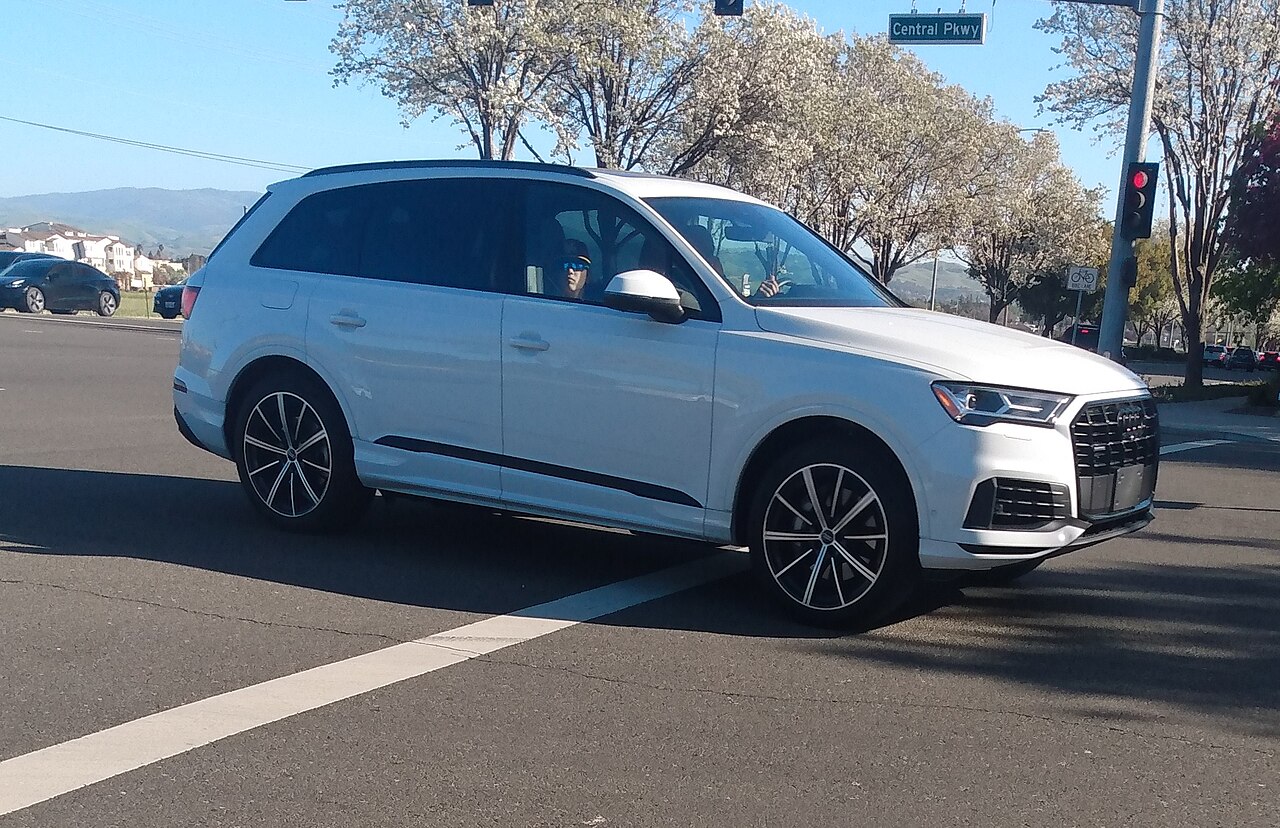
Audi Q7 2021

Car

Audi Q7 2021

12 source-linked failure reports. Most reported: Electrical system failure. Typical failure around 4.1 yr.

Reliability signal A · Early signal · data confidence Low

12 confirmed failure reports

Reliability summary

What is likely to go wrong, when it happens, and how expensive it can be — from source-linked failure reports. Counts are reports in our database, not a population failure rate.

Reliability signal

A

12 confirmed failure reports · Early signal · Data confidence: Low

Most common issue
Electrical system failure
Typical first failure
4.1 yr
Median of confirmed reports with timing
Median repair cost
—
Reported costs only · market varies
Highest reported repair
—
Not a quote · costs differ by country

What breaks?

Failure types

Click a type in the reports section below to filter.

  • Electrical system failure9 · 75%
  • Engine failure1 · 8.3%
  • Other1 · 8.3%
  • Structure / body failure1 · 8.3%

When does it break?

Failure timing

Months after purchase, using reports that included timing.

What does it cost?

Reported repair costs

Distribution of owner-reported repair costs— not a quote or guarantee. Labor and parts prices vary by country.

No reported repair costs yet for this model.

Median months to failure

49.5

Failure reports

12

View →

Median repair cost

—

Still recommend

—

% repaired

—

% mfr warranty

—

% extended warranty

—

% support helpful

—

Use these reports as a risk signal, then check current listings before you buy.

Search this model on Amazon

As an Amazon Associate, After Warranty may earn from qualifying purchases.

What breaks?

What breaks? · reports

Electrical system failure

ELECTRICAL SYSTEM,SERVICE BRAKES,ENGINE

60 months

Government / agencyIndexed Oct 9, 2026Source-linkedVerify source — NHTSA complaint #11746888

My independent repair shop has just diagnosed a coolant leak weeping from the vacuum line connection at the water pump; they referred to this problem as “coolant migration”. As documented extensively by Audi in Technical Service Bulletin 19-23-45 (2070349/2), this indicates an internal seal failure of the water pump, causing pressurized engine coolant to migrate directly into the vehicle’s vacuum system. While I understand that my vehicle is technically past its 4-year factory warranty timeline, a mechanical failure of this nature at just 43,000 miles is highly premature and points to a known manufacturer design defect rather than standard wear and tear. More importantly, this defect poses an immediate, severe safety risk. Because the vacuum system directly services the power brake booster, the migration of coolant into these lines risks catastrophic contamination of the braking system. This results in a stiff brake pedal and compromised vehicle stopping ability. I am deeply concerned about operating this vehicle with an active, manufacturer-acknowledged safety hazard affecting my brakes. At this time, I have not had this problem confirmed by the dealer, but plan to in the next week. The vehicle it available for inspection upon request.

VerifiedEvidence ★★★★☆
View report details

Months until failure

60 months

Repair cost

Not stated

Repaired

Not stated

Manufacturer warranty

Not stated

Extended warranty

Not stated

Support helpful

Not stated

Would recommend

Not stated

AI extraction confidence

90%

Verification status

Verified

Evidence quality

★★★★☆ (4/5)

Discussion

Electrical system failure

ELECTRICAL SYSTEM,VEHICLE SPEED CONTROL

61 months

Government / agencyIndexed Oct 9, 2026Source-linkedVerify source — NHTSA complaint #11755437

On startup, the instrument cluster (Audi Virtual Cockpit) takes an abnormally long time to illuminate. When it does come on, the check engine light and multiple other warning indicators are illuminated. First noticed about a month ago when the panel with the speed indicator wouldn't light up or took a long time to illuminate. I took the car to three dealerships before Audi mentioned that this is a manufacturing issue. The vehicle was taken to [XXX] Audi, Marietta, GA (Repair Order XXX) in XXX. The technician's diagnostic notes recorded a fault described as "control module for instrument cluster — optical data bus — no communication." The dealer referenced an internal Technical Service Bulletin describing an intermittent hardware defect in the Audi Virtual Cockpit logic module, attributed to a manufacturing/semiconductor issue at the supplier level. Per the TSB, if the instrument cluster's production date is before XXX, the cluster must be replaced. The dealer quoted $3,093.81 to replace the instrument cluster assembly. I am aware that NHTSA recall 25V201 (Audi internal number 90VC) covers 2021 Q7 vehicles for a related virtual cockpit shutdown defect, remedied with a free software update. INFORMATION REDACTED PURSUANT TO THE FREEDOM OF INFORMATION ACT (FOIA), 5 U.S.C. 552(B)(6)

VerifiedEvidence ★★★★☆
View report details

Months until failure

61 months

Repair cost

Not stated

Repaired

Not stated

Manufacturer warranty

Not stated

Extended warranty

Not stated

Support helpful

Not stated

Would recommend

Not stated

AI extraction confidence

90%

Verification status

Verified

Evidence quality

★★★★☆ (4/5)

Discussion

Engine failure

ENGINE

53 months

Government / agencyIndexed Oct 9, 2026Source-linkedVerify source — NHTSA complaint #11705219

- Engine water pump failure and coolant intrusion into the vacuum system. Parts were replaced on 5 Nov 2025 and possible still at the dealer's location. - The defect poses the following safety risks: It resulted in contamination of vacuum lines; potential for sudden engine stalling or loss of power while driving; potential for catastrophic damage to engine-management systems dependent on vacuum integrity; potential for damage to emissions and combustion-control systems; potential for reduced braking system performance if vacuum supply is compromised, expensive and unexpected component failures, and possible recurrence since the cause appears related to design rather than normal wear. Any failure can create cascading hazards affecting safety-critical functions. - The problem was confirmed by an authorized Audi dealer. Dealer name and contact info can be provided upon request. - I do not know if the dealer delivered the involved parts to the manufacturer or insurance representative for inspection. Police or others did not inspect it. - There were no warning lights, messages, or other symptoms of the problem prior to the failure. It was identified by the Audi technician on 5 November 2025 while the vehicle was in the dealer for other services. The failure occurred at 47,855 miles which is far below the average lifespan of a water pump or vacuum system.

VerifiedEvidence ★★★★☆
View report details

Months until failure

53 months

Repair cost

Not stated

Repaired

Not stated

Manufacturer warranty

Not stated

Extended warranty

Not stated

Support helpful

Not stated

Would recommend

Not stated

AI extraction confidence

90%

Verification status

Verified

Evidence quality

★★★★☆ (4/5)

Discussion

Electrical system failure

ELECTRICAL SYSTEM,SERVICE BRAKES,ENGINE

19 months

Government / agencyIndexed Oct 9, 2026Source-linkedVerify source — NHTSA complaint #11503637

While driving the vehicle, error messages began appearing on the in-panel dashboard display. At first, a yellow/orange battery icon appeared with the message "Electrical system: malfunction! Please contact Service". Within an hour, the car experienced another electrical system malfunction (red battery icon appeared with the message "Electrical system: malfunction! Safely stop vehicle") along with a host of other error messages (Brakes: malfunction, Steering: malfunction, Parking brake: malfunction, Vehicle lights: malfunction, Stabilization control (ESC/ABS): malfunction, Drive system: malfunction, Transmission: malfunction). The car was undrive-able at this point, coasted to a stop and could not be restarted while on an active roadway. The car had to be towed to the dealership, where it still remains today. * Components or systems malfunctioned: Electrical system, brakes, steering, parking brake, vehicle lights, stabilization control (ESC/ABS), drive system, transmission. It is available at the Audi dealership service location for inspection * My safety was put in significant danger due to the car shutting down on an active roadway with no control over the vehicle. * The problem has been confirmed by the dealer. * The vehicle has been inspected by the dealership service center but not by police or insurance representatives. * Many warning lamps and messages appeared within an hour of the car becoming inoperable.

VerifiedEvidence ★★★★☆
View report details

Months until failure

19 months

Repair cost

Not stated

Repaired

Not stated

Manufacturer warranty

Not stated

Extended warranty

Not stated

Support helpful

Not stated

Would recommend

Not stated

AI extraction confidence

90%

Verification status

Verified

Evidence quality

★★★★☆ (4/5)

Discussion

Other

UNKNOWN OR OTHER

50 months

Government / agencyIndexed Oct 9, 2026Source-linkedVerify source — NHTSA complaint #11681319

The recall involves the virtual cockpit instrument cluster. Audi requires the use of the vehicle’s USB port to complete the update. However, my USB system is not functioning properly. •The Issue: Audi has refused to perform the recall because of the inoperable USB. They have stated that without the USB, they cannot install the update. They are not offering any alternative method or solution to ensure that this recall is completed. •Why This is a Concern: A recall is issued because of a safety-related defect. The manufacturer is obligated under federal law to remedy the defect at no cost to the owner. By refusing to provide a solution beyond requiring a functioning USB, Audi is failing its duty to correct a known safety defect. This leaves me driving a vehicle with an unresolved recall. •My Position: It is unreasonable and negligent for Audi to deny responsibility simply because the recall requires a USB port that is not functioning. The recall repair should be performed regardless, whether through replacement of the port, use of alternate diagnostic tools, or another approved method. By refusing to act, Audi is leaving my vehicle unrepaired, unsafe, and in violation of recall compliance obligations. Requested Action: I respectfully request that the NHTSA investigate Audi’s handling of this recall and require them to provide an effective remedy at no cost to me, in accordance with federal safety recall requirements.

VerifiedEvidence ★★★★☆
View report details

Months until failure

50 months

Repair cost

Not stated

Repaired

Not stated

Manufacturer warranty

Not stated

Extended warranty

Not stated

Support helpful

Not stated

Would recommend

Not stated

AI extraction confidence

90%

Verification status

Verified

Evidence quality

★★★★☆ (4/5)

Discussion

Electrical system failure

ELECTRICAL SYSTEM

52 months

Government / agencyIndexed Oct 9, 2026Source-linkedVerify source — NHTSA complaint #11699936

I am filing this complaint regarding a serious safety and mechanical issue involving my 2021 Audi Q7. The alternator on my vehicle was replaced by Audi in November 2024 as part of an official Audi recall. On October 22, 2025, less than one year later, the alternator failed while I was driving, causing the following safety hazards and damages: Sudden loss of battery power Complete battery drain Damage to the electrical stabilizer Vehicle shut down while driving Required towing Left me stranded on the road Another independent auto shop confirmed that the alternator failure directly caused the battery to fail. My vehicle is only four years old, and the battery should not fail under normal operation unless another component (such as the alternator) is defective. Audi of America refuses to cover the resulting damages, even though the alternator was replaced under their recall and failed prematurely. They have denied reimbursement for repairs, towing, and related expenses, despite clear evidence that the alternator caused the battery and electrical damage. This is a serious safety concern because the alternator failed without warning, and the vehicle lost electrical power while driving. I am requesting NHTSA to review this issue, as the failure of the recall-installed alternator may impact other Audi Q7 owners and may indicate a broader defect or improper recall repair. Thank you for your attention to this matter

VerifiedEvidence ★★★★☆
View report details

Months until failure

52 months

Repair cost

Not stated

Repaired

Not stated

Manufacturer warranty

Not stated

Extended warranty

Not stated

Support helpful

Not stated

Would recommend

Not stated

AI extraction confidence

90%

Verification status

Verified

Evidence quality

★★★★☆ (4/5)

Discussion

Electrical system failure

ELECTRICAL SYSTEM,ENGINE,FUEL/PROPULSION SYSTEM

41 months

Government / agencyIndexed Oct 9, 2026Source-linkedVerify source — NHTSA complaint #11625504

Driving on highway at 70 mph and high engine temp light came on. Said to pull over and continue to run car until temp decreased. I got over as quickly as I could ( no more than 1/4 of a mile) and sat on side of PA turnpike as engine cooled. I was at bottom of an exit ramp. I slowly proceeded up the ramp and warning came on again and red temp light reached again. I pulled right into the gas station at top of TP exit ramp. It still said to continue to run the car. I sat with my son in the car and ran the car in the shade. The temp was decreasing and then all my electrical lights came on, yellow battery warning light on and then suddenly the red battery light and all systems failed. Car turned off. Called AAA to take to my mechanic as Audi was a 3 hour wait for a tow and 3 weeks for service appointment with no loaners available. My certified mechanic said water pump completely dislodged. He replaced water pump, thermostat (which was already replaced bc it failed in year 2 of ownership). After repair, 48 volt battery would not take a charge. Assumed faulty alternator and/or battery. Alternator was already replaced once at year 1 as car died while driving as well. We had car towed to audi and they are reporting known issues with water pump but not issuing recalls. Also known issues with alternator repair parts that were used in year 1 but no warning to consumers. They are diagnosing problem now and if alternator and subsequent battery issue, it will be covered but not if battery issue comes back as electrical in nature.

VerifiedEvidence ★★★★☆
View report details

Months until failure

41 months

Repair cost

Not stated

Repaired

Not stated

Manufacturer warranty

Not stated

Extended warranty

Not stated

Support helpful

Not stated

Would recommend

Not stated

AI extraction confidence

90%

Verification status

Verified

Evidence quality

★★★★☆ (4/5)

Discussion

Electrical system failure

ELECTRICAL SYSTEM

56 months

Government / agencyIndexed Oct 9, 2026Source-linkedVerify source — NHTSA complaint #11723294

I am submitting this complaint regarding a safety-related recall on my Audi Q7 involving the alternator. The wording of the recall is significantly underplayed, written off as an emissions issues. When in reality this is a life threatening flaw in the alternator. It is highly concerning that Audi isn’t being transparent with people who are driving these cars and risking their lives while doing so. This is not simply emissions, in reality, the car can totally malfunction while in operation. The entire electrical system fails and the car completely stops responding to the driver, fully stops and dies no matter where you are driving or at what speed. While driving on the highway, my vehicle experienced a catastrophic electrical failure caused by the recalled alternator, which caused the car to completely stop and it would not restart in any way. This created a life-threatening situation for my family and me. As a result of this electrical failure, the vehicle’s battery was damaged, and Audi has acknowledged coverage of 90% for the battery repair. However, the voltage converter, which is part of the same charging system, was also damaged during the same event. Audi is refusing coverage for the $1,600 repair of the voltage converter, despite the damage being caused directly by the alternator failure. I believe this represents a significant safety risk, as the vehicle’s sudden loss of power could lead to serious injury or death. Additionally, the recall itself caused secondary damage that is being denied coverage, which is unfair and unsafe. I am requesting that NHTSA review this matter as a safety defect/recall-related failure, and ensure the manufacturer addresses all consequences of this recall-related defect, including coverage of secondary damage like the voltage converter.

VerifiedEvidence ★★★★☆
View report details

Months until failure

56 months

Repair cost

Not stated

Repaired

Not stated

Manufacturer warranty

Not stated

Extended warranty

Not stated

Support helpful

Not stated

Would recommend

Not stated

AI extraction confidence

90%

Verification status

Verified

Evidence quality

★★★★☆ (4/5)

Discussion

Electrical system failure

ELECTRICAL SYSTEM,SERVICE BRAKES,ENGINE

47 months

Government / agencyIndexed Oct 9, 2026Source-linkedVerify source — NHTSA complaint #11663107

I am reporting a severe defect in my 2020 Audi Q7 involving “coolant migration” due to a faulty water pump, a known issue in Audi models (Q7, S4, A6, 2013–2022). This poses critical safety risks due to sudden failure with minimal warning. My out-of-warranty Q7 showed minor coolant fouling near a solenoid, with normal coolant levels and no fluid added. The dealer quoted ~$6,000 to replace the water pump and vacuum system. This defect is highly dangerous due to: Sudden Power Loss: Coolant in the vacuum system impairs solenoids and lines, disrupting engine/turbo function. This can cause abrupt power loss, risking loss of control in traffic or at high speeds, potentially leading to collisions. Catastrophic Overheating: A failing water pump may halt coolant circulation, causing rapid engine overheating without warning, risking sudden engine shutdown and stranding drivers in hazardous conditions like highways. Brake Assist Failure: The vacuum system powers the brake booster. Contamination can reduce braking effectiveness, increasing pedal effort and stopping distances, heightening collision risks in emergencies. Emissions Control Issues: Coolant fouling affects PCV and EVAP systems, causing misfires, stalling, or increased emissions, potentially triggering check engine lights and compromising engine stability. Undetectable Progression: The defect often shows no clear symptoms or warnings until severe damage occurs. My vehicle had only minor fouling that could only be detected by visual inspection, yet extensive repairs were needed, indicating the issue’s stealthy nature, which prevents timely driver intervention. Systemic Issue: Forums and a class-action lawsuit confirm this defect across Audi models, yet owners face high repair costs post-warranty. This defect endangers drivers and others by risking vehicle failure, impaired braking, and unstable performance. I urge NHTSA to investigate and mandate a recall or extended warranty.

VerifiedEvidence ★★★★☆
View report details

Months until failure

47 months

Repair cost

Not stated

Repaired

Not stated

Manufacturer warranty

Not stated

Extended warranty

Not stated

Support helpful

Not stated

Would recommend

Not stated

AI extraction confidence

90%

Verification status

Verified

Evidence quality

★★★★☆ (4/5)

Discussion

Electrical system failure

ELECTRICAL SYSTEM,ENGINE

14 months

Government / agencyIndexed Oct 9, 2026Source-linkedVerify source — NHTSA complaint #11482522

I pulled out of the gym after using my key FOB to unlock and start vehicle. Got a warning asking if Key was in the car, it was, and warning went away. A 1/4 mile later, while the car was in drive and idle at a red light, the car completely shut/locked down and alarm started blaring saying there was no key. The key was in the car (it had just unlocked and started the car less than 4 minutes earlier). The car defaults to ON of an auto/on function (gas saving feature?), and I believe that becuase the car was waiting at the light, prompted the computer to misfire functions. I was stuck in traffic and could not get the car to start for over 3 lights length of time. I also found I had no control of the hazard lights. I was able to eventually get it to turn on, alarm persisted. I then drove it home with alarm still blaring and got my spare key, the alarm shut of briefly and then turned back on. I then drove it to Audi servicing while alarm blaring. They assessed the vehicle over the past 10 days and simply told me it was due to the key FOB battery dying. Meaning: they are telling me that this is normal and will continue to happen every time my battery dies. This is very dangerous. I don't know how/if they actually confirmed the battery was dead or simply changed it out. The key FOB battery dying should NOT cause a car, while in drive, to completely shut/lock down. This is a huge safety issue. Someone could have not seen me and rear ended me. Or if I was in traffic on the freeway and my FOB battery dies, then I would really be in trouble. I have other Audis and a FOB key dying has never caused a lock down. Once the car is in motion, the ability of the key fob to affect the ignition or engine should be zero. I believe this issue needs to be looked into and am not getting good response or action from AUDI. I do not feel safe driving a car that will lock down while in drive, and my concern extends to other people who may find themselves in this situation.

VerifiedEvidence ★★★★☆
View report details

Months until failure

14 months

Repair cost

Not stated

Repaired

Not stated

Manufacturer warranty

Not stated

Extended warranty

Not stated

Support helpful

Not stated

Would recommend

Not stated

AI extraction confidence

90%

Verification status

Verified

Evidence quality

★★★★☆ (4/5)

Discussion

Structure / body failure

VISIBILITY/WIPER

3 months

Government / agencyIndexed Oct 9, 2026Source-linkedVerify source — NHTSA complaint #11435082

[XXX] Mobile: [XXX] October 1, 2021 Audi Motor Sales USA, Inc. Re: Assurant Warranty Claim Number: [XXX] Dear Sir/Madam: I am writing to you in hopes of finding a swift and satisfactory resolution since my Audi dealership-issued extended warranty claim is not being honored despite repeated efforts to resolve the issue. Incident: On Saturday, September 25, I was driving on Route 42 when a pebble hit my front windshield and made a small crack underneath the rearview mirror. Action Taken: We immediately reached out to report the issue, but being a weekend, received no response. We did not use the car again, but by the time someone responded to us on 9/28 - 3 days later! - the crack had spidered out from its original size. Details: When the crack appeared, we immediately called Audi Fort Washington (where I purchased my car) and left a voicemail for the service advisor and then called Audi Cherry Hill (closest dealer) and left a similar voicemail. Then we started to text on the Audi website but the response seemed to be a bot that did not lead us to a human contact. Meanwhile, while we have NOT used the car since the incident happened, the crack has spidered out on its own beyond the size of the initial crack! We continued to try calling Audi on Sunday 9/26 and on Monday 9/27 and still received no response! On 9/28 we finally heard from [XXX]f, who contacted the warranty company and reported back to us on 9/30, that it was denied because of the size of the crack. I explained how if this crack happened on a Tuesday and was immediately taken into the dealership it would have been covered, and it is not our fault that it happened on a weekend and no one responded when we immediately reached out - to several sources - several times! I spoke with Assurant directly today on 9/30; they forwarded the information to process the claim. The replacement of the windshield and car rental should be covered under the warranty. INFORMATION Redacted PURSUANT TO THE FREEDOM OF INFORMATION

VerifiedEvidence ★★★★☆
View report details

Months until failure

3 months

Repair cost

Not stated

Repaired

Not stated

Manufacturer warranty

Not stated

Extended warranty

Not stated

Support helpful

Not stated

Would recommend

Not stated

AI extraction confidence

90%

Verification status

Verified

Evidence quality

★★★★☆ (4/5)

Discussion

Electrical system failure

ELECTRICAL SYSTEM,UNKNOWN OR OTHER,FORWARD COLLISION AVOIDANCE

49 months

Government / agencyIndexed Oct 9, 2026Source-linkedVerify source — NHTSA complaint #11683470

On [XXX], I experienced multiple failures of core safety systems in my 2021 Audi Q7 that put my 17-month-old child at serious risk and exposed critical flaws in how the vehicle’s systems operate and record events. On [XXX], the pre sense automatic braking system suddenly engaged while I was driving approximately 35 mph on a clear, empty suburban road. There were no visible obstructions, no warning lights, and nothing recorded in the vehicle’s logs. This occurred less than 48 hours after the vehicle had received recall-related software updates and routine service at an Audi dealership. Prior to that service, the vehicle had no history of mechanical or safety issues. The following day, the keyless entry and anti-lockout system failed. I placed my toddler in his rear-facing car seat behind the front passenger seat and set our baby bag—with the key fob inside—on the rear seat. After closing the door and walking to the driver’s side, the car unexpectedly locked. The fob and my child were both inside. The outdoor temperature was over 90°F. I attempted to open the vehicle and then to break the window with tools, without success. After approximately seven minutes, I broke the driver’s side window with a sledgehammer and removed my child from the car. The car alarm eventually activated, but no lock-in event, key fob error, or warning was recorded. The vehicle was inspected by the dealership twice and Audi Corporate engineers once. Audi confirmed faults in the emergency call module, comfort system, rear lid sensor, and parking sensors. However, they could not reproduce or explain the braking event or lock-in failure. Audi confirmed that the vehicle should not be able to lock with the key inside, and they do not know why it did and are unable to guarantee the safety feature will work in the future. The vehicle has not been driven since. The failure of both safety function and system visibility placed my child in danger. I am requesting a safety investigation. INFORMATION REDAC

VerifiedEvidence ★★★★☆
View report details

Months until failure

49 months

Repair cost

Not stated

Repaired

Not stated

Manufacturer warranty

Not stated

Extended warranty

Not stated

Support helpful

Not stated

Would recommend

Not stated

AI extraction confidence

90%

Verification status

Verified

Evidence quality

★★★★☆ (4/5)

Discussion

Compare nearby models

Similar products

Stay ahead of failures

Notify me about this model

Get an email when a new source-linked failure report is published for the Audi Q7 2021.

We only email when a new published report is added for Audi Q7 2021. No spam, unsubscribe by contacting support.

Contribute signal

Had a failure with this model?

Add your experience and help future shoppers understand what happens after the warranty.

Submit your experience