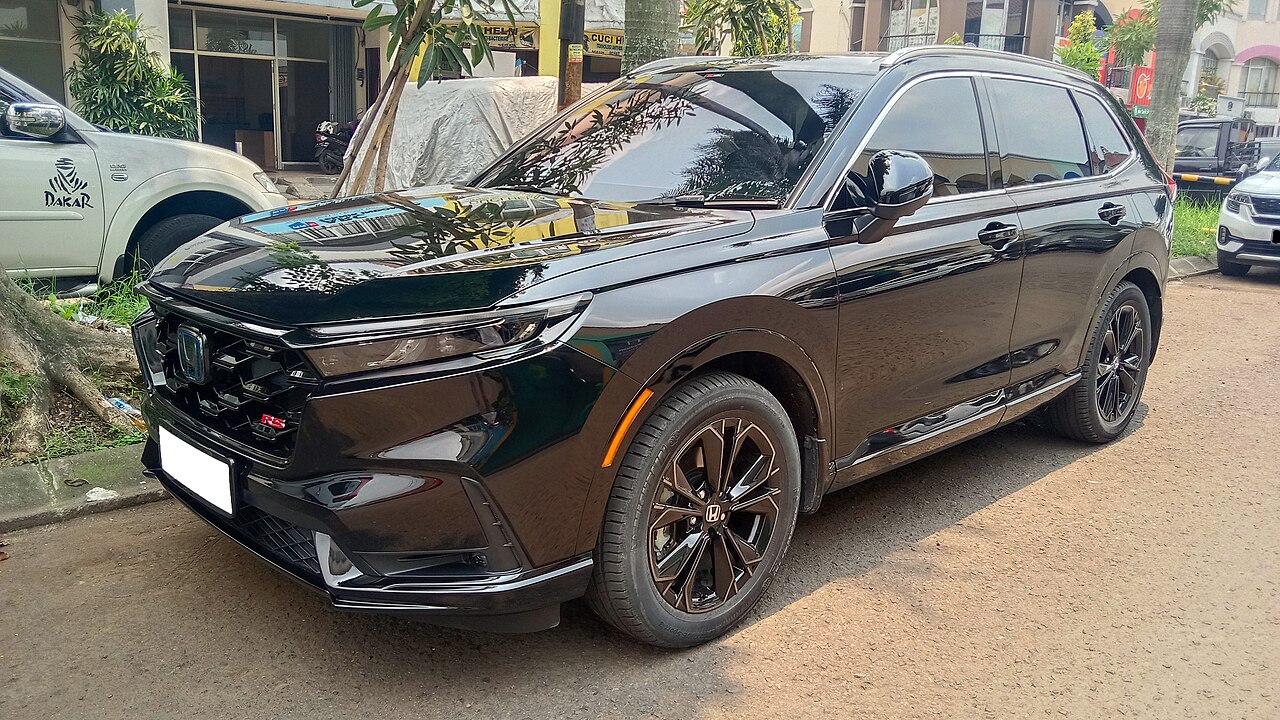
Honda CR-V 2025

Car

Honda CR-V 2025

22 source-linked failure reports. Most reported: Other. Typical failure around 9 mo.

Reliability signal F · Emerging signal · data confidence Moderate

22 confirmed failure reports

Reliability summary

What is likely to go wrong, when it happens, and how expensive it can be — from source-linked failure reports. Counts are reports in our database, not a population failure rate.

Reliability signal

F

22 confirmed failure reports · Emerging signal · Data confidence: Moderate

Most common issue
Other
Typical first failure
9 mo
Median of confirmed reports with timing
Median repair cost
—
Reported costs only · market varies
Highest reported repair
—
Not a quote · costs differ by country

What breaks?

Failure types

Click a type in the reports section below to filter.

  • Other10 · 45.5%
  • Engine failure4 · 18.2%
  • Brake system failure3 · 13.6%
  • Steering failure2 · 9.1%
  • Structure / body failure1 · 4.5%
  • Electrical system failure1 · 4.5%
  • Fuel system failure1 · 4.5%

When does it break?

Failure timing

Months after purchase, using reports that included timing.

What does it cost?

Reported repair costs

Distribution of owner-reported repair costs— not a quote or guarantee. Labor and parts prices vary by country.

No reported repair costs yet for this model.

Median months to failure

9

Failure reports

22

View →

Median repair cost

—

Still recommend

—

% repaired

—

% mfr warranty

—

% extended warranty

—

% support helpful

—

Use these reports as a risk signal, then check current listings before you buy.

Search this model on Amazon

As an Amazon Associate, After Warranty may earn from qualifying purchases.

What breaks?

What breaks? · reports

Other

LANE DEPARTURE,FORWARD COLLISION AVOIDANCE

Government / agencyIndexed Oct 9, 2026Source-linkedVerify source — NHTSA complaint #11660561

With 700 miles on our 2025 CR-V Ex-L owned for only a month, we had just exited from a 100-mile highway trip onto city streets near our home when the driver display suddenly started flashing warnings of failures for ALL driver safety systems, one after another, causing us to immediately stop in the middle lane filled with traffic and not knowing what to do or how to proceed. We pulled over at the next stoplight & quickly put the car in park, which stopped the endless warnings. When the stoplight turned green, we proceeded on the half mile trip home without further warnings. We have not moved the vehicle since the incident so have no idea if &/or when this might happen again. I have since found multiple online reports of the same type of event happening to other CRV owners, with dealer repair shops "guessing" what is causing the problem & "fixing" everything from fuel injectors & sensors to engine harnesses and battery replacements to vehicle computer updates and cylinder misfires, often with the problem recurring anyway. See: 1. [XXX] 2. [XXX] A number of CR-V owners reporting this issue say their vehicle immediately slowed to "limp mode" down to 35mph on the freeway, which was very scary and dangerous! Since we were driving at city speed we cannot know if our car also experienced Limp Mode. INFORMATION REDACTED PURSUANT TO THE FREEDOM OF INFORMATION ACT (FOIA), 5 U.S.C. 552(B)(6)

VerifiedEvidence ★★★★☆
View report details

Months until failure

Not stated

Repair cost

Not stated

Repaired

Not stated

Manufacturer warranty

Not stated

Extended warranty

Not stated

Support helpful

Not stated

Would recommend

Not stated

AI extraction confidence

90%

Verification status

Verified

Evidence quality

★★★★☆ (4/5)

Discussion

Engine failure

VEHICLE SPEED CONTROL,ENGINE,FUEL/PROPULSION SYSTEM

9 months

Government / agencyIndexed Oct 9, 2026Source-linkedVerify source — NHTSA complaint #11722836

My 2025 Honda CRV Hybrid seems to randomly accelerate on its own. This has happened at least 4 or 5 times over the past year. At first I thought I was imagining it but then I noticed it happened again, multiple times. Each time I was NOT pressing the gas pedal nor at any time was I using cruise control. I never use the cruise control. The vehicle seems to accelerate on its on for about 3-4 seconds then stops when I press the break. Clearly uncontrollable and unexpected acceleration of the vehicle puts me, my passengers and others are at risk. I called my local Honda Dealer Service Department and was told that unless I can recreate the random and spontaneous acceleration at the dealership then they won't be able to diagnosis or write for the issue. The Honda Service Rep said sense I have no idea when it is going to happen again he cannot set a appointment for me to come in without having a current issue. Because the acceleration is random and because I cannot recreate it at will, the problem has NOT been confirmed by a dealer or service center and the vehicle has not been inspected. The acceleration issue is random and spontaneous with no warning lamps, no messages and no other symptoms prior to. Once it stops it may no happen again for weeks or months. However as mentioned about it has happened at least 4 to 5 times within the past year with the most recent occurrence on March 6th 2026 ----End-----

VerifiedEvidence ★★★★☆
View report details

Months until failure

9 months

Repair cost

Not stated

Repaired

Not stated

Manufacturer warranty

Not stated

Extended warranty

Not stated

Support helpful

Not stated

Would recommend

Not stated

AI extraction confidence

90%

Verification status

Verified

Evidence quality

★★★★☆ (4/5)

Discussion

Engine failure

VEHICLE SPEED CONTROL,ENGINE,FUEL/PROPULSION SYSTEM

10 months

Government / agencyIndexed Oct 9, 2026Source-linkedVerify source — NHTSA complaint #11734004

Date of Accident: April 13, 2026 I drove into our church parking lot and then parked next to my husband’s car and was totally stopped and in the parking space. I thought I had my foot on the brake. After a split second, it accelerated and jumped the curb of the parking space at a very fast speed. I had no control of the car. I sheared off a heavy metal sidewalk railing and was headed for the brick church (church is on a berm above parking lot), but I managed to steer away to miss the church and a large tree. I steered off the berm and into empty parking lot – still traveling at high speed. I finally threw it into neutral to get it to stop because it was continuing toward a busy street with lots of traffic. Neutral stopped it. No air bags deployed. The front and side of the car that hit the metal railing sustained $6,500 damage. Towed it to collision repair. When we asked at the Columbia, MO, Honda dealer’s service department, they said because the air bags didn’t deploy, that it was probably operator’s error and nothing they could do. We didn’t feel that it was operator error and reported to the assistant General Manager of Honda in a personal meeting. We asked to have the Honda field engineer exam the car. Instead, they had their district service supervisor exam the car. Their conclusion: they could find nothing wrong with the car. After reading online reports of almost identical accidents with this model, we decided it was too dangerous to drive and sold it back to the Honda dealer.

VerifiedEvidence ★★★★☆
View report details

Months until failure

10 months

Repair cost

Not stated

Repaired

Not stated

Manufacturer warranty

Not stated

Extended warranty

Not stated

Support helpful

Not stated

Would recommend

Not stated

AI extraction confidence

90%

Verification status

Verified

Evidence quality

★★★★☆ (4/5)

Discussion

Structure / body failure

STRUCTURE

15 months

Government / agencyIndexed Oct 9, 2026Source-linkedVerify source — NHTSA complaint #11766479

I am filing this complaint regarding the sunroof glass on my 2025 Honda CR-V, VIN [XXX]. On XXX, while I was driving on the interstate at highway speed, I heard a loud pop/combustion-like sound. I immediately pulled over and discovered that the sunroof glass had shattered and fallen inward into the vehicle. I did not see any object, rock, or debris strike the sunroof before it shattered. There was no known impact that I could identify. The glass appeared to fail suddenly while the vehicle was being driven. I am concerned because a sunroof unexpectedly shattering while traveling at highway speed could create a safety hazard for the driver and passengers and could cause the driver to become startled or lose control of the vehicle. The vehicle had approximately 27,875 miles at the time of the incident. The vehicle’s in-service date was XXX. I contacted Honda regarding the damage, but the warranty claim for the window/sunroof glass was denied. I am requesting that NHTSA document this incident and review whether there is a potential safety defect involving sunroof glass on 2025 Honda CR-V vehicles. I have photographs of the shattered sunroof and can provide additional documentation regarding the vehicle, Honda’s warranty determination, and the incident if requested. I am aware of other reports involving 2025 Honda CR-V sunroofs shattering unexpectedly, which is another reason I believe this incident should be documented and reviewed. INFORMATION REDACTED PURSUANT TO THE FREEDOM OF INFORMATION ACT (FOIA), 5 U.S.C. 552(B)(6)

VerifiedEvidence ★★★★☆
View report details

Months until failure

15 months

Repair cost

Not stated

Repaired

Not stated

Manufacturer warranty

Not stated

Extended warranty

Not stated

Support helpful

Not stated

Would recommend

Not stated

AI extraction confidence

90%

Verification status

Verified

Evidence quality

★★★★☆ (4/5)

Discussion

Engine failure

ENGINE

15 months

Government / agencyIndexed Oct 9, 2026Source-linkedVerify source — NHTSA complaint #11761996

I am reporting a severe factory design defect regarding water intrusion into the EVAP emissions system on my 2025 Honda CR-V Hybrid (VIN: [XXX]) After driving home in a normal rainstorm, the vehicle threw diagnostic trouble code P24C0 (EVAP system leak detection pump switching valve stuck ON). The authorized Honda dealership diagnosed the issue as "water intrusion" and charged me an out-of-pocket fee. The dealer's official service invoice explicitly states that the water intrusion occurred from "driving through a puddle." Driving through a standard road puddle or driving in a rainstorm constitutes standard, expected, and necessary vehicle operation. The EVAP canister is a federally mandated emissions component that must legally remain sealed against atmospheric leaks. Because normal road moisture can bypass factory shielding and flood or damage this critical component, it represents a clear engineering and manufacturing defect in sealing and part placement, rather than owner negligence. Honda is systematically denying factory warranty coverage to owners for this specific issue by labeling normal road rain as "outside environmental damage." This leaves drivers facing thousands of dollars in unfair repair bills for a design vulnerability. I am requesting that NHTSA investigate this systemic issue to force a formal safety recall or Technical Service Bulletin (TSB) ensuring retroactive reimbursement and a corrected undercarriage shield design. INFORMATION REDACTED PURSUANT TO THE FREEDOM OF INFORMATION ACT (FOIA), 5 U.S.C. 552(B)(6)

VerifiedEvidence ★★★★☆
View report details

Months until failure

15 months

Repair cost

Not stated

Repaired

Not stated

Manufacturer warranty

Not stated

Extended warranty

Not stated

Support helpful

Not stated

Would recommend

Not stated

AI extraction confidence

90%

Verification status

Verified

Evidence quality

★★★★☆ (4/5)

Discussion

Other

UNKNOWN OR OTHER

13 months

Government / agencyIndexed Oct 9, 2026Source-linkedVerify source — NHTSA complaint #11751671

This model has a safety problem with a dangerous distraction caused by the entertainment system while backing up. When you start the car, the entertainment system begins a boot-up cycle that takes 5 to 10 seconds. During that time the driver can put the car into reverse and begin reversing. While driving in reverse, when the entertainment system finishes starting up, it will resume whatever it was doing when the car was shut off. If the radio was on, the radio will come on. If bluetooth was selected, it will send a "play" command to the attached bluetooth device. This is dangerously distracting to the driver. Worse, it is impossible to turn the entertainment system off when the car is in reverse. If driver wishes to not be dangerously distracted by the loud audio, they need to (1) stop moving, (2) shift into D, (3) tap the "acknowledge" button on the touchscreen display, (4) only then can they turn off the audio. In short, the driver is forced to choose between being distracted by unwanted audio, or to disrupt their reversing maneuver to fumble awkwardly with the controls, with the potential that they may not be as careful when they resume backing up. SOLUTION(S) 1 - reprogram the entertainment system so that it is possible to turn off the audio system while in reverse, by tapping the power knob (this is the normal way to turn it off, but it is disabled while backing up). 2 - mute audio while in reverse. 3 - reprogram the entertainment system so that it does NOT send a "play" command to bluetooth immediately upon starting up.

VerifiedEvidence ★★★★☆
View report details

Months until failure

13 months

Repair cost

Not stated

Repaired

Not stated

Manufacturer warranty

Not stated

Extended warranty

Not stated

Support helpful

Not stated

Would recommend

Not stated

AI extraction confidence

90%

Verification status

Verified

Evidence quality

★★★★☆ (4/5)

Discussion

Other

TIRES

Government / agencyIndexed Oct 9, 2026Source-linkedVerify source — NHTSA complaint #11702149

My brand-new 2025 Honda CR-V Hybrid Sport Touring AWD came equipped from the factory with Bridgestone Ecopia H/L 422 Plus all-season (M+S) tires. These tires exhibit dangerously low traction at very low speeds on normal packed snow and light ice typical on California’s Hwy 80/Tahoe corridor. On Fri Jan 3rd, the vehicle repeatedly lost traction, slid sideways, and struggled to accelerate from a stop on mild winter conditions where M+S tires are expected to provide adequate traction—particularly on an AWD SUV. This occurred at speeds under 10 mph on roads where other vehicles with M+S tires had no difficulty. The issue appears to be abnormally poor winter performance that is inconsistent with what is typical for M+S all-season tires. This raises concern about a possible tread compound defect, hard rubber compound, or manufacturing inconsistency with this specific Ecopia batch or production run. California law (Caltrans chain controls) considers AWD vehicles with M+S tires acceptable for winter operation without chains under R1 and often R2 conditions. These tires fail to meet this expected level of basic winter safety, even though they are legally marked M+S. Honda informed me that these tires are “not intended to be driven on snow and require chains,” which contradicts how M+S-rated OEM tires are used statewide and raises concern that the tire may not be performing to federal Mud & Snow design standards. This appears to be a safety defect affecting traction, stopping, and control of the vehicle during normal winter operation. A tire inspection or compound evaluation may be needed.

VerifiedEvidence ★★★★☆
View report details

Months until failure

Not stated

Repair cost

Not stated

Repaired

Not stated

Manufacturer warranty

Not stated

Extended warranty

Not stated

Support helpful

Not stated

Would recommend

Not stated

AI extraction confidence

90%

Verification status

Verified

Evidence quality

★★★★☆ (4/5)

Discussion

Engine failure

ENGINE

15 months

Government / agencyIndexed Oct 9, 2026Source-linkedVerify source — NHTSA complaint #11764767

While driving on a highway, the vehicle suddenly lost power and could no longer maintain highway speed. It entered a reduced power mode, flashed multiple errors, and was pulled over to the shoulder and stopped. My pregnant wife, who was in the car by herself, was then stuck in a hot car on a dangerous elevated spot on a highway with high-speed traffic close by and on a limited shoulder. It had to be towed to a dealership. The dealership diagnosed a misfire in cylinder 2. The technician removed the spark plugs and found them fouled with oil, primarily one plug. Using a borescope, the technician inspected all cylinders and found a crack across the piston in cylinder 2. A head gasket failure was initially suspected but was ruled out. The oil was drained and inspected, and no metal debris was found in the drain pan. The failure was confirmed by the dealership, and a warranty claim was submitted to and approved by the manufacturer. The approved repair covers replacement of the piston, rings, rod bearing, and head gasket for cylinder 2 only, rather than the short block originally recommended by the technician. The dealership stated that root cause cannot be determined without engineering analysis of the damaged parts, which are to be sent to the manufacturer for review after the repair is complete. The damaged components are available for inspection. The vehicle had approximately 16,000 miles at the time of failure and was purchased new approximately 15 months prior. Complete loss of engine power and the inability to maintain speed in highway traffic created a substantial risk of being struck from behind.

VerifiedEvidence ★★★★☆
View report details

Months until failure

15 months

Repair cost

Not stated

Repaired

Not stated

Manufacturer warranty

Not stated

Extended warranty

Not stated

Support helpful

Not stated

Would recommend

Not stated

AI extraction confidence

90%

Verification status

Verified

Evidence quality

★★★★☆ (4/5)

Discussion

Brake system failure

SERVICE BRAKES

6 months

Government / agencyIndexed Oct 9, 2026Source-linkedVerify source — NHTSA complaint #11708389

At approximately 6:00 PM on December 29, 2025, I was parking my vehicle in the Montague Foods parking lot at 8761 Ferry St in Montague, MI 49437. As I was pulling into the parking space, I had firm pressure on the brake pedal and was not pressing the accelerator. Despite braking, the vehicle suddenly lurched forward unexpectedly. The vehicle struck the parked car in front of me with such force that it moved the large SUV, bounced off, and continued to lurch forward repeatedly. While I was actively trying to stop the vehicle with the brake pedal, it continued moving forward, ran over a curb, and behaved in an uncontrolled, bucking manner. I would describe the experience as similar to a bucking bronco. During the incident, I was yelling, “What is happening?!?” due to the unexpected and frightening behavior of the vehicle. At no point during this incident was the accelerator pedal pressed. No warning lights, alerts, or messages appeared on the dashboard before or during the event that I can recall. Both my vehicle and the parked vehicle sustained damage. Fortunately, there were no injuries. This incident raises serious concerns about the braking, acceleration, or vehicle control systems in this model. I believe this represents a significant and serious safety risk not only to the driver of the vehicle but also pedestrians and other vehicles. I am afraid to drive the car again. I respectfully request that the National Highway Traffic Safety Administration investigate this issue to determine whether it represents a vehicle defect affecting safety, and require Honda to issue any necessary recall or remedy needed

VerifiedEvidence ★★★★☆
View report details

Months until failure

6 months

Repair cost

Not stated

Repaired

Not stated

Manufacturer warranty

Not stated

Extended warranty

Not stated

Support helpful

Not stated

Would recommend

Not stated

AI extraction confidence

90%

Verification status

Verified

Evidence quality

★★★★☆ (4/5)

Discussion

Other

FORWARD COLLISION AVOIDANCE,LANE DEPARTURE

11 months

Government / agencyIndexed Oct 9, 2026Source-linkedVerify source — NHTSA complaint #11737484

COMPONENTS: Forward Collision Avoidance, Lane Keeping Support, Electronic Power Steering. INCIDENT: On 05/12/2026, upon vehicle startup, a total failure of the driver-assist safety suite occurred. Dashboard indicators displayed malfunctions for: Adaptive Cruise Control (ACC), Forward Collision Warning (FCW), Lane Keeping Assistance (LKAS), and a "Steering Wheel Malfunction" warning. The vehicle was inspected at Greeley Honda on the same day (Mileage: ~56k). The dealership confirmed the front radar sensor, located behind the emblem, is defective. Despite no evidence of external impact or damage, the dealership quoted $3,900 for a total replacement of the grille, emblem, and sensor. SAFETY RISK: The failure has completely disabled the Collision Mitigation Braking System (CMBS), removing the vehicle's ability to provide emergency autonomous braking. The accompanying "Steering Wheel Malfunction" indicates an error in the Electronic Power Steering (EPS) torque sensor or LKAS integration, which creates a risk of unpredictable steering assistance. These failures, combined with a cascade of distracting warning lights, pose an unreasonable safety risk during operation. REMEDY SOUGHT: The dealership failed to explain the internal cause of failure or why a cosmetic grille replacement is required to fix a safety sensor. I am seeking a manufacturing investigation. American Honda has not offered a remedy for this critical safety component failure. This appears to be a premature failure of a non-wear item that renders primary safety systems inoperable. I have consented to share my contact information with the manufacturer to facilitate a resolution.

VerifiedEvidence ★★★★☆
View report details

Months until failure

11 months

Repair cost

Not stated

Repaired

Not stated

Manufacturer warranty

Not stated

Extended warranty

Not stated

Support helpful

Not stated

Would recommend

Not stated

AI extraction confidence

90%

Verification status

Verified

Evidence quality

★★★★☆ (4/5)

Discussion

Electrical system failure

ELECTRICAL SYSTEM,VEHICLE SPEED CONTROL

Government / agencyIndexed Oct 9, 2026Source-linkedVerify source — NHTSA complaint #11667689

I’m reporting a high-pitched noise issue with my 2025 Honda CR-V Sport Hybrid. At highway speeds (approximately 68–74 mph), a persistent, high-frequency tone becomes audible from the front driver’s side of the vehicle. It is sharp, constant, and noticeably affected by the vehicle’s battery charge and speed. There are no warning lights, messages, or error indicators. However, the sound is extremely distracting and physically uncomfortable to endure. My wife has a preexisting auditory condition (tinnitus), and this sound makes it extremely difficult to drive or ride in the vehicle without pain or aggravation. It has made the vehicle nearly unusable for her on highways. I’ve brought this to a dealership, where multiple technicians and even a factory engineer inspected the vehicle. They confirmed the presence of the sound using audio measurement tools, and noted that similar sounds are present in other CR-V Hybrids. Despite this, I was told by the manufacturer that the sound is “normal” and that no fix is currently available. This issue has been present since I first took possession of the vehicle. The dealership and manufacturer have confirmed that it exists, but no resolution has been provided. While I may be one of the first people to raise the issue, I believe this may become a much broader concern. A continuous, high-pitched noise at highway speeds could be dangerous—it might distract drivers, cause fatigue, or even lead to long-term hearing discomfort or damage. I am hoping that NHTSA will investigate this issue or track whether other drivers begin reporting similar experiences. I would welcome any guidance on what steps I can take next, or whether further inspection of the vehicle is possible.

VerifiedEvidence ★★★★☆
View report details

Months until failure

Not stated

Repair cost

Not stated

Repaired

Not stated

Manufacturer warranty

Not stated

Extended warranty

Not stated

Support helpful

Not stated

Would recommend

Not stated

AI extraction confidence

90%

Verification status

Verified

Evidence quality

★★★★☆ (4/5)

Discussion

Steering failure

STEERING

Government / agencyIndexed Oct 9, 2026Source-linkedVerify source — NHTSA complaint #11673599

The contact owned a 2025 Honda CR-V. The contact stated while driving at approximately 40 MPH, as the contact slowed to follow a slight right hand curve on the road, the steering wheel pulled to the right. The contact stated that the vehicle drove onto the shoulder, the contact attempted to steer the vehicle back onto the road but the steering was not responding. The contact stated that he was able to turn the steering wheel to the left, however the vehicle was locked in a right turn and then crashed into a small tree as the vehicle was driving down a slight embankment. The contact stated that he did not see any warning lights and as the vehicle crashed into the tree the air bags deployed and the vehicle rolled onto the driver's side and continued to roll 3 times. The vehicle had come to a stop in an upright position on the left hand side of the road. The contact stated that the right front wheel, axel and tie rods had sheared off of the vehicle. The contact stated that he and his 3 sons were transported to the emergency room. The contact stated that he and the son who was sitting in the front passenger seat had minor abrasions on hands and heads and were released from the ER. The two sons in the back passenger seats, the son seated in the right passenger seat had shattered his right index finger and had abrasions on both arms. The contact stated that his other son only had abrasions on both legs on his shins and both arms. The police and EMT were on scene. The police wrote an incident report. The vehicle was towed to an impound lot. The contact stated that his insurance provider declared the vehicle a total loss. The manufacturer was informed of the failure. The contact had researched online and related the failure to NHTSA Campaign Number: 24V744000 (Steering), however his VIN was not part of the recall selection. The failure mileage was approximately 7,500.

VerifiedEvidence ★★★★☆
View report details

Months until failure

Not stated

Repair cost

Not stated

Repaired

Not stated

Manufacturer warranty

Not stated

Extended warranty

Not stated

Support helpful

Not stated

Would recommend

Not stated

AI extraction confidence

90%

Verification status

Verified

Evidence quality

★★★★☆ (4/5)

Discussion

Steering failure

STEERING,FORWARD COLLISION AVOIDANCE

9 months

Government / agencyIndexed Oct 9, 2026Source-linkedVerify source — NHTSA complaint #11728864

STEERING: 2025 Honda CRV steering became "sticky" when veering left, making it difficult to maneuver back to center and the steering could feel a bit jumpy. There were also faint clicks when driving in circles to the left. The VIN was not listed under the current recall number 24V-744 so we brought it to the dealer to see if it was under warranty. The sticky steering only happens after driving the car for a little while, so we weren't able to replicate it for the dealer 12 miles away. However, they took a look at the steering components and told us that it was a "fluke" that the car had made it through assembly inspections because it should have failed and never been sold. We had the car safety checked before leaving for a trip where we'd be driving along steep, winding cliffs with sharp switchbacks and they said we were in good shape. Now they were telling us we were "lucky we didn't hit a pothole" and make it even worse and careen off a cliff. We put about 10k miles on that trip not knowing the danger we were in the whole time. They claim they fixed it by installing a brand new Honda Power Steering Rack, part number 53620-3A0-A33. We've heard that others just end up with the same issues in another 5-7k miles, so we're not feeling confident. AUTOMATIC SAFETY BREAKING: We get several phantom warning alarms and flashing, full screen messages telling us to "BRAKE!" while driving when nothing is there. Usually when there's any kind of flickering sunlight or sunlight through trees, which is everywhere. We can only disable it by turning it off EVERY single time we turn on the car and by going through several menus to get to the feature. We should be able to turn this off completely, not each time. We've twice had it pump the breaks and it's a frightening situation, even at slow speeds, because we could get rear ended. Dealer said, "Yeah...that's how it works. Mine does it too."

VerifiedEvidence ★★★★☆
View report details

Months until failure

9 months

Repair cost

Not stated

Repaired

Not stated

Manufacturer warranty

Not stated

Extended warranty

Not stated

Support helpful

Not stated

Would recommend

Not stated

AI extraction confidence

90%

Verification status

Verified

Evidence quality

★★★★☆ (4/5)

Discussion

Other

UNKNOWN OR OTHER

7 months

Government / agencyIndexed Oct 9, 2026Source-linkedVerify source — NHTSA complaint #11712154

January 18, 2025 Subject: Request for Review – Windshield Crack on 2025 Honda CR-V Hybrid Dear Honda Customer Relations Team, I am writing to respectfully request a review of a windshield issue on my wife’s Subject 2025 Honda CR-V Hybrid, which we purchased new in the summer of 2025. The vehicle currently has approximately 16,000 miles. Recently, a crack developed in the windshield measuring roughly four inches in length. The crack originates at the driver-side edge near the frame and began with a very small divot. There is no visible impact crater or evidence of damage from a foreign object. Based on its location and appearance, I believe this may be consistent with an stress-related edge crack rather than road debris. Our local dealership has declined coverage, which I understand may be standard procedure at the dealership level. However, given the vehicle’s age, mileage, and the nature of the crack, I am respectfully requesting that Honda Corporate review this matter for possible warranty consideration or goodwill assistance. My wife and I have been Honda owners for over 20 years. We have consistently chosen Honda vehicles for their quality and reliability, and we have also purchased Honda vehicles for our children, who continue to drive them today. Our loyalty to the Honda brand has always been rooted in trust—trust in engineering, and trust in standing behind the product. I am not seeking special treatment, only a fair review of the circumstances. We value Honda and hope to continue that relationship for many years to come. I have attached four photographs of the windshield, including both full-view and close-up images of the crack for your review. Thank you for your time and consideration. I appreciate your review and look forward to your response. Sincerely, [XXX] [XXX] INFORMATION REDACTED PURSUANT TO THE FREEDOM OF INFORMATION ACT (FOIA), 5 U.S.C. 552(B)(6)

VerifiedEvidence ★★★★☆
View report details

Months until failure

7 months

Repair cost

Not stated

Repaired

Not stated

Manufacturer warranty

Not stated

Extended warranty

Not stated

Support helpful

Not stated

Would recommend

Not stated

AI extraction confidence

90%

Verification status

Verified

Evidence quality

★★★★☆ (4/5)

Discussion

Fuel system failure

FUEL/PROPULSION SYSTEM

1 months

Government / agencyIndexed Oct 9, 2026Source-linkedVerify source — NHTSA complaint #11675504

Over a distance of 1,718 miles, I measured my vehicle’s actual fuel consumption by recording odometer readings and fuel volume at each refill. I then compared these values to the average fuel economy (MPG) displayed on the vehicle's trip computer. The dashboard consistently underreported fuel consumption by approximately 8% ± 2%, always showing more optimistic (i.e., better) fuel economy than actually achieved. This discrepancy is repeatable and was observed over multiple refueling intervals. The vehicle and its onboard display system are available for inspection upon request. This inaccurate fuel economy reading does not present a direct safety hazard, but it can mislead drivers into overestimating range and efficiency, and may influence consumer decisions based on performance data that does not match real-world usage. Additionally, such behavior—if widespread—could be considered a form of consumer deception. I submitted a detailed written request to an authorized Honda dealership (Victory Honda of San Bruno) asking them to compare actual fuel consumption to the displayed value under controlled conditions. However, the dealership did not perform the required measurements or reset the trip computer, and no technical analysis or documentation was provided. The manufacturer’s customer service reviewed the complaint but closed the case without addressing the technical discrepancy or providing a specification that defines acceptable error for the fuel economy display. There were no warning lights, error messages, or symptoms indicating a malfunction. The issue was discovered independently through manual tracking of fuel usage versus mileage. I have attached documentation including my full correspondence with Honda Customer Service, fuel receipts for each fill-up, photographs of the dashboard display showing average fuel consumption, and the official Service Report from Victory Honda.

VerifiedEvidence ★★★★☆
View report details

Months until failure

1 months

Repair cost

Not stated

Repaired

Not stated

Manufacturer warranty

Not stated

Extended warranty

Not stated

Support helpful

Not stated

Would recommend

Not stated

AI extraction confidence

90%

Verification status

Verified

Evidence quality

★★★★☆ (4/5)

Discussion

Brake system failure

SERVICE BRAKES,FORWARD COLLISION AVOIDANCE

7 months

Government / agencyIndexed Oct 9, 2026Source-linkedVerify source — NHTSA complaint #11711768

Approximate Mileage on Car: 26500 Make/Model/Trim: Honda CRV Hybrid Sport-L Location: Manheim and Lancaster Counties, Pennsylvania Date of Incident: 1/17/26 Weather: Light snow, under 3", mostly plowed/salted surfaces While driving in light snowy road conditions, the vehicle failed to decelerate appropriately when the brake pedal was firmly applied. The driver was operating the vehicle cautiously and at reduced speeds under 20mph, appropriate for winter conditions. Snow accumulation was less than approximately 3 inches, and the roads were mostly plowed and treated with salt. Despite firm brake application, there was no noticeable ABS pulsing or vibration, and the vehicle continued to slide forward with minimal reduction in speed, right through a stop sign and then again at a 4-way traffic light intersection. Both times, the braking response felt delayed or ineffective, resulting in a significantly extended stopping distance. Steering control while braking was limited, leading to fishtailing and spinning across the road. This did not feel like normal loss of traction or typical ABS engagement. The behavior was unexpected given the relatively moderate road conditions and the cautious driving behavior. No warning lights were immediately displayed during the incident. The experience felt like a loss of effective braking capability in winter conditions, creating a serious safety concern. This condition increases the risk of collision due to the inability to stop the vehicle as expected, even when driven cautiously in moderately snowy, plowed, and salted road conditions. A driver has no reliable way to compensate when braking response is inconsistent or delayed. The vehicle is marketed as AWD and suitable for adverse weather conditions. The braking behavior was inconsistent with expectations and with prior vehicles driven by the driver under similar winter conditions for over 40 years.

VerifiedEvidence ★★★★☆
View report details

Months until failure

7 months

Repair cost

Not stated

Repaired

Not stated

Manufacturer warranty

Not stated

Extended warranty

Not stated

Support helpful

Not stated

Would recommend

Not stated

AI extraction confidence

90%

Verification status

Verified

Evidence quality

★★★★☆ (4/5)

Discussion

Other

LANE DEPARTURE,FORWARD COLLISION AVOIDANCE

Government / agencyIndexed Oct 9, 2026Source-linkedVerify source — NHTSA complaint #11657463

I am filing a formal complaint regarding the safety systems on my 2025 Honda CR-V EX-L, particularly the overly aggressive Collision Mitigation Braking System (CMBS) and intrusive Lane Keep Assist. While driving my children to school, my CR-V violently slammed the brakes because a scooter was creeping toward an intersection — clearly not entering traffic. The rider and I made eye contact, fully aware of each other, and there was an open left lane for evasive action if needed (it wasn't). Despite my clear judgment, the CMBS intervened, causing a violent deceleration that launched objects inside the vehicle, scared everyone, and increased the risk of a rear-end collision. I am shocked that Honda eliminated the hardware button to quickly disable CMBS. Now drivers must perform a multi-step procedure every time the vehicle starts — an unreasonable and unsafe burden. I previously owned a 2014 Accord and was a loyal, satisfied customer. I love nearly everything else about the CR-V, but these flawed "safety" systems are a potential deal-breaker. Sudden deceleration can cause concussions and greatly increase the chance of secondary accidents. Lane Keep Assist has created additional dangers. When I move slightly within my lane to create space from a semi-truck, the system unnecessarily corrects my steering. This is distracting and unsafe. Good drivers adjust dynamically, but these systems undermine good judgment rather than enhancing safety. Technology that overrides competent drivers is reckless, not "intelligent." I request two changes: (1) Reinstate a hardware button to easily disable automatic emergency braking, and (2) Allow CMBS and Lane Keep Assist settings to persist across drives. Honda must redesign these systems with real-world driving in mind. Features that destroy driver trust are dangerous, not protective. I am deeply disappointed, frustrated, and have lost trust in my CR-V — a serious failure for a brand I once admired.

VerifiedEvidence ★★★★☆
View report details

Months until failure

Not stated

Repair cost

Not stated

Repaired

Not stated

Manufacturer warranty

Not stated

Extended warranty

Not stated

Support helpful

Not stated

Would recommend

Not stated

AI extraction confidence

90%

Verification status

Verified

Evidence quality

★★★★☆ (4/5)

Discussion

Other

UNKNOWN OR OTHER

Government / agencyIndexed Oct 9, 2026Source-linkedVerify source — NHTSA complaint #11658992

Reversed several feet out of parking space in unobstructed lot. Car abruptly stopped and most systems shut down. Driver depressed brakes to assess. Two warning lights were present - battery and engine. Driver ensured parking brake off and brake hold off. No vehicles, people, or other objects nearby. Driver slowly depressed gas pedal; car would not budge. Driver depressed brakes and shifted into drive; driver slowly depressed gas pedal but car would not respond at all. Driver turned the car completely off. Upon restarting, battery/engine light turned off and car drove normally to dealership. The car had <250 miles on it at the time. Dealer stated that no engine codes were retained. Dealer stated verbally that it is likely a "computer glitch" as the car is new and "just breaking in." Dealer stated that car "probably won't do it again." Written documents indicate that dealer suspects a failure in reverse automatic braking system. After car released to owner without addt'l testing, owner tested reverse automatic braking system. The system worked as expected - the car braked when it detected a close object in its field, it omitted the correct audible warning sounds and visual lights, and continued to perform when the driver depressed the braking system. Additionally, due to the newness of the car, the driver is extremely confident that no objects were around - the driver had been parking far from other vehicles to avoid dings. This "computer glitch" is potentially fatal as the car came to a sudden, complete stop while in motion and was unresponsive in any gear, even after brakes were applied and released. The owner drives on the freeway daily. The dealer could not say with confidence that the "glitch" would not occur in drive at high speed. Imagine driving 65 mph on a freeway and your car coming to a complete, sudden stop - not a rolling stop or a slowdown where you might inch to shoulder - just a completely dead car in the middle of a freeway.

VerifiedEvidence ★★★★☆
View report details

Months until failure

Not stated

Repair cost

Not stated

Repaired

Not stated

Manufacturer warranty

Not stated

Extended warranty

Not stated

Support helpful

Not stated

Would recommend

Not stated

AI extraction confidence

90%

Verification status

Verified

Evidence quality

★★★★☆ (4/5)

Discussion

Other

WHEELS

Government / agencyIndexed Oct 9, 2026Source-linkedVerify source — NHTSA complaint #11748690

My concern is with the tire pressure monitoring system. The vehicle does not show the individual PSI for each tire. Instead, when there is a tire pressure concern, it alerts the driver and instructs the driver to pull over somewhere safe and manually check the tire pressure. The issue became more concerning after one of my tires was replaced with a different tire brand than the other tires. Since then, the vehicle has continued to display a warning message on the dashboard to check the tires. This creates a serious safety issue because if the warning message is already constantly appearing, I may not be properly alerted if there is an actual tire problem, such as a flat tire, dangerously low tire pressure, or another tire failure. The warning becomes less reliable because the driver cannot easily tell whether the alert is due to the existing tire mismatch issue or a new, urgent tire safety problem. This is especially concerning to me as a mother of babies. I frequently drive with my children in the vehicle, and I rely on the vehicle’s safety systems to provide clear and accurate warnings. If the tire pressure system is already giving an ongoing warning, I may not know when there is a real and immediate tire issue that could affect the safety of my children and me while driving. I also believe it is a safety issue that the vehicle requires the driver to pull over and manually check tire pressure instead of displaying the individual tire pressures on the dashboard. Depending on where I am driving, it may not be safe to pull over, especially on a freeway, busy road, poorly lit area, or unsafe location. Having to exit the vehicle to manually check tire pressure can put me and my children at risk. I am requesting that NHTSA review this concern because the TPMS warning system may not provide clear, reliable, and specific information to the driver when a different tire brand has been installed. I believe this could prevent drivers from recognizing an actual tire emergency.

VerifiedEvidence ★★★★☆
View report details

Months until failure

Not stated

Repair cost

Not stated

Repaired

Not stated

Manufacturer warranty

Not stated

Extended warranty

Not stated

Support helpful

Not stated

Would recommend

Not stated

AI extraction confidence

90%

Verification status

Verified

Evidence quality

★★★★☆ (4/5)

Discussion

Other

FORWARD COLLISION AVOIDANCE

11 months

Government / agencyIndexed Oct 9, 2026Source-linkedVerify source — NHTSA complaint #11736781

While driving to store for errands today, 09May26, I came to a stop at a red light with intent to turn right next. I turned on my right blinker and turned a bit to the right and rolled forward to gain visibility to my left as I came to a complete stop. There was a car coming from the left that was preparing to turn left. I observed that car turn on its left blinker, and slow down while entering its turn. I confirmed the intersection was clear and there was nothing in front of me. I applied the gas, then looked left to confirm the other car was completing its left turn. While I was slowly accelerating, but before my eyes returned to the road ahead of me, the accident avoidance system sounded an audible alarm, I think I recall seeing an orange dash warning, and the system seemed to simultaneously trigger a hard brake apply. This was akin to a panic stop. I knew there was a truck approaching behind me. Although a bit stunned and dazed, I recovered as quickly as I could, and continued to complete my right turn to make sure that vehicle did not collide with me. The hard brake apply was so sudden, my head and body pitched forward (as much as permitted by the seat belt). After returning home, I realized my right shoulder was sore, presumably from the brake apply. I worry that this system could trigger the brakes like this at a much higher speed, in a turn, or with my children driving the car (they are just [XXX] and [XXX] old). I have since reached out to the dealership that I purchased the car from for assistance (LaFontaine Honda in Dearborn, MI). I just bought the car (used) last Friday, 5/1. I am a technical project manager that has supported automotive brake development projects for multiple companies and customers for 26 years. I know how these systems are supposed to work, and this one seems flawed, and potentially dangerous in my opinion. I would be happy to discuss further if NHTSA has questions. INFORMATION REDACTED PURSUANT TO THE FREEDOM OF INFORMATION ACT (FOI

VerifiedEvidence ★★★★☆
View report details

Months until failure

11 months

Repair cost

Not stated

Repaired

Not stated

Manufacturer warranty

Not stated

Extended warranty

Not stated

Support helpful

Not stated

Would recommend

Not stated

AI extraction confidence

90%

Verification status

Verified

Evidence quality

★★★★☆ (4/5)

Discussion

Brake system failure

SERVICE BRAKES,FORWARD COLLISION AVOIDANCE

5 months

Government / agencyIndexed Oct 9, 2026Source-linkedVerify source — NHTSA complaint #11705701

On [XXX] I was stopped in the red light behind a car in the New York City suddenly my car moved I applied the brake hard but almost hit the car in front. The message in the dashboard were -Depress brake pedal apply parking brake,brake system problem brake performance may be reduced,brake hold system problem apply brake when stopped,vechile stability assist system problem reduce traction and handling,Hill decent control system problem apply brake when descending,adaptive cruise control system problem,collision mitigation braking system problem,low speed braking control problem.I turned off the car and start again and it worked.This was the first time I was able to take the pictures it happened before as well but I was unable to take picture. After that I took the car to Hillside honda service center I showed them the message of the dashboard which was on my phone. The car was in the service center for two days they said that my car was fine at that time the message of the dashboard was only in my phone.On month of Sep and Oct I took the car again to the Hillside Honda service center with same issue and after staying two days in the service center they said my car was fine.After that I press braking hold and continued my work.On [XXX] and [XXX] same problem occurred I was able to take pictures.Beginning of Nov I was driving at the highway suddenly the message pops up I was sure that the brake wouldn’t work, Push the emergency lights,changed the lane and I was lucky that there was a empty space on the corner of the highway. I applied the brake but the car stopped almost 10- 15 meters ahead. I turned off the car there was no customer after 5 minutes when I start the car everything was fine.On [XXX] I was driving at the highway with a customer same message pops up in the dashboard press the emergency light,changed the lane and again found a empty space at the side of the Highway. This time also I was able to take the picture. INFORMATION REDACTED PURSUANT TO THE FREEDOM

VerifiedEvidence ★★★★☆
View report details

Months until failure

5 months

Repair cost

Not stated

Repaired

Not stated

Manufacturer warranty

Not stated

Extended warranty

Not stated

Support helpful

Not stated

Would recommend

Not stated

AI extraction confidence

90%

Verification status

Verified

Evidence quality

★★★★☆ (4/5)

Discussion

Other

UNKNOWN OR OTHER

7 months

Government / agencyIndexed Oct 9, 2026Source-linkedVerify source — NHTSA complaint #11710563

Safety Issue: Absence of Low Windshield Washer Fluid Indicator I am reporting a significant vehicle safety concern involving my 2025 Honda CR-V EX-L, which is not equipped with a low windshield washer fluid level indicator. This omission created a serious safety risk to myself and other motorists during real-world driving conditions. While driving on a Michigan highway during a severe winter storm, I unknowingly ran out of windshield washer fluid. Due to snow, ice, road salt, and grime typical of winter driving in Michigan, my windshield quickly became dirty and my forward visibility was severely reduced. Because there was no warning or indicator to alert me that the washer fluid level was low, I had no advance notice of the issue. As a direct result, I was forced to pull over onto the highway shoulder at night, in dark conditions and heavy traffic, in order to refill the washer fluid reservoir. Stopping on an active highway shoulder under these conditions posed a substantial safety hazard, increasing the risk of collision to myself and to passing vehicles. This situation was entirely preventable if the vehicle had provided a basic low washer fluid warning. I later confirmed with a Honda dealership that the low windshield washer fluid indicator is not included as a feature on my 2025 Honda CR-V EX-L. This confirms that the issue is not a malfunction but a deliberate omission in vehicle design or feature availability. I am further concerned because I also own a 2023 Acura RDX A-Spec Advance (VIN: [XXX] ), which similarly does not include a low windshield washer fluid indicator, despite being a premium vehicle and Acura being Honda’s luxury brand. This suggests a broader design or cost-cutting decision across Honda/Acura vehicles rather than an isolated model-level oversight. Vehicles sold in northern U.S. states such as Michigan, where winter conditions routinely involve snow, ice, freezing temperatures, and heavy road salt use, depend hea INFORMATION REDACTED PURSUA

VerifiedEvidence ★★★★☆
View report details

Months until failure

7 months

Repair cost

Not stated

Repaired

Not stated

Manufacturer warranty

Not stated

Extended warranty

Not stated

Support helpful

Not stated

Would recommend

Not stated

AI extraction confidence

90%

Verification status

Verified

Evidence quality

★★★★☆ (4/5)

Discussion

Compare nearby models

Similar products

Stay ahead of failures

Notify me about this model

Get an email when a new source-linked failure report is published for the Honda CR-V 2025.

We only email when a new published report is added for Honda CR-V 2025. No spam, unsubscribe by contacting support.

Contribute signal

Had a failure with this model?

Add your experience and help future shoppers understand what happens after the warranty.

Submit your experience