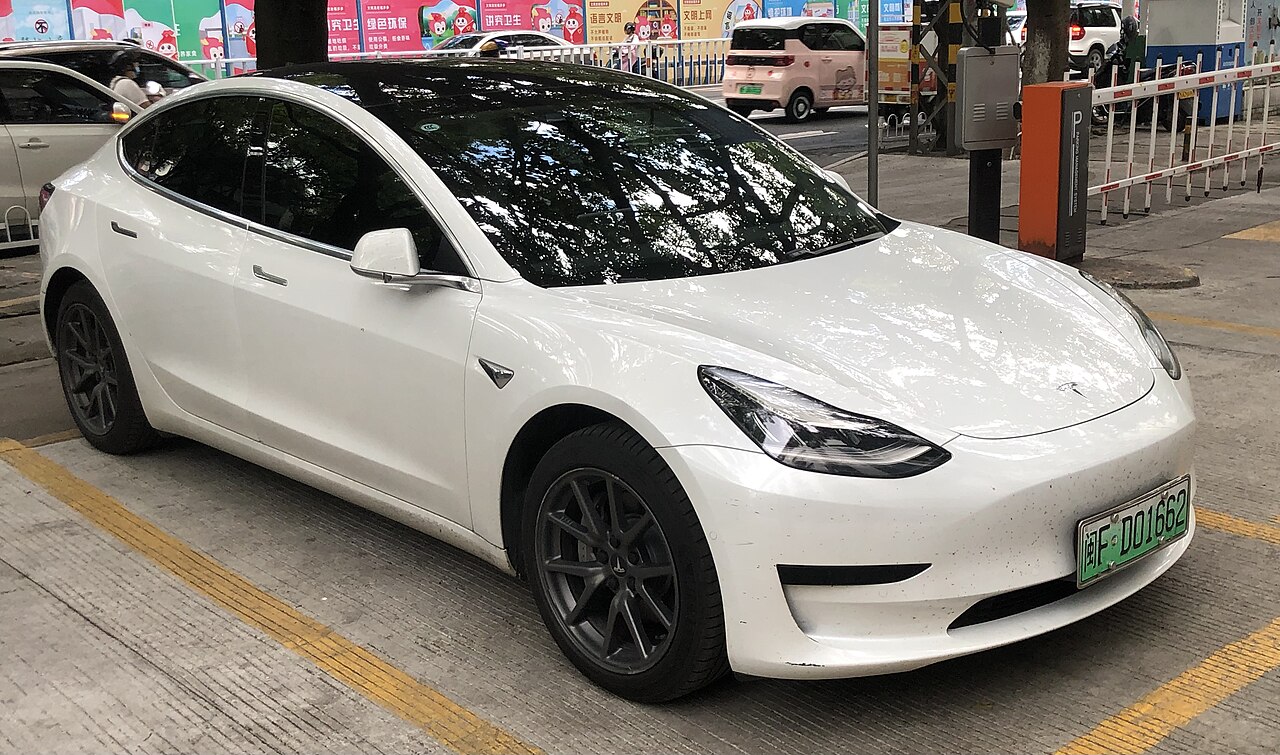
Tesla Model 3 2022

Electric Vehicle

Tesla Model 3 2022

30 source-linked failure reports. Most reported: Other. Typical failure around 2.5 yr.

Reliability signal C · Emerging signal · data confidence Moderate

30 confirmed failure reports

Reliability summary

What is likely to go wrong, when it happens, and how expensive it can be — from source-linked failure reports. Counts are reports in our database, not a population failure rate.

Reliability signal

C

30 confirmed failure reports · Emerging signal · Data confidence: Moderate

Most common issue
Other
Typical first failure
2.5 yr
Median of confirmed reports with timing
Median repair cost
—
Reported costs only · market varies
Highest reported repair
—
Not a quote · costs differ by country

What breaks?

Failure types

Click a type in the reports section below to filter.

  • Other17 · 56.7%
  • Brake system failure7 · 23.3%
  • Electrical system failure4 · 13.3%
  • Structure / body failure1 · 3.3%
  • Steering failure1 · 3.3%

When does it break?

Failure timing

Months after purchase, using reports that included timing.

What does it cost?

Reported repair costs

Distribution of owner-reported repair costs— not a quote or guarantee. Labor and parts prices vary by country.

No reported repair costs yet for this model.

Median months to failure

30

Failure reports

30

View →

Median repair cost

—

Still recommend

—

% repaired

—

% mfr warranty

—

% extended warranty

—

% support helpful

—

Use these reports as a risk signal, then check current listings before you buy.

Search this model on Amazon

As an Amazon Associate, After Warranty may earn from qualifying purchases.

What breaks?

What breaks? · reports

Other

VEHICLE SPEED CONTROL,FORWARD COLLISION AVOIDANCE

49 months

Government / agencyIndexed Oct 9, 2026Source-linkedVerify source — NHTSA complaint #11751194

On XXX, while Full Self-Driving (Supervised) was engaged, my 2022 Tesla Model 3 RWD abruptly decelerated without any visible vehicle, pedestrian, debris, or other obstacle requiring braking. Based on my best recollection, this occurred on approximately five separate occasions in clear daylight with clean cameras. On XXX, the first event occurred near XXX while traveling from [XXX] toward the [XXX]/[XXX] area. I took manual control for about 30 minutes. After I re-engaged FSD, a second event occurred and included approximately three rapid braking pulses. The occupants lunged forward during both episodes. On XXX, the drive from [XXX] to the Ukiah Costco was normal. On the return toward [XXX], FSD suddenly braked hard at approximately 63 mph and reduced the vehicle's speed by about 25 mph, to approximately 38 mph. Family members and friends in the vehicle were startled and moved forward. Later that day, there were two additional unexpected braking episodes while traveling from XXX toward XXX. I used accelerator input to override the unwanted braking. The unexpected highway-speed deceleration created a risk of being struck from behind and made the system unpredictable to supervise. No crash, fire, injury, or property damage occurred. I do not recall a warning message before the braking. The vehicle has not been inspected or diagnosed for this issue and is available for inspection upon request. As of XXX, the vehicle reports Tesla software 2026.20.3 and FSD (Supervised) v12.6.4; it has Hardware 3. INFORMATION REDACTED PURSUANT TO THE FREEDOM OF INFORMATION ACT (FOIA), 5 U.S.C. 552(B)(6)

VerifiedEvidence ★★★★☆
View report details

Months until failure

49 months

Repair cost

Not stated

Repaired

Not stated

Manufacturer warranty

Not stated

Extended warranty

Not stated

Support helpful

Not stated

Would recommend

Not stated

AI extraction confidence

90%

Verification status

Verified

Evidence quality

★★★★☆ (4/5)

Discussion

Other

FORWARD COLLISION AVOIDANCE

9 months

Government / agencyIndexed Oct 9, 2026Source-linkedVerify source — NHTSA complaint #11510345

Since taking ownership of vehicle in summer 2022, have experienced multiple incidents of vehicle emergency braking for no apparent reason while using cruise control. In a few instances when I have attempted to use cruise control again after initial phantom braking incident, there is a 2nd incident of emergency like braking for no apparent reason in the same trip. Have never attempted to reuse cruise control within same trip after experiencing issue twice in that one trip. When phantom braking occurs: - It is while using cruise control (with or without steering assist). - There is no audible or visual warning (not even from auto emergency braking system) before or during vehicle braking. - Is a very strong braking force akin to an emergency maneuver. - There is no clear reason for why vehicle braked - no obstacles in road or slowing traffic. - Level of traffic (light or moderate) does not seem to be a factor, but I don't use system in moderate to heavy traffic. - Weather does not appear to be a factor - it can occur in perfect driving conditions (sunny, clear day). In most recent incident, was traveling at 78mph on highway with no traffic in front or behind vehicle for approx. a half mile in either direction. Without warning or reason, vehicle began to brake hard, slowing vehicle down to 62mph before I could disengage system (approx 1-2seconds). Unclear how low vehicle would brake to if cruise control wasn't disengaged. Cruise control feature feels extremely risky to the point that view as unusable in almost all driving situations (even if would be a good time to use cruise control).

VerifiedEvidence ★★★★☆
View report details

Months until failure

9 months

Repair cost

Not stated

Repaired

Not stated

Manufacturer warranty

Not stated

Extended warranty

Not stated

Support helpful

Not stated

Would recommend

Not stated

AI extraction confidence

90%

Verification status

Verified

Evidence quality

★★★★☆ (4/5)

Discussion

Other

FORWARD COLLISION AVOIDANCE

0 months

Government / agencyIndexed Oct 9, 2026Source-linkedVerify source — NHTSA complaint #11473965

Hello, I purchased a Tesla Model 3 in March 2022. The car will randomly brake while on cruise control and the auto pilot on the highway , there is nothing on the road in front of me when this happens. I am very concerned that I may get into a car accident or cause others behind me to brake abruptly in response to my car resulting in potent accidents.I feel this is quite unsafe. The phantom breaking has happened multiple times. I am driving from Texas to NC where the cruise control is crucial but am worried about the braking problems. I have not had the opportunity to take it to the dealer yet about this problem. It’s unknown to me if the manufacturer inspected this component. There were no warning signs of any type prior to the phantom braking happen. Any insight or guidance you can provide would be appreciated. I appreciate you taking the time to read this. What component or system failed or malfunctioned, and is it available for inspection upon request? Autopilot navigation and cruise control, yes it is available for inspection upon request How was your safety or the safety of others put at risk? Vehicles behind have to brake every time the phantom breaking happens putting everyone at unnecessary risk to avoid a crash. Again, there is no need for the sudden breaking when it occurs. Has the problem been reproduced or confirmed by a dealer or independent service center? No. Has the vehicle or component been inspected by the manufacturer, police, insurance representatives or others? No. Were there any warning lamps, messages or other symptoms of the problem prior to the failure, and when did they first appear? No.

VerifiedEvidence ★★★★☆
View report details

Months until failure

0 months

Repair cost

Not stated

Repaired

Not stated

Manufacturer warranty

Not stated

Extended warranty

Not stated

Support helpful

Not stated

Would recommend

Not stated

AI extraction confidence

90%

Verification status

Verified

Evidence quality

★★★★☆ (4/5)

Discussion

Other

WHEELS

Government / agencyIndexed Oct 9, 2026Source-linkedVerify source — NHTSA complaint #11470036

I am reporting this incident on behalf of our daughter who lost her husband in this Tesla 3 single-car accident. Photographs of what I believe is a failed left front wheel are attached. Sample pieces of the wheel are not in my possession. The accident occurred on a clear day in the late afternoon on a dry stretch of narrow, unlined road that was in a degree of disrepair. Video from the front camera of the vehicle does not indicate a high rate of speed prior to the final minute, which is not captured on the vehicle flash drive. (The flashdrive or specific video minutes can be submitted at your request.) The first reponder and witness at the scene of the accident described the vehicle approaching and accelerating very rapidly toward an impending curve. The sound of the acceleration frightened his children who were playing in the front yard. The witness indicated hearing a loud bang prior to the vehicle lifting up on its left side before exiting the road and hitting a tree resulting in the instantaneous death of the driver who was alone in the car. Although the driver had attended a bourbon festival prior to the incident, witnesses who participated with him and others who spoke with him after the fest and prior to the accident indicated no impairment in speech or movement. Component part photographs and accident report are included with this report. You will notice there is no apparent damage to the tire. A claim was registered with State Farm Automobile Insurance Company, which is attached, as well. State Farm Claims indicating that the vehicle associated with the referenced complaint is on hold at Insurance Auto Auction and available for review.

VerifiedEvidence ★★★★☆
View report details

Months until failure

Not stated

Repair cost

Not stated

Repaired

Not stated

Manufacturer warranty

Not stated

Extended warranty

Not stated

Support helpful

Not stated

Would recommend

Not stated

AI extraction confidence

90%

Verification status

Verified

Evidence quality

★★★★☆ (4/5)

Discussion

Other

UNKNOWN OR OTHER

46 months

Government / agencyIndexed Oct 9, 2026Source-linkedVerify source — NHTSA complaint #11730042

I went to open the trunk on my 2022 Tesla Model 3 using the normal electric trunk button above the license plate. When I clicked the button, the trunk opened a few inches, made an abnormal noise, and then came crashing shut. At this point, I opened trunk manually to see what occurred and immediately saw the electrically-operated trunk strut separated from the trunk and also a crack in my rear glass as a result of the strut breaking off and getting sandwiched between the glass and the trunk lid when it came crashing shut. This is not only a major design flaw, but a huge safety concern. Other Model 3 owners on Reddit have experienced this exact same event happen, clearly indicating the flaw in the part and design of it. In the newer generation Model 3 from 2024 until present, Tesla has changed the design of the trunk strut because they knew it was flawed on the last one. My 2022 Model 3 has the older, more dangerous design. Had my hand and fingers been under the trunk when this occurred, I could’ve sustained a serious injury from the weight of the trunk collapsing on me, but it thankfully didn’t. There is no failsafe in place like a backup gas strut in the event that something like this happens and Tesla put the entire weight of the trunk lid on one electrically-actuated strut on the left side that is prone to misalignment and failure. Tesla needs to be held accountable for this design flaw in the older Model 3s as this trunk part is beginning to wear out or become misaligned in many people’s vehicles by this point. My car has only 62,500 miles on it and this managed to occur. It’s only a matter of time before this part fails on many other Tesla owners, causing massive financial losses and potential injury.

VerifiedEvidence ★★★★☆
View report details

Months until failure

46 months

Repair cost

Not stated

Repaired

Not stated

Manufacturer warranty

Not stated

Extended warranty

Not stated

Support helpful

Not stated

Would recommend

Not stated

AI extraction confidence

90%

Verification status

Verified

Evidence quality

★★★★☆ (4/5)

Discussion

Other

EXTERIOR LIGHTING

44 months

Government / agencyIndexed Oct 9, 2026Source-linkedVerify source — NHTSA complaint #11719385

I am filing a safety complaint regarding water intrusion into the rear tail lamp assembly of my 3-year-old Tesla Model 3. The rear tail light has progressed from minor condensation to active water accumulation and visible pooling inside the sealed housing. This is not light fogging — there is standing moisture inside the assembly. The vehicle has not been involved in any collision and there is no visible external damage to the lamp. I have already been pulled over, and drivers behind me have indicated that the affected tail light is not clearly visible. Reduced rear illumination creates a serious safety risk, particularly at night or in poor weather conditions. A malfunctioning tail lamp increases the likelihood of a rear-end collision. Rear lighting is a federally regulated safety component. Water intrusion into a sealed LED lighting assembly creates risk of electrical malfunction, corrosion, and sudden loss of rear illumination. The vehicle is currently out of warranty due to mileage; however, it is only three years old. A sealed LED tail lamp is not a wear-and-tear item and should not fail due to normal mileage accumulation. This appears to be premature sealing failure. I contacted Tesla Service regarding this issue. Their written response stated that because the vehicle is out of warranty due to mileage, any repairs would be at my expense. They did not address the safety concern or the presence of internal water accumulation. There are numerous reports from other Model 3 owners describing similar tail lamp water intrusion issues. I am requesting that NHTSA review whether water intrusion into sealed rear lighting assemblies constitutes a safety defect and whether further investigation is warranted.

VerifiedEvidence ★★★★☆
View report details

Months until failure

44 months

Repair cost

Not stated

Repaired

Not stated

Manufacturer warranty

Not stated

Extended warranty

Not stated

Support helpful

Not stated

Would recommend

Not stated

AI extraction confidence

90%

Verification status

Verified

Evidence quality

★★★★☆ (4/5)

Discussion

Electrical system failure

ELECTRICAL SYSTEM

11 months

Government / agencyIndexed Oct 9, 2026Source-linkedVerify source — NHTSA complaint #11701894

Submitted Under 49 CFR §552.3 Request for Defect Investigation & Safety Recall Tesla Model 3 / Model Y: Interior High-Voltage Heater Fire Hazard, Missing Firewall, and Entrapment Due to Electronic Door Failures. My 2022 Tesla Model 3 experienced an interior flash fire caused by a design defect. Tesla placed the high-voltage PTC cabin heater and HV wiring inside the dashboard with no firewall. After a crash, I saw a straight “strip flame” shoot out of the HVAC dash vent, exactly like a gas heater. The fire began INSIDE the dash/HVAC ducting within seconds of impact, not from the battery. This shows an arc-flash failure of the HV heater or wiring inside the cabin. The flame entered the cabin instantly because there is no firewall separating HV components from occupants. During the fire, all electronic door releases failed. Tesla hides the manual front releases and provides NO rear mechanical releases. I was trapped inside a burning cabin and suffered major injuries trying to escape by kicking the rear passenger window before bystander helped me brake out the rear passenger window to get me out. Most people cannot escape this design. This is a dangerous combination of defects: (1) HV heater and wiring located inside the cabin with no firewall; (2) HVAC ducting becomes a flame pathway; (3) Electronic door releases fail during fire/crash; (4) No labeled manual rear-door exits; (5) No backup 12-V actuator power to open doors. Tesla must: relocate the HV heater outside the cabin (frunk), add a real firewall, add fire-retardant HVAC materials, add labeled manual releases on all doors, and include a 12-V backup to door actuators. Please open a defect investigation. This design nearly killed me and will kill others.

VerifiedEvidence ★★★★☆
View report details

Months until failure

11 months

Repair cost

Not stated

Repaired

Not stated

Manufacturer warranty

Not stated

Extended warranty

Not stated

Support helpful

Not stated

Would recommend

Not stated

AI extraction confidence

90%

Verification status

Verified

Evidence quality

★★★★☆ (4/5)

Discussion

Other

UNKNOWN OR OTHER

Government / agencyIndexed Oct 9, 2026Source-linkedVerify source — NHTSA complaint #11493648

I am not sure if this is the correct avenue to address this concern; however, I feel it is a valid concern. I purchased my Model 3 Tesla in March of 2022. After having it about a week I conducted a supercharge for the first time after charging it at home. While I was supercharging I noticed an immediate head rush and the sensation of my skin feeling prickly. I then began to experience vertigo. I assumed it was a result of the high levels of electricity being pumped into the car. I didn't think much of it and subsequent supercharging yielded a similar yet less intense full-body-brain sensation. A few days after my initial supercharge I began experiencing major headaches; debilitating headaches. To the point to where I scheduled a CT scan. The result was a diagnoses of "Cluster Headaches." Though I find it odd that these intense headaches did not start until I began driving a Tesla. My concern is that the Tesla emits high levels of EMF's/RF's and that, because this is a field that is relatively unstudied, has not been truly vetted by Tesla or the NHTSA. There is little evidence to support that EMF's are harmful to the brain simply because the technology itself is in its infancy. However, a large and powerful battery in a Tesla could be cause for concern in relation to the levels of radiation it emits to passengers. I would hope there have been sufficient testing put in place to assuage any negative effects of this type of radiation on Tesla owners/passengers. My hope in writing this is to raise the alarm that there could be a potential oversight of the damage these batteries can have on the population operating them; lest we become too fixated on the excitement of an electric vehicle and overlook the very real detriment it has to its consumes.

VerifiedEvidence ★★★★☆
View report details

Months until failure

Not stated

Repair cost

Not stated

Repaired

Not stated

Manufacturer warranty

Not stated

Extended warranty

Not stated

Support helpful

Not stated

Would recommend

Not stated

AI extraction confidence

90%

Verification status

Verified

Evidence quality

★★★★☆ (4/5)

Discussion

Structure / body failure

VISIBILITY/WIPER

46 months

Government / agencyIndexed Oct 9, 2026Source-linkedVerify source — NHTSA complaint #11733457

What component or system failed or malfunctioned, and is it available for inspection upon request? The front windshield (Acoustic Glass) failed due to a spontaneous stress fracture. The crack originated from the edge of the glass without any external impact. The vehicle has been repaired, but the service records and high-resolution photos of the crack are available for inspection upon request. How was your safety or the safety of others put at risk? The spontaneous crack occurred suddenly during a heatwave, significantly obstructing the driver’s forward visibility. Furthermore, the crack expanded rapidly during a subsequent rainstorm and temperature change, compromising the structural integrity of the windshield and potentially interfering with the front-facing ADAS cameras (Autopilot/Safety features) located behind the rearview mirror. Has the problem been reproduced or confirmed by a dealer or independent service center? Yes. The problem was formally inspected and confirmed by the Tesla Burlingame Service Center. They issued a written evaluation report stating the damage was a "Stress Impact" (a manufacturing/structural defect) rather than a rock chip. Has the vehicle or component been inspected by the manufacturer, police, insurance representatives or others? Yes, the component was inspected by the manufacturer (Tesla Service Centers in both Burlingame and San Francisco). Were there any warning lamps, messages or other symptoms of the problem prior to the failure, and when did they first appear? No warning lamps or messages appeared. However, this vehicle was previously subject to a Heat Pump recall (22V045) related to defrosting issues, which may have contributed to long-term thermal stress on the windshield structure prior to this failure.

VerifiedEvidence ★★★★☆
View report details

Months until failure

46 months

Repair cost

Not stated

Repaired

Not stated

Manufacturer warranty

Not stated

Extended warranty

Not stated

Support helpful

Not stated

Would recommend

Not stated

AI extraction confidence

90%

Verification status

Verified

Evidence quality

★★★★☆ (4/5)

Discussion

Other

FORWARD COLLISION AVOIDANCE

13 months

Government / agencyIndexed Oct 9, 2026Source-linkedVerify source — NHTSA complaint #11536813

Was traveling on Interstate 94 near Steele, ND in broad daylight on July 30. The sky was mostly clear and it was not raining. There was no road construction on this stretch of road, . I was westbound in the right lane with no traffic approaching me or behind me: it was a rural roadway with no curves and mostly flat. At 7:39 PM Central time near mile point 198 the car braked without warning very aggressively. I continued traveling with the auto cruise and at 7:40 PM Central time near mile point 194 it again very aggressively braked with nothing but open straight highway with no vehicles, signs, construction or anything else that could have caused this to happen. I continued my journey and it happened several more time until I no longer felt safe using the adaptive cruise. This has happened before and Tesla Service asked me to track the event and report the time when it happened. I reported the above incident to Tesla and they scheduled a repair for August 8. Today they canceled this visit for repair and told me that this was something that occasionally happens with the cruise and that they were canceling my appointment. They told me that if I wanted to drive to the nearest service center that they too would not be able to fix it. I was lucky that this happened in North Dakota on a rural highway. The wheels locked on me and the tires even slightly screeched. I ascertain that had this happened where there would have been someone behind me there would have been an accident. Tesla clearly is not interested in fixing this and told me that if I did not feel safe that I should not use the cruise. I hope you can resolve this before there is a death or serious injury. I have talked to other Tesla Model 3 owners who have experienced this. Thank you for your consideration

VerifiedEvidence ★★★★☆
View report details

Months until failure

13 months

Repair cost

Not stated

Repaired

Not stated

Manufacturer warranty

Not stated

Extended warranty

Not stated

Support helpful

Not stated

Would recommend

Not stated

AI extraction confidence

90%

Verification status

Verified

Evidence quality

★★★★☆ (4/5)

Discussion

Other

FORWARD COLLISION AVOIDANCE

Government / agencyIndexed Oct 9, 2026Source-linkedVerify source — NHTSA complaint #11447934

I took delivery of my Tesla Model 3 in mid December and have have driven approximately 2,000 miles, almost all highway commute miles. I have had horrible experiences with the Autopilot cruise control slamming on the brakes for no apparent reason. Nothing in front of the vehicle, sometimes nothing around the vehicle at all. Behavior is sometimes a quick deceleration of 10 mph or so; however, in some cases FULL brake is applied, coupled with an audible collision warming. Again, these things are happening with NOTHING present in front of my vehicle, and sometimes with nothing around me at all. During my daily commutes, I experience, on average, 5 to 10 instances of this unsafe slowing/stopping procedure. In one instance, the vehicle decelerated from 64mph down to 37mph, for no reason, with a line of other vehicles following me. We narrowly avoided a multi-vehicle collision, caused by a completely unnecessary braking application. Needless to say, as the line of cars passed me, each of the other drivers were very unhappy with me, probably assuming I had “brake checked” them, considering there was no one in front of me and no reason to quickly decelerate from 64mph to 37mph. Had they been following closer or not paying attention we surely would have all be involved in a collision. I reported the issue to Tesla and was told “the vehicle detected a ghost object…This is currently a normal characteristic of autopilot…” There is no other “normal” cruise control feature on the vehicle, it’s either use Autopilot and risk being involved in a collision, or drive the vehicle myself (which defeats the purpose of purchasing the vehicle for commute reasons). Very unhappy that Tesla did not offer to even look into my issue, considering it’s not an occasional problem, it occurs several times per commute trip,

VerifiedEvidence ★★★★☆
View report details

Months until failure

Not stated

Repair cost

Not stated

Repaired

Not stated

Manufacturer warranty

Not stated

Extended warranty

Not stated

Support helpful

Not stated

Would recommend

Not stated

AI extraction confidence

90%

Verification status

Verified

Evidence quality

★★★★☆ (4/5)

Discussion

Other

FORWARD COLLISION AVOIDANCE,LANE DEPARTURE

30 months

Government / agencyIndexed Oct 9, 2026Source-linkedVerify source — NHTSA complaint #11628633

Hi. My issue is partly related to case PE-22-002 and may also contribute to it as well. I will forward my dash-cam videos (the false detection of cars in-front of me for 63.5% of that drive is included here) to your email as support for the investigations. I have been noticing warnings that a car is in the lane I am changing into when there is no car present. This has happened several times, despite the camera showing no cars and checking for myself showed no cars. The first time it happened, it scared me so bad I jerked back into my lane and could have lost control of being safely in the lane. I filed a service request and was told it would cost me an est. $195.00 to have them look at it, but they said they think it is software related and tried to say they don't deal with software issues. It has experienced many occasions of decelerating for no cause when using the Full Self Driving, Autopilot and Cruise Control. It would cause me to have to disengage them as I felt it was effecting my distance efficiency. I found a new issue last night that caused concern. We have been getting high reports of following too closely, so I drove from Plainview, Tx to Amarillo, Tx in complete control myself while driving 100% perfectly and it reported that it claimed 63.5% of that drive was "Following To Closely" when in-fact any time a vehicle was in-front of me by (I think) 30 car lengths, I changed into the other lane where the was no vehicles in the lane at all. It is my personal opinion that it is a combination of the cameras not being infrared and not seeing well enough in low light situations, and the software unable to tell the difference between darkness/shadows and objects that should be avoided. These false alerts occur more for me in low light conditions, but the unneeded deceleration has occurred in all conditions.

VerifiedEvidence ★★★★☆
View report details

Months until failure

30 months

Repair cost

Not stated

Repaired

Not stated

Manufacturer warranty

Not stated

Extended warranty

Not stated

Support helpful

Not stated

Would recommend

Not stated

AI extraction confidence

90%

Verification status

Verified

Evidence quality

★★★★☆ (4/5)

Discussion

Electrical system failure

ELECTRICAL SYSTEM,ENGINE

13 months

Government / agencyIndexed Oct 9, 2026Source-linkedVerify source — NHTSA complaint #11532182

So here goes my story back in may I bought Tesla model 3 2022 46k from hertz clean title however, in the history, it showed a prior accident Long story short one day I was charging at Tesla supercharger I drive home the car did update and after that it wouldn’t charge or going in to drive so of course the car has warranty. I sent it to Tesla service first time. Coral cables The response was oh this car had an accident we can’t touch it the second service center after a week of diagnostic and charging me $590 for no help at all and the response to my issue first was because of the accident but when I was able to prove that the car was driving when I bought it and nothing wrong, they blamed it on the supercharger tesla supercharger that it overheated the batteries and now the motor and the high voltage battery needs to be replaced at my own expense, at no time the car told me pull over it could’ve caught on fire ,no warranty at all when I asked service why I didn’t see that me charging the car is overheating the batteries he said it’s internal warning messages this is at Miami Gardens service center Now I have been experiencing and Tesla‘s and how to do service and how they work and I’m pretty sure I can see that they are clearly I don’t want to say a lying , but they are not honoring their own warranty and they just want to blame it on me now keep in mind that I’ll myself. I am a read. The reason there is at least 20 or 30 people driving a Tesla right now. I was the first person in my own community. I was the first person in my office and everybody when they saw that car with me and how I love it, they decided to buy it but when I needed help, unfortunately Tesla was not there for me I have proof that the Pyro fuse is working condition not like it what is states in the estimate and also the rear inverter is in working condition

VerifiedEvidence ★★★★☆
View report details

Months until failure

13 months

Repair cost

Not stated

Repaired

Not stated

Manufacturer warranty

Not stated

Extended warranty

Not stated

Support helpful

Not stated

Would recommend

Not stated

AI extraction confidence

90%

Verification status

Verified

Evidence quality

★★★★☆ (4/5)

Discussion

Other

LANE DEPARTURE,FORWARD COLLISION AVOIDANCE

Government / agencyIndexed Oct 9, 2026Source-linkedVerify source — NHTSA complaint #11442690

Forward collision avoidance system triggered 4 separate times in a 70 minute/60 mile drive on a stretch of highway and rural roads. The highway consists of 40 miles of divided and undivided highway, with up to 2 lanes per side. Occasionally, the undivided section has center turning lanes. Junctions and turnoffs are common. 3 incidents of forward collision detection automatic braking were triggered by semi trucks in the oncoming lanes on 1 lane per side undivided highway. The vehicle automatically applied the brakes, taking the vehicle from roughly 60mph to 30mph quickly during each instance. The trucks were not particularly close, nor were they appearing to leave their lane into mine. The 4th automatic braking incident occurred seemingly randomly on a rural, undivided 1 lane per side state road. All of these had the potential to cause an accident if I were being closely followed. All incidents occurred using the Autopilot cruise control feature. The auto steer lane keeping feature was activated for at least 1 of the 1st 3 events, but I do not recall which. In all of these instances, the vehicle did not perform any other evasive maneuvers. The 1st, 2nd, and 4th incidents were completely unexpected. The 3rd occurred during a particularly narrow, curvy section of undivided highway, which we were actively anticipating. Due to a configuration issue, the onboard dashcam was not functioning during these events and no video of these events was recorded. This vehicle is expected to go into the service center late December for this and other trim quality issues. Customer service indicated interest in these events and advised me to file bug reports when these occur. For issues with lane keeping, the autopilot auto steer feature regularly under-steered during most curves (narrow canyon driving) and often strayed closer to the lanes to the left of me than I would under my control.

VerifiedEvidence ★★★★☆
View report details

Months until failure

Not stated

Repair cost

Not stated

Repaired

Not stated

Manufacturer warranty

Not stated

Extended warranty

Not stated

Support helpful

Not stated

Would recommend

Not stated

AI extraction confidence

90%

Verification status

Verified

Evidence quality

★★★★☆ (4/5)

Discussion

Other

UNKNOWN OR OTHER,LANE DEPARTURE,FORWARD COLLISION AVOIDANCE

23 months

Government / agencyIndexed Oct 9, 2026Source-linkedVerify source — NHTSA complaint #11588340

The Tesla model 3 from the factory does not have the option to get the trailer mode safety software. Aftermarket suppliers make and sell class 2/3 hitches for the model 3. And while the model 3 is not rated for towing. People still have the tow hitches installed and they tow trailers. The model Y with the tow package has what is called “trailer mode” which enables safety features for towing that allows the vehicle to do several things for safety while towing: - it adjusts the wheel braking and speed stability. - It routs to “pull through” charging stations for safe charging without having to unnecessarily and repeatedly unhook trailers. - auto steer, automatic steering, emergency braking, and following distance is all adjusted to account for the trailer and its weight. - light check, checking for functional trailer lighting. The Model Y that does not get the factory tow hitch does not get this tow package software. If you get the tow hitch added afterwards on the model Y or aftermarket, Tesla does not provide this safety enhanced software. The model 3 does not get this safety software regardless. And yet people are able to install after market tow hitches I believe Tesla should be required to offer the towing software to the Model Y base and Model 3 regardless if the vehicle it tow rated or not because the safety of the vehicle when towing is a necessity. I don’t think it should matter if they charge money or offer it free so long as you can have this trailer mode software option added for safety. Because people are going to tow with their cars. A lot of people don’t follow manufacturer recommendations. And U-Haul trailer rental among many other providers offers tow hitch installations and rents trailers to people with Tesla’s. So the easiest thing is to require Tesla to provide this safety enhancement to every vehicle and not just the model Y “if it gets the tow package from the factory.”

VerifiedEvidence ★★★★☆
View report details

Months until failure

23 months

Repair cost

Not stated

Repaired

Not stated

Manufacturer warranty

Not stated

Extended warranty

Not stated

Support helpful

Not stated

Would recommend

Not stated

AI extraction confidence

90%

Verification status

Verified

Evidence quality

★★★★☆ (4/5)

Discussion

Brake system failure

VEHICLE SPEED CONTROL,SERVICE BRAKES,FORWARD COLLISION AVOIDANCE

0 months

Government / agencyIndexed Oct 9, 2026Source-linkedVerify source — NHTSA complaint #11470337

This concerns the "Phantom Braking" problem occurring to many Tesla owners recently. I took delivery of my new Tesla model 3 on May 3, 2022. I was very cautious about enabling the advanced features of the car such as Autopilot, and I did not experience the Phantom Braking (PB) problems that some of my friends described with their Tesla. I bought the Full Self-Driving (FSD) package but I have not asked for it to be enabled. Then I left my house on June 9th for a 12 day, 2500 mile round trip to Seattle and back. During the trip I cautiously began to use autopilot functions, and found them to be very useful, particularly the TACC cruise control feature. As the trip progressed, I began to use the TACC more and more because I was beginning to conclude it might be safer than my own driving in specific situations). On the 6th day I began to return home and increased my use of both autopilot functions (TACC and auto-steer). The further I drove, the more certain I became what was happening, but not why. But first you have to understand the constraints. TACC controls the accelerator and the brake pedal and therefore also controls the regenerative braking capability. The other half of autopilot is the auto-steering capability, which controls only the steering wheel. But the important part is -- you can operate the car with only TACC engaged but you can't engage auto-steer unless you activate TACC first, or at the same time. During my trip I experienced some degree of PB something like 25 times. The 3-5 worst were similar to stepping on the brake pedal firmly. On one occasion I had no traffic near me so I didn't immediately override the stop, to see what it would do. The car continued to rapidly brake from about 75 mph down to about 25 when I stepped on the accelerator to break the PB episode. My conclusions -- PB is a TACC problem. Auto-steer does not change the behavior and PB doesn't happen unless TACC is engaged.

VerifiedEvidence ★★★★☆
View report details

Months until failure

0 months

Repair cost

Not stated

Repaired

Not stated

Manufacturer warranty

Not stated

Extended warranty

Not stated

Support helpful

Not stated

Would recommend

Not stated

AI extraction confidence

90%

Verification status

Verified

Evidence quality

★★★★☆ (4/5)

Discussion

Brake system failure

SERVICE BRAKES,FORWARD COLLISION AVOIDANCE

Government / agencyIndexed Oct 9, 2026Source-linkedVerify source — NHTSA complaint #11452447

There are two problems with our new 2022 Model 3. 1) The car randomly "phantom brakes". I counted on Monday-- 5 times in roughly 50 miles including twice from 75 MPH to under 40 MPH with maximum braking. All events were on a wide open freeway in a rural area with very light traffic and no movement or vehicles that would possibly explain it. The phantom braking is so bad that the car isn't safe to drive. 2) ABS malfunctioned resulting in a very slow speed impact. A car stopped abruptly in front of me, I hit the brakes where ABS kicked in, the car also automatically braked, but the deceleration was no more than just lifting my foot of the throttle. The ABS was chattering audibly and pulsing through the brake pedal so the ABS was definitely triggered but it appears it was falsely sensing wheel lockup when there was none. If I had been able to just lock the tires up or modulate the brakes myself to prevent lockup, the accident would not have happened. For ref, I'm 52, I've been driving since I was 15, and I have roughly 1,500,000 miles of driving experience. I ride motorcycles and am also a commercial pilot. This is the first accident involving another car I've ever had (never been hit or hit anyone). Tesla has refused to provide the crash data recorder info stating that they are not required to do so in Texas. Based on a conversation in person with a Tesla technician, it appears this is a very new policy with Tesla. At the risk of being accusatory, there are very few reasons Tesla would refuse to provide this data and most if not all of those reasons are to prevent owners from getting data that shows the car malfunctioned. I do have the camera video showing the accident and you can see at 20-25 MPH, I was in full ABS roughly 3 seconds before impact. This was on a dry, clean roadway. I'd guess I should've stopped in 1-2 seconds easily and my 8,000 truck can stop much shorter than what the Tesla stopped in.

VerifiedEvidence ★★★★☆
View report details

Months until failure

Not stated

Repair cost

Not stated

Repaired

Not stated

Manufacturer warranty

Not stated

Extended warranty

Not stated

Support helpful

Not stated

Would recommend

Not stated

AI extraction confidence

90%

Verification status

Verified

Evidence quality

★★★★☆ (4/5)

Discussion

Other

UNKNOWN OR OTHER

40 months

Government / agencyIndexed Oct 9, 2026Source-linkedVerify source — NHTSA complaint #11693997

While driving home, my Tesla was operating in Full Self-Driving (FSD) mode and initially performed normally, stopping at a red light and proceeding smoothly when it turned green. Moments later, the vehicle suddenly accelerated on its own, lost control, and began spinning uncontrollably before sideswiping a parked car and coming to a stop on the wrong side of the street in oncoming traffic. I was fully awake, alert, and did not manually steer or accelerate at any point. The incident appears to have resulted from a malfunction in the vehicle’s FSD system and/or its steering and acceleration control mechanisms. There were no warning lights, error messages, or alerts before or during the event—it occurred without warning. This malfunction created an immediate safety hazard that endangered my life and posed a serious risk to other drivers, pedestrians, and surrounding property. The situation could have easily resulted in a fatal collision or injury. I promptly notified the police, and the incident was reported to Tesla Insurance, which serves as my coverage provider. Despite my repeated efforts to have the issue inspected and addressed, Tesla Insurance has refused to acknowledge fault, open a claim, or cover related damages. As a result, the malfunction has not been reproduced or confirmed by Tesla or any authorized service center. The vehicle has since been inspected by Collision Works, a Certified Tesla Collision Center in Long Beach, California (500 E. Anaheim St, Long Beach, CA 90813), which provided a preliminary repair estimate. I am currently responsible for repair costs out of pocket pending resolution with Tesla Insurance. The vehicle remains in my possession and is available for inspection by Tesla, investigators, or safety authorities upon request. The complete and unexpected failure of the FSD system to regulate acceleration and steering represents a serious safety defect that warrants immediate investigation to prevent future harm.

VerifiedEvidence ★★★★☆
View report details

Months until failure

40 months

Repair cost

Not stated

Repaired

Not stated

Manufacturer warranty

Not stated

Extended warranty

Not stated

Support helpful

Not stated

Would recommend

Not stated

AI extraction confidence

90%

Verification status

Verified

Evidence quality

★★★★☆ (4/5)

Discussion

Other

FORWARD COLLISION AVOIDANCE

Government / agencyIndexed Oct 9, 2026Source-linkedVerify source — NHTSA complaint #11452878

I purchased from Tesla Motors, Inc. (“Tesla”) a Tesla Model 3, VIN: [XXX] (the “Defective Vehicle”) and took delivery of the vehicle on December 10, 2021, from the Loveland, Colorado, service center located at 1606 N. Lincoln Ave. (the “Service Center”). Since the day I took delivery of the Defective Vehicle in December 2021, the Defective Vehicle dangerously, suddenly, and repeatedly slams on the emergency brakes while I am driving on the two-lane roads that are my route to commute to work. This defect has existed and the Defective Vehicle has been unsafe and noncompliant with Tesla’ warranty since the day I took delivery of it. The defect substantially impairs the use and market value of the Defective Vehicle, as the Defective Vehicle is a danger to anyone who drives it. My daily commute is approximately 25 miles each way to and from my home, and, on average, the vehicle will slam on the brakes no less than fifteen times per commute. Often, the occurrence is much higher than fifteen times per commute. Vehicles following behind me have had to swerve to avoid the Defective Vehicle and my belongings fly into the dashboard. One morning, the emergency braking caused my vehicle to slip in the snow, and I was fearful I would hit an oncoming vehicle head on because of the unexpected emergency braking. This defect is severe and endangers my life and safety and the life and safety of any passengers. I have attempted several to have the vehicle repaired at the Service Center, but the Service Center has either refused or been unable to bring the Defective Vehicle in conformity with the warranty. I have asked repeatedly when the repairs will be made, but no one at the Service Center responds to me in the app and the Service Center unilaterally cancels and closes service appointments I attempt to make. I have notified Tesla that the vehicle is a Lemon under Colorado law. INFORMATION Redacted PURSUANT TO THE FREEDOM OF INFORMATION ACT (FOIA), 5 U.S.C. 552(B)(6).

VerifiedEvidence ★★★★☆
View report details

Months until failure

Not stated

Repair cost

Not stated

Repaired

Not stated

Manufacturer warranty

Not stated

Extended warranty

Not stated

Support helpful

Not stated

Would recommend

Not stated

AI extraction confidence

90%

Verification status

Verified

Evidence quality

★★★★☆ (4/5)

Discussion

Brake system failure

UNKNOWN OR OTHER,SERVICE BRAKES

18 months

Government / agencyIndexed Oct 9, 2026Source-linkedVerify source — NHTSA complaint #11560099

If you are on a hill and if the Tesla detects both pedals are pressed. The car will drop into neutral on its own and free roll. The Tesla “one pedal stop and hold” will fail to maintain a stop and hold state if it detects both pedals are pressed. I was on an uphill driveway and I accidentally bumped my brake pedal when I went to press my accelerator pedal. (Big feet). My car free rolled backwards until I let off the accelerator and hit the brake. Luckily nobody was behind me. I moved a good 8 feet backwards during the situation. I tested this on my own in my slanted driveway at home and this problem can be easily reproduced. It happens when the car thinks both pedals are pressed and the brake isn’t fully pressed, it causes the electric motor to disengage causing the vehicle to free roll in neutral, and if “one pedal stop and hold is enabled”, it causes the brake to let go and the vehicle no longer stays stopped. This free rolling downhill. Case 1: stop and hold, in reverse or drive. Both pedals detected pressed, vehicle switches to neutral and free rolls downhill. Case 2: vehicle moving slowly uphill Via accelerator pedal pressed, but the brake is detected as pressed. And the the vehicle falls into neutral and starts free rolling downhill. The safety risk is when the vehicle free rolls downhill when both pedals are detected pressed. The safety risk can happen when the driver accidentally lightly presses both pedals. Or if there is an electrical fault where the vehicle may think both pedals are pressed. Vehicle risks free rolling downhill into other vehicles, buildings, or people Before the driver can realize what has happened and hits the brakes. A software patch will need to be implemented to correct this fault condition. It should be changed to the following: Case 1: if vehicle is in stop and hold mode, the vehicle should remain in stop and hold mode. Case 2: if vehicle is moving. The vehicle should engage stop and hold mode and stop. Thanks.

VerifiedEvidence ★★★★☆
View report details

Months until failure

18 months

Repair cost

Not stated

Repaired

Not stated

Manufacturer warranty

Not stated

Extended warranty

Not stated

Support helpful

Not stated

Would recommend

Not stated

AI extraction confidence

90%

Verification status

Verified

Evidence quality

★★★★☆ (4/5)

Discussion

Steering failure

STEERING,SUSPENSION

49 months

Government / agencyIndexed Oct 9, 2026Source-linkedVerify source — NHTSA complaint #11756842

I am the owner of a 2022 Tesla Model 3. The front control arms on this vehicle are defective as manufactured. From the factory, these components have demonstrated premature failure, abnormal noise, loosening, and/or separation risk that is not consistent with normal wear on a low-mileage vehicle of this age. Symptoms experienced include [describe your exact symptoms clearly and factually — examples: progressive clicking, clunking, popping, or creaking from the front suspension/wheel area; especially noticeable during low-speed turns, reverse, or over bumps; any feeling of looseness, pull, or change in handling; any actual detachment or near-detachment]. These symptoms began at approximately 75000 miles on July 27th 2026. This is not isolated wear. Front control-arm and related suspension-link failures (including lower lateral links that can detach from the subframe) have been the subject of multiple owner complaints, prior Tesla recalls (including NHTSA campaign 21V-835 for improperly torqued lateral-link fasteners on certain Model 3/Y vehicles and the later 23V-235 expansion), technical service bulletins addressing water intrusion and noise in upper control arms, and a current NHTSA preliminary evaluation (opened 2026) into front lower lateral-link detachment on a large population of Model 3 and Model Y vehicles. Owners report that failures can occur with little or no prior dashboard warning, only possible audible cues, and can render the vehicle undrivable or cause sudden changes in alignment and directional control. A sudden separation or failure of a front control arm/lateral link while the vehicle is in motion creates an unreasonable risk of loss of vehicle control, crash, or injury to the driver, passengers, and other road users. Because the condition appears to originate from factory assembly, design, or component durability issues rather than owner abuse or ordinary high-mileage wear, and because similar failures are widely reported across Tesla owners.

VerifiedEvidence ★★★★☆
View report details

Months until failure

49 months

Repair cost

Not stated

Repaired

Not stated

Manufacturer warranty

Not stated

Extended warranty

Not stated

Support helpful

Not stated

Would recommend

Not stated

AI extraction confidence

90%

Verification status

Verified

Evidence quality

★★★★☆ (4/5)

Discussion

Brake system failure

SERVICE BRAKES,FUEL/PROPULSION SYSTEM,FORWARD COLLISION AVOIDANCE

37 months

Government / agencyIndexed Oct 9, 2026Source-linkedVerify source — NHTSA complaint #11679584

I pulled up to a red light in a protected left turn lane. My car is set to use regenerative braking and hold/not roll once stopped. I felt my car roll forward a bit, which shouldn't happen when these settings are on. I quickly checked my rearview mirror, assuming someone had hit me from behind to cause me to roll forward. No one was behind me. I hit my brake and the car suddenly accelerated at full throttle speed, I would guess, into the intersection, despite the light being red for me. I quickly glanced down at my foot to confirm that it was on the brake pedal and it definitely was. I continued to repeatedly push the brake pedal down to no avail. I was steering and tried to navigate my way through 4 lanes of moving traffic because they had a green light. I hit the front end of a car, which didn't slow my car at all. I went on to hit another car's front end, which didn't slow my car at all either. My car then charged out of control to hit the curb on the opposite side of the street facing traffic. Hitting the curb stopped my car finally. I noticed that the airbags on the right side of my car were deployed. Components that failed/malfunctioned: brakes, fuel/propulsion system, speed control, automatic emergency braking, collision warning/avoidance, traffic signal detection Tesla Insurance has deemed the car a total loss. I also reported the malfunction to their Vehicle Support but haven't gotten the report or the data report from the car that I requested yet. I was told that the report would be complete by 8/7/25. The car was placed on a hold for the investigation, so it should be available for inspection. I do have the dashcam videos and photos of my car, if needed. This incident was terrifying because I had zero control of my vehicle due to the sudden unintended acceleration (SUA). I see on the internet that SUA is a problem with Tesla that has been reported repeatedly. It is a miracle that no one was hurt or killed. Tesla needs to address this immediately!

VerifiedEvidence ★★★★☆
View report details

Months until failure

37 months

Repair cost

Not stated

Repaired

Not stated

Manufacturer warranty

Not stated

Extended warranty

Not stated

Support helpful

Not stated

Would recommend

Not stated

AI extraction confidence

90%

Verification status

Verified

Evidence quality

★★★★☆ (4/5)

Discussion

Electrical system failure

ELECTRICAL SYSTEM,FORWARD COLLISION AVOIDANCE

50 months

Government / agencyIndexed Oct 8, 2026Source-linkedVerify source — NHTSA complaint #11760929

My 2022 Tesla Model 3 Long Range has developed a failure of the Autopilot/ADAS computer. The AP computer remains installed in the vehicle and is available for inspection. The vehicle operated normally before software update 2026.26.6. Following the update, Driving Visualization and Autopilot began going offline, along with automatic headlights, automatic turn signals, emergency braking, collision and traffic warnings. The failures have continued despite software/firmware reinstall, DAS reset, camera calibration, and hard reset. Tesla Service inspected the vehicle and confirmed that the AP computer is defective and recommended replacement at approximately $2,600. I paid $120 for Tesla's diagnostic assessment. Service Mode has recorded repeated AP watchdog/kernel-panic events, including APS_w169_TurboA_SCS_LKUP, APS_w134_appMIA, APS_w135_appCritical, and PM_a041_dasMIA. The vehicle has also recorded simultaneous exits of multiple camera streams, sometimes causing camera feeds to go black while driving. Service Mode has shown the AP ECU in Coreboot/INIT, intermittent loss of communication between the AP ECU and infotainment ECU, missing GNSS Ethernet communication, and unavailable AP temperature telemetry. This creates a safety concern because multiple safety-related driver-assistance and camera-dependent systems can unexpectedly become unavailable while driving. The vehicle remains manually drivable, but the driver must unexpectedly operate without previously available functions. The failure can also affect automatic headlights and turn signals, requiring manual operation. I am reporting this as a potential safety defect because multiple ADAS/camera systems fail simultaneously and the AP computer repeatedly crashes/reboots. The failure began after a software update, although Tesla has stated that some alerts predated the update. Due to the GPS board contacting the autopilot first before the infotainment, precise location is off and navigation is unavailable.

VerifiedEvidence ★★★★☆
View report details

Months until failure

50 months

Repair cost

Not stated

Repaired

Not stated

Manufacturer warranty

Not stated

Extended warranty

Not stated

Support helpful

Not stated

Would recommend

Not stated

AI extraction confidence

90%

Verification status

Verified

Evidence quality

★★★★☆ (4/5)

Discussion

Other

FORWARD COLLISION AVOIDANCE

Government / agencyIndexed Oct 8, 2026Source-linkedVerify source — NHTSA complaint #11455424

While driving with the adaptive cruise control enabled or the autopilot enabled, the car will do a hard braking episode which may reduce the speed from 60mph to 40 mph about a fast as is possible without locking up the tires. This happens on four lane divided interstate driving as well as two lane undivided driving. In either type of driving, there may not be any traffic anywhere in site. The most common condition for the occurrence of the braking is while using the adaptive cruise control on a two lane highway and a large truck or farm vehicle approaches from the other direction while driving in the center of their lane. The car acts like it has detected a possible collision, annunciates the collision warning, and brakes hard. I am reporting this because it is obvious to me that this is a safety defect. If someone were following behind me, even at a range considered safe, the deceleration is fast enough to cause the car behind me to collide with me. These hard braking episodes will happen as many as 4 or 5 times in a full day of highway driving. Many smaller episodes of less dangerous braking occur throughout a full day of driving and I consider them annoyances. I received my new car in January of 2022 and have driven it 4300 miles. The car has exhibited this condition since the fist time I tried to use these features starting February 3, 2022. I will not use the cruise control or autopilot when passengers are in the car because it is very alarming to them when it happens. I now rarely use autopilot when I am alone because of the constant state of fear that an uncontrolled braking will happen which would cause an accident. I would be happy to share further information with you. I am aware of the investigation that you began last week looking into the phantom braking phenomenon for Tesla owners. From reading the Washington Post article on the subject and then various posts on Tesla forums, my experiences match the phantom braking descriptions.

VerifiedEvidence ★★★★☆
View report details

Months until failure

Not stated

Repair cost

Not stated

Repaired

Not stated

Manufacturer warranty

Not stated

Extended warranty

Not stated

Support helpful

Not stated

Would recommend

Not stated

AI extraction confidence

90%

Verification status

Verified

Evidence quality

★★★★☆ (4/5)

Discussion

Other

VEHICLE SPEED CONTROL,FORWARD COLLISION AVOIDANCE

7 months

Government / agencyIndexed Oct 8, 2026Source-linkedVerify source — NHTSA complaint #11511287

I used Autopilot on my Model 3 for the first and only time a few weeks ago, and had a terrifying experience with "phantom braking" that could have killed my entire family while going ~75mph on the I-5 near Bakersfield, CA. The I-5 here is split with 2 lanes in each direction, and is straight with no bends. I was driving in the right northbound lane, with Autopilot engaged (adaptive speed control only, no automatic lane-steering). My right foot was off both pedals and two hands were on the wheel. There were no other cars in sight except for a single car driving northbound behind me in the left lane. This car began to pass me on the left, and when its front bumper was aligned with the mid-point of my car (I could just barely see the front bumper through the corner of my eye), my Tesla suddenly automatically slammed on the brakes with absolutely no warning! I immediately clenched the wheel as hard as I could, and had to quickly respond to prevent the wheel from automatically veering to the left. While fighting the wheel to try to keep the vehicle straight, and my family hanging on for their lives, we screeched to a grinding halt at a 45 degree angle facing the left lane. We were extremely lucky to not hit the passing car and fortunately there were no vehicles behind us. I disengaged Autopilot and quickly got out of there so we weren't vulnerable. I speculate that the camera on the left panel between the driver and rear door saw the passing car, and wrongly invoked automatic evasive braking and steering maneuvers in response to a falsely anticipated head-on collision. That's the only reasonable explanation I can come up with. I will not use Autopilot again until "phantom braking" is eliminated. This is a known issue that I've since found mentioned all over the Internet by other Tesla owners. This needs to be fixed hastily before people are killed! We're damn lucky I had both hands on the wheel, otherwise we'd likely be dead! Note: Same report has been sent to Tesla.

VerifiedEvidence ★★★★☆
View report details

Months until failure

7 months

Repair cost

Not stated

Repaired

Not stated

Manufacturer warranty

Not stated

Extended warranty

Not stated

Support helpful

Not stated

Would recommend

Not stated

AI extraction confidence

90%

Verification status

Verified

Evidence quality

★★★★☆ (4/5)

Discussion

Other

WHEELS

48 months

Government / agencyIndexed Oct 8, 2026Source-linkedVerify source — NHTSA complaint #11742451

I am reporting a severe structural defect in the 2022 Model 3 front suspension and wheel hub assembly that poses an imminent threat of catastrophic failure. My vehicle is nearly new, with less than 30k miles. As the original, single owner who maintains this car, a critical failure of this nature is highly premature and indicative of a manufacturing defect rather than normal wear-and-tear. The issue manifests as a progressive clicking and popping noise from the front wheel area during operation. After noticing this sound, I took my vehicle to the dealership. The technician's inspection revealed that critical structural components were loose and failing. The technician explicitly warned me that this specific failure carries a direct risk of sudden wheel separation while the vehicle is in motion. This forced me to take immediate, emergency action right there at the dealership; leaving the shop without fixing it was simply not an option, as driving my car in that condition would have caused immediate and dangerous consequences on the road. A wheel separating or a suspension collapsing at highway speeds is an inherently fatal scenario that endangers my life, my passengers, and the public. This mechanical failure is highly similar to the defect described in NHTSA Number: 21V835000, which covered front suspension lateral links separating from the subframe and carries the same dangerous consequences. However, because my vehicle is a '22 model, Tesla refused to acknowledge the connection to that safety campaign and denied coverage under the drivetrain warranty. I was forced to pay over 800 out of pocket to resolve this hazard. While I could afford this, many drivers cannot. Tesla’s failure to expand their recall to the '22 model year means thousands of drivers are unwittingly operating a ticking time bomb. NHTSA must investigate this issue and force Tesla to expand the recall to include '22 vehicles before this known, fatal defect causes an an entirely preventable tragedy.

VerifiedEvidence ★★★★☆
View report details

Months until failure

48 months

Repair cost

Not stated

Repaired

Not stated

Manufacturer warranty

Not stated

Extended warranty

Not stated

Support helpful

Not stated

Would recommend

Not stated

AI extraction confidence

90%

Verification status

Verified

Evidence quality

★★★★☆ (4/5)

Discussion

Brake system failure

STEERING,VEHICLE SPEED CONTROL,SERVICE BRAKES

34 months

Government / agencyIndexed Oct 8, 2026Source-linkedVerify source — NHTSA complaint #11658826

Wy wife and I drove our Tesla Model 3 from Palo Alto, CA to San Francisco downtown, to meet friends. I was the driver, and my wife sat on the passenger seat. The weather was clear, and the pavement was dry. I did not engage auto-pilot features during the entire trip. The car condition was normal with no signs of error or warning. I made a right turn onto [XXX] from [XXX] Shortly after I completed the turn, the car unexpectedly lost control. Without any prior warnings, it suddenly veered into the center divider, snapped a tree, dashed towards oncoming traffic on the other side of [XXX] , and finally stopped on [XXX] , labelled as location A on the attached drawing. Everything happened so quickly: I could not control the steering wheel, and I applied the brakes in vain. The vehicle seized control, no matter how hard I tried to stop it. I regained control of the vehicle at the intersection of [XXX] and [XXX] , and was able to park the car at location A. We were very fortunate and blessed that we did not hit people at the bus stop, that there were no cars in front of us, that the opposite traffic on [XXX] was stopped by a red light, and that the traffic was light on [XXX] Without such luck, my wife and I, and probably others, would have been seriously injured, if not worse. Because [XXX] is one-way, we decided to move the vehicle to [XXX] , and parked at location B in the drawing. I called 911 and spoke to a female dispatcher. She asked us to remain at location B and wait for police officers to arrive. We waited there for almost 3 hours, but no police arrived. The dashboard display indicated that we had a flat tire(s). We called mobile tire services. After their inspection, most of our tires were alright, except the rim of the front-left wheel was badly bent, as you can see in the attached photo. The mobile tire service staff was skilled enough to carefully patch the damage and said it should be OK to drive back to Palo Alto. INFORMATION REDACTED PURSUANT TO THE FREEDOM

VerifiedEvidence ★★★★☆
View report details

Months until failure

34 months

Repair cost

Not stated

Repaired

Not stated

Manufacturer warranty

Not stated

Extended warranty

Not stated

Support helpful

Not stated

Would recommend

Not stated

AI extraction confidence

90%

Verification status

Verified

Evidence quality

★★★★☆ (4/5)

Discussion

Brake system failure

STEERING,UNKNOWN OR OTHER,SERVICE BRAKES

25 months

Government / agencyIndexed Oct 8, 2026Source-linkedVerify source — NHTSA complaint #11614883

All has been reported in writing to Tesla Corporate and Tesla Service Center SoDo Seattle, WA. Has not been repaired to date, with multiple attempts to bring car in for service: Emergency brake failed to engage on two occasions, [XXX] it was first reported that the car lost control of steering and emergency brake did not engage. Second time on [XXX]; car would not shift into any gear. Tesla Roadside said to have it towed (we did), Tesla had car for two weeks and did not address issues reported. Tesla has received extensive documentation for both times. They continue to tell us to drive car and just report issues as their resolution. Car has failed seals that have resulted in multiple times of mold and rodents in car (had professionally inspected). Tesla continues to insist I go inside vehicle and drive car. Tesla first discovered the mold in March 2024 during warranty service visit. They acknowledge smell in writing. Odometer was changed while car was brought in for service (shows on Tesla provided service records). Car arrived on 7/2/24 at 11:06am with 32,390 miles and left 7/2/24 at 11:07am with 32,687 miles. Manager was present and in the car for this visit. Car charger has failed and been replaced multiple times, battery is defective. Tesla will not inspect. Reported in writing loud thudding in trunk for months and Tesla took no action. Turned out to be live rats discovered during private mold inspection in trunk, frunk and inside of car; we believe we were exposed to rodents for months due to Tesla refusing to inspect properly. We have reported the car making us incredibly ill with heart and lung issues, unexplained hair loss, nausea, fatigue and Tesla has taken no action. We arrived at Service center 7/2/24 asking for water and ill from the car and they ignored until we said we would need to call 911. No warning messages for any of the safety issues reporting, Tesla maintains the car is in good condition. Continue to seek medical care. INFORMATION REDACTED PUR

VerifiedEvidence ★★★★☆
View report details

Months until failure

25 months

Repair cost

Not stated

Repaired

Not stated

Manufacturer warranty

Not stated

Extended warranty

Not stated

Support helpful

Not stated

Would recommend

Not stated

AI extraction confidence

90%

Verification status

Verified

Evidence quality

★★★★☆ (4/5)

Discussion

Brake system failure

SERVICE BRAKES,FORWARD COLLISION AVOIDANCE

14 months

Government / agencyIndexed Oct 8, 2026Source-linkedVerify source — NHTSA complaint #11545244

My car was purchased Aug 2022. In Nov. 2022 we took a short trip. I believe 5 or 6 times the car braked for no reason. I believe it is called phantom braking. One or two times it was a hard brake that I believe could cause an accident if someone was behind me, or the wrong person driving. It was sudden and hard in those two situations. I took the car in and after they drove it two miles they told me there were no issues. Then in June 2023 we went on a long trip. I do not use autopilot, this is only cruise control. On this trip probably between 35 to 45 times we experienced the same issues. At least 5 times they were hard brakes and could cause an accident. I again opened a service visit to Tesla. Again, they drove the car 5 miles and claimed there is nothing wrong. I did not accept this answer and asked for the GM. Finally after demanding this for 20 or so minutes a man came and said he was the manager. He also argued in the beginning but when I told him I have found accidents caused by this he finally admitted that it was something called "phantom braking" and that that it should be fixed very soon with an update. So then again, in August my wife and I went on another trip. It still is happening and probably 6 or 7 times this occurred. It seems to mostly be on smaller 2 lane highways and occurs usually when there are no cars, trucks, or anything nearby. But all it would take is a tailgater to cause a wreck. In August when we returned I made another warranty appointment her in Las Vegas and immediately they cancelled the visit on my app. They are lying about what is occurring and telling me that it is usually when I am following too close or some garbage like that, which is absolutely not true. I just made another appt today but I am sure they will cancel it. What do I do. I really want to go through Nevada Lemon law at this point. My name is [XXX] and my phone is [XXX] . Below I am putting in the most recent incident and mileage then. Happens many time INFORMATION

VerifiedEvidence ★★★★☆
View report details

Months until failure

14 months

Repair cost

Not stated

Repaired

Not stated

Manufacturer warranty

Not stated

Extended warranty

Not stated

Support helpful

Not stated

Would recommend

Not stated

AI extraction confidence

90%

Verification status

Verified

Evidence quality

★★★★☆ (4/5)

Discussion

Electrical system failure

ELECTRICAL SYSTEM

42 months

Government / agencyIndexed Oct 8, 2026Source-linkedVerify source — NHTSA complaint #11717870

RECURRING 12V LOW-VOLTAGE SYSTEM FAILURE AND DEFECTIVE REAR DEFROSTER HEATER GRID VEHICLE: 2022 Tesla Model 3 (VIN: [XXX] ). ODOMETER: 114,093 miles at time of third service visit. SUMMARY OF DEFECT: Vehicle has experienced recurring low-voltage (12V) system alerts since late December 2025. The 12V battery has been replaced three times by Tesla service. After each replacement, the low-voltage alerts return within days. Tesla's diagnostic system detected a DCR (DC resistance) reading of 16.8 milliohms against a threshold of 16 milliohms, indicating the battery's internal resistance is too high for the vehicle's electrical system to function properly. A brand-new 12V battery showed "Degraded - Replace" status within one week of installation. These low-voltage errors did not exist before Tesla replaced the 12V battery during the first service visit. DIAGNOSTIC FINDINGS: During the third service visit (February 2026), Tesla technician performed a resistance check on the rear defroster heater grid and described it as "out of spec but not significantly." Ground straps were also described as "out of spec but again not significantly." The technician stated there was "no smoking gun yet" and it was "maybe a combination of all leading to the 12V warning." Tesla proposed replacing the rear backlight glass at a cost of 1,265 to the customer. Additionally, severe rodent damage was discovered in the front wiring harness with chewed wires and nesting material. Despite this confirmed damage to the electrical system, the service manager stated the rodent damage was "not associated with the error" while the technician simultaneously stated there was no confirmed root cause. SAFETY CONCERN: The recurring 12V low-voltage condition presents a safety risk. The 12V system powers critical vehicle functions including exterior lighting, hazard lights, door locks, windows, the vehicle's computer systems, and safety features. Repeated system alerts include DIF_a018_hwLVSupplyUV (ha INFORMATION

VerifiedEvidence ★★★★☆
View report details

Months until failure

42 months

Repair cost

Not stated

Repaired

Not stated

Manufacturer warranty

Not stated

Extended warranty

Not stated

Support helpful

Not stated

Would recommend

Not stated

AI extraction confidence

90%

Verification status

Verified

Evidence quality

★★★★☆ (4/5)

Discussion

Compare nearby models

Similar products

Stay ahead of failures

Notify me about this model

Get an email when a new source-linked failure report is published for the Tesla Model 3 2022.

We only email when a new published report is added for Tesla Model 3 2022. No spam, unsubscribe by contacting support.

Contribute signal

Had a failure with this model?

Add your experience and help future shoppers understand what happens after the warranty.

Submit your experience