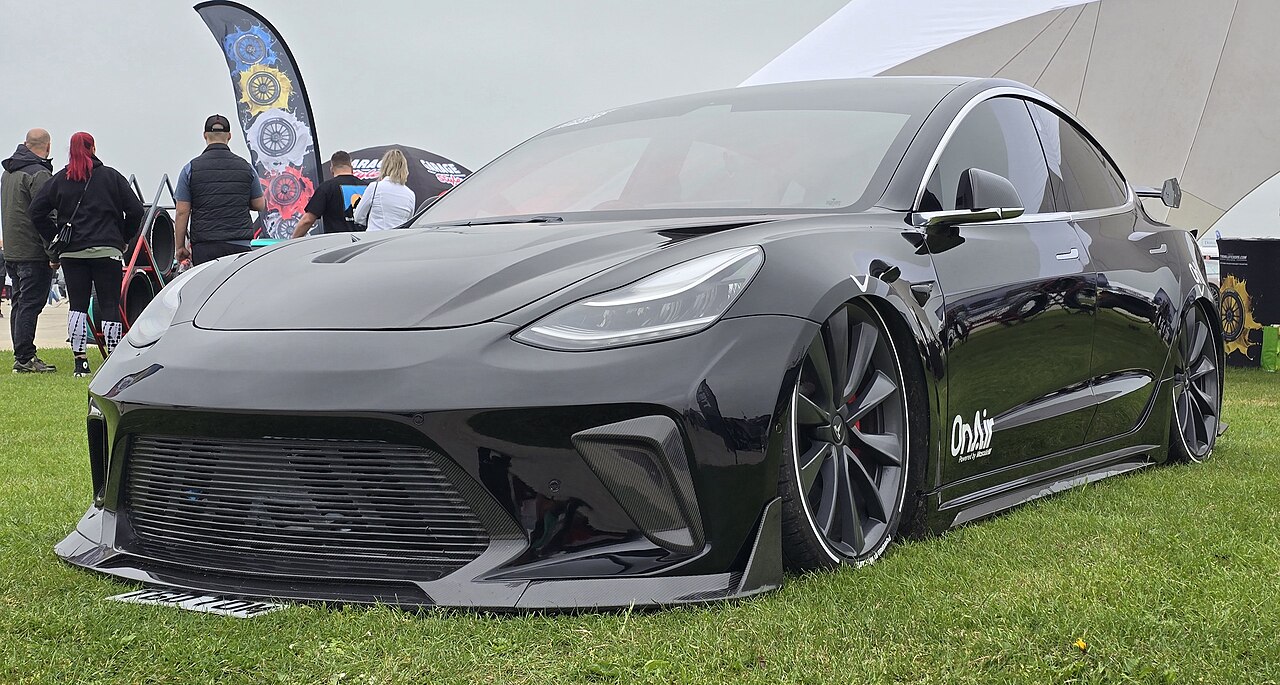
Tesla Model 3 2020

Electric Vehicle

Tesla Model 3 2020

46 source-linked failure reports. Most reported: Other. Typical failure around 3.3 yr.

Reliability signal B · Emerging signal · data confidence Moderate

46 confirmed failure reports

Reliability summary

What is likely to go wrong, when it happens, and how expensive it can be — from source-linked failure reports. Counts are reports in our database, not a population failure rate.

Reliability signal

B

46 confirmed failure reports · Emerging signal · Data confidence: Moderate

Most common issue
Other
Typical first failure
3.3 yr
Median of confirmed reports with timing
Median repair cost
—
Reported costs only · market varies
Highest reported repair
—
Not a quote · costs differ by country

What breaks?

Failure types

Click a type in the reports section below to filter.

  • Other26 · 56.5%
  • Steering failure5 · 10.9%
  • Brake system failure4 · 8.7%
  • Electrical system failure4 · 8.7%
  • Structure / body failure4 · 8.7%
  • Airbag / restraint failure2 · 4.3%
  • Powertrain / transmission failure1 · 2.2%

When does it break?

Failure timing

Months after purchase, using reports that included timing.

What does it cost?

Reported repair costs

Distribution of owner-reported repair costs— not a quote or guarantee. Labor and parts prices vary by country.

No reported repair costs yet for this model.

Median months to failure

39

Failure reports

46

View →

Median repair cost

—

Still recommend

—

% repaired

—

% mfr warranty

—

% extended warranty

—

% support helpful

—

Use these reports as a risk signal, then check current listings before you buy.

Search this model on Amazon

As an Amazon Associate, After Warranty may earn from qualifying purchases.

What breaks?

What breaks? · reports

Other

EXTERIOR LIGHTING

47 months

Government / agencyIndexed Oct 9, 2026Source-linkedVerify source — NHTSA complaint #11590195

Subject: Non-Functional Left Rear Tail Light Due to Condensation Build-Up in Tesla Vehicle Dear NHTSA, I am writing to report an issue with my Tesla vehicle concerning the left rear tail light. The tail light has stopped functioning, and I believe this failure is due to condensation build-up within the light assembly. When I previously reported the condensation to Tesla, I was informed that it was normal and not a cause for concern. However, it now seems that this persistent condensation has led to the failure of the tail light. This issue raises significant safety concerns, as fully functional tail lights are essential for safe driving. *Especially during automated self-driving which disregards the alert of a nonfunctional tail light. * I am seeking your assistance in addressing this problem and ensuring that it is properly investigated. I am concerned that other Tesla owners might experience similar issues, which could compromise vehicle safety. Thank you for your attention to this matter. I look forward to your guidance on the next steps. Sincerely, [XXX] [XXX] VIN: [XXX] --- INFORMATION REDACTED PURSUANT TO THE FREEDOM OF INFORMATION ACT (FOIA), 5 U.S.C. 552(B)(6)

VerifiedEvidence ★★★★☆
View report details

Months until failure

47 months

Repair cost

Not stated

Repaired

Not stated

Manufacturer warranty

Not stated

Extended warranty

Not stated

Support helpful

Not stated

Would recommend

Not stated

AI extraction confidence

90%

Verification status

Verified

Evidence quality

★★★★☆ (4/5)

Discussion

Steering failure

STEERING,LANE DEPARTURE

45 months

Government / agencyIndexed Oct 9, 2026Source-linkedVerify source — NHTSA complaint #11576321

My Model 3 intermittently has the steering wheel locked in position, which sometimes resolves temporarily after rebooting the car. I always get a steering assist reduced error on the car, regardless of rebooting. It also no longer has lane keep capabilities or Autopilot, which involve the car automatically moving the steering. I have not gotten this inspected by a dealer or service center. The issue first appeared yesterday, after I tried to pull out of a parking lot, but I had trouble since my wheel would not turn. I will be going to a service center next week. After the errors began, I have not meaningfully driven the car, since locking of the wheel while driving is very dangerous. A handful of errors showed up on the screen (Cruise Control disabled, Traction Control Disabled, Stability control disabled, Steering assist reduced), and I did not have any regenerative braking applying. I returned safely to my parking spot. After multiple reboots of the car (pressing both wheel buttons), I found that sometimes after putting my car into Drive, my steering wheel was locked. Other times, I could turn my steering wheel without issue, but I would always receive the Steering assist reduced error.

VerifiedEvidence ★★★★☆
View report details

Months until failure

45 months

Repair cost

Not stated

Repaired

Not stated

Manufacturer warranty

Not stated

Extended warranty

Not stated

Support helpful

Not stated

Would recommend

Not stated

AI extraction confidence

90%

Verification status

Verified

Evidence quality

★★★★☆ (4/5)

Discussion

Brake system failure

SERVICE BRAKES, HYDRAULIC,VEHICLE SPEED CONTROL

25 months

Government / agencyIndexed Oct 9, 2026Source-linkedVerify source — NHTSA complaint #11529563

The contact owned a 2020 Tesla Model 3. The contact stated while pulling into the driveway and depressing the brake pedal, the vehicle failed to respond, accelerated unintendedly, broke through the garage door, and crashed into the vehicle parked inside the garage. The other vehicle moved away and damaged the garage. There was no warning light illuminated. The air bags did not deploy. The contact shifted into reverse (R), pulled out of the driveway and shifted into drive (D). The brake pedal was depressed but the vehicle failed to respond. The contact stated that he hit the curb to stop the vehicle, and the vehicle stopped. The contact stated that all the air bags then deployed. The vehicle failed to unlock. The contact rolled down the windows and cried for help until the neighbors arrived and opened the vehicle from the outside. The contact sustained bruises on both arms, and the contact's wife sustained bruises on the right shoulder and on the left leg. Both the contact and his wife received medical assistance. There was no police report filed. The vehicle was towed to a third party it was sold to. The other damaged vehicle was totaled. The manufacturer was notified of the failure, but no assistance was provided. The failure mileage was 9,600.

VerifiedEvidence ★★★★☆
View report details

Months until failure

25 months

Repair cost

Not stated

Repaired

Not stated

Manufacturer warranty

Not stated

Extended warranty

Not stated

Support helpful

Not stated

Would recommend

Not stated

AI extraction confidence

90%

Verification status

Verified

Evidence quality

★★★★☆ (4/5)

Discussion

Other

VEHICLE SPEED CONTROL,FORWARD COLLISION AVOIDANCE

28 months

Government / agencyIndexed Oct 9, 2026Source-linkedVerify source — NHTSA complaint #11489830

While driving on an open highway using the Tesla Auto Pilot (Adaptive Cruise Control, NOT Full Self Driving), we experienced 3 separate instances of unexpected braking. In each case, we were on flat terrain with no vehicles in front of us for hundreds of yards. The weather was sunny and warm with few clouds in the sky. We were driving westbound between 10am and 1pm at the time of the incidents. During the first incident, the vehicle began to brake sharply and violently enough to startle, awake and scare a sleeping adult passenger in the front passenger seat. From memory, the braking rapidly dropped our speed by 15-20 mph. Thinking it was a simple glitch, I attempted to re-engage the system two more times and the same type of behavior occurred each time. I drove the remaining hours of our drive without engaging Auto Pilot. After researching the issue following the drive, I learned of the "phantom braking" issue many customers have reported. We then reported the issue to Tesla and created a service appointment to check out the vehicle. Tesla responded back that the ran a full remote diagnostic and the vehicle has no hardware issues reported by any sensors and said the service appointment was unnecessary because there was nothing to look at.

VerifiedEvidence ★★★★☆
View report details

Months until failure

28 months

Repair cost

Not stated

Repaired

Not stated

Manufacturer warranty

Not stated

Extended warranty

Not stated

Support helpful

Not stated

Would recommend

Not stated

AI extraction confidence

90%

Verification status

Verified

Evidence quality

★★★★☆ (4/5)

Discussion

Electrical system failure

ELECTRICAL SYSTEM,UNKNOWN OR OTHER

31 months

Government / agencyIndexed Oct 9, 2026Source-linkedVerify source — NHTSA complaint #11506905

The problem is my car has been in the shop six times for an issue that Tesla claims it is unable to fix. I started smelling a burning smell (smoke coming from my air vents anytime the air is on) and brought it in. The first three times they were unable to find anything the fourth time they noticed debris That was embedded in the heating fins. They replaced that unit. The fifth/sixth time they actually took the HVAC unit out and noticed the entire plastic underneath was melted and warped. Since the smell has continued and I’m worried that it’s dangerous, I had the air quality tested. The formaldehyde levels were 50 times higher than the EPA recommends as a safe level. (HCH0 level of 6 ppm) I’ve submitted all this to Tesla and they said they are currently working with their legal team to figure out if a buy back as possible. The New York Attorney General told me that the car is not viable for a lemon law due to the fact they didn’t do three chances to fix it in 90 days. (The first 2 appointments were in the 90 days but the 3-6th were just past it) The car is not safe to breath air in and my lungs hurt from even spending a few minutes in the car. I’m worried about the effects it has on my health and I feel morally wrong to sell it to anyone else. Please help.

VerifiedEvidence ★★★★☆
View report details

Months until failure

31 months

Repair cost

Not stated

Repaired

Not stated

Manufacturer warranty

Not stated

Extended warranty

Not stated

Support helpful

Not stated

Would recommend

Not stated

AI extraction confidence

90%

Verification status

Verified

Evidence quality

★★★★☆ (4/5)

Discussion

Other

UNKNOWN OR OTHER,FORWARD COLLISION AVOIDANCE

22 months

Government / agencyIndexed Oct 9, 2026Source-linkedVerify source — NHTSA complaint #11460984

Shift stalk also serves as fsd disengagement- to Shift into reverse with a regular car, it’s a very explicit mechanical shift with either the manual or automatic gear box. So consider this scenario where I nearly back crashed into the car behind me. In fsd, it can be disengaged either by 1) braking, (2) breaking torque with the steering wheel or (3) lifting the gear selector stick. So, I arrive at a stop light, I brake because fsd driving is producing an alarm that it came too close to the car in front of me (not me, fsd too close). Being human and not realizing that fsd disengaged when I hit the brake, a then lifted the shift stalk to disengage fsd to get it to shut up with the alarm. Actually what this did was shift me into reverse. Light turns green, I step on the accelerator and I go backwards. This event would be impossible with a conventional shifter. the other major issue is in a school zone. I acknowledge that the software appears to have placeholders where it recognizes a school zone, brakes and proceeds. The issue however is, when on the zone, in fsd and having manually set to the zone speed, the crosswalk guard flags the lane to stop, fsd instead, proceeds to snap to the left and attempt to pass the car in front of me, breaching all zone protocol.

VerifiedEvidence ★★★★☆
View report details

Months until failure

22 months

Repair cost

Not stated

Repaired

Not stated

Manufacturer warranty

Not stated

Extended warranty

Not stated

Support helpful

Not stated

Would recommend

Not stated

AI extraction confidence

90%

Verification status

Verified

Evidence quality

★★★★☆ (4/5)

Discussion

Structure / body failure

VISIBILITY/WIPER

60 months

Government / agencyIndexed Oct 9, 2026Source-linkedVerify source — NHTSA complaint #11668723

I am reporting a spontaneous windshield crack that developed on my 2020 Tesla Model 3 Performance under normal operating conditions. After exiting a routine drive-through car wash in Las Vegas on a hot day, I noticed a hairline crack in the windshield. It originates from the very bottom edge within the black ceramic frit area, curves upward, and spans across the glass. There are no impact points, chips, or pits of any kind. I brought the vehicle to Tesla Service, where the Service Manager visually confirmed it is a stress crack not caused by external damage. Despite this, they stated that Tesla does not offer goodwill or warranty repairs for windshields, regardless of the nature of the failure. This raises a serious safety concern. A windshield is a structural component of the vehicle and critical for driver visibility. A spontaneous failure like this without external cause compromises safety, especially at highway speeds. There are numerous reports of similar spontaneous cracks in Tesla Model 3 vehicles, often originating from the same area. This suggests a potential systemic defect in the design, installation, or bonding of the windshield. I am requesting that the NHTSA investigate this issue for safety implications and possible structural design flaws.

VerifiedEvidence ★★★★☆
View report details

Months until failure

60 months

Repair cost

Not stated

Repaired

Not stated

Manufacturer warranty

Not stated

Extended warranty

Not stated

Support helpful

Not stated

Would recommend

Not stated

AI extraction confidence

90%

Verification status

Verified

Evidence quality

★★★★☆ (4/5)

Discussion

Other

LATCHES/LOCKS/LINKAGES

6 months

Government / agencyIndexed Oct 9, 2026Source-linkedVerify source — NHTSA complaint #11521150

The contact owns a 2020 Tesla Model 3. The contact stated that while driving 25-35 MPH, all four windows slightly went down independently, wiggled and made clicking sounds. There was no warning light illuminated. The contact stated that the sound had become unbearable. Additionally, the contact stated that the front driver's side and passenger's side doors and the rear driver's side door failed to close securely. The door chime reminder engaged. The contact also stated the vehicle would shift into park (P) and would jerk when attempting to drive due to the failure. The contact stated that the doors required to be slammed in order to close securely. Additionally, the contact stated that the vehicle shifted into park (P) and stopped abruptly while driving. The contact stated that the failure also occurred while driving downhill and while at a traffic light. The vehicle was taken to a Tesla Service Center several times, and the windows and doors were readjusted; however, the failure persisted. The vehicle was taken back to the Tesla Service Center, where the window trim panel and the door trim panel were readjusted; however, the failure increased. The vehicle was not repaired. The manufacturer was notified of the failure. The failure mileage was approximately 14,000.

VerifiedEvidence ★★★★☆
View report details

Months until failure

6 months

Repair cost

Not stated

Repaired

Not stated

Manufacturer warranty

Not stated

Extended warranty

Not stated

Support helpful

Not stated

Would recommend

Not stated

AI extraction confidence

90%

Verification status

Verified

Evidence quality

★★★★☆ (4/5)

Discussion

Other

UNKNOWN OR OTHER,LANE DEPARTURE

20 months

Government / agencyIndexed Oct 9, 2026Source-linkedVerify source — NHTSA complaint #11453132

The Tesla rear facing repeater cameras show the driver's blind spot when changing lanes. The cameras are also used during automatic lane changes when the car is in drive-assisted (FSD) mode on the highway and in city (FSD Beta). The cameras have a manufacturer defect. At night, light from the turn signal led is blinding a large part of the vision field of these cameras. This renders the blind spot vision for the driver but also the computer assisted automatic lane changes for the car partially obstructed. Tesla has acknowledged this defect by redesigning the rear facing cameras so the blinding is remedied. Tesla is refusing to fix this issue under warranty and requires owners to pay for this safety fix. Tesla's statement on this issue: "Hi Stephan! The blind spot camera performance on your vehicle is neither a defect of materials nor workmanship. It is a characteristic of the product. And it's a characteristic that has been design enhanced in newer vehicle production. If you wish to upgrade to newer camera technology, you have an option to purchase the upgraded cameras and have them installed." I am having my cameras replaced, and will pay for it. I believe Tesla should, however, seeing how this is driver safety related even if they are unwilling to acknowledge this.

VerifiedEvidence ★★★★☆
View report details

Months until failure

20 months

Repair cost

Not stated

Repaired

Not stated

Manufacturer warranty

Not stated

Extended warranty

Not stated

Support helpful

Not stated

Would recommend

Not stated

AI extraction confidence

90%

Verification status

Verified

Evidence quality

★★★★☆ (4/5)

Discussion

Steering failure

STEERING,SUSPENSION

66 months

Government / agencyIndexed Oct 9, 2026Source-linkedVerify source — NHTSA complaint #11703787

My Tesla Model 3 is experiencing premature suspension failures involving the lower lateral links and stabilizer links. These components were already replaced once, and they are failing again in less than 30,000 miles. This is not normal wear for suspension parts on a modern vehicle. These failures cause clunking, instability, and looseness in the front end—conditions that affect the vehicle’s ability to track straight and maintain control, especially over uneven pavement or during emergency maneuvers. This isn’t an isolated case. There are extensive reports from other Tesla owners across multiple models (Model 3 and Model Y in particular) showing the same premature wear on these suspension links. Many owners have parts failing even earlier. Once the car is out of warranty, Tesla charges thousands of dollars to replace these components, despite clear indications that the suspension was under-engineered for the weight of the vehicle. Tesla knows this is a recurring issue but refuses to issue a recall or goodwill repairs. A repeated failure of critical suspension links in such low mileage suggests a defect. These parts should not be wearing out this fast, and the resulting instability poses a real safety risk. I’m requesting NHTSA investigate these premature failures.

VerifiedEvidence ★★★★☆
View report details

Months until failure

66 months

Repair cost

Not stated

Repaired

Not stated

Manufacturer warranty

Not stated

Extended warranty

Not stated

Support helpful

Not stated

Would recommend

Not stated

AI extraction confidence

90%

Verification status

Verified

Evidence quality

★★★★☆ (4/5)

Discussion

Other

LATCHES/LOCKS/LINKAGES

62 months

Government / agencyIndexed Oct 9, 2026Source-linkedVerify source — NHTSA complaint #11678986

Essentially, I find the lack of emergency, unpowered door release for the back doors a little concerning. There is no way to open the door in the event that all power to the door latch fails. Even in newer models (at least of 3/Y/Cybertruck, that i know of) the emergency release is buried under the cupholder liner in the rear seat. Here is a youtube video showing a homebrew retrofit. It seems like something like this should probably be provided to owners of this model of car. The internals of the door seem to make this feasible. [XXX] The front seats, on the other hand, have an easily accessed and intuitive emergency door release. I imagine that the rear seats differ from this model because of child safety locks. Just removing all emergency handles from the door seems like a pretty bad solution. I further understand that there are situations in which even an emergency door release will fail to open the door, and a glass break device is probably the ultimate recourse to this situation. But rear seat emergency egress really seems like a blind spot in NHTSA requirements at least. I shouldn't have to do an airline style safety briefing to my rear passengers in a consumer vehicle. Thanks for your time, [XXX] INFORMATION REDACTED PURSUANT TO THE FREEDOM OF INFORMATION ACT (FOIA), 5 U.S.C. 552(B)(6)

VerifiedEvidence ★★★★☆
View report details

Months until failure

62 months

Repair cost

Not stated

Repaired

Not stated

Manufacturer warranty

Not stated

Extended warranty

Not stated

Support helpful

Not stated

Would recommend

Not stated

AI extraction confidence

90%

Verification status

Verified

Evidence quality

★★★★☆ (4/5)

Discussion

Airbag / restraint failure

AIR BAGS,SEATS

34 months

Government / agencyIndexed Oct 9, 2026Source-linkedVerify source — NHTSA complaint #11525432

I have an alert that says "Front passenger safety restraint system fault". I took the car in to Tesla Service in late April. Was told it would be about $270 to replace the sensor in the seat that detects it someone is sitting in it. They told me that when the parts people went in, that wasn't the issue and that to fix the sensor they thought it was they would have to tear the whole seat apart and that takes too long so instead I need to buy a whole new seat at the cost of $3000. I didn't have time to deal with it further at that point and the seat was back ordered anyway. I asked if the issue would affect the operation of the airbags or seat belts thus causing a safety concern and was told that it would not. That the car was still safe. I took the car back without repair. I have since noticed that when a passenger is in the seat, the symbol that states that the airbag is not engaged is still on. So it would appear that the airbag is not working properly. I called Tesla today to inquire and ask for clarification if this is a safety concern and if the airbag is not working. They told me a manager would call me back. They said there is not a Tesla wide recall- even though it would appear that this issue is causing the airbag not to work. From research online it seems like other customers have experienced the same or similar issues.

VerifiedEvidence ★★★★☆
View report details

Months until failure

34 months

Repair cost

Not stated

Repaired

Not stated

Manufacturer warranty

Not stated

Extended warranty

Not stated

Support helpful

Not stated

Would recommend

Not stated

AI extraction confidence

90%

Verification status

Verified

Evidence quality

★★★★☆ (4/5)

Discussion

Brake system failure

SERVICE BRAKES

64 months

Government / agencyIndexed Oct 9, 2026Source-linkedVerify source — NHTSA complaint #11693937

The complaint was filed on behalf of the contact's daughter. The contact's daughter owned a 2020 Tesla Model 3. The contact stated that while the contact's daughter was driving at 35 MPH, the brake pedal was depressed; however, the vehicle failed to stop as intended. The contact stated that the contact's daughter stated that the brake pedal felt spongy and unusual. The contact's daughter stated that the brake pedal was depressed to the floor; however, the vehicle still did not stop. The contact's daughter enabled the emergency braking system; however, the vehicle still did not stop. The contact's daughter beeped the horn to alert the nearby driver, and the dash cam independently activated. The contact stated that because of the failure, the contact's daughter's vehicle rear-ended the vehicle in front of the contact's daughter's vehicle. The air bags did not deploy. The contact stated that after the crash, the emergency braking system failure warning light was illuminated. The vehicle was towed to a local tow yard. The vehicle was condemned as a total loss by the insurance company. A Police report was filed. The contact's daughter was treated at the local hospital on the following day. The contact's daughter sustained headaches, whiplash, and a concussion. The manufacturer was not made aware of the failure. The failure mileage was approximately 49,000.

VerifiedEvidence ★★★★☆
View report details

Months until failure

64 months

Repair cost

Not stated

Repaired

Not stated

Manufacturer warranty

Not stated

Extended warranty

Not stated

Support helpful

Not stated

Would recommend

Not stated

AI extraction confidence

90%

Verification status

Verified

Evidence quality

★★★★☆ (4/5)

Discussion

Other

VEHICLE SPEED CONTROL

73 months

Government / agencyIndexed Oct 9, 2026Source-linkedVerify source — NHTSA complaint #11753407

I was making a right turn from the parking lot onto the street, a maneuver I have made hundreds of times previously without any issue. My foot was on the accelerator pedal as normal for this turn. The vehicle accelerated far faster than intended for this maneuver, with tires screeching, and continued across the width of the street. The vehicle's front left wheel struck the curb on the opposite side of the street from the parking lot exit. The wheel sustained significant damage, and the wheel rim was torn. When I regained my bearings, I lifted my foot off the accelerator and the vehicle slowed down. At the time, I believed a serious crash was imminent. I was able to drive the vehicle home, which was about 1 1/2 miles away, but it is not safe to drive so I won't drive it until it is repaired. I am aware that Tesla and NHTSA have attributed many prior sudden acceleration incidents to drivers unintentionally pressing the accelerator when intending to press the brake. Due to the vehicle's regenerative braking, I rarely use the brake pedal during normal driving, which makes this explanation virtually impossible in my case. I am also aware that NHTSA reopened an investigation in 2023 after learning about a potential inverter-related design flaw that could cause sudden unintended acceleration in Tesla vehicles, and that this investigation remains open as of this writing.

VerifiedEvidence ★★★★☆
View report details

Months until failure

73 months

Repair cost

Not stated

Repaired

Not stated

Manufacturer warranty

Not stated

Extended warranty

Not stated

Support helpful

Not stated

Would recommend

Not stated

AI extraction confidence

90%

Verification status

Verified

Evidence quality

★★★★☆ (4/5)

Discussion

Other

UNKNOWN OR OTHER,LANE DEPARTURE

72 months

Government / agencyIndexed Oct 9, 2026Source-linkedVerify source — NHTSA complaint #11745633

Subject: Tesla HW2 FSD – Advertised Safety/Autonomy Features Not Provided Description: I am reporting an issue regarding my 2020 Tesla Model 3 equipped with Hardware 2 (HW2) and Full Self-Driving (FSD) package. Although the vehicle is listed and sold as “FSD capable,” Tesla has stopped providing FSD software updates for HW2 vehicles. My vehicle is stuck on FSD version 12.6.4 and cannot receive newer versions (v12.7, v12.8, v13, etc.). Tesla continues to advertise FSD as an evolving safety and autonomy system, but HW2 vehicles are no longer receiving the required updates to maintain or improve safety functions. This results in: • Safety-related features not being updated • Autonomy features advertised at purchase not being delivered • OTA updates being discontinued without notice • Tesla refusing to provide a hardware upgrade path (HW3) despite FSD being purchased on this VIN This creates a safety concern because the vehicle is operating with outdated perception and driving models while newer vehicles receive critical improvements. Tesla has not provided a remedy, timeline, or alternative solution. I request NHTSA to investigate Tesla’s failure to provide advertised and safety‑related FSD functionality for HW2 vehicles. Vehicle Info: 2020 Tesla Model 3 Hardware: HW2 FSD purchased on VIN (previous owner) Purchased used in July 2023 Current FSD version: 12.6.4 (no further updates)

VerifiedEvidence ★★★★☆
View report details

Months until failure

72 months

Repair cost

Not stated

Repaired

Not stated

Manufacturer warranty

Not stated

Extended warranty

Not stated

Support helpful

Not stated

Would recommend

Not stated

AI extraction confidence

90%

Verification status

Verified

Evidence quality

★★★★☆ (4/5)

Discussion

Structure / body failure

VISIBILITY/WIPER,FORWARD COLLISION AVOIDANCE,LANE DEPARTURE

36 months

Government / agencyIndexed Oct 9, 2026Source-linkedVerify source — NHTSA complaint #11526530

The automatic windshield wipers came on and would not shut off. The car was clean, the day was sunny, and the camera lenses were free of dust or anything else that could cover them. While driving along, the wipers started and would not shut off. I went into the main monitor/screen that has the wiper settings but I was not able to activate the wiper/off button, so the wipers kept working. Pressing on that button would not activate it. I was in autopilot at the time, i.e., cruise control + lane keep assistance. I have FSD/full self driving, but have never used it since it is still in beta testing. I’m using Tesla software # 2023.7.10 I checked the various Tesla websites, and you can turn off the wipers only if you disable the ADAS features. After I turned off the ADAS, I was able to activate the wiper/off button. But this is a terrible situation, the ADAS needs to be activated, but if I activate, it wipers will begin working whenever they feel like it, regardless of the weather outside. This is clearly a software problem with the Tesla ADASN needs to be corrected. I don’t want to be driving along with auto pilot on, and then the wipers will simply turn on. Any help you could provide would be greatly appreciated to correct this dangerous situation. There are countless hundreds of complaints like this on the various Tesla websites about spontaneously functioning wipers when the weather is bright and sunny.

VerifiedEvidence ★★★★☆
View report details

Months until failure

36 months

Repair cost

Not stated

Repaired

Not stated

Manufacturer warranty

Not stated

Extended warranty

Not stated

Support helpful

Not stated

Would recommend

Not stated

AI extraction confidence

90%

Verification status

Verified

Evidence quality

★★★★☆ (4/5)

Discussion

Airbag / restraint failure

AIR BAGS

62 months

Government / agencyIndexed Oct 9, 2026Source-linkedVerify source — NHTSA complaint #11681732

Summary Complaint – 2020 Tesla Model 3 (VIN: [XXX] ) I am reporting a defect with the passenger side airbag system in my 2020 Tesla Model 3. Tesla Service identified the passenger airbag sensor as defective and quoted a $1,600 repair cost. This raises concern that the problem is not isolated, but may represent a broader safety defect affecting other Model 3 vehicles of the same year. Why this is a safety issue: - Airbags are federally required safety systems. A defective sensor risks non-deployment, delayed deployment, or incorrect deployment. - Tesla has already recalled 2020 Model 3 vehicles for airbag issues (twisted side curtain airbags – NHTSA Campaign ID 21V834000). - In 2024, a Model 3 recall was issued for a defective driver airbag module. - Other automakers (GM, Hyundai/Kia, Takata) have recalled vehicles for similar airbag sensor/module failures. Requested Action: I respectfully request that NHTSA: 1. Open a defect investigation into passenger side airbag sensor/module failures in the 2020 Tesla Model 3. 2. Require Tesla to issue a recall and provide free repairs if systemic defects are confirmed. 3. Ensure reimbursement for owners who have already paid out-of-pocket. Airbag integrity is essential. I urge NHTSA to investigate and protect the safety of Tesla Model 3 owners and passengers. Complainant Information: [XXX] [XXX] Phone: [XXX] INFORMATION REDACTED PURSUANT TO THE FREEDOM OF INFORMATION ACT (FOIA), 5 U.S.C. 552(B)(6)

VerifiedEvidence ★★★★☆
View report details

Months until failure

62 months

Repair cost

Not stated

Repaired

Not stated

Manufacturer warranty

Not stated

Extended warranty

Not stated

Support helpful

Not stated

Would recommend

Not stated

AI extraction confidence

90%

Verification status

Verified

Evidence quality

★★★★☆ (4/5)

Discussion

Other

LANE DEPARTURE

16 months

Government / agencyIndexed Oct 9, 2026Source-linkedVerify source — NHTSA complaint #11438166

The lane departure assistance in my car was malfunctioning. Yes it is available for inspection if you would like. Today I.e. 10/25/2021, I was driving manually on Interstate 5. The car wasn’t on autopilot or cruise control. I was trying to merge into right lane and had my right turn signal on and made sure there was no one in my blind spot. As I was merging there was a warning signal and message displayed on the screen that read something like- lane departing corrective steering applied. The car was trying to pull me back into the lane I was departing from and it was applying sudden brakes to slow me down. I had to apply lot of force to the steering wheel to pull the car into the lane I was trying to merge. It was rush hour traffic and the cars around me were going pretty fast. It was a really dangerous situation and there could have been a big collision if I didn’t apply that force to bring the car into the right lane. There were no warning signs leading up to what happened today. But there was some malfunctioning in my car previously when the car just stopped without any warning on the ramp to my driveway. It’s a steep ramp and the car stopped all of a sudden and would not move. I contacted Tesla service about this and no action was taken whatsoever. I am really concerned about the safety of myself and the drivers around me not knowing what kind of bugs are going to come up in the future. Please take some action to make Tesla responsible for this.

VerifiedEvidence ★★★★☆
View report details

Months until failure

16 months

Repair cost

Not stated

Repaired

Not stated

Manufacturer warranty

Not stated

Extended warranty

Not stated

Support helpful

Not stated

Would recommend

Not stated

AI extraction confidence

90%

Verification status

Verified

Evidence quality

★★★★☆ (4/5)

Discussion

Other

VEHICLE SPEED CONTROL,FORWARD COLLISION AVOIDANCE

28 months

Government / agencyIndexed Oct 9, 2026Source-linkedVerify source — NHTSA complaint #11488872

Driving on cruise control (not autopilot), in the following conditions: on an interstate highway with all lanes in the traveling direction clear, no obstructions and no traffic to the front or to either side of the car, on a straight road with no bridge or on or off ramp in front of the car, daylight and no rain or or other participation, the car can unexpectedly and without warning aggressively brake. If the driver does not immediately regain control of the speed (by pressing the accelerator, or turning off the cruise control) the braking has caused the speed of the car to go from 75mph to 30mph. Unlike other Tesla accident avoidance features, the braking occurs with no indication that an obstruction is being avoided. I have owned the car since it was new and until Saturday 8 October 2022, the adaptive cruise control worked as expected. Since that Saturday (less than a week) the braking has occurred several times. Each time it required a sudden depress of the accelerator pedal to recover speed control of the car. The first photo I've attached shows a screengrab of the moment of one deceleration on Monday 10 October saved as a dashcam video. As you can see there is no obstruction and no other traffic around the car at the time. The second photo is a snapshot of the chat session I had with Tesla service where they claim that this behavior is caused by a curve, off ramp, a bridge, a two lane road. As you can see in the first photo, none of this is the case.

VerifiedEvidence ★★★★☆
View report details

Months until failure

28 months

Repair cost

Not stated

Repaired

Not stated

Manufacturer warranty

Not stated

Extended warranty

Not stated

Support helpful

Not stated

Would recommend

Not stated

AI extraction confidence

90%

Verification status

Verified

Evidence quality

★★★★☆ (4/5)

Discussion

Other

FORWARD COLLISION AVOIDANCE

27 months

Government / agencyIndexed Oct 9, 2026Source-linkedVerify source — NHTSA complaint #11494405

"Phantom braking" issue. When car is in autopilot or enhanced autopilot mode (an upgrade I purchased after I bought car), will brake suddenly and firmly at high speed for no apparent reason. Until September 2022 car would very occassionally brake too easily in autopilot mode (perhaps 3 times in two years), but it was not sufficiently forceful or frequent to cause alarm. However, on 9/26/22 and 9/30/22 during daytime driving car violently braked on highway at least 6 times over approx 500 miles of driving. Fortunately, these incidents caused no damage, collision, or injury. There was little additional traffic on the road at the time. However, items in car, and two cats in carriers on back seat were thrown forward and displaced, and the incidents were very frightening. When I realized this was happening in autopilot modes, I stopped using feature completely and have not since. At 11/19/22 service appt for issue at Alhambra Tesla dealer I was told this was a "known issue" with no current solution; however, I was told that the more I used autopilot and hit accelorator during phantom braking, the faster car would "learn" not to do this. Given that taking the risk of continuing to use autopilot at all poses a serious risk of injury, I am truly shocked at the suggestion that I continue to use this feature and essentially train my car not to be dangerous. Via Tesla app I gave information and dates to Tesla prior to service appt and was told that they would attach vehicle log to file for service visit.

VerifiedEvidence ★★★★☆
View report details

Months until failure

27 months

Repair cost

Not stated

Repaired

Not stated

Manufacturer warranty

Not stated

Extended warranty

Not stated

Support helpful

Not stated

Would recommend

Not stated

AI extraction confidence

90%

Verification status

Verified

Evidence quality

★★★★☆ (4/5)

Discussion

Other

VEHICLE SPEED CONTROL

41 months

Government / agencyIndexed Oct 9, 2026Source-linkedVerify source — NHTSA complaint #11555372

I was already situated in the left turn lane on a two way city street, slowing down, and about to come to a full stop before making a U turn when I felt a surge in power before the car picked up, accelerated uncontrollably, and launched forward. In front of the turn is a raised cemented median strip divider where the car hit and went on top of it. Instinctively, I just held on to the steering wheel firmly to keep the car straight so that it will stay on (top) and within the divider and not veering to the right or left and running onto incoming traffics on both sides of the street. The car came to a stop after coming off the other end of the divider (approximately 100 ft) and ended on one of the lane from the opposite traffic. Thankfully there were no cars on that lane at the time and I was able to sluggishly drive the car safely into an adjacent parking lot. I, as well as other could have been seriously injured or killed. All wheels and tires are visibly damaged and possibly the underside as well. The car is in a body repair shop and waiting for inspection at this time. I already reported the incident to my insurance and Tesla companies. All inspections and reports are pending at this time. There was no police report since there was no collision or bodily injuries. There were no warning signs, signals, messages, or symptoms from the car or from Tesla before the incident. The car 12V battery was changed 3 months prior by Tesla Service Center. This is my first encounter with this sort of problem.

VerifiedEvidence ★★★★☆
View report details

Months until failure

41 months

Repair cost

Not stated

Repaired

Not stated

Manufacturer warranty

Not stated

Extended warranty

Not stated

Support helpful

Not stated

Would recommend

Not stated

AI extraction confidence

90%

Verification status

Verified

Evidence quality

★★★★☆ (4/5)

Discussion

Other

SUSPENSION

72 months

Government / agencyIndexed Oct 9, 2026Source-linkedVerify source — NHTSA complaint #11754693

I own a Tesla Model 3 and have been experiencing concerning front suspension and steering issues that appear to be worsening over time. While driving and especially during low speed turns, parking and maneuvering, the front suspension produces loud screeching, squeaking, and rubbing noises. The steering has also become noticeably stiffer that normal at times, and the noises can be felt through the steering wheel. The sounds are coming from the front suspension area and occur repeatedly during normal driving. The issues raises significant safety concerns because I am worried there may be a defect affecting the front suspension of steering components. Unexpected steering resistance combined with loud suspension noises creates concern that a suspension component could fail while the vehicle is in motion, potentially resulting in loss of steering control or a crash. There were no warning lights or messages displayed before or during these symptoms. The vehicle has not been involved in any collision that would explain these symptoms. The problem has continued during normal operation and appears to be getting progressively worse. The vehicle is available for inspection upon request. I am submitting this complaint because I understand NHTSA is investigating front suspension issues involving 2018-2020 Tesla Model 3 vehicles, and my vehicle is experiencing similar symptoms. I believe this issue should be investigated to determine whether it is related to the front suspension components under investigation.

VerifiedEvidence ★★★★☆
View report details

Months until failure

72 months

Repair cost

Not stated

Repaired

Not stated

Manufacturer warranty

Not stated

Extended warranty

Not stated

Support helpful

Not stated

Would recommend

Not stated

AI extraction confidence

90%

Verification status

Verified

Evidence quality

★★★★☆ (4/5)

Discussion

Steering failure

STEERING,LANE DEPARTURE

62 months

Government / agencyIndexed Oct 9, 2026Source-linkedVerify source — NHTSA complaint #11680195

Subject: Urgent Complaint Regarding Power Steering Failure in 2019 Tesla Model 3 Hello NHTSA, I am writing to file a complaint regarding a very dangerous situation I recently experienced with my 2019 Tesla Model 3. While driving on the freeway at approximately 65 mph, the power steering failed unexpectedly. I struggled significantly to change lanes in order to exit the freeway, and it felt as though my vehicle was going to collide with other cars. After managing to get off the freeway, I nearly hit the guardrail while attempting to turn onto a side street, creating a hazardous situation. I am deeply concerned about the potential consequences; for instance, what if I had struck a pedestrian, or if the car had collided with another vehicle at high speed? I live on a winding mountain road, where I could have easily driven off a cliff. Turning the car off and back on temporarily resolved the issue. However, there are numerous complaints regarding steering rack failures with Tesla vehicles. Tesla has quoted me $2,700.00 to fix what appears to be a known manufacturing defect. They are aware of this potentially hazardous situation but are not taking responsibility for the repairs. This is a serious safety issue, and I urge Tesla to accept responsibility and cover the repair costs before someone is seriously injured or killed—if such an incident has not already occurred. Please let me know what further actions I can take to facilitate Tesla's resolution of this dangerous problem. Thank you for your attention to this matter. Sincerely,

VerifiedEvidence ★★★★☆
View report details

Months until failure

62 months

Repair cost

Not stated

Repaired

Not stated

Manufacturer warranty

Not stated

Extended warranty

Not stated

Support helpful

Not stated

Would recommend

Not stated

AI extraction confidence

90%

Verification status

Verified

Evidence quality

★★★★☆ (4/5)

Discussion

Other

SEAT BELTS,SEATS

67 months

Government / agencyIndexed Oct 9, 2026Source-linkedVerify source — NHTSA complaint #11732996

2020 Tesla Model 3 Standard Range Plus, VIN [XXX] restraint control module fault codes RCM_a056 and RCM_a058. Passenger front seat occupancy sensor failure triggering "Service Required" airbag system alert. September 2024: fault code RCM a056: Tesla repaired this issue under the Supplemental Restraint System Limited Warranty (5 years, 60,000 miles) at Tesla Service Latham NY (326 Old Niskayuna Rd, Latham NY 12110). January 10, 2026: Fault code RCM_a058. Reported in writing through the Tesla app. Tesla scheduled a service visit for January 13, 2026. Technician assessed the vehicle in person and declined to repair, verbally stating the fault may be a one-time occurrence and to monitor and return if it continued. April 2026: Fault continues recurring. Tesla Service Latham issued estimate #XXX dated April 18, 2026 for $1,076.32 customer pay. Repairs include resistive occupancy sensor replacement and seat back trim cover replacement. This is a safety-critical system governing airbag deployment. Tesla has documented this failure mode in internal service bulletins citing electrical interference in the seat harness as a design issue. Tesla repaired this under warranty, dismissed a related restraint fault for the same seat when reported within months of the repair, and is now billing the owner for a safety system that failed due to a known design defect. A recall is warranted. INFORMATION REDACTED PURSUANT TO THE FREEDOM OF INFORMATION ACT (FOIA), 5 U.S.C. 552(B)(6) INFORMATION REDACTED PURSUANT TO THE FREEDOM OF INFORMATION ACT (FOIA), 5 U.S.C. 552(B)(6)

VerifiedEvidence ★★★★☆
View report details

Months until failure

67 months

Repair cost

Not stated

Repaired

Not stated

Manufacturer warranty

Not stated

Extended warranty

Not stated

Support helpful

Not stated

Would recommend

Not stated

AI extraction confidence

90%

Verification status

Verified

Evidence quality

★★★★☆ (4/5)

Discussion

Other

SEAT BELTS,SEATS

36 months

Government / agencyIndexed Oct 9, 2026Source-linkedVerify source — NHTSA complaint #11645041

The passenger-side seatbelt system in my Tesla Model 3 (bought Dec 2020) has been malfunctioning repeatedly. The vehicle displays a "Front passenger safety restraint system fault” warning, even when no one is on the passenger side. This issue has persisted despite multiple repair attempts by Tesla during the warranty period, but they have been unable to resolve it. Safety Concern: A malfunctioning seatbelt system is a serious safety hazard, as it could result in the seatbelt failing to function properly in an accident, potentially putting the passenger at greater risk of injury or death. Additionally, the fault warning may prevent proper airbag deployment or create a distraction for the driver while operating the vehicle. Attempts to Fix & Verification: Tesla has attempted multiple repairs but has not been able to fix the issue. According to Tesla, this is a common issue with this model, which raises concerns about a wider systemic defect. The problem is persistent and ongoing, making the vehicle unreliable and unsafe for passengers. Warning & Symptoms: The seatbelt fault warning appears randomly but frequently while driving. Tesla attempted to fix this issue as early as June of 2023, and has remained unresolved despite 4 or more service visits. We might have asked Tesla to work on this issue even earlier and more times since we're unable to pull up repair history before this due to their system error. This issue requires immediate investigation to determine if it is a broader safety defect affecting other Tesla vehicles and if a recall or mandatory repair is necessary.

VerifiedEvidence ★★★★☆
View report details

Months until failure

36 months

Repair cost

Not stated

Repaired

Not stated

Manufacturer warranty

Not stated

Extended warranty

Not stated

Support helpful

Not stated

Would recommend

Not stated

AI extraction confidence

90%

Verification status

Verified

Evidence quality

★★★★☆ (4/5)

Discussion

Steering failure

STEERING,SUSPENSION

7 months

Government / agencyIndexed Oct 9, 2026Source-linkedVerify source — NHTSA complaint #11400003

This is a complaint about the issue of popped ball-joints which is affecting all models of Tesla cars. Here is just one example of a ball-joint that has popped apart for no good reason. HTTPS://WWW.IAAI.COM/VEHICLEDETAILS/39240789?TENANT=US&ROWNUMBER=3 it is easy to find other examples of this same failure in other Tesla at the junkyard. I will attach a few photographs to show you. Thes ball joints are of low quality, undersized, prone to creaking and groaning due to lack of grease which causes the ball to wear down and pop out. The Tesla forums are filled with reports about this. Elon musk has addressed this by nerfing the forums. Definitely a genius. Links to other popped teslas.here: HTTPS://WWW.IAAI.COM/VEHICLEDETAILS/39311673?TENANT=US&ROWNUMBER=11 popped front and whompy rear HTTPS://WWW.IAAI.COM/VEHICLEDETAILS/39310125?TENANT=US&ROWNUMBER=15 popped HTTPS://WWW.IAAI.COM/VEHICLEDETAILS/39308954?TENANT=US&ROWNUMBER=22 popped HTTPS://WWW.IAAI.COM/VEHICLEDETAILS/39282369?TENANT=US&ROWNUMBER=24 popped HTTPS://WWW.IAAI.COM/VEHICLEDETAILS/39280909?TENANT=US&ROWNUMBER=30 popped HTTPS://WWW.IAAI.COM/VEHICLEDETAILS/39265721?TENANT=US&ROWNUMBER=33 popped and then burned to a crisp HTTPS://WWW.IAAI.COM/VEHICLEDETAILS/39248729?TENANT=US&ROWNUMBER=39 popped HTTPS://WWW.IAAI.COM/VEHICLEDETAILS/39245824?TENANT=US&ROWNUMBER=51 popped HTTPS://WWW.IAAI.COM/VEHICLEDETAILS/39244011?TENANT=US&ROWNUMBER=62 popped HTTPS://WWW.IAAI.COM/VEHICLEDETAILS/39258823?TENANT=US&ROWNUMBER=81 popped see attached POPS2 I can find you plenty more. Please investigate. Thank you keef

VerifiedEvidence ★★★★☆
View report details

Months until failure

7 months

Repair cost

Not stated

Repaired

Not stated

Manufacturer warranty

Not stated

Extended warranty

Not stated

Support helpful

Not stated

Would recommend

Not stated

AI extraction confidence

90%

Verification status

Verified

Evidence quality

★★★★☆ (4/5)

Discussion

Other

FORWARD COLLISION AVOIDANCE

39 months

Government / agencyIndexed Oct 8, 2026Source-linkedVerify source — NHTSA complaint #11544521

On September 9, 2023, we were driving from Winter Park, CO to Omaha, NE. Three or four hours into our trip, we experienced what is described on the internet as "phantom breaking" four or five times in an hour. We were in a remote area on I-80 with no cars ahead of us or behind us and no debris in the road. We have occasionally experienced this hard automatic breaking for no obvious reason before in our almost four years of driving this Tesla, but we never thought much of it. This time since it happened so many times in such a short amount of time, we researched online if there was anything we could do. With that information we turned off the "Automatic Emergency Breaking", which seemed to do the trick. When we contacted the Tesla Service Center in Council Bluffs, IA for an appointment to see if they could fix the problem, they asked for more information. They said the following: "We performed a remote diagnosis on the Autopilot System in the vehicle and its affiliated hardware and all checks came back in good standing with no faults." They then suggested I read the Owners manual for factors that may cause the vehicle to brake when not required or expected. I read it and told them none of those conditions were present. They said that was all they could do and suggested if it happens again I should file a "bug report" (which was a new concept to me!). The phantom breaking happened, but Tesla either doesn't seem to believe me or does not have the ability to properly diagnose or fix the problem. I will try to remember to turn off the Automatic Emergency Breaking, but that raises other safety concerns . . . .

VerifiedEvidence ★★★★☆
View report details

Months until failure

39 months

Repair cost

Not stated

Repaired

Not stated

Manufacturer warranty

Not stated

Extended warranty

Not stated

Support helpful

Not stated

Would recommend

Not stated

AI extraction confidence

90%

Verification status

Verified

Evidence quality

★★★★☆ (4/5)

Discussion

Electrical system failure

POWER TRAIN,ELECTRICAL SYSTEM,UNKNOWN OR OTHER

38 months

Government / agencyIndexed Oct 8, 2026Source-linkedVerify source — NHTSA complaint #11536830

On August 2, 2023 at 0400, the Tesla M3 was charging in the garage using a home charger. Smoke indicative of an electrical fire likely originated from the vehicle and eventually triggered a smoke alarm in the kitchen. The driver was unaware the source of the smoke was the Tesla, disconnected the Tesla and moved it out of the house to protect the vehicleb assuming a fire was in the house, and called firefighters who searched the home without success for a source of the fire. The driver now believes the Tesla was the source as the garage access door was cracked open to feed the charging cable from the 240v outlet in the laundry room. The nearest smoke detector from the Tesla is in the kitchen, where the driver smelled smoke from an electrical fire. At roughly 0745, the driver was about to complete a one hour commute to work in this Tesla unaware that the incident at 0400 was related to the Tesla. The driver experienced a sudden vector and velocity change in the vehicle while traveling at highway speeds. This is the driver's last memory of the accident that followed. A witness driving behind the Tesla described the vehicle traveling in clear lanes when it abruptly jerked left, then right into the side of the highway into concrete barricades. The Tesla was destroyed, airbags deployed, and the driver was rescued by first responders,firefighters, and paramedics. The driver was evacuated to the nearest hospital with serious injuries. The driver suffered broken ribs, a pneumothorax, several lacerations to head and chest, several contusions across the shoulder, legs, and body, and a mild traumatic brain injury.

VerifiedEvidence ★★★★☆
View report details

Months until failure

38 months

Repair cost

Not stated

Repaired

Not stated

Manufacturer warranty

Not stated

Extended warranty

Not stated

Support helpful

Not stated

Would recommend

Not stated

AI extraction confidence

90%

Verification status

Verified

Evidence quality

★★★★☆ (4/5)

Discussion

Other

LATCHES/LOCKS/LINKAGES

59 months

Government / agencyIndexed Oct 8, 2026Source-linkedVerify source — NHTSA complaint #11662321

I am writing to report a repeated and potentially dangerous defect in my 2020 Tesla Model 3. On four separate occasions, the front trunk (frunk) latch has opened on its own, without any input from me. This has occurred while parked in my garage and poses a serious safety risk, especially at highway speeds where the hood could flip up and obstruct the driver’s view. I am aware that Tesla has issued recalls for this exact problem involving the frunk latch mechanism on certain Model 3 vehicles. However, I have been told by Tesla that my VIN is not included in the recall, despite my car exhibiting the same malfunction. I brought my vehicle to the Carlsbad CA Tesla service center, but they found no issue and have since told me they consider the matter closed. I also want to note that I previously experienced a failure of the rear camera cable, which Tesla also initially claimed was not part of a recall—only to later repair it under warranty when the problem became undeniable. I believe this hood latch issue poses a critical safety hazard that may be more widespread than Tesla currently acknowledges. If the frunk opens while driving, it could cause a catastrophic accident. Tesla’s dismissal of this issue leaves me driving a car that could endanger myself and others on the road. I respectfully request that NHTSA investigate this defect and consider whether the existing recall should be expanded to include additional vehicles like mine. I would also like NHTSA to contact Tesla and direct them to address the situation in my vehicle…to do more than say “we could not reproduce the reported issue." Thank you for your attention to this urgent matter.

VerifiedEvidence ★★★★☆
View report details

Months until failure

59 months

Repair cost

Not stated

Repaired

Not stated

Manufacturer warranty

Not stated

Extended warranty

Not stated

Support helpful

Not stated

Would recommend

Not stated

AI extraction confidence

90%

Verification status

Verified

Evidence quality

★★★★☆ (4/5)

Discussion

Other

UNKNOWN OR OTHER,FORWARD COLLISION AVOIDANCE

23 months

Government / agencyIndexed Oct 8, 2026Source-linkedVerify source — NHTSA complaint #11464982

We were pulling our car from 5th floor of a parking garage and as the car was coming down the ramp into the 4th floor, it accelerated itself to a high speed, hit another parked car, and came to a stop hitting concrete pillar in the garage. Our car was damaged severely and all the airbags got deployed, smoke came out it. We are still in shock from the incident and it was a traumatic experience for all 4 members of our family including two of our children. It would have been catastrophic had there been another person around or if something more had happened. Our car unexpectedly accelerated and none of the warnings worked. Tesla car usually gives us warning (a shrilling beeping noise) when an unexpected obstacle, be it another car or a trash can or a human, is within a short distance of the vehicle. This warning sound comes up even when no automatic driving feature is used. But on that day, the warning sound did not come and we think the vehicle may have malfunctioned. When we searched in the internet, we found many incidents of unexpected acceleration with Tesla Model 3.When we brought our concern to the insurance, we were asked to report to NHTSA. The car is now with insurance and the manufacturer has not looked into it as we haven’t informed them yet. The car was in excellent condition and there were no warning or failure lamps on before the incident. This warrants your attention and hence we are writing this to you. Please advise us the next steps and if we need to preserve the car to retrieve any data recorded in the vehicle. For the safety of other drivers and pedestrians, this needs to be thoroughly investigated. Kindly do the needful.

VerifiedEvidence ★★★★☆
View report details

Months until failure

23 months

Repair cost

Not stated

Repaired

Not stated

Manufacturer warranty

Not stated

Extended warranty

Not stated

Support helpful

Not stated

Would recommend

Not stated

AI extraction confidence

90%

Verification status

Verified

Evidence quality

★★★★☆ (4/5)

Discussion

Structure / body failure

VISIBILITY/WIPER

42 months

Government / agencyIndexed Oct 8, 2026Source-linkedVerify source — NHTSA complaint #11565165

Tesla vehicles have an automatic wiper mode that is supposed to clear the windshield, without driver intervention, when it becomes obscured due to rain, snow, or water buildup. While driving on December 19, 2023, our Model 3 was passed by a large truck, throwing a large amount of water across the windshield. When this happened, the forward visibility was completely obscured momentarily. The automatic wipers did not clear the windshield as expected. The vision was obscured until the driver was able to manually enable the wipers. Obviously, driving at highway speeds on the freeway, without being able to see forwards, even momentarily, is a safety concern. Thinking the car had a failure, we tried to arrange for a repair from Tesla service. Their response was: "This issue has been identified as a known firmware issue, to be resolved on a future firmware release. For now, we recommend using the manual wipers as needed when auto wipers are not detecting rain. When a fix is available it will be sent to your vehicle automatically over the air. Unless you had any other questions, I will go ahead and close out this service request. Thanks!" Looking through Tesla owner forums, this appears to be a much discussed issue for the last 4-5 years. Many owners are having issues with functionality of the automatic wipers. We don't have any photos of the incident, but I recreated a similar situation in a local touchless car wash. With the car being completely deluged in water and soap, the automatic wipers never came on. The included pictures show the touchscreen with the Auto wiper mode and the windshield completely obscured, but no wiper activation. The last photo is a screenshot of part of the conversation with Tesla support about the repair request.

VerifiedEvidence ★★★★☆
View report details

Months until failure

42 months

Repair cost

Not stated

Repaired

Not stated

Manufacturer warranty

Not stated

Extended warranty

Not stated

Support helpful

Not stated

Would recommend

Not stated

AI extraction confidence

90%

Verification status

Verified

Evidence quality

★★★★☆ (4/5)

Discussion

Other

FORWARD COLLISION AVOIDANCE

67 months

Government / agencyIndexed Oct 8, 2026Source-linkedVerify source — NHTSA complaint #11709397

Vehicle Information: 2020 Tesla Model 3 AWD (Leased) Full Self-Driving (FSD) enabled Summary of Safety Issue: While Full Self-Driving (FSD) was engaged, the vehicle failed to detect roadside infrastructure and collided with multiple fixed objects, including a route sign board, a walkway sign board, and an underground electrical cable. The system did not provide adequate warnings or corrective action before impact. System jerk the steering confirmed system is engaged but did not break and drive to non-drivable area and not given any disengagement warning and totaled the car. Incident Details: • Date of incident: [XXX] • Location: On [XXX] {XXX] Piscataway, NJ 08854 • Road type: [XXX] • Weather/visibility: Clear • Speed at time of incident: <40 MPH (under the speed limit) Description: As soon as i trigger the FSD it immediately tried to navigated left or right and failed and unexpectedly veered into roadside infrastructure. The system did not slow down, steer away, or alert the driver in time to prevent the collision. The impact caused significant damage to public property and the vehicle is totaled. No injuries occurred. Evidence Available: • Photos of the scene and damage • Police report (number: [XXX] • Tow documentation • Tesla collision center estimate Reason for Reporting: This incident suggests a potential safety defect in Tesla’s FSD system related to object detection, path planning, and collision avoidance. The failure occurred without driver input and raises concerns about the system’s reliability in detecting fixed roadside objects. I request that NHTSA review this incident as part of ongoing evaluations of Tesla’s driver-assistance systems. INFORMATION REDACTED PURSUANT TO THE FREEDOM OF INFORMATION ACT (FOIA), 5 U.S.C. 552(B)(6)

VerifiedEvidence ★★★★☆
View report details

Months until failure

67 months

Repair cost

Not stated

Repaired

Not stated

Manufacturer warranty

Not stated

Extended warranty

Not stated

Support helpful

Not stated

Would recommend

Not stated

AI extraction confidence

90%

Verification status

Verified

Evidence quality

★★★★☆ (4/5)

Discussion

Other

LANE DEPARTURE

31 months

Government / agencyIndexed Oct 8, 2026Source-linkedVerify source — NHTSA complaint #11500362

My car is affected by a product defect where Tesla Model 3's which have blind spot monitoring cameras (all model 3s) during a certain time frame have extreme glare at night, preventing the driver from safely using the blind spot monitoring system. The camera is basically unusable, and this is a feature that drivers rely on to safely view their blind spots. I have done lots of research online, and Tesla repeatedly refuses to fix these product defects under warranty. There are tens of thousands (potentially hundreds of thousands) of affected vehicles, and I'm sure that Tesla is trying to avoid a costly recall, so they refuse to admit that this is a major safety issue and say that it is "within spec". If you search "tesla model 3 side camera glare" in Google, you'll find that there are thousands of complains on forums. Tesla fixes some under warranty, and refuses to fix others. I am aware that there was a recall on Model 3 vehicles already due to the rear view camera going out, which the NHTSA deemed a safety issue. I would argue that the defective blind spot cameras are a FAR more significant safety issue, because the rear-view camera is used almost exclusively during slow speed maneuvering into tight spaces, while the blind spot cameras are used on freeways for high-speed (60-70mph) lane changes. I have reached out to Tesla and requested that they fix this under warranty as it is a major safety issue, and they told me that newer production models have had the problem fixed, but that my model year needs to pay to have it fixed by Tesla. I have attached pictures of my conversation with Tesla to this complaint. Please take action against this company, which is putting its customers at risk because they don't want to bear the financial cost of fixing their product design defect.

VerifiedEvidence ★★★★☆
View report details

Months until failure

31 months

Repair cost

Not stated

Repaired

Not stated

Manufacturer warranty

Not stated

Extended warranty

Not stated

Support helpful

Not stated

Would recommend

Not stated

AI extraction confidence

90%

Verification status

Verified

Evidence quality

★★★★☆ (4/5)

Discussion

Powertrain / transmission failure

POWER TRAIN,VEHICLE SPEED CONTROL

52 months

Government / agencyIndexed Oct 8, 2026Source-linkedVerify source — NHTSA complaint #11622202

I am filing a complaint regarding a serious safety issue with my 2020 Tesla Model 3 Standard Range Plus. While driving on the freeway, the car displayed a “Power Limited - OK to Drive” message, followed by “Power Reduced,” and then automatically limited my speed to 60 mph. This happened unexpectedly on a busy freeway, nearly causing an accident with a car behind me. The message advised that “exiting and re-entering the vehicle may restore operations.” I took the freeway exit and exited the car, re-entered, and resumed driving, but the error returned, reducing my speed further to 58 mph, and at one point, down to 7 mph. This behavior makes the car unsafe for freeway driving, as the speed can drop suddenly, putting me at risk of a collision. This issue persists on city roads as well, with speed reductions happening within a mile of driving, restricting the speed anywhere between 7-60 mph. I scheduled a service appointment with Tesla on 10/12/2024, but the earliest available date is 11/1/2024. I contacted Tesla’s customer service to prioritize my appointment or perform a remote diagnosis, but they refused to accommodate my request. During my own online research, I found that the car log indicates a “RearDrive Inverter Sensor” detecting high temperatures, likely causing the speed restrictions, along with a non-functional powertrain pump. Although my car is under an 8-year warranty for the battery and drive unit, Tesla has sent me a pre-approval bill for the upcoming service, making me concerned they may try to classify these issues as non-warranty and charge me hefty amounts for repairs. Currently, I cannot safely use my vehicle, especially on freeways, and I have no other repair options outside of Tesla. This ongoing issue is urgent and impacts my safety and ability to drive the car reliably.

VerifiedEvidence ★★★★☆
View report details

Months until failure

52 months

Repair cost

Not stated

Repaired

Not stated

Manufacturer warranty

Not stated

Extended warranty

Not stated

Support helpful

Not stated

Would recommend

Not stated

AI extraction confidence

90%

Verification status

Verified

Evidence quality

★★★★☆ (4/5)

Discussion

Structure / body failure

SUSPENSION,STRUCTURE,WHEELS

64 months

Government / agencyIndexed Oct 8, 2026Source-linkedVerify source — NHTSA complaint #11692513

I am writing to formally report a critical safety incident involving my 2020 Tesla Model 3, where the bumper detached while driving through a puddle of water on Oct 9th, 2025. This occurred on a busy street, and fortunately, another driver alerted me just in time, averting a potentially serious accident. Following the incident, I arranged for my vehicle to be towed to a Tesla-authorized collision center and opened a claim with my insurance company. I have since learned that this issue is recognized internally by Tesla, as they have created a service incident regarding it, but have failed to communicate this to customers effectively. Tesla's lack of accountability is concerning. Despite repeated attempts to address this with their support and service teams, they have deflected responsibility and continue to downplay the seriousness of this matter, insisting I must rely on insurance to cover the costs. This situation raises significant safety concerns, not just for myself but for all Tesla Model 3 drivers. I urge NHTSA to take the following actions: 1. Investigate this safety issue regarding the bumper detachment on Tesla Model 3 vehicles. 2. Pressure Tesla to publicly acknowledge this known issue and take immediate corrective action to prevent future occurrences. 3. Ensure that affected customers are compensated for damages and repairs due to this defect. I appreciate your attention to this serious safety issue and look forward to seeing NHTSA hold Tesla accountable to protect all consumers and ensure vehicle safety. I have attached proof of diligent efforts on my part to get this resolved: - Claim number with Progressive - Communication with Tesla giving them proof of this issue - Earlier NHTSA bulletin acknowledging the issue and the Tesla internal service incident created for this issue. Thank you for your urgent attention to this matter.

VerifiedEvidence ★★★★☆
View report details

Months until failure

64 months

Repair cost

Not stated

Repaired

Not stated

Manufacturer warranty

Not stated

Extended warranty

Not stated

Support helpful

Not stated

Would recommend

Not stated

AI extraction confidence

90%

Verification status

Verified

Evidence quality

★★★★☆ (4/5)

Discussion

Steering failure

STEERING,SUSPENSION,WHEELS

0 months

Government / agencyIndexed Oct 8, 2026Source-linkedVerify source — NHTSA complaint #11337132

Friday June 26TH, 6:00 p.m. Public roads. Sunny, dry. Something snapped while driving 5 MPH at the moment I started a slow left turn. The car lurched to a halt. The right front wheel was angled left at about a 35 degrees, while the left wheel pointed straight. Tesla sent a flat bed. The truck technician reported by phone that the wheel was separated from the suspension and a Tesla Bolt was available for him to temporarily hold alignment for safe loading. I understand he left a note and the Bolt inside the car. I believe the Bolt was part of the broken suspension. The car had 3,300 miles. During my ownership, I noticed a light clicking (or clunking) when the car passed over a 3 inch change in road elevation, such as occurs during repaving when striking a man hole cover or new layer of asphalt. I took this to be a peculiarity of the Tesla suspension combined with the 18 inch wheels. The sound was rare, as most roads are quite smooth and I made it a point to drive slowly over sudden bumps. More recently, as our town is repaving, I heard the click more frequently. On father's day, while a friend was test driving the car, he being a car geek, heard the click, called it a "clunk," and told me to get it looked at. I had not yet made the appointment when something snapped on June 26TH. Over the weekend I left voice mails and sent to Tesla service an email stating Tesla should consider giving me a replacement vehicle, but I wished first to hear their report on what had occurred. Tesla service in milford is not open on weekends. Tesla called on Monday afternoon seeking my input on what had occurred. Later that day they reported it appeared to them that a critical Bolt had not been welded onto the sub-frame. Tesla service in milford ordered a new sub-frame, part number 1044521-00-R, from California. Tesla is researching what occurred.

VerifiedEvidence ★★★★☆
View report details

Months until failure

0 months

Repair cost

Not stated

Repaired

Not stated

Manufacturer warranty

Not stated

Extended warranty

Not stated

Support helpful

Not stated

Would recommend

Not stated

AI extraction confidence

90%

Verification status

Verified

Evidence quality

★★★★☆ (4/5)

Discussion

Electrical system failure

ELECTRICAL SYSTEM

28 months

Government / agencyIndexed Oct 8, 2026Source-linkedVerify source — NHTSA complaint #11491050

The 12 volt battery on my T2020 Tesla Model 3 failed without warning last week when I entered the driver's side and closed the door. There was a very brief warning on the control screen that the "12 volt battery should be replaced soon." Then the screen went blank and all controls to the car were rendered inoperable. I could not open the door. I had to go on line on my mobile phone to the Tesla website to get the manual to remind myself how to use the mechanical latch on the door. I then exited the car, and could not re-enter the car. My biggest concern is that if a child or an animal were in the back seat there would be NO WAY to get them out without breaking a window. The Tesla technician came the next day to change the 12 volt battery. To do this on a Tesla Model 3, he first had to use an external 12 volt battery to open the "frunk", which he did. However, the car's 12 volt battery was so dead that he could not jump it. He then had to "break in to the car" by inserting a pneumatic pillow into the driver's side window so that he could insert a coat hangar he made himself (he told me Tesla does not supply them!). It took him about an hour of fumbling before he was able to open the mechanical latch on the driver's door; this allowed him to disconnect the main battery unit below the rear seat so he would not be electrocuted when he changed the 12 volt battery in the frunk. So even if I had had a set of jumper cables and an eternal battery at the time the car's 12 volt battery failed, I would have had to break a window to get into the car to rescue a child or animal who might have been trapped in the car. This is clearly a design flaw that should be corrected to improve the safety of a car that I otherwise like very much. I should mention that the Tesla technician said he was seeing a lot of these 12 volt battery failures; he had 4 more to address that very day. Thank you.

VerifiedEvidence ★★★★☆
View report details

Months until failure

28 months

Repair cost

Not stated

Repaired

Not stated

Manufacturer warranty

Not stated

Extended warranty

Not stated

Support helpful

Not stated

Would recommend

Not stated

AI extraction confidence

90%

Verification status

Verified

Evidence quality

★★★★☆ (4/5)

Discussion

Electrical system failure

STEERING,ELECTRICAL SYSTEM,SERVICE BRAKES

34 months

Government / agencyIndexed Oct 8, 2026Source-linkedVerify source — NHTSA complaint #11577318

Braking and Stopping - Braking system - Improperly functioning braking systems. I experienced a problem with the brake pedal, brake calipers, and/or any component of a Model 3 braking system. “Model 3 has an anti-lock braking system (ABS) that prevents the wheels from locking when you apply maximum brake pressure. This improves steering control during heavy braking in most road conditions…Forward Collision Warning and Automatic Emergency Braking do not operate when driving at very low speeds (see Collision Avoidance Assist on page 128). Do not rely on these features to warn you, or to prevent or reduce-the impact of a collision. (Tesla owners Manuel71-73) I stop on a downward slope with my foot on the brake to wait for a gate to open in my apartments. I let go of the brake and the vehicle remained steady until it started rolling. When it started rolling, I jam my foot on the brake but the brake is engaged (locked). The vehicle accelerates, the brakes and steering wheel is locked giving no control over the vehicle. The vehicle drives through the gate and into a wall. The airbags deploy and I get out immediately for caution of explosion and shock. I call a tow truck and made a claim with USAA. I got a concussion and multiple injuries on my body. I’ve been getting medical treatment for 6-8 months. USAA didn’t help as they deemed the accident was my fault and totaled the vehicle. I bought the vehicle for more than what’s it’s worth. I have loan payment that I can NOT pay. This was my only asset and this accident changed my work life. Tesla gave me the run around on how to make a claim and no compensation. Directed me to insurance company. This demonstrates failure of an Braking System, operating electric vehicles, company responsibility, safety and transportation regulations and policies. These vehicles are highly dangerous for my safety and others as there’ve been multiple accidents and deaths.

VerifiedEvidence ★★★★☆
View report details

Months until failure

34 months

Repair cost

Not stated

Repaired

Not stated

Manufacturer warranty

Not stated

Extended warranty

Not stated

Support helpful

Not stated

Would recommend

Not stated

AI extraction confidence

90%

Verification status

Verified

Evidence quality

★★★★☆ (4/5)

Discussion

Other

VEHICLE SPEED CONTROL,FORWARD COLLISION AVOIDANCE

20 months

Government / agencyIndexed Oct 8, 2026Source-linkedVerify source — NHTSA complaint #11453749

My Tesla Model 3 is equipped with standard auto pilot (no full-self driving) and traffic aware cruise control (TACC or otherwise known as adaptive cruise control). While engaged, I experience, on average, per 60-mile trip a minimum of 1 phantom braking event. Note this is not on residential, county or state roads, this is on divided highways. The vehicle will slam on the brakes for no reason and will at times activate the forward collision warning system. It's so bad I've disabled many of the safety systems for fear I will cause an accident. Traffic aware cruise control on a two lane road (this does not steer or lane center the vehicle), is unusable because it constantly brakes for oncoming traffic in other lanes, or aggressively brakes for vehicles turning in front of you, even with plenty of distance to clear. The system will even continue to brake, after the turning vehicle has fully cleared the road. This requires the driver to slam the accelerator to cancel the braking action. When I first purchased the vehicle in February of 2020, there were no issues with Phantom braking. This issue has become worse with over-the-air updates. I canceled my full-self driving subscription because the phantom braking was even worse with that software. Additionally, Tesla uses a driver safety score to determine insurance rates if you are using their branded insurance program. When these phantom braking events occur it sometimes registers as an emergency braking event which deducts from your overall score and can ultimately cause your rates to increase. When I enrolled in FSD, before Tesla would release the software, they required a certain safety score over a week's time. During that time the system falsely reported running red lights, emergency braking events, and aggressive stopping, while only using the regenerative braking system. They system will also flag you for tailgating with auto pilot engaged.

VerifiedEvidence ★★★★☆
View report details

Months until failure

20 months

Repair cost

Not stated

Repaired

Not stated

Manufacturer warranty

Not stated

Extended warranty

Not stated

Support helpful

Not stated

Would recommend

Not stated

AI extraction confidence

90%

Verification status

Verified

Evidence quality

★★★★☆ (4/5)

Discussion

Brake system failure

VEHICLE SPEED CONTROL,SERVICE BRAKES

46 months

Government / agencyIndexed Oct 8, 2026Source-linkedVerify source — NHTSA complaint #11581449

I took delivery of this Tesla Model 3 last month and have been using it often for my commute. Tesla’s “Traffic Aware Cruise Control” is dangerous and has put my life at risk multiple times now when driving on the highway at night. It slams on the brakes as if it is about to crash when nothing is ahead. It also slammed the brakes when passing a semi truck that was accelerating from being stopped on the shoulder. If anyone was behind me, they would have crashed into me. This “phantom braking” only happens at night. I would disable it immediately but it is not able to be disabled! This is the most frustrating part. I have a long commute on the interstate at night and really need cruise control, and now I am constantly worried when commuting that the car will slam the brakes. The fact that I can’t revert to an old fashioned cruise control with no sensors and no cameras is absurd and extremely dangerous. What component or system failed or malfunctioned, and is it available for inspection upon request? I don’t believe anything “failed”. I believe Tesla’s software is not ready for the real world and this “traffic aware cruise control” should be a beta feature that drivers can use at their own risk. How was your safety or the safety of others put at risk? Unexpected, random slamming of the brakes at highway specs on the interstate at night. In all situations that the “phantom braking” has happened, I would have been rear ended if someone was following behind me. Has the problem been reproduced or confirmed by a dealer or independent service center? No Has the vehicle or component been inspected by the manufacturer, police, insurance representatives or others? No, as there has been no crash yet Were there any warning lamps, messages or other symptoms of the problem prior to the failure, and when did they first appear? No warnings, no messages, nothing. Just sudden braking when using “traffic aware cruise control”.

VerifiedEvidence ★★★★☆
View report details

Months until failure

46 months

Repair cost

Not stated

Repaired

Not stated

Manufacturer warranty

Not stated

Extended warranty

Not stated

Support helpful

Not stated

Would recommend

Not stated

AI extraction confidence

90%

Verification status

Verified

Evidence quality

★★★★☆ (4/5)

Discussion

Other

VEHICLE SPEED CONTROL,FORWARD COLLISION AVOIDANCE

39 months

Government / agencyIndexed Oct 8, 2026Source-linkedVerify source — NHTSA complaint #11543938

On 9/3/23 we were traveling from Moab UT to Green River UT and the cruise control was engaged at highway speeds. We were not using the "Autopilot" functionality. Without warning, the car suddenly decelerated under what felt like hard braking. There was no warning immediately before the hard braking started and the car had no warning indicators of any kind either before or after the incidents. The hard deceleration happened at least four times. One of those times a raven flew up from the road, but the other times there was nothing in the road. At least three of the incidents occurred on highway 6 traveling north. The last time it occurred was on I-70 westbound after we stopped the cars and cleaned all the cameras and ensured there was no debris on the front bumper which could cause issues with the forward-looking radar. We lost confidence in the cruise control feature and did not enable it for the rest of the trip. This is a safety issue because the car does not just reduce speed, it feels like it is braking hard or perhaps full regeneration of the battery. Either way, on these 2-lane highways, there are often situations when other drivers are driving too close to the rear bumper and a sudden, inexplicable hard braking is very likely to cause collision. A collision at these speeds could push the car into oncoming traffic, leading to fatalities. We asked Tesla service to look into the issue, and said there is likely footage of at least one of the events (because I honked the horn to start recording). The Tesla service person gave several reasons why it deceleration may occur, but Tesla is neither reviewing the footage, nor taking action to remedy the issue. They said "Our remote diagnostics has confirmed the vehicle hardware is operating as expected and there are no repairs the service team can make in regards to this." With service unable to make a fix to the car, this problem remains unresolved and we have lost confidence in cruise control.

VerifiedEvidence ★★★★☆
View report details

Months until failure

39 months

Repair cost

Not stated

Repaired

Not stated

Manufacturer warranty

Not stated

Extended warranty

Not stated

Support helpful

Not stated

Would recommend

Not stated

AI extraction confidence

90%

Verification status

Verified

Evidence quality

★★★★☆ (4/5)

Discussion

Other

FORWARD COLLISION AVOIDANCE,LANE DEPARTURE

21 months

Government / agencyIndexed Oct 8, 2026Source-linkedVerify source — NHTSA complaint #11470987

The Tesla lane assist and adaptive cruise control failed while I was driving on the highway (I-295 in DC). I have not paid for the full self driving, so I was using the autopilot every Model 3 uses by default. The car skidded into the barrier on the side of the highway and tore up the back left tire and scraped the car. Autopilot was engaged but the car didn’t slow into the turn. I started to slow it down manually by down clicking the knob on the steering wheel, but it lost control even though autopilot was on the entire time. I’ve driven on autopilot on that highway hundreds of times. Autopilot always slows down on its own going into a turn. I was paying attention and am a very attentive driver. But autopilot normally would never have a problem with a turn like that, so I didn’t want to hit the brakes or do anything to disengage autopilot at the last second. I thought that would make things worse. I took over manually once it hit the barrier, obviously. At that point, I kept it from veering back into the other lane so that it would not hit the car next to me. Normally, there is more traffic ahead of me when I drive in that lane at that point on 295, so autopilot slows down because there are cars directly ahead of me. In this case, there were no cars ahead, so the autopilot didn’t reduce speed until later than normal. But I have been using Tesla autopilot for almost 3 years. It normally works quite well. The issue here seems to be that the autopilot does not see far enough ahead. Even though a sharp turn was coming up, it did not slow down at all until it was very close to the turn in the highway. The reason I am reporting this now is that Tesla ignored me when I reported it. I brought it in for service, and it cost me $1500 for Tesla to repair the wheel after the crash. But Tesla didn’t investigate the failure by the autopilot, or pay for it. And I saw on the news that you are investigating autopilot failures, so I thought you should know about this one too

VerifiedEvidence ★★★★☆
View report details

Months until failure

21 months

Repair cost

Not stated

Repaired

Not stated

Manufacturer warranty

Not stated

Extended warranty

Not stated

Support helpful

Not stated

Would recommend

Not stated

AI extraction confidence

90%

Verification status

Verified

Evidence quality

★★★★☆ (4/5)

Discussion

Brake system failure

STEERING,VEHICLE SPEED CONTROL,SERVICE BRAKES

73 months

Government / agencyIndexed Oct 8, 2026Source-linkedVerify source — NHTSA complaint #11750430

On July 11 at approximately 6:47 a.m., I was operating my Tesla Model 3 on Interstate 65 in Hart County, Kentucky, with Full Self-Driving (FSD) engaged during normal highway travel. Approximately one hour earlier, I had departed a highway rest area after sleeping from the previous day’s travel. Rain developed during the trip, but I observed adequate visibility, apparent roadway traction, and I was not impaired. I was traveling in the far-right lane of a three-lane interstate. The posted speed limit was approximately 70 mph; however, FSD limited the vehicle to approximately 65 mph and displayed warnings indicating that the higher speed was unavailable. While FSD remained engaged, the system initiated a lane change from the far-right lane into the center lane. After entering the center lane, the vehicle began displaying repeated warning messages and FSD disengaged multiple times. I attempted to locate settings related to the warnings on the touchscreen but could not identify an available adjustment. During the third disengagement, I perceived that the vehicle continued braking without releasing while steering resistance increased significantly. The steering wheel then rotated abruptly, and I was unable to regain normal directional control before the vehicle departed its intended travel path and struck a concrete median. The collision caused personal injuries and substantial vehicle damage. I have not been able to reproduce the condition. The incident was investigated by the Kentucky State Police. Based on the sequence of repeated FSD warnings, disengagements, continued braking, and abrupt steering behavior, I believe this event warrants investigation. I request that NHTSA review the vehicle’s Full Self-Driving logs, telemetry, Event Data Recorder (EDR) data, steering and braking commands, diagnostic records, and software history to determine whether a vehicle or software malfunction contributed to the collision. Almost like someone had control, into the wall -KM

VerifiedEvidence ★★★★☆
View report details

Months until failure

73 months

Repair cost

Not stated

Repaired

Not stated

Manufacturer warranty

Not stated

Extended warranty

Not stated

Support helpful

Not stated

Would recommend

Not stated

AI extraction confidence

90%

Verification status

Verified

Evidence quality

★★★★☆ (4/5)

Discussion

Other

FORWARD COLLISION AVOIDANCE

22 months

Government / agencyIndexed Oct 8, 2026Source-linkedVerify source — NHTSA complaint #11466027

"Phantom braking" issue is very real and very dangerous on my vehicle. Problem occurs while operating the car with Autopilot engaged such that the adaptive cruise control is in operation. Problem happens with or without also having the auto-steer function engaged. Problem is that the vehicle will suddenly, very unexpectedly slam on the brakes. This can cause the driver of the vehicle to go into panic mode and for obvious reasons is also very dangerous for vehicles that are following the malfunctioning Tesla. Sometimes, this sudden, hard braking occurs when a vehicle coming toward the Tesla makes a left turn in front of the Tesla at a VERY far away and VERY safe distance - so safe that the driver of the Tesla is caught completely off guard when the Tesla decides to slam on the brakes. And cars behind the Tesla are also caught off guard. Other times, this "phantom braking" happens for no apparent reason at all - totally out of the blue. I am now very leery to use the autopilot feature, even though that was one of the vehicles biggest selling points. I am positive that only reason I have not been rear-ended is I have quick enough reflexes that I have been able to push my foot on the accelerator quickly enough to over-ride the sudden braking before the car behind me hit me. I have called Tesla's service department about this issue. They do acknowledge the issue, although in a vague manner as if they are reluctant to fully admit how prevalent and serious the issue is. I've asked if there are any adjustments I can make to the various settings that might reduce this problem. The representatives that I spoke with had only anecdotal experiences from conversations with other customers complaining about this problem. My Tesla has several control settings which could be related to this problem. They are not well explained in the owner's manual, plus some settings appear to overlap or conflict with similarly named settings. Confusing! Many incidents, so is date is not specific.

VerifiedEvidence ★★★★☆
View report details

Months until failure

22 months

Repair cost

Not stated

Repaired

Not stated

Manufacturer warranty

Not stated

Extended warranty

Not stated

Support helpful

Not stated

Would recommend

Not stated

AI extraction confidence

90%

Verification status

Verified

Evidence quality

★★★★☆ (4/5)

Discussion

Other

FORWARD COLLISION AVOIDANCE

74 months

Government / agencyIndexed Oct 8, 2026Source-linkedVerify source — NHTSA complaint #11754878

All Teslas vehicles running HW3 / AI3 Autopilot self driving computers have been known for years to have a defective design problem with the cooling system without its own dedicated cooling and which puts the self driving computer last in the cooling looping at the top of the cooling stack. When the computer fails and they will Tesla requires the owner to replace the computer. This does not result in a redesigned improvement to the computer or cooling system that reduces the thermal stress being applied to the new computer. Tesla is now pushing a new version of the self driving FSD software with the “v14 Lite” release over the last two weeks. This software release uses large complex software models which Tesla design to use every part of the HW4 / AI3 compute power which stressed the computer by pushing it to it compute limiting. All this compute is causing the computer to overheat and fail. Tesla then require owners who are all out of warranty now to pay thousands to replace the computer. This replacemen uses the same flawed cooling system and the same computer incapable of dealing passive compute requests on it by the latest v14 Lite software to eventually cause the computer to just require the replacement computer to eventually need yet another replacement of the same flawed design at owners cost. There is also supposed to systems which monitor the thermal stress on the computer and shut it off abruptly until it cools down which is not ideal at freeway speeds which is not happening. Recall to address and resolve the issue with improved cooling, more powerful computer that doesn’t reach maximum capacity and it’s each use, and less taxing software needs to be issue. This is a major safety design problem which Tesla has not addressed. There only solution is to just replace design constrained components with the exact same parts at owners cost. These multiple design issues can and often result is sudden shutdown of the computer, or worse case sudden complete failure.

VerifiedEvidence ★★★★☆
View report details

Months until failure

74 months

Repair cost

Not stated

Repaired

Not stated

Manufacturer warranty

Not stated

Extended warranty

Not stated

Support helpful

Not stated

Would recommend

Not stated

AI extraction confidence

90%

Verification status

Verified

Evidence quality

★★★★☆ (4/5)

Discussion

Other

SUSPENSION

45 months

Government / agencyIndexed Oct 8, 2026Source-linkedVerify source — NHTSA complaint #11582019

My vehicle is 4 years old. 3 weeks after the expiration of my original warranty, the front suspension now squeaks loudly when driving at low speeds. This issue matches the known manufacturing defect described in Tesla’s 2021 service bulletin, “Reseal Front Upper Control Arm Ball Joints.” We never received this bulletin from Tesla, and we were never given the option of resealing the joints. As a consequence, the ball joints have now failed and both upper control arms must be replaced, at a cost to me of $330. I asked if Tesla can waive these repair costs due to the bulletin and widespread manufacturing defect, but Tesla declined, stating: “Your vehicle is not listed as an affected VIN for this bulletin. In order for a repair bulletin to be covered under the vehicle warranty the condition has to be reported within the warranty period. Once no longer under warranty, it is not covered.” Even though my VIN was not included, clearly it should have been since the ball joints have failed. Also, if this is a known car defect, why should it matter when the problem starts to appear in order for Tesla to take full responsibility and fix it? They are shifting costs to consumers for their own, known, widespread manufacturing defects. Additionally, if I had been informed about the bulletin in 2021, resealing the joints at that time would have been easier & far cheaper than replacing both arms now. It’s my understanding that Senators Markey (MA) and Blumenthal (CT) expressed concern that this defect could be a safety risk, and urged Tesla to issue a voluntary recall, which Tesla declined. I hope NHTSA will consider investigating this manufacturing defect further. Thank you very much for your time. Vehicle is available for inspection. Yes, an independent service center confirmed this suspension problem. A Tesla repair service center will inspect the components on [XXX]. No, there were no warning lamps, messages or symptoms prior to failure. The failure began on [XXX]. INFORMATION RE

VerifiedEvidence ★★★★☆
View report details

Months until failure

45 months

Repair cost

Not stated

Repaired

Not stated

Manufacturer warranty

Not stated

Extended warranty

Not stated

Support helpful

Not stated

Would recommend

Not stated

AI extraction confidence

90%

Verification status

Verified

Evidence quality

★★★★☆ (4/5)

Discussion

Compare nearby models

Similar products

Stay ahead of failures

Notify me about this model

Get an email when a new source-linked failure report is published for the Tesla Model 3 2020.

We only email when a new published report is added for Tesla Model 3 2020. No spam, unsubscribe by contacting support.

Contribute signal

Had a failure with this model?

Add your experience and help future shoppers understand what happens after the warranty.

Submit your experience