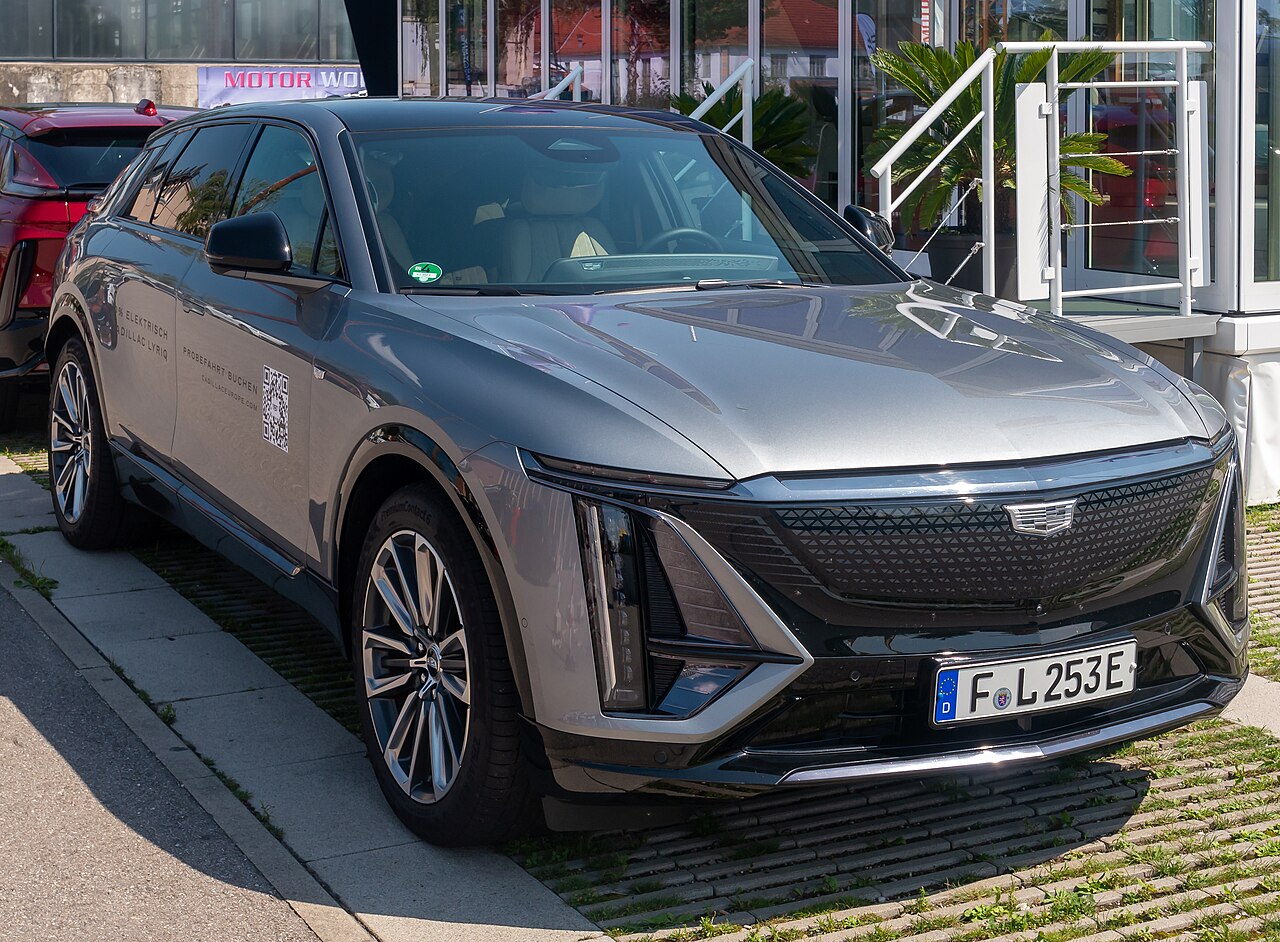
Cadillac Lyriq 2024

Car

Cadillac Lyriq 2024

21 source-linked failure reports. Most reported: Electrical system failure. Typical failure around 1.6 yr.

Reliability signal D · Emerging signal · data confidence Moderate

21 confirmed failure reports

Reliability summary

What is likely to go wrong, when it happens, and how expensive it can be — from source-linked failure reports. Counts are reports in our database, not a population failure rate.

Reliability signal

D

21 confirmed failure reports · Emerging signal · Data confidence: Moderate

Most common issue
Electrical system failure
Typical first failure
1.6 yr
Median of confirmed reports with timing
Median repair cost
—
Reported costs only · market varies
Highest reported repair
—
Not a quote · costs differ by country

What breaks?

Failure types

Click a type in the reports section below to filter.

  • Electrical system failure10 · 47.6%
  • Other6 · 28.6%
  • Brake system failure4 · 19%
  • Steering failure1 · 4.8%

When does it break?

Failure timing

Months after purchase, using reports that included timing.

What does it cost?

Reported repair costs

Distribution of owner-reported repair costs— not a quote or guarantee. Labor and parts prices vary by country.

No reported repair costs yet for this model.

Median months to failure

19

Failure reports

21

View →

Median repair cost

—

Still recommend

—

% repaired

—

% mfr warranty

—

% extended warranty

—

% support helpful

—

Use these reports as a risk signal, then check current listings before you buy.

Search this model on Amazon

As an Amazon Associate, After Warranty may earn from qualifying purchases.

What breaks?

What breaks? · reports

Other

BACK OVER PREVENTION

1 months

Government / agencyIndexed Oct 9, 2026Source-linkedVerify source — NHTSA complaint #11605513

Car has a automatic back up braking system. The car will brake hard to stop vehicle if there is an object behind it. In this case, the car was braking when there was no object behind it. This happen continously while I was trying to back out of a parking space. I could only drive forward. Finally, after a few attempts to back out of the parking space, I was able to drive in reverse. After I was able to drive forward, I tested the the car drove to a location where there wasn't anything behind me. I put the car in reverse and it did it again automatically hard braked and stopped the vehicle. I waited then tried it again and I didn't have the problem anymore. I took the car to the Cadillac Dealer. I was told there have been others who have had this same issue. Furthermore, I was told they can't fix it. Perhaps the feature can be turned off I was told. I don't see where it can be turned off. The feature is a good safety feature if works when it should. Meaning, when there is truly an object behind the car. That's my complaint This was a scary episode.

VerifiedEvidence ★★★★☆
View report details

Months until failure

1 months

Repair cost

Not stated

Repaired

Not stated

Manufacturer warranty

Not stated

Extended warranty

Not stated

Support helpful

Not stated

Would recommend

Not stated

AI extraction confidence

90%

Verification status

Verified

Evidence quality

★★★★☆ (4/5)

Discussion

Steering failure

STEERING

24 months

Government / agencyIndexed Oct 9, 2026Source-linkedVerify source — NHTSA complaint #11746363

Component Involved: Steering Wheel Assembly (Super Cruise Steering Wheel Light Bar / Rim)Safety Defect Description:The plastic insert covering the Super Cruise LED light bar and the surrounding leather wrap located directly on the top rim of the steering wheel are breaking apart, peeling, and separating. This is an immediate and severe driving safety hazard. While executing turns and maneuvering the vehicle, the driver’s hands and clothing sleeves are actively getting caught and snagged on the exposed, broken plastic edges and peeling wrap on the wheel rim. This causes physical interference and sudden, unexpected entrapment of the driver's hand or clothing during active steering.Consequences of the Defect:This defect presents an imminent risk of a vehicle crash due to sudden mechanical restriction of the driver's hands. If a driver’s sleeve or fingers become trapped or snagged by the peeling steering wheel trim while negotiating a sharp turn, curve, or emergency evasive maneuver, they will be unable to smoothly rotate the wheel, leading to a direct loss of steering control.

VerifiedEvidence ★★★★☆
View report details

Months until failure

24 months

Repair cost

Not stated

Repaired

Not stated

Manufacturer warranty

Not stated

Extended warranty

Not stated

Support helpful

Not stated

Would recommend

Not stated

AI extraction confidence

90%

Verification status

Verified

Evidence quality

★★★★☆ (4/5)

Discussion

Electrical system failure

ELECTRICAL SYSTEM,EXTERIOR LIGHTING

19 months

Government / agencyIndexed Oct 9, 2026Source-linkedVerify source — NHTSA complaint #11714212

My 2024 Cadillac EV is only 9900 miles. I was driving the car on Sunday Jan 11, 2026 with my family when we noticed smoke filled inside the cabin. My 3 children (a [XXX] , a [XXX] old, and a new-born who is [XXX] old) were in the car; they inhaled the smoke. We evacuated the car and called onstar for assistance - who towed the car. The smoke originated from the tailgate of the car. Alarmingly, just 3 days before this incident (Jan 8, 2026), I took the car to the local Cadillac dealership to complain about water intrusion in the left taillight that is in the liftgate. The service advisor created a repair order and sent me back saying it would take 10 days to arrive. Upon my specific inquiry, the advisor stated the car was safe to drive and assured me that I would not get a ticket. Since the event (5 days later) it was confirmed by the service advisor that the same water intrusion event lead to the electrical fire that burned a connector, a module, and multiple wiring components causing the fire. INFORMATION REDACTED PURSUANT TO THE FREEDOM OF INFORMATION ACT (FOIA), 5 U.S.C. 552(B)(6)

VerifiedEvidence ★★★★☆
View report details

Months until failure

19 months

Repair cost

Not stated

Repaired

Not stated

Manufacturer warranty

Not stated

Extended warranty

Not stated

Support helpful

Not stated

Would recommend

Not stated

AI extraction confidence

90%

Verification status

Verified

Evidence quality

★★★★☆ (4/5)

Discussion

Other

BACK OVER PREVENTION,FORWARD COLLISION AVOIDANCE

23 months

Government / agencyIndexed Oct 9, 2026Source-linkedVerify source — NHTSA complaint #11739744

I put the car in reverse and released the parking brake. The car started to move backwards. However, the back passenger door was wide open, and the passenger was standing outside the car in the path of the open door. The door hit a guide wire running from the top of a power pole to the sidewalk beside the car. The wire pulled the door backwards, destroying it. This was fortunate. Without the wire in the way, I would’ve had not heard the crashing of the door and would have continued to drive over the person standing beside the car as the passenger door knocked him down. The indicator that the door was still open is so small on the gauge cluster that I couldn’t see that the door was still open when I put the car into reverse. There was no audible warning that I was about to move before all doors were closed, and the emergency braking didn’t stop the car from moving. The passenger’s leg got pushed sideways under the open door. Had the guidewire not pulled the door backwards and caused so much noise that I stopped, the door would’ve broken the passenger’s leg and potentially pushed him under the rear passenger side tire.

VerifiedEvidence ★★★★☆
View report details

Months until failure

23 months

Repair cost

Not stated

Repaired

Not stated

Manufacturer warranty

Not stated

Extended warranty

Not stated

Support helpful

Not stated

Would recommend

Not stated

AI extraction confidence

90%

Verification status

Verified

Evidence quality

★★★★☆ (4/5)

Discussion

Electrical system failure

POWER TRAIN,ELECTRICAL SYSTEM,FUEL/PROPULSION SYSTEM

26 months

Government / agencyIndexed Oct 9, 2026Source-linkedVerify source — NHTSA complaint #11758673

On August 9, 2026, at approximately 3:40 a.m., while driving, the vehicle suddenly lost all propulsion and became completely disabled on the roadway. The vehicle remained powered on but would not move forward or backward. At approximately the time of the failure, Cadillac/OnStar Advanced Diagnostics generated a critical Electric Drive Unit warning instructing immediate service and reported diagnostic code P0A78. Additional vehicle diagnostic warnings involved the electric drive unit/high-voltage propulsion system. I immediately contacted roadside assistance but was unable to obtain a workable towing solution for several hours. The vehicle ultimately had to be privately towed and has remained undriveable since the incident. The loss of propulsion occurred unexpectedly while the vehicle was being driven, without advance warning that would have allowed me to safely plan for the vehicle to become disabled. I am concerned that the same sudden loss of propulsion could occur at higher speed, in traffic, at an intersection, or in another location where an unexpected loss of motive power could create a serious crash risk. The vehicle requires diagnosis and repair for the Electric Drive Unit/P0A78 condition.

VerifiedEvidence ★★★★☆
View report details

Months until failure

26 months

Repair cost

Not stated

Repaired

Not stated

Manufacturer warranty

Not stated

Extended warranty

Not stated

Support helpful

Not stated

Would recommend

Not stated

AI extraction confidence

90%

Verification status

Verified

Evidence quality

★★★★☆ (4/5)

Discussion

Other

EXTERIOR LIGHTING

Government / agencyIndexed Oct 9, 2026Source-linkedVerify source — NHTSA complaint #11574592

The auto leveling lights drift during driving. On staff up, the headlights will point up and down, then self level. However, for the past week, the right headlight drifts down towards the road and the left headlight will drift upwards after about 20-30 minutes of driving. The downward drifting headlight only illuminates about 1 car length ahead while the upward drifting headlight will point towards overhead street signs. This causes reduced visibility with increased flare and reduced headlight throw at the same time. It also is dangerous to incoming traffic since the left headlight ends up drifting upward to produce a throw similar to a high beam, even though the high beams are off. The only way to get the lights to re-level is to shut off the vehicle and restart. Even after this, the lights will only be at the correct level for about 20-30 minutes as they start to drift in opposite vertical directions while driving. There have been multiple reports of similar cases on forums discussing the Cadillac Lyriq. Since the problem only occurs noticeably after 20-30 of night driving, the dealer has stated they can not reproduce it while in their possession. There are no warning messages or codes displayed.

VerifiedEvidence ★★★★☆
View report details

Months until failure

Not stated

Repair cost

Not stated

Repaired

Not stated

Manufacturer warranty

Not stated

Extended warranty

Not stated

Support helpful

Not stated

Would recommend

Not stated

AI extraction confidence

90%

Verification status

Verified

Evidence quality

★★★★☆ (4/5)

Discussion

Other

UNKNOWN OR OTHER

20 months

Government / agencyIndexed Oct 9, 2026Source-linkedVerify source — NHTSA complaint #11721640

Component: Electronic Stability Control / Navigation / GPS Complaint: Since the February 2026 over-the-air software update, the built-in Google Maps GPS has been severely malfunctioning. The system consistently fails to update my vehicle’s location, showing me as stationary at my home address even after driving for 30+ minutes and 20+ miles away. This is not an intermittent glitch — it renders the native navigation system completely unusable after nearly every drive. Prior to the February 2026 update, the GPS functioned perfectly. The issue began immediately following that update and has persisted despite infotainment system resets and checking for further software updates. I am aware that GM has internally acknowledged this issue via Preliminary Information bulletin PIC6644 (issued February 2026), which attributes the problem to a “software anomaly” and confirms engineering is investigating. However, no fix or timeline has been provided to customers. A GPS system that does not reflect the vehicle’s actual location is a safety concern — particularly when relying on navigation for routing, hazard awareness, or emergency response. I am filing this complaint to ensure this issue is part of the public record and to urge NHTSA to monitor the scope of this defect across 2024 Lyriq vehicles

VerifiedEvidence ★★★★☆
View report details

Months until failure

20 months

Repair cost

Not stated

Repaired

Not stated

Manufacturer warranty

Not stated

Extended warranty

Not stated

Support helpful

Not stated

Would recommend

Not stated

AI extraction confidence

90%

Verification status

Verified

Evidence quality

★★★★☆ (4/5)

Discussion

Electrical system failure

ELECTRICAL SYSTEM,SERVICE BRAKES,FORWARD COLLISION AVOIDANCE

17 months

Government / agencyIndexed Oct 9, 2026Source-linkedVerify source — NHTSA complaint #11715908

On November 26, 2025, while traveling in stop-and-go freeway traffic, I experienced a severe braking failure that led to a rear-end collision. Despite applying maximum force to the brake pedal, the vehicle did not decelerate as expected. Objective technical evidence from the Bosch CDR report (Case #1105768) confirms a critical system failure: Extreme Driver Input: At -0.5 seconds before impact, Driver Applied Brake Pedal Pressure reached 10,935 kPa, representing a near-maximum emergency braking effort. Inadequate Response: Despite this peak pressure, the Vehicle Indicated Speed decreased only from 24 MPH to 22 MPH in the final 0.5-second interval. Data Discrepancy: The vehicle decelerated by 12 MPH (from 36 to 24 MPH) between -1.0s and -0.5s under lower pressure (7,695 kPa). However, when brake pressure was increased to its peak at -0.5s, deceleration effectively stalled. Electronic Anomaly: The Traction Control System (TCS) was reported as "Active" throughout the braking event, indicating potential improper electronic intervention. This vehicle has a history of significant electrical failures, including a total power loss on 10/15/2024 that required a high-voltage battery replacement. The failure of the braking system to respond to maximum driver input poses a catastrophic safety risk. I am requesting an investigation into the 2024 Cadillac LYRIQ's brake-by-wire and electronic stability control integration.

VerifiedEvidence ★★★★☆
View report details

Months until failure

17 months

Repair cost

Not stated

Repaired

Not stated

Manufacturer warranty

Not stated

Extended warranty

Not stated

Support helpful

Not stated

Would recommend

Not stated

AI extraction confidence

90%

Verification status

Verified

Evidence quality

★★★★☆ (4/5)

Discussion

Electrical system failure

ELECTRICAL SYSTEM

19 months

Government / agencyIndexed Oct 9, 2026Source-linkedVerify source — NHTSA complaint #11722688

I experienced a complete electrical failure in my 2024 Cadillac Lyriq that prevented access to the vehicle while an infant was inside. The incident occurred when the vehicle’s 12-volt battery system failed, causing a total loss of electrical power and rendering the vehicle completely unresponsive. As a result of this failure, all electronic entry systems stopped functioning and the exterior door handles remained in the locked position. There were no warning signs or error messages communicated from the vehicle. Because the vehicle could not be unlocked or accessed from the outside, an infant was trapped inside the vehicle for approximately 27 minutes. Cadillac has been contacted and they confirmed a faulty 12 volt battery and since then replaced the battery. The incident was recorded by home security cameras and documentation has been preserved. This event raises a serious safety concern. A failure of the 12-volt battery should not disable all methods of entry into a vehicle, particularly when the design of the Cadillac Lyriq uses electronically actuated exterior door handles that remain recessed and locked without electrical power. This creates a situation in which occupants may be trapped inside the vehicle with no reliable means for outside access. The inability to unlock or mechanically access the vehicle during a power failure presents a significant risk of injury or death, particularly in situations involving children, extreme temperatures, or medical emergencies.

VerifiedEvidence ★★★★☆
View report details

Months until failure

19 months

Repair cost

Not stated

Repaired

Not stated

Manufacturer warranty

Not stated

Extended warranty

Not stated

Support helpful

Not stated

Would recommend

Not stated

AI extraction confidence

90%

Verification status

Verified

Evidence quality

★★★★☆ (4/5)

Discussion

Electrical system failure

ELECTRICAL SYSTEM,FUEL/PROPULSION SYSTEM

12 months

Government / agencyIndexed Oct 9, 2026Source-linkedVerify source — NHTSA complaint #11668979

Hi, this vehicle is owned by Surreal Development LLC. A company whom reverse engineers vehicle. GM has an issue in their Cadillac Lyriq's which causes a complete failure of the vehicle's communication systems without warning while driving. This issue appears to affect all Global B vehicles but it is most severe in vehicles with one pedal driving (Sierra EV, Lyriq, Blazer EV, Optiq, Silverado EV, Equinox EV, etc...) The error is likely within the vehicle's Serial Data Gateway Control Module but it is unclear. The vehicle recovers from the communication quickly (within seconds) but it causes long term adverse affects for that driving period. 1. The vehicle will light up with warnings (Service Traction Control, disengage super cruise, disengage ACC, etc...) 2. The driver's pedal will go into safety mode. 3. A "Service High Voltage" system warning may or may not appear. The safety concern is mostly in #2. When this happens it is very jarring to the driver as it drastically changes how the vehicle responds. While the vehicle may state one pedal driving is disabled many times it still indicates it is on within the controls (likely due to an error in the compounded communication fault). This can lead to the driver rear ending the vehicle in front of them or rolling over. The fault does not correct itself until the vehicle resets (powers off/on). The issue is common and affects many owners of the Cadillac Lyriq. The only diagnostic data we see are communication faults across many modules.

VerifiedEvidence ★★★★☆
View report details

Months until failure

12 months

Repair cost

Not stated

Repaired

Not stated

Manufacturer warranty

Not stated

Extended warranty

Not stated

Support helpful

Not stated

Would recommend

Not stated

AI extraction confidence

90%

Verification status

Verified

Evidence quality

★★★★☆ (4/5)

Discussion

Electrical system failure

ELECTRICAL SYSTEM,FUEL/PROPULSION SYSTEM

11 months

Government / agencyIndexed Oct 9, 2026Source-linkedVerify source — NHTSA complaint #11660828

This is an update to my original NHTSA complaint submitted on May 5, 2025 (complaint number 11658852), regarding a complete electrical failure in a 2024 Cadillac Lyriq. While parked in a garage, the vehicle experienced a full shutdown—rendering all systems inoperable, including the door locks and windows. Most alarmingly, a [XXX] child was trapped in the back seat due to the doors being electronically locked and unresponsive. The dealership has since diagnosed the failure as a cable routed improperly near the steering column that had rubbed against a component and snapped. This severed connection resulted in the complete loss of vehicle power and emergency functions. Since that time, I have discovered multiple similar reports from other Lyriq owners online describing full system shutdowns, locked doors, and failures to start—many of which are shared on public forums such as Reddit [XXX] ). This suggests that this may not be an isolated case but rather a potential systemic defect in the Lyriq's wiring harness design or electrical architecture. I am extremely concerned that this failure mode could occur while driving, particularly at highway speeds, and would result in loss of steering, braking assist, and emergency exit options. I urge the NHTSA to investigate this issue further to determine whether a recall or manufacturer communication is appropriate. This vehicle is currently with the dealership, and I have refused delivery until GM provides formal safety assurances. INFORMATION REDACTED PURSUANT TO THE FREEDOM OF INFORMATION ACT (FOIA), 5 U.S.C. 552(B)(6)

VerifiedEvidence ★★★★☆
View report details

Months until failure

11 months

Repair cost

Not stated

Repaired

Not stated

Manufacturer warranty

Not stated

Extended warranty

Not stated

Support helpful

Not stated

Would recommend

Not stated

AI extraction confidence

90%

Verification status

Verified

Evidence quality

★★★★☆ (4/5)

Discussion

Electrical system failure

ELECTRICAL SYSTEM,VEHICLE SPEED CONTROL,FUEL/PROPULSION SYSTEM

1 months

Government / agencyIndexed Oct 9, 2026Source-linkedVerify source — NHTSA complaint #11612400

I purchased a brand new Cadillac Lyriq on July 1, 2024, and have encountered several severe issues that compromise the safety and reliability of the vehicle: 1.Display Failure: The display frequently flickers, flashes, and sometimes completely blacks out, causing the loss of critical information such as speed, backup camera, navigation, and other vital systems. This makes the vehicle unsafe to drive, as it is impossible to monitor speed and other essential functions necessary for safe operation. 2.Battery Overheating During DC Fast Charging: The vehicle’s battery consistently overheats during DC fast charging sessions, causing the charge rate to drop significantly (from ~190 kW down to 14-20 kW). This overheating issue not only drastically extends charging times but also raises serious safety concerns, particularly during long road trips in hot weather. The vehicle has repeatedly experienced these issues, making it unreliable for long-distance travel. 3.Charger Overheating and Instability During Home AC Charging: The home AC charger provided with the vehicle becomes excessively hot while charging the Lyriq. Additionally, the charging rate fluctuates erratically between 0-3 kW, further complicating the charging process. This overheating of the charger at home raises concerns about the safety of parking or charging the vehicle in my garage, as it may pose a fire risk. These issues have been reported to my dealership, who have attempted repairs without success. The problems persist, and the vehicle remains unsafe and unreliable for my family’s needs. I am deeply concerned about the potential for these issues to lead to more severe safety incidents if not addressed promptly.

VerifiedEvidence ★★★★☆
View report details

Months until failure

1 months

Repair cost

Not stated

Repaired

Not stated

Manufacturer warranty

Not stated

Extended warranty

Not stated

Support helpful

Not stated

Would recommend

Not stated

AI extraction confidence

90%

Verification status

Verified

Evidence quality

★★★★☆ (4/5)

Discussion

Other

UNKNOWN OR OTHER

26 months

Government / agencyIndexed Oct 9, 2026Source-linkedVerify source — NHTSA complaint #11761303

The vehicle is a Cadillac Lyriq. Following an over the air software update pushed by the manufacturer, the vehicle began displaying a high voltage system error message and lost the ability to DC fast charge. The high voltage components themselves are reported to be functional, the issue appears to be caused entirely by the software update rather than a hardware failure. The vehicle has been at an authorized dealership service center since August 14, 2026, awaiting a resolution. The dealership has confirmed the fault is present and is consistent with a known issue caused by the manufacturer's software update, but has not been able to repair it independently, since the fix requires a corrected software release from the manufacturer. As of this writing, the manufacturer has not issued the corrected update and has not provided a timeline for when one will be available. This creates a safety risk because the vehicle cannot be relied upon for longer trips or situations requiring DC fast charging, which can leave the driver stranded or unable to reach a destination or charging option within a safe range, particularly in hot weather conditions common in this region. The warning message and loss of fast charging capability appeared immediately after the software update was applied, with no prior symptoms. It is unknown whether the manufacturer has independently inspected this specific vehicle beyond the dealership's diagnosis. The high voltage system and charging hardware remain available for inspection upon request. Multiple other owners of this same model have reported the identical issue following the same software update, suggesting this is a widespread defect rather than an isolated incident.

VerifiedEvidence ★★★★☆
View report details

Months until failure

26 months

Repair cost

Not stated

Repaired

Not stated

Manufacturer warranty

Not stated

Extended warranty

Not stated

Support helpful

Not stated

Would recommend

Not stated

AI extraction confidence

90%

Verification status

Verified

Evidence quality

★★★★☆ (4/5)

Discussion

Brake system failure

SERVICE BRAKES,FORWARD COLLISION AVOIDANCE

6 months

Government / agencyIndexed Oct 9, 2026Source-linkedVerify source — NHTSA complaint #11642052

On [XXX], my wife was driving our 2024 Cadillac Lyriq RWD (VIN: [XXX] ) in stop-and-go traffic on [XXX] at 5-10 MPH. She was maintaining a safe distance when the truck ahead suddenly stopped. She pressed the brakes firmly, but the vehicle failed to stop, resulting in a collision. Despite full brake application, the car did not stop as expected. The Automatic Emergency Braking (AEB) and Forward Collision Alert (FCA) systems did not activate. No alerts or braking assistance occurred, even though these safety features were enabled. Her passenger witnessed her screaming that the brakes were not stopping the car. The crash caused front bumper damage, and a police report was filed. Investigation & GM’s Response GM inspected the vehicle but refuses to provide testing details. The Crash Data Report does not show any recorded braking event or safety activation, despite my wife pressing the brakes. GM has not explained: Why the brakes failed to stop the vehicle. Why AEB and FCA did not activate. Why no braking data was recorded despite the collision. Safety Concerns My wife is now afraid to drive the vehicle and refuses to continue driving it after repairs. I may be forced to break my lease or sell the car due to this serious safety concern. This raises major safety risks for other Cadillac Lyriq owners, especially with known braking-related recalls on 2023 and 2024 models. Request for Investigation I urge NHTSA to: Investigate braking system failures in the 2024 Cadillac Lyriq. Review AEB and FCA non-activation during low-speed collisions. Determine whether GM is withholding data or failing to acknowledge a defect. INFORMATION REDACTED PURSUANT TO THE FREEDOM OF INFORMATION ACT (FOIA), 5 U.S.C. 552(B)(6)

VerifiedEvidence ★★★★☆
View report details

Months until failure

6 months

Repair cost

Not stated

Repaired

Not stated

Manufacturer warranty

Not stated

Extended warranty

Not stated

Support helpful

Not stated

Would recommend

Not stated

AI extraction confidence

90%

Verification status

Verified

Evidence quality

★★★★☆ (4/5)

Discussion

Electrical system failure

POWER TRAIN,ELECTRICAL SYSTEM,UNKNOWN OR OTHER

22 months

Government / agencyIndexed Oct 9, 2026Source-linkedVerify source — NHTSA complaint #11732450

My 2024 Cadillac LYRIQ generated the following High Voltage Battery fault codes via On-Demand Diagnostic: U2B4A, U2B4D, U2B50, U2B53, U2B56, U2B59, U2B5C, U2B5F, U2B62, U2B65, U2B68 — all under module VIC - Lithium-Ion Battery. Multiple codes are flagged "Service Right Away" indicating an active fault in the high voltage propulsion battery system. I brought the vehicle to Lindsay Cadillac, Alexandria VA [XXX] ) on [INSERT DROP-OFF DATE]. As of today [INSERT TODAY'S DATE], the vehicle has been sitting at the dealership for [X] days with ZERO repair action taken. The service manager has stated he does not know what to do, has no timeline, and cannot provide any answers. GM Technical Service Bulletins PIP6009B and 25-NA-044 specifically cover these exact DTCs and provide a documented repair procedure. The dealer has failed to follow or initiate this procedure. No loaner vehicle was provided despite this being a warranty repair on inoperative vehicle. I have been forced to rent a vehicle at $125/day out of pocket. I have an open Cadillac Concierge case number [93707662 #]. Cadillac Concierge was unable to reach the dealer's service department by phone. I have escalated in writing to GM's executive office including [XXX] and [XXX] with no resolution. This is a high voltage battery fault on an all-electric vehicle flagged as "Service Right Away" severity. The vehicle remains unrepaired, the dealer is unresponsive, and GM's own customer service cannot reach the dealer. This represents both a safety concern and a complete failure of the warranty service obligation. I am requesting NHTSA investigation of both the underlying battery defect and the dealer's failure to act on a known TSB. INFORMATION REDACTED PURSUANT TO THE FREEDOM OF INFORMATION ACT (FOIA), 5 U.S.C. 552(B)(6)

VerifiedEvidence ★★★★☆
View report details

Months until failure

22 months

Repair cost

Not stated

Repaired

Not stated

Manufacturer warranty

Not stated

Extended warranty

Not stated

Support helpful

Not stated

Would recommend

Not stated

AI extraction confidence

90%

Verification status

Verified

Evidence quality

★★★★☆ (4/5)

Discussion

Brake system failure

SERVICE BRAKES

8 months

Government / agencyIndexed Oct 9, 2026Source-linkedVerify source — NHTSA complaint #11732706

What component or system failed or malfunctioned, and is it available for inspection upon request? The issue involves the Anti-lock Braking System (ABS) and the transition between regenerative braking and friction braking in my Cadillac Lyriq (RWD). The ABS engages unexpectedly during normal braking conditions when using one-pedal driving. The vehicle is available for inspection upon request. How was your safety or the safety of others put at risk? The unexpected ABS activation creates inconsistent and unpredictable braking behavior, including a pulsing sensation and reduced braking confidence. This affects the driver’s ability to modulate braking smoothly and predict stopping distance, increasing the risk of a collision, especially in normal traffic conditions where consistent braking response is critical. Has the problem been reproduced or confirmed by a dealer or independent service center? Yes. The issue has been reproduced during multiple visits to authorized Cadillac dealerships. However, I have been told that the vehicle is “operating as designed,” despite the abnormal braking behavior. Has the vehicle or component been inspected by the manufacturer, police, insurance representatives or others? The vehicle has been inspected by multiple authorized Cadillac dealerships and the issue has been escalated to General Motors. No resolution or fix has been provided to date. Were there any warning lamps, messages or other symptoms of the problem prior to the failure, and when did they first appear? There are no warning lights or messages associated with this issue. The problem occurs intermittently during normal driving conditions, particularly when transitioning from regenerative braking (one-pedal driving) to applying the brake pedal. The issue began shortly after taking delivery of the vehicle and has persisted since.

VerifiedEvidence ★★★★☆
View report details

Months until failure

8 months

Repair cost

Not stated

Repaired

Not stated

Manufacturer warranty

Not stated

Extended warranty

Not stated

Support helpful

Not stated

Would recommend

Not stated

AI extraction confidence

90%

Verification status

Verified

Evidence quality

★★★★☆ (4/5)

Discussion

Brake system failure

SERVICE BRAKES,FORWARD COLLISION AVOIDANCE

15 months

Government / agencyIndexed Oct 9, 2026Source-linkedVerify source — NHTSA complaint #11697614

I am submitting this follow-up to document new information and continuing concerns regarding my 2024 Cadillac Lyriq EV, which experienced sudden unintended acceleration during a parking maneuver. GM and its claims administrator (ESIS) have now completed their review and issued a denial letter on October 31 2025, stating “no defects were found.” However, the denial included no supporting technical findings, analysis, or data explaining how that conclusion was reached. Despite multiple written requests, GM has not provided the following key event-data modules: – Brake System Control Module (EBCM/iBooster) export (brake pressure, pedal position, brake override flags) – Propulsion/Drive Control Module data (torque request vs actual torque and accelerator input) – Front Camera Module metadata (timestamps and event record IDs) Additionally, several data discrepancies remain unresolved — including mismatched timestamps between the ASCM and FCM reports and camera images that do not correspond to the actual crash scene. On October 29 2025, GM publicly announced Customer Satisfaction Program N252521980, covering certain 2023–24 Cadillac Lyriq and 2024 Chevy Blazer EV vehicles for a Brake System Control Module software update due to possible brake-control performance issues. Because my incident involved loss of braking response, this recall appears directly relevant. I have requested confirmation whether my vehicle is affected and whether this module was analyzed in GM’s investigation, but have not received a reply. I am requesting that NHTSA review GM’s handling of this case to determine whether the engineering review was complete and whether the vehicle’s BSCM or related systems could be implicated in unintended acceleration or brake override failures. GM Case #1092995 – Submitted to ESIS/GM Product Investigations Group. Thank you for your attention and for documenting this matter in the defect database.

VerifiedEvidence ★★★★☆
View report details

Months until failure

15 months

Repair cost

Not stated

Repaired

Not stated

Manufacturer warranty

Not stated

Extended warranty

Not stated

Support helpful

Not stated

Would recommend

Not stated

AI extraction confidence

90%

Verification status

Verified

Evidence quality

★★★★☆ (4/5)

Discussion

Other

VEHICLE SPEED CONTROL,FORWARD COLLISION AVOIDANCE

21 months

Government / agencyIndexed Oct 9, 2026Source-linkedVerify source — NHTSA complaint #11725667

COMPONENT: Vehicle Speed Control — Automatic Emergency Braking / Anti-Lock Braking System (ABS) COMPLAINT: I am filing this complaint to report a POST-REMEDY FAILURE of the repair performed under NHTSA Safety Recall 24V589 (GM Program #N242453471) on my 2024 Cadillac Lyriq AWD. RECALL REMEDY COMPLETED: My vehicle received the Electronic Brake Control Module (EBCM) software update on August 13, 2024, under GM Program #N242453471. The recall was marked "Complete" by the servicing dealership on that date. FAILURE INCIDENT: On March 15, 2026, at low speed (under 25 mph) on a dry surface, my Lyriq failed to activate its Automatic Emergency Braking system while approaching a stationary object. The vehicle did not decelerate or stop as designed. The ABS system appeared to release braking pressure rather than maintain it, allowing the vehicle to continue forward and strike the object. The front grille assembly sustained significant physical damage as a direct result. This failure is identical in nature to the defect described in Recall 24V589 — specifically, the ABS falsely activating and releasing braking pressure during low-speed operation on a dry surface — despite the recall remedy having been applied and certified complete ten months prior. SAFETY CONCERN: The software remedy applied under Recall 24V589 did not correct the defect on my vehicle. This raises serious concerns about the effectiveness of the EBCM software update as a remedy across all affected vehicles. If other vehicles received the same software update and the defect persists, there is a significant ongoing safety risk to the public. I am requesting that NHTSA: Investigate whether the Recall 24V589 remedy (EBCM software update) has been effective across all affected vehicles Determine whether a supplemental or revised recall remedy is necessary Require GM/Cadillac to cover physical damages resulting from this post-remedy failure I have also contacted Cadillac Customer Care direct

VerifiedEvidence ★★★★☆
View report details

Months until failure

21 months

Repair cost

Not stated

Repaired

Not stated

Manufacturer warranty

Not stated

Extended warranty

Not stated

Support helpful

Not stated

Would recommend

Not stated

AI extraction confidence

90%

Verification status

Verified

Evidence quality

★★★★☆ (4/5)

Discussion

Electrical system failure

ELECTRICAL SYSTEM

Government / agencyIndexed Oct 9, 2026Source-linkedVerify source — NHTSA complaint #11725923

We own a 2024 Cadillac Lyriq EV. We began experiencing safety concerns related to battery performance and overall vehicle reliability during the active bumper-to-bumper warranty period. These concerns were reported to an authorized GM dealer, Napleton Cadillac, prior to warranty expiration. Service records at Napleton Cadillac document the history of these complaints. The vehicle has been unable to process required over-the-air (OTA) software updates through GM's intended automated update process. During a dealer visit on February 17, 2026, at GM's direction, the Napleton Cadillac service technician confirmed that the vehicle had multiple open notices and that our reported concerns are consistent with known issues affecting the 2024 Cadillac Lyriq across multiple units — indicating this is not an isolated occurrence. The dealer advised that correcting the update failure would require approximately five hours of manual labor at an estimated cost of $1,250 — a cost GM has declined to cover, despite the fact that the OTA update process is the manufacturer's intended method for delivering safety-critical corrections and the failure to update is a vehicle deficiency, not a customer-caused condition. Due to these unresolved safety concerns, we have not been driving the vehicle. We do not have confidence that the vehicle is operating safely or as designed. We formally requested a repurchase from General Motors through the EV Concierge program (Case No. 87486271). That request was denied on March 14, 2026, citing two rationales: (1) the vehicle is out of warranty, and (2) system updates do not qualify for repurchase. We believe these rationales fail to account for the fact that the original safety complaints were filed during the warranty period and that the root issue is battery and system safety — not a routine software preference. We are filing this complaint to create a formal federal safety record and to request that NHTSA evaluate an investigation or recall.

VerifiedEvidence ★★★★☆
View report details

Months until failure

Not stated

Repair cost

Not stated

Repaired

Not stated

Manufacturer warranty

Not stated

Extended warranty

Not stated

Support helpful

Not stated

Would recommend

Not stated

AI extraction confidence

90%

Verification status

Verified

Evidence quality

★★★★☆ (4/5)

Discussion

Electrical system failure

ELECTRICAL SYSTEM

26 months

Government / agencyIndexed Oct 9, 2026Source-linkedVerify source — NHTSA complaint #11764970

On or about August 6, 2026, I received email communication from the GM EV Concierge , establishing Case #106606137. My vehicle has been "bricked" and GM has had possession of it since August 3, 2026, (46 days and counting) without so much as an official diagnosis or repair timeline. I have repeatedly been told that the matter has been “escalated,” that GM is “working with the dealership,” and that the repair is being “expedited,” however, I don't know to whom it has been escalated, but at this point I have not received any measurable result rather than continuous general status statements. Regardless, the practical result remains undisputed: my vehicle continues to be unavailable, my vehicle has yet to receive an official diagnosis, and I have yet been provided with a reliable repair timeline. GM continues to route my vehicle through a process that has failed to produce an official diagnosis does not resolve the underlying problem. More importantly, it does nothing to address the fact that I remain without the leased vehicle I am paying for while it is under warranty. Because GM continues to possess my vehicle, I have been required to incur over $3,000.00 in transportation and other expenses that I would not otherwise have incurred, not including the sheer amount of time my wife and I have wasted! I specifically request that GM address its own published Trip Interruption Benefits and Assistance provision. GM’s warranty and roadside-assistance states: “Trip Interruption Benefits and Service: If your trip is interrupted due to a warranty failure, incidental expenses may be reimbursed during the Powertrain warranty period. Items considered are hotel, meals, rental car, or a vehicle being delivered back to the customer, up to 500 miles.” I did not ask GM to make an unsupported goodwill payment. I asked GM to determine whether the circumstances I have experienced qualify for consideration under GM’s own published Trip Interruption Benefits and Assistance provision.

VerifiedEvidence ★★★★☆
View report details

Months until failure

26 months

Repair cost

Not stated

Repaired

Not stated

Manufacturer warranty

Not stated

Extended warranty

Not stated

Support helpful

Not stated

Would recommend

Not stated

AI extraction confidence

90%

Verification status

Verified

Evidence quality

★★★★☆ (4/5)

Discussion

Brake system failure

PARKING BRAKE,SERVICE BRAKES,FORWARD COLLISION AVOIDANCE

4 months

Government / agencyIndexed Oct 9, 2026Source-linkedVerify source — NHTSA complaint #11622839

While driving through Wisconsin on [XXX] with Super Cruise activated in 70MPH traffic the car provided me with driver's side collision warning failure notice and then a forward collision warning failure notice, but the car continued to be operating normally. A short time later a brakes overheating warning came on while the car still seemed to be operating normally and maintaining speed. I immediately disengaged the cruise control to check out the situation and the car instantly locked on the brakes, and we could see smoke and smell the burning brakes. I pulled to car to the side of the road, and we exited the car concerned there might be a fire coming from one of the 4 smoking wheels. The rotors were red hot. We remained a safe distance from the car until the brakes stopped smoking. After it appeared safe, I reentered the car and determined the brakes (parking brakes) were fully engaged and the car would not move. We contacted OnStar for assistance and waited. After a significant time (it seemed like quite a while) I suddenly heard the sound of the parking brakes electrically releasing. Shortly after that I started and tested the car again and it would move so we slowly drove it off the busy interstate to the next exit a short distance away and continued working with OnStar to obtain a tow to a Cadillac dealership. After working with OnStar for several hours and determining that there would most likely be no tow truck coming, we decided to test drive the car around the area now that the brakes had cooled off. We ended up renting a 'safety' car that my wife would drive, and I would try to drive the car back to Minnesota to our dealer. The car operated normally for the drive home, but we did not use any cruise control just in case. It was my belief that a system communication issue told the brakes to engage and that since the Super Cruise was engage the motors just added more power to over-come the drag on the brakes until they over heated. INFORMATION REDACTED PURSUA

VerifiedEvidence ★★★★☆
View report details

Months until failure

4 months

Repair cost

Not stated

Repaired

Not stated

Manufacturer warranty

Not stated

Extended warranty

Not stated

Support helpful

Not stated

Would recommend

Not stated

AI extraction confidence

90%

Verification status

Verified

Evidence quality

★★★★☆ (4/5)

Discussion

Compare nearby models

Similar products

Stay ahead of failures

Notify me about this model

Get an email when a new source-linked failure report is published for the Cadillac Lyriq 2024.

We only email when a new published report is added for Cadillac Lyriq 2024. No spam, unsubscribe by contacting support.

Contribute signal

Had a failure with this model?

Add your experience and help future shoppers understand what happens after the warranty.

Submit your experience