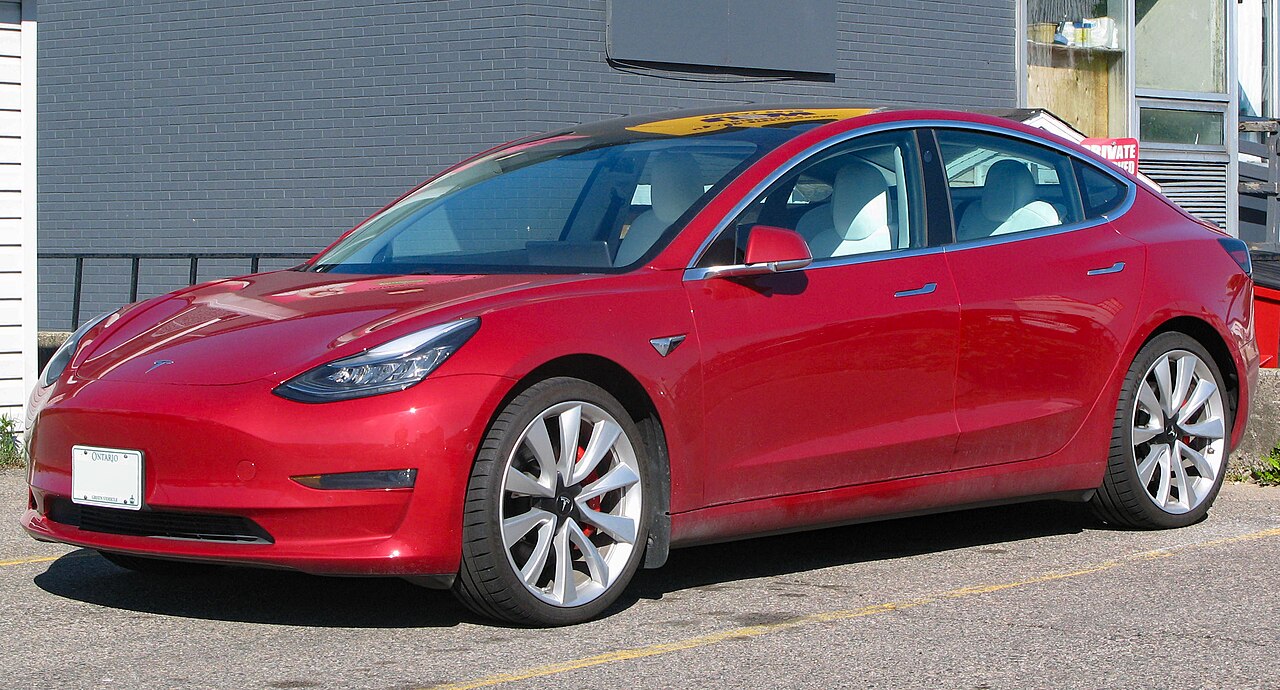
Tesla Model 3 2019

Electric Vehicle

Tesla Model 3 2019

62 source-linked failure reports. Most reported: Other. Typical failure around 4.6 yr.

Reliability signal A · Emerging signal · data confidence Moderate

62 confirmed failure reports

Reliability summary

What is likely to go wrong, when it happens, and how expensive it can be — from source-linked failure reports. Counts are reports in our database, not a population failure rate.

Reliability signal

A

62 confirmed failure reports · Emerging signal · Data confidence: Moderate

Most common issue
Other
Typical first failure
4.6 yr
Median of confirmed reports with timing
Median repair cost
—
Reported costs only · market varies
Highest reported repair
—
Not a quote · costs differ by country

What breaks?

Failure types

Click a type in the reports section below to filter.

  • Other24 · 38.7%
  • Airbag / restraint failure15 · 24.2%
  • Electrical system failure10 · 16.1%
  • Brake system failure7 · 11.3%
  • Structure / body failure3 · 4.8%
  • Steering failure2 · 3.2%
  • Fuel system failure1 · 1.6%

When does it break?

Failure timing

Months after purchase, using reports that included timing.

What does it cost?

Reported repair costs

Distribution of owner-reported repair costs— not a quote or guarantee. Labor and parts prices vary by country.

No reported repair costs yet for this model.

Median months to failure

55

Failure reports

62

View →

Median repair cost

—

Still recommend

—

% repaired

—

% mfr warranty

—

% extended warranty

—

% support helpful

—

Use these reports as a risk signal, then check current listings before you buy.

Search this model on Amazon

As an Amazon Associate, After Warranty may earn from qualifying purchases.

What breaks?

What breaks? · reports

Airbag / restraint failure

AIR BAGS

58 months

Government / agencyIndexed Oct 9, 2026Source-linkedVerify source — NHTSA complaint #11587952

I received an error. - RCM_a056 "front passenger safety restraint system fault" So I scheduled service to review what happened. According to Tesla, and my service center - this is a known and common issue. The issue is a failure of the seat occupancy sensor. This requires replacement of: seat harness assembly, seat belt reminder sensor box clip and the first row occupancy sensor. However, the major issue (and what should be a class action lawsuit) is that Tesla created a new sensor - that now works, however, requires the replacement of the PASSENGER AIRBAG. Tesla's solution to this widely known issue (according to my service center) was to create a sensor that is not compatible with the current airbag system. This cost is astronomical. If the sensor alone could be replaced, this could be around a $400 fix, but because the airbag is an extra (approximate) $1,000. Total cost of repair is $1,329.34, not including the required $100 remote diagnostic fee.

VerifiedEvidence ★★★★☆
View report details

Months until failure

58 months

Repair cost

Not stated

Repaired

Not stated

Manufacturer warranty

Not stated

Extended warranty

Not stated

Support helpful

Not stated

Would recommend

Not stated

AI extraction confidence

90%

Verification status

Verified

Evidence quality

★★★★☆ (4/5)

Discussion

Airbag / restraint failure

AIR BAGS

59 months

Government / agencyIndexed Oct 9, 2026Source-linkedVerify source — NHTSA complaint #11588025

Starting on May 6, 2024, my vehicle display showed an error message stating "Front passenger safety restraint system fault - Service is required." I alerted Tesla of this error through my phone app and set an appointment to have this fixed. I then received an estimate of $1400 which consisted of replacement of the passenger airbag ($1000) as well as an additional sensor that Tesla is indicating went bad ($400). I have never been in an accident with this vehicle so I can't understand why the airbag would be to be replaced, unless it was defective. I questioned this with Tesla and was told that none of the safety systems are covered anymore since the vehicle is now our of warranty. My wife drives my daughter to school daily and I'm more concerned that a car I spent $40k + on will not protect her in the event of a crash. Why would an un-used airbag need to be replaced at the owner's expense? Why isn't Tesla covering a defect in their restraint systems?

VerifiedEvidence ★★★★☆
View report details

Months until failure

59 months

Repair cost

Not stated

Repaired

Not stated

Manufacturer warranty

Not stated

Extended warranty

Not stated

Support helpful

Not stated

Would recommend

Not stated

AI extraction confidence

90%

Verification status

Verified

Evidence quality

★★★★☆ (4/5)

Discussion

Brake system failure

SERVICE BRAKES,FORWARD COLLISION AVOIDANCE

51 months

Government / agencyIndexed Oct 9, 2026Source-linkedVerify source — NHTSA complaint #11544976

The car is plagued by "phantom braking." It occurs when I am on the freeway - the car suddenly brakes and/or decelerates. (Sometimes it is a sudden braking and sometimes the cruise control just turns off.) This is very unsafe - I am fortunate that it has occurred when there is no car close behind me. I feel it happen and put my foot on the accelerator as soon as I can. It's happened as many as 3-4 times during a long (@500 miles) drive, and other times only once. It occurs in various kinds of weather and I have never been able to figure out why it happens. It has happened when there are no cars in front of or next to my car. I believe this problem has been reported many times before. I do not know what system or part is responsible for this. I have had the car since 2019 and this has been happening as long as I can remember. I have never received any kind of a warning or signal that the car would brake. NOTE: B/c the problem is ongoing, I did not put in an approximate date below.

VerifiedEvidence ★★★★☆
View report details

Months until failure

51 months

Repair cost

Not stated

Repaired

Not stated

Manufacturer warranty

Not stated

Extended warranty

Not stated

Support helpful

Not stated

Would recommend

Not stated

AI extraction confidence

90%

Verification status

Verified

Evidence quality

★★★★☆ (4/5)

Discussion

Electrical system failure

POWER TRAIN,ELECTRICAL SYSTEM

59 months

Government / agencyIndexed Oct 9, 2026Source-linkedVerify source — NHTSA complaint #11587433

Tesla Model 3 battery pack coolant connector design flaw. It is made by plastic and covered with very thin cheap plastic cover which can very easily create impact and break the battery pack connector when any small objects hit front wheels(both side) while driving that leads the following safety and hazard issues to driver and passengers. 1. When there is hit in the coolant connector while driving the coolant start leaking which put safety of car,driver,passengers and others in very high risk 2. When it happens the dashboard shows the car is running reduced power and not giving enough info to take immediate action 3. This issue can be easily reproducible just driving the car in freeway where the road has debris or due to work zone 4. This issue reported to Geico Insurance 5. There is no warning before it first appears 6. It leads to change the entire battery pack which cost ~ $20,000 7. Since this is very critical component it should be well protected which is not the case currently

VerifiedEvidence ★★★★☆
View report details

Months until failure

59 months

Repair cost

Not stated

Repaired

Not stated

Manufacturer warranty

Not stated

Extended warranty

Not stated

Support helpful

Not stated

Would recommend

Not stated

AI extraction confidence

90%

Verification status

Verified

Evidence quality

★★★★☆ (4/5)

Discussion

Airbag / restraint failure

AIR BAGS

88 months

Government / agencyIndexed Oct 9, 2026Source-linkedVerify source — NHTSA complaint #11769274

My 2019 Tesla Model 3 (approx. 95,000 miles) displays a persistent 'Front passenger safety restraint system' alert. The car drives normally and there has been no crash, fire, or injury. Tesla Service's estimate lists $631.60 for the alert diagnosis, $458.50 to replace the front passenger seat Occupant Classification System (OCS), and $699.44 to update the front passenger airbag for compatibility, an update Tesla's own service bulletin SB-23-20-001 requires alongside the OCS repair. The total is about $1,790 before tax. Tesla declined goodwill coverage and said the supplemental restraint system warranty expired in 2023. The alert means the front passenger airbag and seat belt pretensioner may not work correctly in a crash. This appears common: NHTSA's database already holds over 100 complaints on the 2019 Model 3 describing the same alert and repair path. I am asking NHTSA to review whether this is a defect in the occupant classification system. I have the Tesla estimate and will keep it.

VerifiedEvidence ★★★★☆
View report details

Months until failure

88 months

Repair cost

Not stated

Repaired

Not stated

Manufacturer warranty

Not stated

Extended warranty

Not stated

Support helpful

Not stated

Would recommend

Not stated

AI extraction confidence

90%

Verification status

Verified

Evidence quality

★★★★☆ (4/5)

Discussion

Structure / body failure

STRUCTURE

25 months

Government / agencyIndexed Oct 9, 2026Source-linkedVerify source — NHTSA complaint #11438346

In August 2021, I discovered that the glass roof of my car had major cracks even though I had not had a collision and was not aware of any specific cause for such major damage. According to Tesla technicians who examined the damage, the roof glass had "a small crack running in top layer of glass along with a small star crack on the front left"; the back glass had "several cracks all over it with two large impacts"; "both glass pieces showed external damage on both front and rear." As a result, it was necessary to replace the glass, at a cost of over $2000. A hickory tree stands next to the uncovered driveway where the Tesla is normally parked since it was bought over two years ago. I am incredulous that falling hickory nuts might have caused such extensive damage, as Tesla theorized happened. In any case, if the roof glass is so fragile that a few falling hickory nuts could destroy the roof, it seems that the roof is not sufficiently strong and sturdy and could therefore be a safety hazard.

VerifiedEvidence ★★★★☆
View report details

Months until failure

25 months

Repair cost

Not stated

Repaired

Not stated

Manufacturer warranty

Not stated

Extended warranty

Not stated

Support helpful

Not stated

Would recommend

Not stated

AI extraction confidence

90%

Verification status

Verified

Evidence quality

★★★★☆ (4/5)

Discussion

Other

VEHICLE SPEED CONTROL,UNKNOWN OR OTHER,ELECTRONIC STABILITY CONTROL (ESC)

6 months

Government / agencyIndexed Oct 9, 2026Source-linkedVerify source — NHTSA complaint #11292014

I am very disappointed and shocked from what happened last December 10, 2019 (Tuesday). At around 5:50 am, I am slowly driving at the parking lot of my office at stryker corporation in san jose, ca. I am slowly parking my car and then there's a sudden unintended acceleration on my car which I cannot even control or stop. The acceleration speeds up automatically on its own even if I'm stepping on the brake. Due to the speed up on the acceleration, the car went over the curb with so much speed and moved towards the tent which is the smoking area in our work. The windshield of my car broke when it hit the tent and the car still moved to the other side of the island. Luckily, my car landed on a bucket of cement which helped my car to stop. It was really a terrifying incident which I didn't expect to happen because my car is new and I thought that it's the smartest and safest car. I have a dash camera on my car and I have a video of the whole incident that will prove that my statements are true.

VerifiedEvidence ★★★★☆
View report details

Months until failure

6 months

Repair cost

Not stated

Repaired

Not stated

Manufacturer warranty

Not stated

Extended warranty

Not stated

Support helpful

Not stated

Would recommend

Not stated

AI extraction confidence

90%

Verification status

Verified

Evidence quality

★★★★☆ (4/5)

Discussion

Other

UNKNOWN OR OTHER

20 months

Government / agencyIndexed Oct 9, 2026Source-linkedVerify source — NHTSA complaint #11395813

The rear passenger side window spontaneously shattered while I was driving to work this morning. After a quick Google search I found that this same thing has happened to many other Model 3 owners. I immediately drove to the nearest Tesla service center and was treated as if the problem was my fault and at first they were not going to cover it under warranty. I provided them with the dash cam footage of the window falling out of the vehicle into the freeway and proof that there were no other vehicles around me when this happened. They then agreed to cover it under warranty. But when my vehicle was done they then tried to blame the issue on the fact that my windows were tinted. It was very disappointing to be treated dismissively and for them to not acknowledge at all that this issue May be bigger than my vehicle. Had that window not been tinted the shattered window would not have stayed in tact like it did and I would have had shattered glass flying in the cabin of my vehicle making for a very dangerous situation.

VerifiedEvidence ★★★★☆
View report details

Months until failure

20 months

Repair cost

Not stated

Repaired

Not stated

Manufacturer warranty

Not stated

Extended warranty

Not stated

Support helpful

Not stated

Would recommend

Not stated

AI extraction confidence

90%

Verification status

Verified

Evidence quality

★★★★☆ (4/5)

Discussion

Brake system failure

STEERING,SUSPENSION,SERVICE BRAKES

73 months

Government / agencyIndexed Oct 9, 2026Source-linkedVerify source — NHTSA complaint #11677252

The vehicle’s front suspension began making loud squeaking noises and felt unstable while driving, especially when turning or going over uneven surfaces. At times, the vehicle does not make a proper turn and almost feels like it loses grip, which is extremely unsafe. I brought the vehicle to a Tesla service center. After inspection, Tesla provided a service estimate and documentation confirming the failure of the front lower lateral links — the exact part and condition described in NHTSA Safety Recalls 21V835000 and 23V235000, which cover defective front suspension lateral link fasteners on this vehicle make, model, and year. Despite the clear match, Tesla did not recognize the repair as recall-related and categorized it as a customer-pay service. This raises concern that some affected vehicles are being excluded from proper recall coverage, despite experiencing the same safety defects. There were no warning lights or alerts prior to the failure. The issue was confirmed by Tesla and the part is available for inspection upon request.

VerifiedEvidence ★★★★☆
View report details

Months until failure

73 months

Repair cost

Not stated

Repaired

Not stated

Manufacturer warranty

Not stated

Extended warranty

Not stated

Support helpful

Not stated

Would recommend

Not stated

AI extraction confidence

90%

Verification status

Verified

Evidence quality

★★★★☆ (4/5)

Discussion

Airbag / restraint failure

AIR BAGS,SEAT BELTS,SEATS

84 months

Government / agencyIndexed Oct 9, 2026Source-linkedVerify source — NHTSA complaint #11745079

It was raining and my passenger got in the car (slightly damp). When he sat down, I reveived an error message on the screen saying "Front passenger safety restraint system issue". The airbag light is red indicating that it won't work for my passenger. You should be able to get into a car wet without your airbag no longer working. My understanding is that this is a common problem. Tesla wants > $1000 to replace the seat sensor + requires me to pay to have my airbag replaced so the part matches the sensor. According to Tesla Service Bulletin SB-23-20-002, the new style of seat sensor is strictly incompatible with the older style of airbag (known as a "Full Suppression" airbag). $182 (Diagnostic Fee) $475 (OCS Replacement) $318 (Airbag Update) + Labor + Tax The internet is full of reports of this issue. Just google "Front passenger safety restraint system issue". I do not have an invoice for the repair yet. Tesla's service center's first available appt is in 25 days. This means I have to go 25 days without a passenger in my front seat.

VerifiedEvidence ★★★★☆
View report details

Months until failure

84 months

Repair cost

Not stated

Repaired

Not stated

Manufacturer warranty

Not stated

Extended warranty

Not stated

Support helpful

Not stated

Would recommend

Not stated

AI extraction confidence

90%

Verification status

Verified

Evidence quality

★★★★☆ (4/5)

Discussion

Other

FORWARD COLLISION AVOIDANCE

42 months

Government / agencyIndexed Oct 9, 2026Source-linkedVerify source — NHTSA complaint #11498750

12/24 between 7:54am and 8:55am driving on the 10 west from Arizona to California while on auto drive within one hour experienced 4 times the car engaged the brake while traveling 80 mph on the highway. All 4 times there was nothing in front or side of the vehicle. The vehicle did not alarm a sensor that something was in the way. Fortunately we reacted quickly and continued with the accelerator so we didn’t stop abruptly on the Highway. 2 out of the 4 times it was a very hard brake the other two times it was hard but not nearly as forceful. Again nothing in the road, sun behind us, no indicators of obstructed cameras. We haven’t been on a long trip with the car in a long time, however my son drove from Orange County , CA to Los Angeles one evening about 6 weeks ago and he said the same thing occurred 3 times while on the trip and on the highway. I did Google the situation and it sounds like I am not the only one who has experienced the phantom braking situation. We have disengaged the auto drive and auto pilot the remainder of the trip.

VerifiedEvidence ★★★★☆
View report details

Months until failure

42 months

Repair cost

Not stated

Repaired

Not stated

Manufacturer warranty

Not stated

Extended warranty

Not stated

Support helpful

Not stated

Would recommend

Not stated

AI extraction confidence

90%

Verification status

Verified

Evidence quality

★★★★☆ (4/5)

Discussion

Brake system failure

UNKNOWN OR OTHER,SERVICE BRAKES,FORWARD COLLISION AVOIDANCE

47 months

Government / agencyIndexed Oct 9, 2026Source-linkedVerify source — NHTSA complaint #11524965

Unintended acceleration during public street and highway while approaching a stop to make a right turn on November of 2022 in Orange County California onto a highway I let go of the pedal ready to press the brake and while turning it made a unnecessary acceleration to speed up making steering difficult, another incident where I believe in February 2023 as I was driving in the right lane a truck made a sudden stop and the accident avoidance never deployed nor warn me and the acceleration maneuver my steering pedal as I felt it degrease on the brake and increase on the acceleration pedal this was very traumatic and scary knowing I might have bodily injuries or even death also while setting the speed limit I notice while using the regenerative braking the brake pedal would vibrate very aggressively also while using the back up cam and side views it would glitch a lot after a bug update I feel this is very concerning for me and my kids and a lot of reviews and even attorneys or aware of the situation most of all it's a safety issue for California

VerifiedEvidence ★★★★☆
View report details

Months until failure

47 months

Repair cost

Not stated

Repaired

Not stated

Manufacturer warranty

Not stated

Extended warranty

Not stated

Support helpful

Not stated

Would recommend

Not stated

AI extraction confidence

90%

Verification status

Verified

Evidence quality

★★★★☆ (4/5)

Discussion

Other

SUSPENSION

7 months

Government / agencyIndexed Oct 9, 2026Source-linkedVerify source — NHTSA complaint #11306419

Please note that the full VIN of the car I am complaining about is unknown and therefore I have used the VIN of another wrecked 2019 Model 3 to submit this report. Here is a damaged Tesla in a salvage auction in germany. HTTPS://WWW.COPART.DE/LOT/50047705/PHOTOS no airbags have deployed and the car is almost undamaged except that the front suspension has fallen to bits. The attached photographs show that the ball joint of the lower control arm has snapped. Also the ball joint that attaches the steering arm has snapped off which is extremely alarming. Part of the cast aluminium lower arm has snapped off. The manufacturing standards and quality control of Tesla suspension components is appalling. Rather than reporting these defects back to the factory and to the NHTSA these failures are being systematically covered up. Quite obviously the german owner of this car will not be reporting this to NHTSA so I am doing my best as a concerned citizen to bring this to your attention. The Tesla fan club is not very pleased that I am doing this. Such is life. Regards keef

VerifiedEvidence ★★★★☆
View report details

Months until failure

7 months

Repair cost

Not stated

Repaired

Not stated

Manufacturer warranty

Not stated

Extended warranty

Not stated

Support helpful

Not stated

Would recommend

Not stated

AI extraction confidence

90%

Verification status

Verified

Evidence quality

★★★★☆ (4/5)

Discussion

Electrical system failure

ELECTRICAL SYSTEM,VISIBILITY/WIPER

45 months

Government / agencyIndexed Oct 9, 2026Source-linkedVerify source — NHTSA complaint #11512606

The rear view camera of my car it’s failing intermittently some days work some days don’t. So I found that there is a recall related to this specific issue. NHTSA Recall Number 21V-00D then I scheduled a service with Tesla indicating that I’m sending the car for them to honor the recall. They accepted and scheduled the service appointment through the app at $0 cost because obviously it’s their responsibility. Well for my surprise when I arrive to the Tesla Service Center in Coral Gables Florida, the person in charge refused to honor the recall saying that the car it’s not in warranty and that they don’t perform services on recalls even though I was showing them that the recall it’s on my VIN number at the NHTSA website. Now I’m worried that I may cause an accident because the car may malfunction due to this safety issue with the rear camera. Find attached screenshots of the conversations I had with them where they are basically refusing to properly perform the service for this recall that includes the full inspection of the coaxial cable to see if it’s too damaged and the replacement of the part.

VerifiedEvidence ★★★★☆
View report details

Months until failure

45 months

Repair cost

Not stated

Repaired

Not stated

Manufacturer warranty

Not stated

Extended warranty

Not stated

Support helpful

Not stated

Would recommend

Not stated

AI extraction confidence

90%

Verification status

Verified

Evidence quality

★★★★☆ (4/5)

Discussion

Other

VEHICLE SPEED CONTROL

3 months

Government / agencyIndexed Oct 9, 2026Source-linkedVerify source — NHTSA complaint #11300075

I was pulling into a parking spot at the grocery store and as I tried to ease to a stop, the care accelerated quickly and aggressively and I smashed into the parked car a few feet in front of me. Air bags went off and burned a hole in my pants and burned the skin on my left thigh. Substantial repairs were required. I have never had anything like this happen before or since. I am healthy, not on any meds or substances, wasn't tired or distracted, and am overall a high functioning 50 year old married mom of two. The car was only 5 days old. It all happened so fast and the car seemed to have a mind of its own. I was very shaken, assumed I had my foot on the wrong pedal, and was ashamed that I could have made such a mistake. When I heard of the recent case and that you are reviewing similar issues with other teslas, my husband and I thought you should at least review our situation too. Whether it was in fact user error or a defect, I don't know. I'm not above accepting responsibility, but it is like the car raced forward so quickly I didn't know what was happening and had no time at all to react or respond before my leg as burning.

VerifiedEvidence ★★★★☆
View report details

Months until failure

3 months

Repair cost

Not stated

Repaired

Not stated

Manufacturer warranty

Not stated

Extended warranty

Not stated

Support helpful

Not stated

Would recommend

Not stated

AI extraction confidence

90%

Verification status

Verified

Evidence quality

★★★★☆ (4/5)

Discussion

Other

SUSPENSION

18 months

Government / agencyIndexed Oct 9, 2026Source-linkedVerify source — NHTSA complaint #11387213

Here is another Tesla Model 3 in the junkyard. The front suspension has fallen to bits. All 3 ball-joints have simply popped apart. Even in cars that have been in major crashes it is unusual to see a ball joint that has separated. There are many reports on the forums that the ball joints on Model 3 cars are squeaking badly when the steering is turned side to side. Example: HTTPS://TESLAMOTORSCLUB.COM/TMC/THREADS/TIME-TO-REPLACE-UPPER-CONTROL-ARM-BALL-JOINTS.202921/PAGE-3 time to replace upper-control arm ball joints | page 3 | Tesla ...teslamotorsclub.com ' Tesla: vehicles ' Model 3 I am exceptionally disappointed that Tesla will not honor what's clearly a fleetwide part failure issue for the ball joints ** owners are resorting to DIY repairs by injecting grease or WD40 through the rubber boot. The squeaking sound means that metal is rubbing on metal. Eventually the ball wears down sufficiently for it to pop out of its socket. I have made reports to you already on this subject and have supplied many photographs of Tesla popped ball joints. I strongly urge you to take immediate action by issuing a recall. Thank you. Keef

VerifiedEvidence ★★★★☆
View report details

Months until failure

18 months

Repair cost

Not stated

Repaired

Not stated

Manufacturer warranty

Not stated

Extended warranty

Not stated

Support helpful

Not stated

Would recommend

Not stated

AI extraction confidence

90%

Verification status

Verified

Evidence quality

★★★★☆ (4/5)

Discussion

Brake system failure

STEERING,UNKNOWN OR OTHER,SERVICE BRAKES

33 months

Government / agencyIndexed Oct 9, 2026Source-linkedVerify source — NHTSA complaint #11460948

On 3/28/22 at 4:01 pm, while in parking lot traffic traveling 2-3 mph, the vehicle lost propulsion, and steering. The vehicle's audible warnings sounded and displayed a series of errors ranging from tire pressure to driver assistance features not being available. The vehicle struggled to move and had steering as stiff as a vehicle without power steering all four tires flat. I backed it into a parking space and conducted a hard re-start using the steering wheel buttons. After a few minutes the vehicle rebooted and continued as normal. A service appointment with Tesla was made immediately. On 4/15/22 Tesla conducted a remote diagnostic and submitted a repair estimate to me in preparation for a 4/16/22 repair. The estimate was for the amount of $757. This amount appears to be related to my vehicle being 3,000 miles past the bumper-to-bumper 50,000 mile warranty. The invoice states Tesla will conducting the following: Correction: Sensor - Wheel Speed -ABS - Rear - RH (Remove & Replace); Correction: Hub - Rear - RH (Remove & Replace); Correction: Hub - Rear LH (Includes Alignment Check) (Remove & Replace). Lastly the invoice lists the HUB ASSY as the part being replaced.

VerifiedEvidence ★★★★☆
View report details

Months until failure

33 months

Repair cost

Not stated

Repaired

Not stated

Manufacturer warranty

Not stated

Extended warranty

Not stated

Support helpful

Not stated

Would recommend

Not stated

AI extraction confidence

90%

Verification status

Verified

Evidence quality

★★★★☆ (4/5)

Discussion

Electrical system failure

STEERING,ELECTRICAL SYSTEM,SERVICE BRAKES

8 months

Government / agencyIndexed Oct 9, 2026Source-linkedVerify source — NHTSA complaint #11308965

I previously submitted a concern with this car that occurred in December 2019. Tesla in milford, CT had the car in service for 23+ days because of errors with the car: alert messages included (but weren't Limited to) power reduced, front motor disabled, ETC. The car kept powering off while I was driving and the brakes and steering malfunctioned. Tesla ultimately diagnosed the problem as a "shorted penthouse harness." Two weeks after receiving the car back, the error messages reappeared. The car broke down again and had to be towed back to Tesla in milford, CT. While Tesla indicated that the prior issues were resolved, they obviously weren't. The car shut down again while I was driving on the interstate and also in the city. The brakes and steering didn't function properly. I received error messages indicating power reduced, brakes disabled, power steering disabled, front motor disabled, automatic emergency braking disabled, car May be free rolling--just to name a few. This car is unsafe and unreliable. As of today, the car has been in service for 28+ business days; however, Tesla told me they worked on the car over the weekend, which would indicate the car has been in service over 30 days.

VerifiedEvidence ★★★★☆
View report details

Months until failure

8 months

Repair cost

Not stated

Repaired

Not stated

Manufacturer warranty

Not stated

Extended warranty

Not stated

Support helpful

Not stated

Would recommend

Not stated

AI extraction confidence

90%

Verification status

Verified

Evidence quality

★★★★☆ (4/5)

Discussion

Airbag / restraint failure

AIR BAGS,SEATS

71 months

Government / agencyIndexed Oct 9, 2026Source-linkedVerify source — NHTSA complaint #11659735

Around February or March of 2025, my Tesla Model 3 (year 2019) began to flag an electronic warning for a passenger occupancy sear sensor and recommended immediate service. The sensor and warning did not stay on and would only appear intermittently. I still decided to service the vehicle and took the car to the manufacturer service center closest to me in May 2025. I was quoted for $500-$600 to repair the sensors. Later the quote was updated to over $1,200 because the new sensor was “not compatible” with the old air bag. It seems like Tesla intentionally or knowing used an updated sensor either because the old sensor was known to have issues or because of refreshed models but then did not ensure they used a part that worked with their existing model cars. This seems like a major safety issue and requires customers to pay twice their expected repair cost in order to ensure basic required safety functions work on a 6 year old car. I clarified with the service advisor that if I did not replace the airbag that they would not deploy in a collision and they affirmed my understanding which forces me to have to replace the airbags on a 6 year old vehicle for no reason other than Tesla’s poor safety planning.

VerifiedEvidence ★★★★☆
View report details

Months until failure

71 months

Repair cost

Not stated

Repaired

Not stated

Manufacturer warranty

Not stated

Extended warranty

Not stated

Support helpful

Not stated

Would recommend

Not stated

AI extraction confidence

90%

Verification status

Verified

Evidence quality

★★★★☆ (4/5)

Discussion

Airbag / restraint failure

ELECTRICAL SYSTEM,AIR BAGS,SEATS

85 months

Government / agencyIndexed Oct 9, 2026Source-linkedVerify source — NHTSA complaint #11753364

The Front Passenger Safety Restraint System failed prematurely on my 2019 Tesla Model 3 at only 23,105 miles, triggering the alert 'Alerts - Seats - Front passenger safety restraint system issue/Service is required' and disabling passenger airbag functionality. Upon inspection, Tesla Service quoted $1,285.13 out-of-pocket to repair the system. While the root failure involves a $12 occupant occupancy sensor (Part #1099592-00-F), Tesla's mandatory service procedures require a full subsystem revision cascade to fix it. Specifically, under 'Replace Occupant Classification System (OCS) of Front Passenger Seat while Servicing Subcomponents' and 'Update Front Passenger Airbag to Maintain Compatibility with Front Passenger Seat,' Tesla requires replacing the right-hand seat harness assembly (Part #1489060-03-G) and the complete Front Passenger Airbag (Part #1077823-00-G) solely to maintain hardware compatibility with the revised sensor. Because Tesla redesigned subcomponent hardware without offering a backwards-compatible replacement sensor for earlier Model 3 production units, restoring a critical primary safety system creates an exorbitant financial barrier, forcing the vehicle to be operated with disabled airbags.

VerifiedEvidence ★★★★☆
View report details

Months until failure

85 months

Repair cost

Not stated

Repaired

Not stated

Manufacturer warranty

Not stated

Extended warranty

Not stated

Support helpful

Not stated

Would recommend

Not stated

AI extraction confidence

90%

Verification status

Verified

Evidence quality

★★★★☆ (4/5)

Discussion

Other

SEAT BELTS

3 months

Government / agencyIndexed Oct 9, 2026Source-linkedVerify source — NHTSA complaint #11266831

My wife has a Tesla Model 3 car, purchased earlier this year and having about 8000 miles on it. The safety belt buckle is broken and cannot insert the safety belt to the buckle. My wife scheduled a service from the app. The company sent an invoice for over $100 for the repair. She didn't have any knowledge on the warranty and signed the invoice. But after that, I told her that it is a manufacture defect and should be covered by warranty. It is not only covered by the bumper-to-bumper warranty, it is a safety issue and has a longer warranty. My wife then rescheduled the appointment, and called the phone number listed in the invoice, also called the Tesla customer number. Called every day and left at least 3 voice messages. However, she could not reach any live person to discuss the issue. My wife rescheduled the appointment multiple times so that she could make clear on the warranty issue. But now she could not reschedule the appointment any more, so she had to cancel the appointment. It's been close to three weeks since the first contact and still could not reach any live person to discuss the issue. I'd like Tesla to contact her to discuss the warranty issue on the safety belt buckle and fix it for free.

VerifiedEvidence ★★★★☆
View report details

Months until failure

3 months

Repair cost

Not stated

Repaired

Not stated

Manufacturer warranty

Not stated

Extended warranty

Not stated

Support helpful

Not stated

Would recommend

Not stated

AI extraction confidence

90%

Verification status

Verified

Evidence quality

★★★★☆ (4/5)

Discussion

Airbag / restraint failure

AIR BAGS,STRUCTURE

87 months

Government / agencyIndexed Oct 9, 2026Source-linkedVerify source — NHTSA complaint #11767082

On September 22, 2026, my 2019 Tesla Model 3 was involved in a very low-speed front collision. The Tesla Vehicle Data Report records the front collision event at approximately 23:21:26.933 and shows vehicle speed of approximately 2–3 mph at the time of the recorded collision. Despite the extremely low recorded vehicle speed, the vehicle’s airbags deployed. The airbag deployment caused an eyebrow/facial laceration that required six stitches and medical treatment. The Tesla vehicle data also shows an accelerator pedal position of approximately 70–75% around the collision event, while brake pressure was essentially zero at the recorded collision timestamp. Significant braking appears in the data after the collision event. I am concerned that the restraint system may have deployed the airbags during an unusually low-speed collision. I am requesting that NHTSA review whether the airbag/restraint system in this vehicle may have a safety defect or an inappropriate deployment threshold. I have retained the Tesla Vehicle Data Report, photographs of the vehicle and injury, and medical documentation. I am also requesting that Tesla preserve the vehicle’s crash data and all deployed airbag/restraint components for investigation.

VerifiedEvidence ★★★★☆
View report details

Months until failure

87 months

Repair cost

Not stated

Repaired

Not stated

Manufacturer warranty

Not stated

Extended warranty

Not stated

Support helpful

Not stated

Would recommend

Not stated

AI extraction confidence

90%

Verification status

Verified

Evidence quality

★★★★☆ (4/5)

Discussion

Other

SUSPENSION

51 months

Government / agencyIndexed Oct 9, 2026Source-linkedVerify source — NHTSA complaint #11626269

The contact owns a 2019 Tesla Model 3. The contact stated while driving at an undisclosed speed, there was an abnormal squeaking sound coming from the front suspension. The sound was heard while making a turn. The vehicle was taken to the dealer where it was diagnosed with a failed upper control arm. The contact was informed that the upper control arm needed to be replaced. The vehicle was repaired. The contact stated that five days later the failure reoccurred. The vehicle was taken to the dealer; however, the failure was not duplicated. The vehicle was not diagnosed or repaired by an independent mechanic or the dealer. The contact stated that while the vehicle was at the dealer for a scheduled service appointment in May 2024, the vehicle was diagnosed with a failed suspension lateral link needed to be replaced. The contact was informed that the suspension lateral link needed to be replaced. The vehicle was not repaired. The contact was informed of two recalls, NHTSA Campaign Number: 23V235000 (Suspension) and NHTSA Campaign Number: 21V835000 (Suspension); however, the VIN was not included in the recalls. The manufacturer was made aware of the failure but provided no assistance. The failure mileage was approximately 40,775.

VerifiedEvidence ★★★★☆
View report details

Months until failure

51 months

Repair cost

Not stated

Repaired

Not stated

Manufacturer warranty

Not stated

Extended warranty

Not stated

Support helpful

Not stated

Would recommend

Not stated

AI extraction confidence

90%

Verification status

Verified

Evidence quality

★★★★☆ (4/5)

Discussion

Other

SUSPENSION

79 months

Government / agencyIndexed Oct 9, 2026Source-linkedVerify source — NHTSA complaint #11715496

At approximately 30,000 miles, the front left suspension lateral link/control arm separated while driving due to a missing mounting fastener (bolt), resulting in sudden steering instability and abnormal front wheel movement. Vehicle handling became unpredictable and felt unsafe to control, creating risk of loss of steering control. I stopped driving immediately. There was no collision, curb strike, pothole, or road hazard at the time of the incident. No warning lights or messages appeared prior to the failure; it occurred suddenly without advance notice. Tesla Service inspected and confirmed the separation and missing fastener. Suspension components and the front subframe assembly were replaced —4,400 out of pocket. Tesla documented they could not make a formal cause determination. The recovered bolt is intact and available for inspection upon request. Insurance also reviewed the incident and classified it as mechanical rather than collision-related. Because this involves a safety-critical steering/suspension fastener failure without warning, I am submitting this report for safety tracking. I am aware of similar owner reports describing suspension fastener or lateral link separation on this vehicle generation in case this reflects a broader pattern.

VerifiedEvidence ★★★★☆
View report details

Months until failure

79 months

Repair cost

Not stated

Repaired

Not stated

Manufacturer warranty

Not stated

Extended warranty

Not stated

Support helpful

Not stated

Would recommend

Not stated

AI extraction confidence

90%

Verification status

Verified

Evidence quality

★★★★☆ (4/5)

Discussion

Airbag / restraint failure

SUSPENSION,AIR BAGS

73 months

Government / agencyIndexed Oct 9, 2026Source-linkedVerify source — NHTSA complaint #11678202

The contact owns a 2019 Tesla Model 3. The contact stated that the passenger's side air bag warning light was illuminated. The vehicle was taken to the Tesla Service Center, where it was diagnosed and determined that the passenger's side seat sensor had failed. The seat was replaced with a new seat; however, the air bag warning illuminated after the repair. The vehicle was taken back to the service center, where the contact was informed that the technician had failed to install the module connected to the air bag during the previous repair. The seat replacement was performed a second time; however, the failure persisted, and the contact noticed that the seat was not installed correctly. The contact requested for another service through the Tesla App, but the request was denied. The contact was informed that the vehicle was repaired, and the notification of the failure was due to a glitch in the system. Additionally, while driving at various speeds, there was an abnormal creaking sound coming from the front suspension. The contact stated that the sound became louder while turning. An appointment was scheduled with the Tesla Service Center. The vehicle was not diagnosed or repaired. The manufacturer was notified of the failure. The failure mileage was unknown.

VerifiedEvidence ★★★★☆
View report details

Months until failure

73 months

Repair cost

Not stated

Repaired

Not stated

Manufacturer warranty

Not stated

Extended warranty

Not stated

Support helpful

Not stated

Would recommend

Not stated

AI extraction confidence

90%

Verification status

Verified

Evidence quality

★★★★☆ (4/5)

Discussion

Electrical system failure

ELECTRICAL SYSTEM

51 months

Government / agencyIndexed Oct 9, 2026Source-linkedVerify source — NHTSA complaint #11547513

After leaving my neighborhood, my car stopped working while I was turning. Everything went black, and I was unable to turn my hazards on and had to exit the vehicle using the emergency lever to open the door. The car was towed to Tesla. It had to be forced onto the tow truck, as you can only shift the gear to neutral if the car is on. We asked Tesla what the problem was in the service chat, and they said "Yes the rear drive inverter went out on it that goes to the rear drive unit." I have never heard of such a malfunction with Tesla. There was no warning to pull over. If this was on a highway or busy street, the car would have just died, which could have caused a major or fatal accident. This matter should be investigated promptly, as it is a major safety issue. There could have been a fatality if this had happened on a busy highway with speeding cars. When I say it stopped working without warning, I truly mean it. I was unable to turn on my emergency lights. The Tesla was totally unresponsive. I am truly scared to drive the car again, even if it gets repaired. The car only has around 20k+ miles. This should never have happened, and Tesla failed to give me a warning before the major malfunction occurred. Truthfully, I do not know if I will ever drive my Tesla again. I no longer trust the vehicle.

VerifiedEvidence ★★★★☆
View report details

Months until failure

51 months

Repair cost

Not stated

Repaired

Not stated

Manufacturer warranty

Not stated

Extended warranty

Not stated

Support helpful

Not stated

Would recommend

Not stated

AI extraction confidence

90%

Verification status

Verified

Evidence quality

★★★★☆ (4/5)

Discussion

Airbag / restraint failure

AIR BAGS

83 months

Government / agencyIndexed Oct 9, 2026Source-linkedVerify source — NHTSA complaint #11735561

I am submitting a complaint regarding a “Front Passenger Safety Restraint System Fault” warning that recently appeared on my Tesla vehicle. My vehicle currently has approximately 45,000 miles. This warning indicates a potential issue with the passenger airbag or related restraint system components, which is a critical safety feature. A malfunction in this system raises serious concerns about whether the passenger airbag would deploy properly in the event of a crash. I contacted Tesla service, and I was informed that the repair would cost over $1,500 out of pocket. Given the relatively low mileage and the importance of the safety system involved, I am concerned that this may represent a broader defect rather than normal wear and tear. Additionally, I have found similar reports online from other Tesla owners experiencing the same warning, which suggests this may not be an isolated incident. A failure or malfunction of the passenger restraint system presents a significant safety risk to occupants. I believe this issue warrants further investigation to determine whether there is a systemic defect affecting Tesla vehicles. I am requesting that NHTSA review this issue and consider whether further action, including a potential recall or manufacturer responsibility, is appropriate. Vehicle details (VIN, model, year, etc.) can be provided as needed.

VerifiedEvidence ★★★★☆
View report details

Months until failure

83 months

Repair cost

Not stated

Repaired

Not stated

Manufacturer warranty

Not stated

Extended warranty

Not stated

Support helpful

Not stated

Would recommend

Not stated

AI extraction confidence

90%

Verification status

Verified

Evidence quality

★★★★☆ (4/5)

Discussion

Other

VEHICLE SPEED CONTROL,FORWARD COLLISION AVOIDANCE

24 months

Government / agencyIndexed Oct 9, 2026Source-linkedVerify source — NHTSA complaint #11422754

On June 6th, 2021, we were driving home in our 2019 Tesla Model 3. We were at the intersection of 7th Street and 36th Avenue in Moline, Illinois. We were stopped on 36th Avenue heading east trying to turn north onto 7th street. We were stopped behind another vehicle when our Tesla started creeping slowly forward toward the vehicle in front of us. My wife, who was driving, stepped on the brake. But instead of stopping, the Tesla suddenly accelerated, careening off the car in front of us and then heading into the intersection at full speed. My wife was able to avoid hitting two vehicles on 7th Street in the intersection, but then hit a steel stoplight pole across the intersection. The right front passenger tire was torn off the Tesla and the airbags deployed. No one was hurt. But we damaged two other vehicles and totaled our Tesla. My wife insists that she did not hit the accelerator pedal. I believe I remember when she attempted to stop the car, she might have accidentally bumped the control behind the steering wheel that activates the adaptive cruise control. I do not know. But the adaptive cruise control should not activate under 35 MPH. The Moline Police department investigated the accident and issued report number 2021005635. You can download this report on https://buycrash.com. I have seen other reports on sudden unintended acceleration from Tesla's and wanted to report this incident.

VerifiedEvidence ★★★★☆
View report details

Months until failure

24 months

Repair cost

Not stated

Repaired

Not stated

Manufacturer warranty

Not stated

Extended warranty

Not stated

Support helpful

Not stated

Would recommend

Not stated

AI extraction confidence

90%

Verification status

Verified

Evidence quality

★★★★☆ (4/5)

Discussion

Other

SUSPENSION

50 months

Government / agencyIndexed Oct 9, 2026Source-linkedVerify source — NHTSA complaint #11564327

The front upper control arms on the vehicle failed at around 50,000 miles. The control arms failed with the same symptoms described in Tesla's service bulletin [XXX] ). However, despite the service bulletin stating that the correction was to reseal the area around the ball joints, Tesla's service team told me that they no longer do that because they found out that the problem would reappear if they only reseal them. That they instead replace the front upper control arms with a newer version. They billed me $181.44 for that work despite having a service bulletin for the issue and despite it being a widespread issue with the early failure of those control arms. I was lucky that I had this issue addressed when it only made noise and did not wait for the suspension component to structurally fail, which would have resulted in a crash. I have the invoice and the written communication between myself and Tesla. However, when submitting this incident form on NHTSA's website, the Upload Files section wasn't working in Chrome or Firefox on Windows. Clicking the "Upload Files" button on this web form just made the button disappear and nothing else happened. If it is helpful, I'd be happy to share the invoice and written communication between myself and Tesla with NHTSA. Please let me know if that's needed. INFORMATION REDACTED PURSUANT TO THE FREEDOM OF INFORMATION ACT (FOIA), 5 U.S.C. 552(B)(6)

VerifiedEvidence ★★★★☆
View report details

Months until failure

50 months

Repair cost

Not stated

Repaired

Not stated

Manufacturer warranty

Not stated

Extended warranty

Not stated

Support helpful

Not stated

Would recommend

Not stated

AI extraction confidence

90%

Verification status

Verified

Evidence quality

★★★★☆ (4/5)

Discussion

Electrical system failure

ELECTRICAL SYSTEM

76 months

Government / agencyIndexed Oct 9, 2026Source-linkedVerify source — NHTSA complaint #11692414

The contact owns a 2019 Tesla Model 3. The contact stated that his wife was driving approximately 30-40 MPH at night with Full Self-Driving(FSD) mode engaged. The contact stated that the driver was exiting the highway to merge onto another highway that would close intermittently. The contact stated that the driver briefly looked at the navigation screen, and the vehicle suddenly crashed into the first highway closure gate, and the windshield shattered. The vehicle then crashed into a second highway closure gate. The contact stated that the Full Self-Driving(FSD) mode failed to operate as needed to prevent the collisions. The driver was able to stop the vehicle by depressing the brake pedal. The vehicle stopped in the middle of the highway, and there was no oncoming traffic. The contact's daughter was occupying the front passenger's side seat during the incident. The driver called 911, and the police officers arrived at the scene. A police report was filed, but the police report number was not available. The air bags did not deploy. There was no injury sustained. The vehicle was towed to a tow yard, where it was under evaluation. The contact related the failure to NHTSA Action Numbers: PE25012(Electrical System) and PE24031(Electrical System). The contact attempted to contact the manufacturer via phone, but the manufacturer was unreachable. The vehicle was not repaired. The failure mileage was 111,725.

VerifiedEvidence ★★★★☆
View report details

Months until failure

76 months

Repair cost

Not stated

Repaired

Not stated

Manufacturer warranty

Not stated

Extended warranty

Not stated

Support helpful

Not stated

Would recommend

Not stated

AI extraction confidence

90%

Verification status

Verified

Evidence quality

★★★★☆ (4/5)

Discussion

Airbag / restraint failure

AIR BAGS,SEAT BELTS,SEATS

64 months

Government / agencyIndexed Oct 9, 2026Source-linkedVerify source — NHTSA complaint #11622793

I am submitting a complaint regarding an unresolved safety issue with the front passenger restraint system in my 2019 Tesla Model 3 (VIN: [XXX] ). Since February 2024, I have encountered recurring alerts for this system, despite multiple service visits to address it. Service History and Concerns: The initial repair attempt on February 27, 2024, involved Tesla replacing the Occupant Classification System (OCS) filter module. However, the alert returned shortly after, showing the issue was not resolved. On October 14, 2024, I returned to Tesla, where they quoted $1,800 for further repairs, claiming my general warranty was expired. Their records indicate that this failure directly impacts the front passenger’s safety restraint, making it a serious defect. During a follow-up visit on October 23, 2024, the issue was confirmed but left unaddressed unless I paid out-of-pocket. This recurring fault poses a critical safety risk, as a defective restraint system compromises passenger protection in a crash. Tesla’s refusal to provide coverage, despite prior similar recalls for restraint systems, suggests a pattern of shifting safety costs onto consumers. I request the NHTSA to investigate this fault’s prevalence and require Tesla to provide a remedy that upholds passenger safety. Thank you for your attention to this serious issue. INFORMATION REDACTED PURSUANT TO THE FREEDOM OF INFORMATION ACT (FOIA), 5 U.S.C. 552(B)(6)

VerifiedEvidence ★★★★☆
View report details

Months until failure

64 months

Repair cost

Not stated

Repaired

Not stated

Manufacturer warranty

Not stated

Extended warranty

Not stated

Support helpful

Not stated

Would recommend

Not stated

AI extraction confidence

90%

Verification status

Verified

Evidence quality

★★★★☆ (4/5)

Discussion

Airbag / restraint failure

AIR BAGS,SEATS

86 months

Government / agencyIndexed Oct 9, 2026Source-linkedVerify source — NHTSA complaint #11763478

The Restraint Control Module (RCM) fault code RCM_a056 intermittently appears and disappears on the vehicle's display. This code indicates a fault in the front passenger Occupant Classification System (OCS) — the sensor responsible for detecting passenger presence and weight to determine whether and how the passenger airbag deploys in a crash. Because the OCS sensor is malfunctioning, the passenger airbag may fail to deploy, deploy incorrectly, or deploy with wrong force in a collision, putting any front passenger at serious risk of injury or death. The fault is intermittent — it appears and disappears without any change in vehicle configuration or seating — which is consistent with a failing OCS sensor or degraded wiring harness connection under the passenger seat. No collision or injury has occurred. The vehicle has not yet been inspected by a dealer or service center. No independent inspection has been performed. Tesla has issued Service Bulletin SB-23-20-002, which has been revised at least seven times, acknowledging a known OCS sensor defect across multiple Model 3 vehicles. Despite this, no safety recall has been issued. The repair cost quoted by Tesla service is approximately $800–$2,000 out of pocket for what appears to be a widespread manufacturing defect in a critical safety system. Numerous other Model 3 owners have reported the identical fault code. The component is available for inspection upon request.

VerifiedEvidence ★★★★☆
View report details

Months until failure

86 months

Repair cost

Not stated

Repaired

Not stated

Manufacturer warranty

Not stated

Extended warranty

Not stated

Support helpful

Not stated

Would recommend

Not stated

AI extraction confidence

90%

Verification status

Verified

Evidence quality

★★★★☆ (4/5)

Discussion

Airbag / restraint failure

AIR BAGS,SEAT BELTS

86 months

Government / agencyIndexed Oct 9, 2026Source-linkedVerify source — NHTSA complaint #11756690

To Whom It May Concern, I am logging a safety defect complaint regarding my 2019 Tesla Model 3, which displays active fault code RCM_a056 – Front passenger safety restraint system fault. This error deactivates the front passenger airbag and seatbelt pretensioners, creating an immediate, severe safety hazard. The Defect: The failure involves the Occupant Classification System (OCS) seat sensor and affects passengers in two ways: 1. Children (Current Stage): The fault triggers primarily when a child sits in the front seat. The degraded sensor mat cannot process lighter weight accurately, throwing an "implausible voltage" error that disables the airbag system. 2. Adults (Advanced Stage): online data shows this same code eventually locks out for adults due to internal wiring harness fraying or sensor circuit failure. Manufacturer Response: Tesla is aware of this fleet-wide defect and issued Service Bulletin SB-23-20-002 to address it. However, because my vehicle is out of warranty, Tesla refuses to cover this critical safety repair. Service centers are quoting owners $1,300 to $1,500+ out-of-pocket to fix an inherent manufacturing flaw in a federally mandated safety system. I urge the NHTSA to investigate the 2019 Tesla Model 3 OCS system and compel Tesla to issue a safety recall to fix this hazard at no cost to consumers. Sincerely, [XXX] INFORMATION REDACTED PURSUANT TO THE FREEDOM OF INFORMATION ACT (FOIA), 5 U.S.C. 552(B)(6)

VerifiedEvidence ★★★★☆
View report details

Months until failure

86 months

Repair cost

Not stated

Repaired

Not stated

Manufacturer warranty

Not stated

Extended warranty

Not stated

Support helpful

Not stated

Would recommend

Not stated

AI extraction confidence

90%

Verification status

Verified

Evidence quality

★★★★☆ (4/5)

Discussion

Other

LANE DEPARTURE

41 months

Government / agencyIndexed Oct 9, 2026Source-linkedVerify source — NHTSA complaint #11495279

At night, both left and right side turn signal cameras (repeater cameras) become heavily obscured with glare when using turn signals. This interferes with lane keep assist, blind spot/collision warning, autopilot functions, and the ability for a driver to safely discern the presence of a vehicle in the vehicle’s blind spot. In November 2022 Tesla stated “It is a characteristic of the product… that has been design enhanced in newer vehicle production.” The issue is caused by 3 small holes located on the repeater camera’s printed circuit board (PCB) that allow internal light from the turn signal repeater to shine through the PCB to the camera sensor side, directly obscuring most of the camer sensor. The new “design enhanced” version covers these 3 holes with tape, eliminating the problem. Tesla does not view this as a concern and does not cover this safety issue under warranty. A very large number of owners have filed complaints with Tesla. Some owners had the parts replaced under “good will” while most have been charged for the replacement of the side repeaters as Tesla doesn’t classify this as a defect in “materials or workmanship”. Despite this, Tesla felt compelled to “enhance the design” by eliminating this problem. It’s absurd that Tesla knows about the issue and went as far as correcting it to prevent further problems, but won’t issue a TSB for vehicles effected by this “characteristic” that poses a major safety concern.

VerifiedEvidence ★★★★☆
View report details

Months until failure

41 months

Repair cost

Not stated

Repaired

Not stated

Manufacturer warranty

Not stated

Extended warranty

Not stated

Support helpful

Not stated

Would recommend

Not stated

AI extraction confidence

90%

Verification status

Verified

Evidence quality

★★★★☆ (4/5)

Discussion

Other

UNKNOWN OR OTHER

Government / agencyIndexed Oct 9, 2026Source-linkedVerify source — NHTSA complaint #11205764

Hi, according to the following article: HTTPS://WWW.BUSINESSINSIDER.COM/TESLA-MODEL-S-CATCHES-FIRE-IN-SAN-FRANCISCO-GARAGE-2019-5 Tesla ceo elon musk has said the company's vehicles are less likely to catch fire than gas-powered ones, but data from the national fire protection association suggests the opposite.[xxx] has made a fraudulent claim. He has committed a crime. What is NHTSA going to do about this serious issue? I believe NHTSA has a fiduciary obligation to the world to handle this situation in a right way. I believe immediate action is needed, including requiring Tesla INC. To do a recall if warranted. I hope NHTSA would do the right thing. I believe time is of the essence. I hope to hear from you guys. Thanks. Also, please consider the following two concerning articles and videos as well: 1)HTTPS://KTLA.COM/2019/04/22/VIDEO-APPEARS-TO-SHOW-TESLA-EXPLODING-IN-SHANGHAI-PARKING-LOT-PROMPTING-INVESTIGATION/TESLA is investigating why a Model s appeared to explode in a shanghai parking garage 2)HTTPS://ABC7NEWS.COM/5283936/ Tesla Model s catches fire in san francisco garage aren't these two recent events extremely concerning? Thanks. If you guys can't do anything about this serious issue, can you please provide me with the names of some government agencies who might be able to help me? Regards, [xxx] information redacted pursuant to the freedom of information act (FOIA), 5 u.s.c. 552(B)(6). *Tr

VerifiedEvidence ★★★★☆
View report details

Months until failure

Not stated

Repair cost

Not stated

Repaired

Not stated

Manufacturer warranty

Not stated

Extended warranty

Not stated

Support helpful

Not stated

Would recommend

Not stated

AI extraction confidence

90%

Verification status

Verified

Evidence quality

★★★★☆ (4/5)

Discussion

Structure / body failure

STRUCTURE

83 months

Government / agencyIndexed Oct 9, 2026Source-linkedVerify source — NHTSA complaint #11737862

Component: Exterior Door Handle (Front Passenger) Incident Description: A latent manufacturing defect resulted in the structural delamination of the interior chrome plating on the front passenger door handle. This failure occurred after the last use of the handle, creating a razor-sharp metallic edge that was not visible during a normal approach to the vehicle. Upon contacting the handle to open the door, a passenger sustained a deep laceration from this jagged metallic blade. Safety Hazard: The defect transforms a primary vehicle touchpoint into a concealed cutting hazard. The chrome skin peels and curls into a sharp edge without warning or visible signs of wear, posing an ongoing risk of serious physical injury to any occupant. Manufacturer Response: Tesla Service (Los Gatos) was provided with photographic evidence of the razor edge and the resulting injury. While acknowledging the injury, Tesla refused a safety-based "goodwill" repair, citing the vehicle’s age (2019) and the absence of a formal recall. Tesla further attempted to attribute this structural material failure to cleaning products, despite the vehicle being garage-kept and maintained only with pH-neutral enthusiast-grade soaps. Tesla has since refused further discussion. Request: This defect poses an ongoing risk of serious physical injury to any occupant using the handles. I am reporting this to assist in identifying a trend of material failure in 2017–2020 Model 3 chrome door handles.

VerifiedEvidence ★★★★☆
View report details

Months until failure

83 months

Repair cost

Not stated

Repaired

Not stated

Manufacturer warranty

Not stated

Extended warranty

Not stated

Support helpful

Not stated

Would recommend

Not stated

AI extraction confidence

90%

Verification status

Verified

Evidence quality

★★★★☆ (4/5)

Discussion

Steering failure

STEERING,FORWARD COLLISION AVOIDANCE

79 months

Government / agencyIndexed Oct 9, 2026Source-linkedVerify source — NHTSA complaint #11715150

What component or system failed or malfunctioned, and is it available for inspection upon request? The steering system failed due to corrosion and water ingress affecting both the steering rack and the associated steering wiring harness. These components were replaced by Tesla and are no longer available for inspection. How was your safety or the safety of others put at risk? The steering system is a safety-critical component. Corrosion and water intrusion created a risk of reduced or sudden loss of steering assist while driving, which could lead to loss of vehicle control and increase the risk of a crash. Has the problem been reproduced or confirmed by a dealer or independent service center? Yes. Tesla service confirmed water ingress and corrosion affecting the steering rack and wiring harness and performed a full replacement of both components. Has the vehicle or component been inspected by the manufacturer, police, insurance representatives or others? Yes. The vehicle and steering components were inspected by Tesla at a Tesla Service Center, which identified water ingress and corrosion as the cause of failure. Were there any warning lamps, messages or other symptoms of the problem prior to the failure, and when did they first appear? Yes. The vehicle displayed steering-related warning messages prior to repair, including reduced steering assist alerts, which prompted inspection by Tesla service. The warnings appeared shortly before the repair was performed.

VerifiedEvidence ★★★★☆
View report details

Months until failure

79 months

Repair cost

Not stated

Repaired

Not stated

Manufacturer warranty

Not stated

Extended warranty

Not stated

Support helpful

Not stated

Would recommend

Not stated

AI extraction confidence

90%

Verification status

Verified

Evidence quality

★★★★☆ (4/5)

Discussion

Airbag / restraint failure

AIR BAGS,SEATS,BACK OVER PREVENTION

67 months

Government / agencyIndexed Oct 9, 2026Source-linkedVerify source — NHTSA complaint #11675754

The rear camera on my Tesla intermittently fails when shifting into reverse. Additionally, the rear trunk will not open using the in-car release button, mobile app, or key fob. A warning appears stating the function will return on the next drive, but I am often forced to use the emergency release to access the trunk. I believe this may be related to a prior recall involving the rear trunk harness, but when checking my VIN, no active recalls appear. Tesla service also reports no recalls on file. I am also receiving an intermittent fault message regarding the front passenger safety restraint system, stating that service is required. This is a serious concern, as a malfunctioning restraint system may fail to protect occupants in the event of a crash. Tesla has given me an estimate of $225.00 to address the safety restraint fault and $495.27 to repair the trunk/rear camera issues, with a total cost of $739.60 including taxes. I believe that safety-related repairs, especially those involving airbag and restraint systems, should be covered by the manufacturer and not passed on to the vehicle owner when not due to misuse or damage. The passenger restraint fault poses a direct safety hazard in a crash. The rear camera issue, while less severe, still impacts safety, as the camera provides a wider and clearer view than mirrors alone. I am asking NHTSA to review whether these issues are safety defects and whether they may be connected to known problems or recalls not applied to my vehicle.

VerifiedEvidence ★★★★☆
View report details

Months until failure

67 months

Repair cost

Not stated

Repaired

Not stated

Manufacturer warranty

Not stated

Extended warranty

Not stated

Support helpful

Not stated

Would recommend

Not stated

AI extraction confidence

90%

Verification status

Verified

Evidence quality

★★★★☆ (4/5)

Discussion

Electrical system failure

ELECTRICAL SYSTEM,VEHICLE SPEED CONTROL

44 months

Government / agencyIndexed Oct 9, 2026Source-linkedVerify source — NHTSA complaint #11507925

I am writing to report a serious issue that occurred while my wife and two of my children were driving my Tesla Model 3 with VIN number [XXX] on Highway 99 North on February 14, 2023, at approximately 6pm. While driving on the highway, the Model 3 suddenly shut down and died. The vehicle completely lost power and they were unable to restart it. Despite trying all the resets given by Tesla roadside assistance, the car would not move. Even the Tesla team wasn't able to move the car and it was California Highway Patrol who moved it to a safer location. My wife and children were extremely frightened by this incident, which was an incredibly dangerous situation as they were driving on a busy highway, and they were lucky that no accidents occurred as a result. I wanted to update you that the Tesla team in Stockton, CA is now handling this issue and they have informed me that the battery fuse blew. However, this incident has left me with grave concerns regarding the safety of my Tesla Model 3 for myself and my children. I believe that the car has become extremely unsafe to drive, and I am very worried that a similar situation could happen again. I must also note that this incident has created a panic within me, that even if and when the issue is resolved, every time I drive my Model 3, I will have a flashback of the incident and the fear that it might happen again. I believe this is a very serious issue that needs to be addressed. INFORMATION Redacted PURSUANT TO THE FREEDOM OF INFORMATION ACT (FOIA), 5 U.S.C. 552(B)(6).

VerifiedEvidence ★★★★☆
View report details

Months until failure

44 months

Repair cost

Not stated

Repaired

Not stated

Manufacturer warranty

Not stated

Extended warranty

Not stated

Support helpful

Not stated

Would recommend

Not stated

AI extraction confidence

90%

Verification status

Verified

Evidence quality

★★★★☆ (4/5)

Discussion

Brake system failure

VEHICLE SPEED CONTROL,UNKNOWN OR OTHER,SERVICE BRAKES

16 months

Government / agencyIndexed Oct 9, 2026Source-linkedVerify source — NHTSA complaint #11372879

1. Phantom braking while driving on Autopilot: mostly on highways, when driving on Autopilot, the car suddenly applies brakes for no reason and no obstacle or vehicle in front of the car. This May lead to someone hitting me from behind (rear ending) as that driver would not expect my car to slow down. 2. Homelink system closes garage door randomly: the homelink gives command to garage door to close when it is not supposed to. There were an incident when the car was under the garage door and one incident when the car was backing out. 3. Lane departure alert: on newly marked road, the car did not take any action when the lane was crossed without engaging turn signal. The lane departure alert system should have brought the car back in lane. Tesla's response is that the systems are "beta versions". I can understand a system not working (like lane departure alert). However, phantom, braking and homelink issues are out of drivers' control and there is no corrective action a driver can take. For example, a) "the car does not apply brakes if there is obstacle", driver can apply brake and mitigate the risk. B) "the car applies brakes when the road is clear". Driver cannot help as it will be few seconds before the driver realizes that the car applied brakes for no good reason and then he/she will have to cancel the Autopilot system and take control. It May be too late... There were several incidents of phantom braking. There were 4 incidents related to homelink. Date below is the date of latest phantom braking incident.

VerifiedEvidence ★★★★☆
View report details

Months until failure

16 months

Repair cost

Not stated

Repaired

Not stated

Manufacturer warranty

Not stated

Extended warranty

Not stated

Support helpful

Not stated

Would recommend

Not stated

AI extraction confidence

90%

Verification status

Verified

Evidence quality

★★★★☆ (4/5)

Discussion

Airbag / restraint failure

STEERING,AIR BAGS,VEHICLE SPEED CONTROL

1 months

Government / agencyIndexed Oct 9, 2026Source-linkedVerify source — NHTSA complaint #11241215

My car was five weeks old. While I was driving home on my commute I realize the screen had froze, and then suddenly blacked out. I thought it was a software update as I am a family that owns Tesla, but it wasn't because suddenly the ability to steer and break or compromised and the car had sped without any indication as to why. I reported it to Tesla and the earliest they could set for an appointment with several weeks later. Within one week of this incident initially occurring, this happened again during traffic and my car instead of breaking, increased tremendously and smashed into a car in front of me. I had contacted. Tesla letting them know that the first time this happened I was very lucky because I wasn't on the highway, but 95% of my commute is on major highways in the bay area. I said this could be dangerous and I really think this needs to be looked up faster, I got zero response. So when this happened there was absolutely nothing I could do and I rolled and sprained my ankle very aggressively. Not only that but all of the airbags in the entire car malfunctioned even though I was able to Focus the brunt of the damage to the right front. Unfortunately one of the back windows didn't open nor did the passenger lower airbag. There was no one in the passenger seat but if there was that would have not gone off and that's not ok. There was no reason for this to happen and there were no updates on software that needed to happen and the car was five weeks old. Tesla has refused to provide me with their data and I have an SSD that shows my car shut down.

VerifiedEvidence ★★★★☆
View report details

Months until failure

1 months

Repair cost

Not stated

Repaired

Not stated

Manufacturer warranty

Not stated

Extended warranty

Not stated

Support helpful

Not stated

Would recommend

Not stated

AI extraction confidence

90%

Verification status

Verified

Evidence quality

★★★★☆ (4/5)

Discussion

Airbag / restraint failure

AIR BAGS,FORWARD COLLISION AVOIDANCE,LANE DEPARTURE

87 months

Government / agencyIndexed Oct 9, 2026Source-linkedVerify source — NHTSA complaint #11765845

On September 12, 2026, at approximately 2:05 PM, while operating on Full Self-Driving (FSD v14.1 Lite) on Hardware 3 (HW3), the vehicle experienced a critical, unprompted loss of path control. While traveling on the highway, the vehicle sharply veered off the left side of the roadway, caught air, and violently impacted an emergency barrier, resulting in the destruction of 9 steel poles and causing physical injuries to both the driver and front passenger. Despite the severe frontal impact and structural collision, neither the front nor knee airbags deployed, raising serious concerns regarding the vehicle's crash-sensing algorithms, structural impact detection, and restraint system integration under this software version. This incident highlights major safety risks associated with running computationally heavy FSD stacks on legacy HW3 architecture: 1. Uncommanded Steering Deviations: The system abruptly executed a violent, unprompted hard turn away from the path of travel, indicating severe lane-detection or path-planning failure. 2. Restraint System / Safety Failure: Critical secondary safety systems (front and knee airbags) failed to deploy in a high-impact structural collision involving multiple steel barrier poles. 3. Hardware Constraint Risks: The compounding computational and thermal load on HW3 hardware running v14.1 Lite continues to manifest in erratic vehicle control, latency, and hazardous tracking behavior. This severe safety defect requires an immediate federal investigation into both FSD trajectory control on legacy hardware and secondary restraint deployment failures.

VerifiedEvidence ★★★★☆
View report details

Months until failure

87 months

Repair cost

Not stated

Repaired

Not stated

Manufacturer warranty

Not stated

Extended warranty

Not stated

Support helpful

Not stated

Would recommend

Not stated

AI extraction confidence

90%

Verification status

Verified

Evidence quality

★★★★☆ (4/5)

Discussion

Brake system failure

SERVICE BRAKES

70 months

Government / agencyIndexed Oct 8, 2026Source-linkedVerify source — NHTSA complaint #11658771

The brake lines have completely failed on my 2019 Tesla Model 3 due to rust / corrosion in the drivers side front wheel well. Fortunately failure was caught before an accident occurred. Had I not caught this failure, at highway speed this could have resulted in a very bad accident putting me and my family in danger. After the failure occurred the vehicle indicated it had low brake fluid and that it should be taken to a Tesla service center. I had two different Tesla service centers review the brake line failure, and inspect the remaining brake lines. Both service centers denied that the brake lines were covered under warranty. After connecting the second service center with a Tesla shop in the New England region the Tesla service center agreed to cover replacement under good will. While this is a positive outcome the failure of the brake lines has also identified massive corrosion issues on the battery, subframes, and bolts holding critical components together. I've been informed that removal of the sub-frames and battery may result in the battery being deemed faulty. This is due to corrosion found at the edges of the battery which may result in failure of the required battery pressure test. If the battery is faulty it will need to be replaced and is also not considered under warranty. The estimate for replacement is $23k which would mechanically total this vehicle. Battery corrosion is another safety issue, since the battery is designed to be sealed removing moisture from being able to penetrate the battery cells. Corrosion both on the battery pack and battery cells could contribute to failure of the battery pack while driving.

VerifiedEvidence ★★★★☆
View report details

Months until failure

70 months

Repair cost

Not stated

Repaired

Not stated

Manufacturer warranty

Not stated

Extended warranty

Not stated

Support helpful

Not stated

Would recommend

Not stated

AI extraction confidence

90%

Verification status

Verified

Evidence quality

★★★★☆ (4/5)

Discussion

Other

FORWARD COLLISION AVOIDANCE

72 months

Government / agencyIndexed Oct 8, 2026Source-linkedVerify source — NHTSA complaint #11665594

* The AEB engaged when it shouldn't have. Yes. * Yes * No. * Yes, Tesla remotely told me that the error codes in my service menu had nothing to do with the AEB engaging when it wasn't supposed to. The problem has been reported to Tesla. * None. On [XXX] a car stopped suddenly in front of me and my AEB engaged when it shouldn't have. My car is a Model 3 Performance and it can stop much faster than most cars. The car behind me came inches from hitting me and my dog and myself were thrown violently forward. This is a *MAJOR* safety hazard and could have caused an accident and has caused accidents in other cases. [XXX] This thread has videos of the incident. There was around 20 feet between my car and the car in front of me when the AEB stopped my car. My foot was already on the brake and I was in the process of stopping at a reasonable rate when the AEB suddenly engaged. I could feel the ABS engaging. This happened another time about a month ago. A white box van two cars in front of me slowed down and turned right and the AEB engaged even though there was no need for it. Tesla has the ability to turn off the AEB but you have to do it each time you drive. Please require Tesla to make the AEB on/off choice sticky so you don't have to turn it off each time you drive. Also please make Tesla fix their software or disable AEB on their cars. Recent accident where AEB caused an accident. [XXX] Other incidents where AEB engaged almost causing an accident or caused an accident: [XXX] [XXX] Please do Google searches to find the rest. Thanks! INFORMATION REDACTED PURSUANT TO THE FREEDOM OF INFORMATION ACT (FOIA), 5 U.S.C. 552(B)(6)

VerifiedEvidence ★★★★☆
View report details

Months until failure

72 months

Repair cost

Not stated

Repaired

Not stated

Manufacturer warranty

Not stated

Extended warranty

Not stated

Support helpful

Not stated

Would recommend

Not stated

AI extraction confidence

90%

Verification status

Verified

Evidence quality

★★★★☆ (4/5)

Discussion

Electrical system failure

ELECTRICAL SYSTEM

56 months

Government / agencyIndexed Oct 8, 2026Source-linkedVerify source — NHTSA complaint #11570504

Twice in a span of six weeks my 2019 Tesla Model 3 simply stopped operating - dead stop. First incident was on a road trip over the Christmas holidays ([XXX]). We had stopped in suburban Chicago before continuing our trip home. The vehicle control screen went black and the vehicle ceased almost all operations. The vehicle could not be started nor put into a gear for towing. All functions accessed through the screen (virtually every function) was rendered inoperable. I called Tesla who told me that according to their computer systems the vehicle was active. The mercifully nearby service center said no fault was recorded by the computer log. They were able to get the screen reactivated and we continued our trip with no further incident and they weren't able to explain what happened. On Friday [XXX] the same thing happened in our garage. The vehicle was towed to Tesla. They diagnosed the issue to an electrical fault in the steering column which shuts the vehicle down. The remedy is a replacement of the entire steering column at a cost of $2100 plus labor. I don't know if this is a typical remedy for other manufacturers but this is quite a expensive solution for an issue unrelated to the steering function. From a safety perspective this was an astounding occurrence. If this winter was colder or we were in a more remote place we would have been in pretty big trouble not being able to activate the heat or any other function of the vehicle. I believe the totality of the shutdown makes this fault an extraordinary concern with an extraordinary price tag for Tesla drivers. INFORMATION REDACTED PURSUANT TO THE FREEDOM OF INFORMATION ACT (FOIA), 5 U.S.C. 552(B)(6)

VerifiedEvidence ★★★★☆
View report details

Months until failure

56 months

Repair cost

Not stated

Repaired

Not stated

Manufacturer warranty

Not stated

Extended warranty

Not stated

Support helpful

Not stated

Would recommend

Not stated

AI extraction confidence

90%

Verification status

Verified

Evidence quality

★★★★☆ (4/5)

Discussion

Other

SUSPENSION

15 months

Government / agencyIndexed Oct 8, 2026Source-linkedVerify source — NHTSA complaint #11364724

Please note that I have used the VIN of another 2019 Model 3 to submit this complaint since the VIN of the badly mangled car which is the subject of this complaint is indecipherable. Here is mangled Model 3 in the junkyard: HTTPS://WWW.COPART.COM/LOT/52448180/PHOTOS/2019-TESLA-MODEL-3-IN-INDIANAPOLIS from the condition of the wreck and the bio-hazard markings it is a certainty that occupants have been severely injured or killed. The attached photograph shows that the upper ball joint has popped apart. This can only happen if there is a manufacturing defect or if the ball has worn down due to poor lubrication. Many owners have complained about squeaking ball joints and some have resorted to puncturing the rubber boot and injecting spray lubricant. Even in such a severe crash the ball joint should not have popped apart like this. It is highly likely that this ball joint failure was the cause of the crash. In the photograph BALLJOINTFATAL2 you can see that there is a flat section worn away on the tire tread. Teslas have anti-lock-braking system. The only way for a wheel to totally jam up and skid is by means of a mechanical failure prior to the crash. It is disgraceful that your organisation does not demand that Tesla recall these deadly cars. Please take action. Thank you keef. Please note that although I have used a substitute VIN this submission is entirely honest and factual and I have supplied my genuine contact details. Number of deaths and injuries is an estimate based on the severity of crash damage. Date of crash and speed of vehicle are estimates. Mileage of vehicle is an estimate. I deny the claim by elon musk that my complaints are fraudulent and intended to damage the tsla share value.

VerifiedEvidence ★★★★☆
View report details

Months until failure

15 months

Repair cost

Not stated

Repaired

Not stated

Manufacturer warranty

Not stated

Extended warranty

Not stated

Support helpful

Not stated

Would recommend

Not stated

AI extraction confidence

90%

Verification status

Verified

Evidence quality

★★★★☆ (4/5)

Discussion

Other

UNKNOWN OR OTHER

34 months

Government / agencyIndexed Oct 8, 2026Source-linkedVerify source — NHTSA complaint #11462651

This is a safety report on the poor function of the rearview camera and is for two issues that both hinder the ability to safely back up utilizing the camera display. The first issue is in regard to the delayed display of video on the screen compared to reality. The display always is delayed by a noticeable margin. Reacting to what is on the screen _now_ is often the wrong reaction, as the real position of the car has changed from what is displayed. While this delay still results in a smooth video an estimated 80% of the time, there are times when the screen freezes for a second or two, making it more likely for an accidental crash due to non-current video being displayed. The second issue is in regard to the quality of the video displayed on the screen in what Tesla calls "low light" conditions. The video is grainy, with vertical lines obfuscating what is displayed on the screen. After numerous reports of this to Tesla over the time of my ownership, the always reply saying it is normal. If backing up in nighttime conditions, the screen may not adequately display surroundings due to Tesla's known inability to fix the display when it is not daylight. As reference, this happens even backing into my own garage during the daytime hours, when I can see perfectly well myself. I would not consider this low light condition. Tesla has refused to fix this issue, and instead insists it is expected behavior and offered to explain it to me further, rather than resolving the issue. They seem more interested in getting customers to be quiet, than fixing issues. Please feel free to contact me to discuss this further. I would be more than happy to gather any data that would help you. I just want my car I paid for to work without safety issues shrugged off by the manufacturer. Thanks!

VerifiedEvidence ★★★★☆
View report details

Months until failure

34 months

Repair cost

Not stated

Repaired

Not stated

Manufacturer warranty

Not stated

Extended warranty

Not stated

Support helpful

Not stated

Would recommend

Not stated

AI extraction confidence

90%

Verification status

Verified

Evidence quality

★★★★☆ (4/5)

Discussion

Steering failure

STEERING,SUSPENSION

20 months

Government / agencyIndexed Oct 8, 2026Source-linkedVerify source — NHTSA complaint #11397998

This is a complaint about ball-joint failure in Tesla Model 3 cars. Please note that I have used the VIN of another Tesla to file this complaint since the VIN of the car in question is unavailable. Many owners are complaining on the forums that their steering is creaking and they are resorting to DIY remedies such as peeling back the rubber boot on the top ball joint and squirting in lubricant. There have been many cases where the ball has eventually worn down and popped out of the socket. Here is a thread discussing this and the owner has included a photograph showing the separated ball joint. This photo is attached to this complaint thread: HTTPS://TESLAMOTORSCLUB.COM/TMC/THREADS/WHOMPY-WHEEL-SYNDROME.221394/#POST-5355853 snip ***I was driving this morning and the car started to pull to the left, as if my tire had gone flat. I pulled over and found that side of the car to be resting on the tire. I thought the air suspension had gone out in that area, but after having it towed, we found the ball joint to have failed. After looking online, I am thankful it wasn't much worse. If you Google whompy wheel syndrome, you'll see plenty of stories where an accident ensued and lots of damage followed. Now I'm just interested to see what this will cost to fix. Guessing I should have the passenger side replaced, as a precaution, as well. "Whompy wheels" is a term coined and perpetuated by a lunatic living in australia.the pictures associated with that phrase were taken from random pictures the guy found while trawling the internet, that is not to say people haven't had suspension issues, but "whompy wheels" is fud and therefore not a legitimate source of information.**** there are many teslas showing up in the junkyards with this exact same failure. Please act now. Thank you. Keef

VerifiedEvidence ★★★★☆
View report details

Months until failure

20 months

Repair cost

Not stated

Repaired

Not stated

Manufacturer warranty

Not stated

Extended warranty

Not stated

Support helpful

Not stated

Would recommend

Not stated

AI extraction confidence

90%

Verification status

Verified

Evidence quality

★★★★☆ (4/5)

Discussion

Other

FORWARD COLLISION AVOIDANCE

75 months

Government / agencyIndexed Oct 8, 2026Source-linkedVerify source — NHTSA complaint #11690186

Vehicle: 2019 Tesla Model 3 Dual Motor VIN: [XXX] Mileage: ~84,041 Software: v12 (2025.32.6 e575ed98d527), FSD Supervised v12.6.4 Date/Time: [XXX], ~[XXX] Location: [XXX] Incident Description: While operating Autopilot, I was stopped at a stop sign preparing to turn right. I lightly pressed the accelerator to prompt the turn. At that moment, the vehicle would not respond to steering or braking input. Despite applying full force on the steering wheel and brake pedal, the car continued straight ahead and struck a street sign. This represents a loss of manual override — I was completely locked out of steering and braking. Prior Behavior at Same Location: On prior occasions using Autopilot at this same intersection, the vehicle would attempt to make the turn but then immediately steer itself into the breakdown lane. I had learned to expect this and was prepared to take over. However, in this most recent incident, the vehicle did not allow me to take over at all, which created a far more serious hazard. Result: •Vehicle damage (front bumper, sensors) •Significant safety risk if pedestrians or cross traffic had been present •Demonstrates that Autopilot can both mis-execute turns and, critically, fail to relinquish control when the driver intervenes Action Taken: •Scheduled Tesla Service (Cherry Hill, NJ – Oct 7, 2025) •Requested Tesla to preserve all telemetry, camera footage, and Autopilot logs •Reported to my insurance carrier as a suspected manufacturer defect Request: I am reporting this as a serious safety defect. A system that prevents manual override of steering and braking is unsafe and could cause severe injury or death. Please investigate Tesla Autopilot’s behavior at this location and in similar right-turn scenarios. INFORMATION REDACTED PURSUANT TO THE FREEDOM OF INFORMATION ACT (FOIA), 5 U.S.C. 552(B)(6)

VerifiedEvidence ★★★★☆
View report details

Months until failure

75 months

Repair cost

Not stated

Repaired

Not stated

Manufacturer warranty

Not stated

Extended warranty

Not stated

Support helpful

Not stated

Would recommend

Not stated

AI extraction confidence

90%

Verification status

Verified

Evidence quality

★★★★☆ (4/5)

Discussion

Fuel system failure

SUSPENSION,FUEL/PROPULSION SYSTEM

5 months

Government / agencyIndexed Oct 8, 2026Source-linkedVerify source — NHTSA complaint #11282556

I wish to file a complaint about a Tesla Model 3 in the interest of human safety. This is concerning the issue of battery fires. I believe that this incident has so far gone unreported. Here is a Model 3 in the salvage auction yard that has been almost totally destroyed by fire. HTTPS://WWW.IAAI.COM/VEHICLEDETAILS?ITEMID=34394730&ROWNUMBER=2&SIMILARVEHICLEITEMID=&ISNEXT=&LOADRECENT=TRUE the car is so badly burned that the VIN is not able to be determined but the auction site would have that record. I have substituted the VIN of another wrecked Model 3 in order to make this report. There has been a recent post on Tesla motors club forum which provides photos of the fire scene on the highway at vacaville and the images match the junkyard car. It seems that Tesla is using the "ran over a trailer hitch on the roadway" aka "cat ate my homework" excuse again but looking at the photos it seems that a whompy wheel is the more likely cause. HTTPS://TESLAMOTORSCLUB.COM/TMC/THREADS/ANOTHER-TESLA-FIRE.175198/ **** ddawson, today at 9:51 am vacaville fire department car fire. I was told the owner ran over a trailer hitch that fell off a truck. I believe its a 3. No one hurt at least.. **** and *** this story actually did run on the 11:00 news, Sunday Nov. 24TH, on kpix (our local cbs affiliate). It was reported by brian hackney. The story wasn't clear about where the fire took place, other than in vacaville where there does happen to be a Supercharger. They showed the same dramatic image of the burned-out car. Fortunately no one was injured here. The weird part is that the kpix website never showed the story. I searched afterward, and the other stories reported that night (including the one about Prius catalytic converter thefts) were all up, except for that one** please investigate. Thank you.

VerifiedEvidence ★★★★☆
View report details

Months until failure

5 months

Repair cost

Not stated

Repaired

Not stated

Manufacturer warranty

Not stated

Extended warranty

Not stated

Support helpful

Not stated

Would recommend

Not stated

AI extraction confidence

90%

Verification status

Verified

Evidence quality

★★★★☆ (4/5)

Discussion

Electrical system failure

ELECTRICAL SYSTEM,UNKNOWN OR OTHER,FUEL/PROPULSION SYSTEM

3 months

Government / agencyIndexed Oct 8, 2026Source-linkedVerify source — NHTSA complaint #11319735

Immediately prior to downgrade my Tesla Model 3 configuration from standard plus (240 max charge limit) to standard configuration (220 max charge limit), I could charge to 239 charge limit. At the downgrade, in conjunction with a software update, after the synchronization/calibration period took place, my new configuration of standard had a charge limit of only 207/208 at 100% charge, which is an immediate loss of charging limit of 31+. This is a 50% greater drop in charge limit than was agreed. The charge limitation was supposed to be only a 20 miles drop, but it ended up being 31+ drop in charging limit. My battery is and has always been in good health. The method of reduction in charge limitation was originally communicated to be a simple software limit. However, I was later told that the limit in charge level was achieved by actually turning off cells within the battery block. If turning off cells is in fact the method used to limit the charging capacity of the battery, then it is very concerning since not only is it a fraudulent removal of capacity - but a much greater drop in charging capacity than the charge capacity I purchased - but it also leaves me in a situation where I can only charge to 166 miles to maintaining my battery's health condition at the recommended max 80% charge level. At an 80% charge level of the now 207/208 100% maximum charge limit I will only get 166 charge. At 80% of my standard configuration I would have been able to charge to 176. If I had known this artificial and fraudulent reduction in charge limit would have been imposed I would have not downgraded to standard. The charge limit on the non-downgraded standard plus configuration has been increased to 250 from 240. So, today without the downgrade my 80% charge limit would be 200 instead of 166 - a 34 charge increase - or - a 43 increase at 100% charge limit!!

VerifiedEvidence ★★★★☆
View report details

Months until failure

3 months

Repair cost

Not stated

Repaired

Not stated

Manufacturer warranty

Not stated

Extended warranty

Not stated

Support helpful

Not stated

Would recommend

Not stated

AI extraction confidence

90%

Verification status

Verified

Evidence quality

★★★★☆ (4/5)

Discussion

Structure / body failure

SUSPENSION,STRUCTURE

78 months

Government / agencyIndexed Oct 8, 2026Source-linkedVerify source — NHTSA complaint #11748392

Summary of the Problem Rear subframe assembly and multiple rear suspension links required full replacement due to failure/wear at approximately 51,890 miles, on a vehicle with no history of collision or accident damage. Tesla diagnosed the issue as an interior rattle/squeak reproducible over bumpy roads and speed bumps, which led to replacement of the rear subframe and nearly the entire rear suspension link set. Total repair cost was approximately $7,667.65, entirely out of pocket, as Tesla stated no recall applies to this VIN. Full Description (detailed narrative field) In December 2025, I began noticing a rattling/squeaking noise from the rear of my 2019 Tesla Model 3, reproducible on bumpy roads, speed bumps, and rail tracks. The vehicle has never been in an accident and has no history of collision damage. I brought the vehicle to Tesla Service (Fremont, CA) on 07-Jan-2026 at 51,890 miles. Tesla's diagnosis found it necessary to replace: The rear subframe assembly Rear toe link assemblies (left and right) Rear upper fore link assemblies (left and right) Rear lower fore link assemblies (left and right) Rear upper aft link assemblies (left and right) Front lower compliance links (left and right) Front lower lateral links (pair) A four-wheel alignment This amounted to nearly a full rear (and partial front) suspension rebuild, at a cost of $6,843.34 for this job alone, and $7,667.65 total, entirely at my expense. Tesla confirmed there is no open recall covering this VIN or this failure. I am concerned this represents a premature structural/suspension component failure unrelated to accident damage or normal wear, at a mileage (51,890) that suggests a potential defect in the subframe or suspension hardware/corrosion resistance for this model year, rather than an isolated wear item. I am filing this complaint so NHTSA can evaluate whether this is part of a broader pattern for 2019 Model 3 vehicles.

VerifiedEvidence ★★★★☆
View report details

Months until failure

78 months

Repair cost

Not stated

Repaired

Not stated

Manufacturer warranty

Not stated

Extended warranty

Not stated

Support helpful

Not stated

Would recommend

Not stated

AI extraction confidence

90%

Verification status

Verified

Evidence quality

★★★★☆ (4/5)

Discussion

Other

TIRES

58 months

Government / agencyIndexed Oct 8, 2026Source-linkedVerify source — NHTSA complaint #11587040

Continental 235/40/r19 This is what I sent to Consumer Affair website: My personal experience reflects exactly the same as the poor rating of this brand. Tire has separation at 32k miles on the Tesla 3. I first noticed a thumb thumb sound. I ignored but it got worse then the vibration inside cabin started to occur. I pulled the tire off and inspected. My God i have a tire separation with steel wire sticking out and a big hump. I got mad after i found out that Tesla wants nothing to do with it (heck they don't even a have no. to call for an expensive car, shame on you Tesla) and Continental does not have a warranty. Spending time searching for another tire to buy i find out it is expensive for EV tire. I was frustrated and angry that i have to deal with a defective tire with no warranty from Tesla and Continental for low miles (plenty of thread left on tire). I decided to call Continental. The experience was horrible with them hung up on me and a run around. They told me to take to Discount tire to have it inspect. Dt agreed tire is defective and expect me to pay $250 with pro rate covered by Continental. I already found the same tire for $225 so i tell D.t take a hike. I called Continental back and [XXX] broke loose. I got a lot of run around, hung up with the rep. then manager and they won't do the tire pro rate more than 30%. I got fed up with lot of cussing I went back to D.Tire and settled with another Continental tire that is cheaper. I was pushing my luck driving with the tire that will blow anytime. The [XXX] Tesla does not have a spare tire on an expensive car (shame on you Tesla). I had no choice to replace a tire out of my pocket of $150 for the same brand as that is the only one with similar thread pattern very reluctantly as I had NO other choice or take a risk driving and NO spare tire. INFORMATION REDACTED PURSUANT TO THE FREEDOM OF INFORMATION ACT (FOIA), 5 U.S.C. 552(B)(6)

VerifiedEvidence ★★★★☆
View report details

Months until failure

58 months

Repair cost

Not stated

Repaired

Not stated

Manufacturer warranty

Not stated

Extended warranty

Not stated

Support helpful

Not stated

Would recommend

Not stated

AI extraction confidence

90%

Verification status

Verified

Evidence quality

★★★★☆ (4/5)

Discussion

Electrical system failure

ELECTRICAL SYSTEM

35 months

Government / agencyIndexed Oct 8, 2026Source-linkedVerify source — NHTSA complaint #11466635

NHTSA Recall No: 21V-00D My vehicle has been affected and suffering from the defect noted by the NHTSA. For approximately five months I have unsuccessfully attempted to have the defective condition repaired to no avail. Most recently the vehicle was taken to a Tesla Service Center to have to recall performed, however upon arrival I was informed that the parts were not available and the service center informed me incorrectly that the the parts were available. Specifically, the service center advised they did not have a grommet to complete the repair and would not repair the vehicle without the grommet. I was informed that although the service center had the rear camera coaxial cable in stock, which would have repaired the defect the service center would not perform the repair without the rubber grommet as well. Upon being informed the repair would not be completed as previously promised, I requested the alternative repair be performed for safety reasons to prevent the intermittent problem becoming permeant. I requested the "guide protector" be installed as a temporary solution to the rear camera ceasing to function for days at a time after I open and close the trunk. The alternative repair is described at: https://www.tesla.com/support/model-3-trunk-lid-harness-retrofit "How will Tesla repair my car and how long will it take? At no cost to you, Tesla Service will inspect the trunk harness on affected vehicles for wear. If the amount of wear is within the specification for the coaxial cable, Tesla Service will install a guide protector to prevent further wear. If the amount of wear is beyond the specification, Tesla Service will replace the harness and install a guide protector." I have submitted numerous photographs to the Tesla documenting the recalled defective condition that creates an enormous safety hazard. To date the only solution I have is to not use the trunk whenever the camera is actually working.

VerifiedEvidence ★★★★☆
View report details

Months until failure

35 months

Repair cost

Not stated

Repaired

Not stated

Manufacturer warranty

Not stated

Extended warranty

Not stated

Support helpful

Not stated

Would recommend

Not stated

AI extraction confidence

90%

Verification status

Verified

Evidence quality

★★★★☆ (4/5)

Discussion

Other

UNKNOWN OR OTHER

64 months

Government / agencyIndexed Oct 8, 2026Source-linkedVerify source — NHTSA complaint #11618812

I have been an owner and fan of Tesla’s FSD for 5 and 1/2 years. Even though Tesla has repeatedly missed Elon’s promised delivery dates, I’ve remained an advocate. I am a Sr. Enterprise Architect and have a Masters in Software Engineering. I know how difficult a problem like an AI-based FSD is to solve, so I’ve been cutting Elon some slack on his constant over-promising and under-delivering. My daughter goes to school over 800 miles from home, and I’ve used FSD to do over 90% of the driving taking her to and from school, and it’s done pretty darn well, but the latest two versions I’ve received over the last few weeks have been so bad, they are dangerous in my opinion. Issues like panic braking for no visible reason, and today my car made an unexpected lane change across two lanes, cutting off a rapidly moving truck in the fast lane, all requiring me to take control. I now have interventions every few minutes, sometimes only a few minutes from engagement. With Tesla’s focus on “Robotaxi Day,” I am concerned that the demo may be more smoke and mirrors, because the latest version of FSD on my car is nowhere near ready for prime time. Can Tesla fix this? I’m sure they can, but this software version was definitely rushed out too soon, probably because Elon put heavy pressure prior to their big Robotaxi event. My wife has a Model Y with FSD behaving the same way, so it is not isolated to just my car. If Robotaxi Day is a smash success, they are either running a hardware or software version my 2 cars do not have, or they demoed in a very controlled environment. But here’s another issue. We’ve all been promised a working FSD. If Tesla found that level 3 hardware cannot deliver, and if Elon has to eat crow and embrace LIDAR, for example, there will be a class action against Tesla from owners stuck with an FSD technology that is not safe and doesn’t deliver on Elon’s promises. I doubt Tesla will upgrade all of us to hardware that works. Then what? My FSD is v12.5.4.1.

VerifiedEvidence ★★★★☆
View report details

Months until failure

64 months

Repair cost

Not stated

Repaired

Not stated

Manufacturer warranty

Not stated

Extended warranty

Not stated

Support helpful

Not stated

Would recommend

Not stated

AI extraction confidence

90%

Verification status

Verified

Evidence quality

★★★★☆ (4/5)

Discussion

Other

Chest Clip, Buckle, Harness

31 months

Government / agencyIndexed Oct 8, 2026Source-linkedVerify source — NHTSA complaint #11452313

Q: What component or system failed or malfunctioned... A: Summary: When using the car seat forward facing and in a configuration acceptable for forward facing as outline in the product manual, specifically when using the vehicle safety belt, the car seat harness can get tangled and interlocked with the vehicle safety belt, preventing the car seat harness from being tightened fully and also damaging the vehicles safety belt in the process. See attached images, videos, and transcript with Clek Support for more information. Q: ... and is it available for inspection upon request? A: Yes Q: How was the child’s safety put at risk? Had I not noticed the issue by checking the tightness of the harness on my child's shoulders, I could have incorrectly believed that my child was securely fastened in the car seat. An inattentive parent or one that doesn't frequently check the tightness of the shoulder straps, could believe, if they were to pull the harness tightening strap and it were to stop, that their child was secure when in fact the harness could be tangled with the vehicle safety belt and the child not being secured in the car seat. Additionally, over time the vehicle seat belt could become damaged enough to where it no longer can serve its purpose adequately in securing the car seat to the vehicle. Q: Has the car seat been inspected by the manufacturer, police, insurance representatives or others? A: Clek support has been contacted and all details were provided but they are claiming that there is no issue with the car seat despite confirming with them that the car seat is in an acceptable configuration for forward facing and with being able to repeatedly reproduce the issue. Additional: I have a video of the issue but its too large to submit. I have uploaded it to my youtube account for viewing. https://youtu.be/q7BVuGeBNqM The images submitted are those provided to Clek in the initial communication and the resulting conversation. The video best shows the issue.

VerifiedEvidence ★★★★☆
View report details

Months until failure

31 months

Repair cost

Not stated

Repaired

Not stated

Manufacturer warranty

Not stated

Extended warranty

Not stated

Support helpful

Not stated

Would recommend

Not stated

AI extraction confidence

90%

Verification status

Verified

Evidence quality

★★★★☆ (4/5)

Discussion

Other

FORWARD COLLISION AVOIDANCE,LANE DEPARTURE

82 months

Government / agencyIndexed Oct 8, 2026Source-linkedVerify source — NHTSA complaint #11737933

Tesla FSD on HW3 vehicles has become very unstable. Users complain the car ping pongs within the lane and occasionally will steer onto the left or opposite lane. This seems to have happened after a recent update between Feb/March 2026. Growing reports of the same issue reported on Reddit. Ping pong tesla fsd Sources: r/TeslaFSD, r/TeslaLounge, r/TeslaSupport Tesla FSD Ping Pong Effect Software Updates Recent Updates: Many users have reported that the ping-pong effect started after recent software updates, particularly 2026.8.6 and 2026.14.3. "Yes, this started for me after the update to 2026.8.6 and continued on 2026.8.6.1" HW3 Issues: Some users with Hardware 3 (HW3) have noted that FSD has become unusable due to this effect. "I'm HW3 Software 2026.14.3 FSD Software V12.6.4 Driving on the highway is completely unusable and would result in a crash if I kept it on." Troubleshooting Steps Camera Calibration: Several users have suggested recalibrating the cameras, which can sometimes help. "Try a camera housing cleaning and a camera calibration" DAS Reset: Performing a Driver-Assist System (DAS) reset has also been recommended. "Also reset the DAS" Cleaning Cameras: Ensuring the cameras are clean can improve performance. "Ask SC or mobile service to check camera alignment AND clean the front cameras, and recalibrate cameras." Hardware Issues IMU/Gyroscope: A few users have been told by Tesla service that the issue might be due to a failing gyroscope/IMU in the HW3 Autopilot computer. "The tech told me it might be a failing gyroscope/IMU inside the HW3 Autopilot computer." HW3 Replacement: Replacing the HW3 computer can be costly, and some users are considering waiting for a HW4 retrofit. "Their solution is to replace the entire HW3 computer — quoted around $2,500–$3,000." User Experiences Ping-Ponging on Highways: Many users have reported the ping-pong effect specifically on highways. "While using FSD on higher speed interstates (multiple) my car acts like a

VerifiedEvidence ★★★★☆
View report details

Months until failure

82 months

Repair cost

Not stated

Repaired

Not stated

Manufacturer warranty

Not stated

Extended warranty

Not stated

Support helpful

Not stated

Would recommend

Not stated

AI extraction confidence

90%

Verification status

Verified

Evidence quality

★★★★☆ (4/5)

Discussion

Electrical system failure

ELECTRICAL SYSTEM

55 months

Government / agencyIndexed Oct 8, 2026Source-linkedVerify source — NHTSA complaint #11571510

I am writing to express my serious concern and to file a formal complaint regarding a critical issue with my Tesla vehicle, specifically related to the Power Conversion System (PCS). I have recently been informed by Tesla’s diagnostic team that the PCS in my vehicle has malfunctioned and requires replacement. This is particularly alarming given the vehicle's relatively low mileage and my previous history of reporting charging issues. For your reference, the key details are as follows: Vehicle and Issue Identification: The vehicle in question, which I took delivery of in May 2019, is now experiencing a significant reduction in charging capability, only charging at 16A instead of the expected 32A. This issue has persisted despite earlier assurances that the problem was with the wall charger, a claim which now seems inaccurate. Mileage and Usage: My vehicle has only covered approximately 29,000 miles, which casts doubt on the wear-and-tear argument for such a critical component failure. Safety and Recurrence Concerns: While I am currently not aware of any direct safety issues, the recurrence of this problem among other Tesla owners is worrying and suggests a potential pattern of technical shortcomings. Cost of Repair: I have been quoted a repair cost of $1,808/- by Tesla, which is a substantial amount, especially considering the vehicle's age and mileage. Given these points, I request a thorough re-evaluation of this matter. I strongly believe that this issue should be covered under warranty, or as a goodwill gesture, considering the vehicle's low mileage and the history of charging issues reported shortly after purchase. Furthermore, I urge Tesla to investigate if this is a wider issue affecting more vehicles, as it raises concerns about the reliability and durability of critical components in Tesla vehicles. The vehicle is available for inspection at your convenience. I expect a prompt response to this complaint, and I hope for a swift and satisfactory resolution.

VerifiedEvidence ★★★★☆
View report details

Months until failure

55 months

Repair cost

Not stated

Repaired

Not stated

Manufacturer warranty

Not stated

Extended warranty

Not stated

Support helpful

Not stated

Would recommend

Not stated

AI extraction confidence

90%

Verification status

Verified

Evidence quality

★★★★☆ (4/5)

Discussion

Other

BACK OVER PREVENTION

73 months

Government / agencyIndexed Oct 8, 2026Source-linkedVerify source — NHTSA complaint #11676973

My vehicle was working fine when Tesla issued an over-the-air software update recently. The next day, my backup camera was not working. The back up camera is required for this vehicle under FMVSS 111 and is otherwise essential for this vehicle due to limited rear vision through the rear window. In addition, GPS/navigation stopped working, the windshield wipers did not function on certain settings and the display was at times not legible, presumably because it believed it was a different time of day and was in the wrong mode. There are likely additional issues that have not revealed themselves yet. I took the vehicle to the local Tesla Service Center on July 25, 2025. They confirmed the reported issues and said it was a problem with the software update, which they would perform onsite while I waited. The service center personnel also stated this was not a firmware issue or anything to do with my car and that it was just the software update. After a few hours, the personnel reported they could not get the update to install and asked that I bring the vehicle back the following week for further diagnostics. Before I brought the vehicle back, I was sent an invoice for approximately $2,300 for replacement of on vehicle's computer. I brought the vehicle back today, July 29, 2025, and asked them to perform the onsite diagnostics they wanted me to bring the vehicle back in for and did not agree to pay for the computer replacement. I also informed the Tesla personnel that, at a minimum, the the back up camera failure is a safety related issued covered for this vehicle under FMVSS 111 and that they were not permitted to charge me for fixing it. The vehicle warranty period recently expired but it is well within the 10-year date of manufacture. Other issues with the vehicle may also qualify as safety related, but the back up camera is clearly one - Tesla recently issued a recall for this very same problem impacting the Model 3, but the recall did not include my model year.

VerifiedEvidence ★★★★☆
View report details

Months until failure

73 months

Repair cost

Not stated

Repaired

Not stated

Manufacturer warranty

Not stated

Extended warranty

Not stated

Support helpful

Not stated

Would recommend

Not stated

AI extraction confidence

90%

Verification status

Verified

Evidence quality

★★★★☆ (4/5)

Discussion

Other

UNKNOWN OR OTHER

35 months

Government / agencyIndexed Oct 8, 2026Source-linkedVerify source — NHTSA complaint #11464210

Firstly, I have 2 recalls on my vehicle which I have reached out to Tesla to repair. Their response was that if it's not a problem now, they won't fix it. If the cable/monitor loses function, I am asked to contact them. In regard to the 2nd recall, they said that they will fix it up with a recent update. No further action needed. My concern and current complaint is my back left/driver's side quarter/corner glass shattered spontaneously. This is after I closed the trunk and pushed back the backseat upright (which was pushed down probably from closing the trunk). Within 30-60 seconds of being in the car, the whole class corner panel shattered. The car was parked (in 50* degree weather) for 4 hours while I had dinner and watched a movie. I was inside the car when the spontaneous shattering occurred on 05/10/2022 @ approximately 9:00pm. There was no internal or external force, the car was parked, and I was inside when the whole situation happened. I was beside myself how it just shattered and how lucky I was not to have kids or anyone in that backseat behind me next to the shattered window. This is unacceptable to have defective and poor quality controlled glass/workmanship. I don't expect to close my car door and have my window shattered or close the trunk and have the windshield explode. This needs to be investigated so no one would actually get hurt. I am lucky that I had no one in the car and the vehicle wasn't moving but I can't imagine if others would be so lucky. I called roadside and customer service. They were of no help. They reported no recalls on the glass and that I should fix it and it won't be covered. I've called numerous numbers to get no where and no explanation other than we're sorry and you will need to get it fix and pay for it. I understand if someone broke in my car or if there was an accident, but in this case, it seriously just shattered without an explanation. I am hoping to get some resolution from Tesla and protect others.

VerifiedEvidence ★★★★☆
View report details

Months until failure

35 months

Repair cost

Not stated

Repaired

Not stated

Manufacturer warranty

Not stated

Extended warranty

Not stated

Support helpful

Not stated

Would recommend

Not stated

AI extraction confidence

90%

Verification status

Verified

Evidence quality

★★★★☆ (4/5)

Discussion

Brake system failure

SERVICE BRAKES,FORWARD COLLISION AVOIDANCE

49 months

Government / agencyIndexed Oct 8, 2026Source-linkedVerify source — NHTSA complaint #11601644

The brakes of my car did not work on July 2023. I stepped on the brakes and the car did not stop. It accelerated. I almost crashed into another car as the car kept on going. The car beeped when getting close to another car & slowed. I had to maneuver the car to the side of the road to avoid a collision. It did not stop until the length of 2 cars. My husband checked my tesla car and saw there was an alert that the brakes did not work, however, he was unable to take a picture of the message and it did not re-appear. When I scheduled a Tesla service, at first it was a mobile service & they said it had to be checked at a service center. At the service center, I was told that nothing was wrong with my cars brakes and I was charged a $240 diagnostic fee. They state that they "test drove [the] vehicle and was unable to replicate customers concern. Using customers provided times stamp of 7/13/23 between 5:45 PM and 6 PM verified no brake related alerts where present. Technician inspected from and rear brakes, front and rear brake pad thickness was at 8MM. Customers stated about a recall related to loos brake caliper bolts, as of now there is no documentation available to service of any steps to take. For piece of mind technician torqued front caliper bolts to knuckled to 94NM and rear caliper bolts to knuckle to 83NM. Advise customer to monitor condition as it was a one time occurrence." - Component that failed were the brakes & the automatic emergency braking as it did not turn on quickly. - My safety was put at risk as I almost got into a car accident. - The Tesla Service Center at Buena Park "drove the vehicle and was unable to replicate" my concerns. - The vehicle was inspected by Tesla, but not by the police, insurance, representative or others. - There was a warning message that showed up when my husband went back to see if there were any messages and it stated that the brakes did not work. Of note, I do not recall seeing any messages before or during the incident.

VerifiedEvidence ★★★★☆
View report details

Months until failure

49 months

Repair cost

Not stated

Repaired

Not stated

Manufacturer warranty

Not stated

Extended warranty

Not stated

Support helpful

Not stated

Would recommend

Not stated

AI extraction confidence

90%

Verification status

Verified

Evidence quality

★★★★☆ (4/5)

Discussion

Other

LANE DEPARTURE

62 months

Government / agencyIndexed Oct 8, 2026Source-linkedVerify source — NHTSA complaint #11620561

I see in today's news that the NHTSA is investigating Tesla's FSD due to accidents in poor visibility, but the articles I've read are not discussing another visibility issue that may actually be more widespread. I already reported concerns with Telsa's FSD in incident 11618812, but I forgot to mention another issue I believe is crucial to the success or failure of Tesla's FSD, and I am surprised to find that nobody is talking about this serious flaw. Because Tesla's FSD relies on camera video only, the vehicle is blind in the dark. I live in a rural area, and on some roads without streetlights or other vehicles nearby illuminating the areas around the vehicle, Tesla's FSD falsely assumes that the side and rear facing cameras are obstructed because they cannot see in the dark. This was also an issue when my son and I drove home through the night from South Carolina. When we hit North Carolina on [XXX] in the middle of the night between cities and no streetlights, traffic was sparse so there was nobody behind or to the sides of the vehicle. Every few minutes, FSD falsely warned us that the cameras were obstructed, and alerted us that FSD's capabilities were limited. One point of view is that there was nobody there so my car was clear, and FSD could assume that everything is okay and suppress the warning, but what if the driver of the other vehicle at night failed to have their lights on? And how will FSD ever know that the camera is obstructed, or is in pitch dark? Take an average of the low light across multiple cameras? Is that risky? In my opinion, Tesla's FSD cannot rely on video alone and either needs to use LIDAR, night vision, or 3D radar to see more accurately around the vehicle in poor visibility conditions. The answer to low light, bright low sun, fog, or dust is probably the same solution. But we were all promised FSD, so will Musk upgrade the hardware in our cars at Tesla's expense, or expect all of us to pay for the upgrade to get what we were all promise

VerifiedEvidence ★★★★☆
View report details

Months until failure

62 months

Repair cost

Not stated

Repaired

Not stated

Manufacturer warranty

Not stated

Extended warranty

Not stated

Support helpful

Not stated

Would recommend

Not stated

AI extraction confidence

90%

Verification status

Verified

Evidence quality

★★★★☆ (4/5)

Discussion

Compare nearby models

Similar products

Stay ahead of failures

Notify me about this model

Get an email when a new source-linked failure report is published for the Tesla Model 3 2019.

We only email when a new published report is added for Tesla Model 3 2019. No spam, unsubscribe by contacting support.

Contribute signal

Had a failure with this model?

Add your experience and help future shoppers understand what happens after the warranty.

Submit your experience